Bahrain’s Temporary ban on Protests Criticized

By Ali Al-Bassam
Impunity Watch Reporter, Middle East

MANAMA, Bahrain — Last Tuesday, Bahrain imposed a temporary ban on all protests and gatherings.  Interior Minister Sheikh Rashed bin Abdullah Al-Khalifa said that the ban was established to ensure public safety and prevent violence.  Al-Khalifa also said that the ban was necessary since violence that accompanied previous protests, disrupted traffic, affected trade and the economy, and damaged private property.

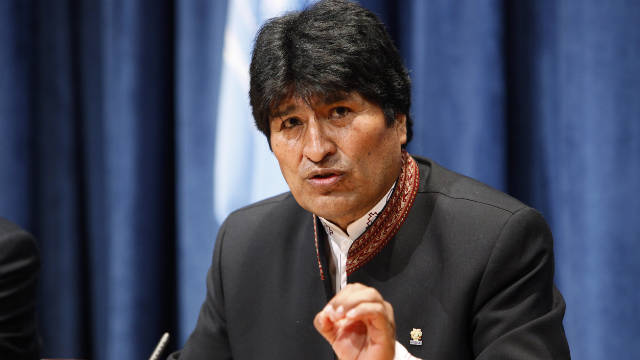
Bahrain says that its temporary ban on protesting is a safety measure. (Photo Courtesy of Reuters).

During his press conference, Al-Khalifa mentioned Omran Mohammed Ahmed, a 19 year old police officer, who was killed in an explosion in Al-Eker village when his patrol was attacked by rioters.  “Citizens of any country in the world will understand the necessity of implementing security measures to control, but not close, the entrances to the village in order to conduct a thorough investigation into Omran’s death,” he said.

Amnesty International says that the ban on all rallies violates the right to freedom of expression and peaceful assembly and must be lifted immediately.  Al-Khalifa says that no one’s right is violated as long as they comply with the limits prescribed in the ban. Amnesty International reports that within the last few months, scores of people have been arrested for “illegal gatherings,” where prisoners of conscience were jailed solely for exercising their right to peaceful assembly.

“Even in the event of sporadic or isolated violence once an assembly is underway, authorities cannot simply declare a blanket ban on all protetsts…” said Amnesty International Middle East and North Africa Deputy Director Hassiba Hadj Sahraoui.

Wefaq, Bahrain’s leading Shia opposition party, believes that the ban is an attempt to silence it.  “We reject this decision and consider it against our constitutional right.  There is no reason for it because all our events are peaceful,” said Wefaq official Sayed Hadi Al-Mousawi.  Al-Mousawi also said that he believes the ban goes against international human rights.  Bahrain banned many protests organized by Wefaq in the past few months.

Al-Khalifa also said that the ban is justifiable since organizers have failed to keep protesters from engaging in violence.  He believes that a temporary ban is an “opportunity for everyone to take a step back, calm down and gain some perspective.”

Prior to the ban, organizers had to go through a process to gain consent to hold a demonstration.  Bahrain’s Code on Public Meetings, Processions and Gatherings imposes significant restrictions, and is in breach under the International Covenant on Civil and Political Rights.  The code requires that at least 3 organizers with a clean police record must apply for permission, specifying their activity and its subject, and the venue and time.  Organizers must be residents of the area where the activity will take place.  If permission is not granted then the activity is considered illegal.  Several rallies were banned this year due to the location and timings of the rallies since they could have potentially disturbed traffic.

For further information, please see:

Al Jazeera — Bahrain bans Protests and Gatherings — 31 October 2012

Amnesty International — Bahrain’s Protests ban Condemned — 31 October 2012

Bahrain News Agency — Ban on Marches and Rallies is Temporary, Interior Minister says — 31 October 2012

Reuters — Bahrain Must Lift ban on all Protests — 31 October 2012

Mayor Offers $120,000 for a Fugitive’s Head on Ice

By Irving Feng
Impunity Watch Reporter, Asia

DAVAO CITY, The Philippines – Vice mayor, Rodrigo Duterte, of Davao City has offered a 5 million pesos ($121,000) reward for the capture, execution and delivery of a known fugitive’s head.


Duterte addressing the public on Yu. (Photo Courtesy of NY Daily News)

The fugitive in question is Ryan Yu, the leader of a local car theft ring.  Duterte has offered the public two million pesos ($48,400) for Yu’s capture, four million pesos ($96,800) if he is killed, and an additional 1 million pesos ($24,200), on top of the aforementioned reward, if Yu’s head is literally delivered on ice.

Duterte has a reputation for being tough on crime and has been previously associated with death squads.  These death squads were responsible for the executions of over 200 suspected criminals during Duterte’s previous mayoral term from 2004 to 2009.  The executions included a number of minors as well.

Human Rights Commission (HRC) chairman Loretta Ann Rosales has criticized Duterte’s actions declaring that he has violated the law by ordering the extrajudicial killing of Yu.  Rosales claims that Duterte is depriving Yu of proper due process, and despite Yu’s alleged crimes and links to the car theft ring, enjoys certain rights under the law.

Duterte responded to the allegations by calling for Rosales to show him the specific laws that he has violated by ordering the capture of a known fugitive.  Duterte claims that there is nothing illegal about using the police and government to sanction the capture of a dangerous criminal linked to a local carjacking gang.

Ronald de la Rosa, the local Davao police chief, says his office was flooded with calls and messages from people asking if the reward offer was legitimate.  Rosa assured that the reward was very real, and Duterte says that the funds for the reward will be paid out from his political campaign contributions.

Rosa conveyed that Yu and his gang were responsible for more than 40 stolen vehicles which were stashed in a local warehouse.  The discovery of the stolen vehicles prompted Duterte’s call for Yu’s head.  Duterte and Rosa have conveyed that the offer is to expedite the capture of a very dangerous criminal who could be armed with automatic weapons.

The reward is to facilitate Yu’s capture; however, it is also incentive for a fairly dangerous endeavor.  Duterte says that those who go after Yu need to know that Yu will most likely be armed and incredibly difficult to capture.  Because Yu will not come into custody peacefully, it may be possible that Yu must be killed in order for him to be incapacitated.

For further information, please see:

Philippine Daily Inquirer – Don’t castrate gov’t, Duterte tells CHR chief – 29 October 2012

Philippine Star – Duterte mulls raising bounty for car theft ring leader to P6 million – 29 October 2012

Davao Sun Star – Duterte to Human rights commission head: Show me the law I violated – 29 October 2012

NY Daily News – Mayor in the Philippines offers $121,000 reward for decapitated head – 26 October 2012

Suspected Rigged Ukrainian Election Sparks Hunger Strike

By Alexandra Sandacz
Impunity Watch Reporter, Europe

KIEV, Ukraine – Opposition leader and ex-prime minister, Yulia Tymoshenko, announced a hunger strike to protest an alleged rigged voting.

Ukrainian citizen watches as imprisoned former Prime Minister Tymoshenko’s party addresses the country. (Photo Courtesy of Spiegel)

On Sunday, Ukraine’s parliament held their election. President Victor Yanukovych is projected to win; however, international observers are subsequently criticizing the process. On Monday, these particular observers pointed out the flaws in the election process, with the Organization for Security and Cooperation in Europe commenting that the country had taken a “step backwards” on the road to democracy.

Ukrainian President Viktor Yanukovych’s pro-business Party of Regions has 34 percent of votes. However, the United Opposition bloc, who promotes and involves jailed opposition leader and former Prime Minster, Yulia Tymoshenko, is in second place with 22 percent of the vote.

Tymoshenko, who was sentenced to seven years in prison for the abuse of power, has “symbolically” led her party from behind bars. Yanukovych was accused of overpaying Russia in a gas deal, and she was, therefore, not permitted to register as a candidate.

The OSCE believes Tymoshenko’s current imprisonment is the epitome of obstacles that impede the elections in Ukraine. Walburga Habsburg Douglas, the Swedish MP who led the OSCE delegation stated, “Considering the abuse of power, and the excessive role of money in this election, democratic progress appears to have reversed in Ukraine. One should not have to visit a prison to hear from leading political figures in the country.”

Tymoshenko announced through her lawyer, “The elections were rigged from the first to the last day. To hide this fact means to destroy Ukraine’s future.” Due to Tymoshenko’s imprisonment, she stated she would not call for “civil unrest in the streets” because she is prevented from guaranteeing “that these actions will be peaceful and organized in the best way.”

While Ukraine was recently considered isolated under President Yanukovich, observers accused the current government as corruption and authoritative. These recent accusations have stemmed from Tymoshenko’s imprisonment, which the United States and the European Union have called a “politically motivated show trial.”

United Opposition official, Arseiy Yatsenyuk, said, “The campaign was very tough, extremely tough. Intimidation, they purchased the voters, they intimidated the members of the election commissions. So they did their utmost with an iron fist to do something to win the elections, but look at the results of the exit polls. They didn’t succeed.”

The OSCE is monitoring the election.

For further information, please see:

BBC News — Ukraine election ‘reversed democracy’, OSCE says – 29 October 2012

CNN — Ruling party leads Ukraine vote – 29 October 2012

Reuters — Ukraine’s Tymoshenko launches hunger strike over “rigged” vote – 29 October 2012

Spiegel — Ukrainian Election Criticized as Votes Counted – 29 October 2012

Israel Turns Away African Migrants at the Egypt Border

By Ali Al-Bassam
Impunity Watch Reporter, Middle East

JERUSALEM, Israel — Human Rights Watch (HRW) and two NGO’s, the Hotline for Migrant Workers, and Physicians for Human Rights, report that the Israeli military have turned away dozens of African asylum seekers, mostly made up of Eritreans, from its border with Egypt since June 2012.

Israel has denied entry to dozens of African migrants since June. (Photo Courtesy of Al Jazeera)

HRW published a report last Sunday, saying “Israeli soldiers allegedly denied food and water to migrants, beat them with fists and guns, and pushed them across the Israel-Egypt border with long metal poles.”

HRW claims that Israel’s actions puts asylum seekers at risk of enduring prolonged detention in Egyptian prisons and police stations, where they are unable to claim asylum.  Also, Eritrean migrants risk a forcible return to Eritrea, and also face abuse, torture, and rape by traffickers in the Sinai region.

The number of rejected asylum seekers has increased at the Egypt-Israeli border since Israel began construction on a 250 km fence that runs the length of the border.  “Building a border fence does not give Israel a right to push back asylum seekers,” said Gerry Simpson, senior refugee researcher and advocate at HRW.  Simpson believes that Israel is failing to follow international law, and should only reject asylum seekers when their claim for asylum is not valid.

In a letter written to Prime Minister Binyamin Netanyahu and the Justice Ministry, Interior Minister Eli Yishai said that Israel must resume the arrests of African migrants.  Yishai, who in his letter only mentions the Sudanese and not the Eritreans who comprise the majority of migrants that cross from Egypt, said “as you know, the problem of infiltration to Israel is one of the most difficult and complicated problems which Israel has dealt with since the founding of the state, [it is] a problem which threatens our identity, character, and future.”

A source close to Yishai said that his letter is directly related to the elections that will occur in January.  The Shas, the political party which Yishai is associated with, fear losing potential voters that commonly vote for the Likud and are frustrated with Netanyahu’s handling of the illegal immigration issue.

Last May, rising tensions over illegal immigration erupted when protesters marching through the streets of south Tel Aviv started smashing African-run shops and property, chanting “Blacks out.”

Currently, more than 60,000 Africans are estimated to be living in Israel illegally, mostly in the run-down neighborhoods of south Tel Aviv.

For further information, please see:

Al Jazeera — African Migrants ‘Denied Entry’ to Israel — 29 October 2012

Gulf News — Israel Turns Back Dozens of African Migrants — 29 October 2012

Human Rights Watch — Israel: Asylum Seekers Blocked at Border — 28 October 2012

The Jerusalem Post — NGO’s Reject Israeli Asylum Policy to Migrants — 28 October 2012

Rockets and Air Strikes End Israel-Gaza Informal Truce

By Emily Schneider
Impunity Watch Reporter, Middle East

JERUSALEM, Israel – An informal truce in place since Thursday came to an end Sunday as militants in Gaza fired rockets into southern Israel. Reports vary, but anywhere between 7 and 26 rockets were fired into Israel on Sunday from Gaza in the worst outbreak of violence in the area in months. Reports say that 18 rockets were fired on Monday alone.

A man is wheeled from the village of Beit Lahia, northern Gaza, after a recent Israeli airstrike. (Photo courtesy of CNN)

An Egyptian-brokered truce paused fighting in the Gaza strip area since Thursday.  Although no formal agreement had been reached with Hamas, the Islamist faction which controls the Gaza Strip, an Israeli defense official said that Egyptian defense officials had been instrumental in restoring calm.

“The Egyptians have a very impressive ability to articulate to (Hamas) that its primary interest is not to attack and use terror against Israel or other targets,” Amos Gilad, an Israeli defense official, told Israeli Army Radio. However, he made sure to acknowledge that there was no direct agreement with Hamas.

“It can be said categorically that there is no agreement with Hamas, there has never been and there will never be. … The only thing that has been set and said is that there will be calm. We are not interested in an escalation,” Gilad added.

An Israeli spokeswoman said that 86 projectiles had been fired at Israel from Gaza between Tuesday and Wednesday, but noted that the Iron Dome system had intercepted eight of them. There was nevertheless damage to several homes in southern Israel and three agricultural workers were wounded when a Palestinian rocket exploded near them on Wednesday. That same day, Israel killed a Hamas militant in an air strike, the purpose of which was to prevent rocket launches from Gaza. On Tuesday, Israel killed three Hamas members who, allegedly, were involved in launching the previous attacks or planning future ones.

Before Sunday, the last known rocket launched from Gaza occurred on Wednesday at 8:00 p.m., according to that spokeswoman.

The latest surge of violence occurred Sunday, following the killing of a Gazan who Israel claimed had fired mortars at Israeli troops. That militant died near the southern town of Khan Younis and reportedly belonged to the Izzedine al-Qassam Brigades, which is the armed wing of Hamas. Hamas responded by firing rockets and were answered by Israeli airstrikes that took out several targets in Gaza. Israeli officials say that seven rockets were fired into Israel from Gaza on Sunday alone.

Hamas has refused to renounce violence or recognize Israel’s right to exist, and is ostracized by the Quartet of Middle East mediators comprising the United States, United Nations, European Union and Russia.

For further information, please see:

Arutz Sheva – Barrage Continues: 18 Rockets Since Midnight – 29 October 2012

BBC News – Violence Ends Israel-Gaza Truce – 29 October 2012

Haaretz – IAF Strikes Gaza After Rocket Barrage Hits Southern Israel – 29 October 2012

Rueters – Egypt Brokers Informal Israel-Gaza Truce: Israel Official – 25 Octover 2012