Violence in Myanmar’s Rahkine State Persists, Resulting in Dozens of Deaths

By Irving Feng
Impunity Watch Reporter, Asia

SITTWE, Myanmar – Violence between Rohingya Muslims and Buddhists flared up again in Myanmar’s western state of Rakhine causing the deaths of approximately 60 inhabitants, roughly 31 of which were women.

Demonstrators hold up signs asking for aid. (Photo Courtesy of Reuters)

Rakhine was the stage of a brutal conflict between the majoritarian Buddhists and Rohingya Muslims last June when the rape and homicide of Buddhist woman was blamed on Muslims.  Last June’s violence caused countless deaths and thousands more were displaced when their homes burned to the ground.

Officials are still investigating what exactly set off the violence this time around.  In addition to the existing casualties, dozens of others sustained injuries and thousands of homes along with several religious buildings were destroyed.

An accurate picture of the situation in Rakhine is still elusive as the state access is restricted making the information difficult to verify.  Witnesses to the violence and tragedies, however, have reported that at least 25 men and 31 women have been killed.  Roughly 1,900 homes have also been set ablaze.  It is still uncertain which side, whether the Buddhists or the Muslims, have sustained the most casualties.

The violence has affected the towns of Yathedaung, Kyaukpyu, Kyauk Taw, and supposedly countless others.  Thousands have begun to flee their homes, and approximately 50 boats carrying Rohingya Muslims were reportedly headed for Sittwe, the capital of Rakhine state.

Those fleeing are believed to be heading to the refugee camps situated in the outskirts of Rakhine capital, Sittwe.  The prior conflict in June had already displaced thousands of inhabitants who have been bunkered down in the makeshift camps for months.

The U.N. expressed its concerns regarding even more displaced inhabitants fleeing for the already overcrowded camps in the periphery of Sittwe.  The thousands of refugees fleeing their homes and seeking safety include many women and children.

The international community watches on as the United Nations and local police forces call for calm and peace among the conflicting groups.  President Thein Sein had negotiated ceasefires and uneasy peace between the two conflicting groups in the past; however, the government has been unable to implement a permanent solution to the violence.

The estimated 800,000 Rohingya Muslims are still considered illegal immigrants in Myanmar, and Bangladesh, where many have fled from, continues to deny Rohingyas refugee status.  Amnesty International has demanded Myanmar to repeal the 1982 citizenship law that continues to subject Rohinya Muslims to their stateless condition.  However, the state of affairs regarding Rohingya citizenship in Myanmar has yet to be addressed.

For further information, please see:

Bangkok Post – 20 die in Myanmar violence – 25 October, 2012

BBC – Burma Rakhine clashes death toll at 56 – state officials – 25 October, 2012

Centre Daily Times – 56 dead in new ethnic violence in Myanmar – 25 October 2012

Reuters – Sectarian violence worsens in Myanmar’s volatile west – 25 October 2012

EU Awards Prestigious Human Rights Award to Iranian Activists

By Alexandra Sandacz
Impunity Watch Reporter, Europe

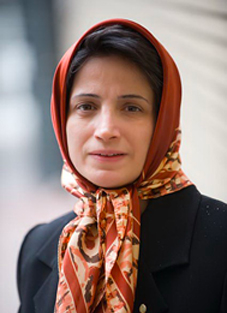
STRASBOURG, France – On Friday, the European Union gave its largely respected human rights award to two Iranian activists, an imprisoned lawyer, Nasrin Sotoudeh, and a formerly imprisoned filmmaker, Jafar Panahi.

Sakharov Prize winners, Nasrin Sotoudeh (left) and Jafar Panahi (right). (Photo Courtesy of RFE/RL)

The European Union awards the Sakharov Prize to an individuals or groups dedicated to the defense of human rights and freedom of thought. The award was created in December of 1988 and is named after Soviet scientist and dissident Andrei Sakharov.

European Parliament President, Martin Schulz, stated, “The award… is a message of solidarity and recognition to a woman and a man who have not been bowed by fear and intimidation and who have decided to put the fate of their country before their own.”

The jailed Russian punk band, Pussy Riot, and a Belarussian civil rights activist, Ales Beliatsky, were also nominees this year.

Co-winner, Nasrin Sotoudeh, a lawyer, is known for her defense of opposition activists. Sotoudeh also defended women who were jailed for demanding equality, and journalists who were punished for expressing their opinions. Often times, she took these important cases pro bono work and insisting Iranian authorities uphold the rule of law and justice. She is currently serving a six-year jail sentence for “acting against the national security” and “propaganda against the regime”.

Schultz announced, “If the fight for freedom, if the fight for human rights, for human dignity, for freedom from torture and against the death sentence, for freedom of opinion and for justice in criminal proceedings is an attack on national security, then we support this person in her attack on the national security of a regime that does not respect any of these fundamental rights. The prize for Mrs. Sotoudeh is a clear rejection of the regime in Iran.”

The other recipient, Jafar Panahi, a director, is regarded for his humanist films on life in Iran. While facing his own arrests in 2009 and 2010, some of his colleagues were also sent to jail for their outspoken criticism of President Mahmoud Ahmadinejad. In 2010, he was placed under house arrest and banned from filmmaking for 20 years. Despite his filmmaking restrictions, his 2011 documentary, This is Not a Film, was secretly smuggled out of the country on a USB drive that was hidden in a cake.

Schulz continued, “As in every good portrait, [Jafar Panahi in his films] shows not only the merits but also the contradictions and the daily problems of Iranians. State regimes clearly fear nothing more than the portrayal of the bitter reality that reigns inside their nations. And this is why people like Mr. Panahi are silenced in such regimes.”

Unfortunately, it’s unlikely that the imprisoned Iranian co-winners will make it to Strasbourg for the ceremony on December 12.

For further information, please see:

BBC News — Iran dissidents Sotoudeh and Panahi win Sakharov prize – 26 October 2012

International Business Times — EU Awards Iranian Dissidents With Sakharov Prize – 26 October 2012

The New York Times – European Rights Award Given to Convicted Iranians – 26 October 2012

RFE/RL – Iranians Win Sakharov Free-Thought Prize – 26 October 2012

Gold Mining Strikes Come to a Close in South Africa

By Heba Girgis
Impunity Watch Reporter, Africa

CAPE TOWN, South Africa—South African mines today reached an agreement on a wage deal with the unions and the protesters as the bulk of the gold sector’s striking miners returned to work under a threat of dismissal. This return marked a success for the new tough approach taken by the mining firms. At least 12,000 gold and 20,000 platinum miners were still pursuing an illegal wave of strikes that have now cost Africa’s largest economy over 10 billion rand just this year. The reported estimation was made by South Africa’s National Treasury.

Striking Mine Worker. (Photo Courtesy of All Africa)

In its interim budges policy statement, the treasury said, “Declining mining output and the spread of strike activity has depressed activity in related industries—including manufacturing, logistics and services, with negative consequences for GDP.”

The National Union of Mineworkers spokesman Lesiba Seshoka said that, “the worst in the gold sector is over. Members have accepted a new pay structure.” The Chamber of Mines’ offer, together with a package that was already on the table will give the mine workers a wage increase between 11 and 20.8 percent depending on the role in the mining process.

Spokeswoman, Marian van der Walt, for Harmony Gold, a gold mining company in the region, noted, “We’re very pleased that they signed and all of the uncertainty and turmoil in the market to an end.”

This agreement does not cover the platinum and coal sectors—only gold miners. The mine owners of these other two sectors are starting to count the cost of what may end up to be the worst labor unrest in the country since the 1980s.

Not all of the strikes are coming to an end. A six-week old strike at Anglo American Platinum, the world’s top producer of the precious metal, is not much closer to ending. It has 20,500 workers at its Union and the strikers continue to hold out for higher wages.

Finance Minister Pravin Gordhan told Parliament today, “We say very clearly that the problems in the mining area do reflect upon our growth prospects and it’s going to still take us some time to understand what the full impact on the growth is depending how and when these strikes actually end.”


For further information, please see:

All Africa – Gold Mining Companies, Unions Sign Agreements – 25 October 2012

Al Jazeera – South Africa Mines Agree Deal With Unions – 25 October 2012

Associated Press – ‘Worst is Over’ as South Africa Gold Miners Sign Pay Deal – 25 October 2012

Reuters – South Africa Strikes Ease as Gold Mine Pay Deal Reached – 25 October 2012


Four on Trial in Bahrain for Tweets Against the King

By Justin Dorman
Impunity Watch Reporter, Middle East

MANAMA, Bahrain — Four men in their twenties were recently detained and charged for statements they made on Twitter which allegedly insulted King Hamad.

A torn poster of King Hamad can get you at least two months in prison. (Photo Courtesy of the Guardian)

They were all arrested on charges of defaming the king on Wednesday and had their computers and other electronic equipment confiscated. Prosecutor Ahmed Bucheeri has said that the four will face, “an urgent trial before the criminal court.”

So far three of the cases have been adjourned to October 31 for submission of defense papers. The other case has been adjourned for the verdict on November 1. The three adjourned until the 31st have all denied the charges brought against them. Additionally, all three have been denied their respective requests for release. The fourth man charged admitted to committing the act, however, later notified the judge that he was informed he would be released had from custody had he admitted to the crime.

Bahrain has been in political tumult since the Sunni rulers suppressed the Shia majority’s pro-democracy protests last year. They put down the uprising through the use of martial law and help from other Gulf neighbors. The country is in great unrest and it is a daily commonplace occurrence that protestors and police will clash in the streets.

Since the uprisings, criticism of King Hamad or the Al Khalifa family has been considered a great offense. The court interprets any insult towards the ruling family as an insult on the country of Bahrain as a whole.

The Arabic Network for Human Rights Information (“ANHRI”), has called for the “immediate release of all the prisoners of conscience in the Bahraini prisons and respect the freedom of opinion and expression and the peaceful demonstration.”

ANHRI is upset about how these four bloggers have been arrested and in general, condemns the frequent and systematic violence in which Bahraini authorities deal with peaceful demonstrators. They have urged other international and regional human rights organizations to take greater action to change Bahrain’s policies which suppress human rights.

These four twenty year old men have not been the only alleged protestors who have been recently detained. A month ago, Zainab al-Khawaja, the daughter of a detained Bahraini activist, was imprisoned for two months for tearing up a picture of King Hamad.

Last July, protest leader Nabeel Rajab was convicted and sentenced to three months in jail for a comment he tweeted against the prime minister. Rajab was later acquitted on appeal which gives some hope to these four men on trial for similar charges.

For further information, please see:

Gulf Daily News – Four on Trial for Insulting His Majesty – 23 October 2012

The Arabic Network for Human Rights Information – ANHRI Calls the Bahraini Authorities to Stop Suppressing the Peaceful Demonstrations – 23 October 2012

Saudi Gazette – Bahrain Detains Four for Defaming King on Twitter – 19 October 2012

Guardian – Bahrain Charges Four Men with Insulting King – 18 October 2012


European Parliament Calls on EU Council of Ministers to Impose EU Wide Visa Bans and Asset Freezes on Officials in Magnitsky Case

Press Release
Hermitage Capital

25 October 2012 – The European Parliament passed with an overwhelming majority a resolution calling on the Council of Ministers of the EU to impose EU wide visa sanctions and asset freezes on Russian officials involved in the false arrest, torture and death of whisleblowing lawyer Sergei Magnitsky. The European Parliament also called on the Russian government to conduct a credible investigation into Magnitsky’s death and to cease persecuting his mother and widow.

The report was presented by Kristiina Ojuland MEP (Estonia/ALDE Party), the special rapporteur on the Magnitsky case in the European Parliament. On the floor of the European Parliament, Ms. Ojuland said: “Although former president Dmitry Medvedev promised to cast light to this case, we still have not seen justice served. Visa bans and asset freezes are concrete reactions…and demonstrate the EU’s value based policy. Let us be clear, the Magnitsky case is more than a tragedy of an individual fighting organized crime. …we cannot let EU banks accept the fortunes of corrupt individuals stealing from the Russian people.” 

http://www.europarl.europa.eu/meetdocs/2009_2014/documents/afet/pr/908/908403/908403en.pdf

The EU Parliament has twice before called for progress in Russia’s investigation into Sergei Magnitsky death. Because of the lack of action, the EU Parliament is now specifically calling on the Council of Ministers of the EU to implement sanctions. Similar calls have been made by parliamentarians of Sweden, Holland, the UK and Poland, as well as the Parliamentary Assembly of the Council of Europe, and the OSCE Parliamentary Assembly.

Marek Migalski (Poland /ECR Party) said: “Sergei Magnitsky…was killed, was tortured in a Russian prison. Our responsibility is just doing the minimum – that which is proposed by Ms Ojuland’s report – that is the introduction of visa bans, the freezing of assets on those whom we suspect may be involved in the process of killing this innocent man.”

Andris Piebalgs, a member of the European Commission and speaking on behalf of the EU High Representative on Foreign Affairs said: “The Magnitsky case has become one of the emblematic cases in this respect, not only for the Russian people but also for the EU. The … reason why we continue to be active in the Magnitsky case is that we believe that Russia itself should have a great interest in solving it.”

The next step is for the recommendations voted on by MEPs to be brought up at the next meeting of the EU Council of Ministers.


For further information please contact:

Hermitage Capital
Phone:             +44 207 440 1777
Email:              info@lawandorderinrussia.org
Website:          http://lawandorderinrussia.org
Facebook:        http://on.fb.me/hvIuVI
Twitter:           @KatieFisher__
Livejournal:     //hermitagecap.livejournal.com/