Woman’s Rape Kit Has Finally Been Tested – 10 Years Later

By: Sarah Purtill
Impunity Watch Reporter, North America

NEW YORK, USA – Natasha Alexenko was 20 years old on August 6, 1993 when a man held a gun to her back. She had been trying to get her keys out when she felt the gun against her back. She heard that man say “If you don’t do everything I say I’ll blow your brains out.” The man brought Alexenko into the stairwell of her building where he sexually assaulted her at gun point. Alexenko went to the hospital that night for a rape kit. But it was not until 10 years later that she finally got the call from the New York County’s District Attorney’s office informing her that the rap kit had finally been tested.

“I was like, ‘This is great, it’s moving forward — I can’t believe it after all these years,’” says Alexenko. “It wasn’t until later that I thought, ‘Holy mackerel! Why on Earth did this take so long?’” Alexenko was unsure why it took so long to be tested. “It just doesn’t make sense,” Alexenko said.  “Why would you put someone through this very invasive, whole-body exam, which is traumatizing in itself, take their rape kit and just let it sit there?”

Natasha Alexenko founded Natasha’s Justice Program to help fight againSt the backlog of rape kits across the United States. Photo Courtesy of Len Marks.

After her rape, Alexenko moved back home to Ontario. In Canada she had the support of her mother and close friends. But she ended up drinking heavily to try to get through the pain. “I just felt so much grief,” says Alexenko. She felt this way because she was not able to explain her assailants face to the police. “I blamed myself for not being able to help catch this man who was still out there, probably hurting other people.”

Four years after she received the call from the DA’s office, Alexenko’s assailant was caught. Victor Rondon was arrested in Las Vegas for jaywalking and then extradited to New York after he was finger printed by police. A year later, he was found guilty of eight counts of violent assault. He was also found guilty of burglary, robbery, two counts of rape, sodomy and sexual abuse. He was sentenced to 44 to 107 years in prison.

“I was just grateful that he was put behind bars,” said Alexenko, who fainted when she saw him at his trial. “My body just shut down. It wasn’t just that I was remembering stuff; it was like I was there.” In 2011, Alexenko founded Natasha’s Justice Program. The goal of the nonprofit is to get rid of the backlog of rape kits in the United States.

Alexenko’s story is not unique. In fact, her rape kit had been one of 17,000 unprocessed rape kits held in a storage facility in New York. Fortunately, New York City has since eliminated that backlog. Around the United States, there were 70,000 unprocessed rape kits in 2015. There are estimates that put that number in the hundreds of thousands.

According to Alexenko, people have started taking sexual assault and the backlog of rape kits much more seriously. The US Department of Justice announced it would be dedicating $41 million in federal grant money to test the 70,000 known unprocessed rape kits nationwide in 2015. So far, many communities have taken advantage of it.

“There’s been such a shift — and I think it’s because there have been so many survivors who have come forward,” says Alexenko. “There are so many amazing people who are fighting so hard.”

For more information, please see:

New York Post – I was Raped in 1993 – And No One Tested My Rape Kit for 10 Years – 4 April 2018

USA Today – Tens of Thousands of Rape Kits Go Untested Across USA – 16 July 2015

New York Post – DA Hailed After Pledging $35M to Eliminate Rape Kit Backlogs – 12 November 2014
Detained Journalists’ Lawyers Argue for Case Dismissal

By: Katherine Hewitt
Impunity Watch Reporter, Asia

YANGON, Myanmar – Court hearings have been taking place since January for two Reuters journalists that were arrested on December  12, 2017.  Myanmar officials arrested Wa Lone and Kyaw She Oo for obtaining state secrets from two police officers working in the Rakhine state.  The journalists had been working on a story in relation to the mass killings of Rohingya in the Rakhine state.

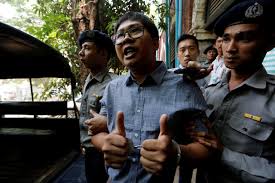
Wa Lone pictured after April 4, 2018’s case hearing. Photo Courtesy of Reuter/ Ann Wang.

So far, 17 witnesses gave testimony in court in 13 hearings that have taken place.  Lone’s and Oo’s lawyers say that the witnesses called forth by the prosecution are weak.  There are inconsistencies in the testimonies. Additionally, several procedural mistakes were revealed during the court sessions. Testimonies included a witness who burned notes from the time of the arrest, another who wrote the information down on his hand, and one who signed the search form before the section detailing the items seized had been filled in. The defense attorney has called for the dismissal of the case based on this.  The judge will decide at the next hearing on 11 April.

The prosecution team responded to the request to dismiss the case by stating that the information that the two journalist had was secret and that the journalist intended to hurt the country with that information. The defense team presented that that the prosecution could not establish that the information that the journalist obtained was secret as it had been published by both state and private media outlets.

Wa Lone told journalist after the court hearing, “We only did our work as reporters. I want the people to understand that and want to tell them that I never betrayed the country.”  She Oo said, “We followed the news and uncovered the Inn Din story. The reason why we did it is to give the vitally important information to the country.”

For more information please visit:

Reuters – lawyers for Reuters reporters argue for Myanmar court to dismiss case –  4 April 2018

Democratic Voice of Burma – Court hears arguments on motion to dismiss charges against Reuters duo – 4 April 2018

Washington Post -Lawyers ask Myanmar to dismiss case vs. Reuters journalists – 4 April 2018

Following Public Outcry, France Sets Legal Age of Consent

By: Jenilyn Brhel
Impunity Watch Reporter, Europe

PARIS, France – Lawmakers in France are in the process of formalizing the age of sexual consent after public outcry over two cases involving preteens.

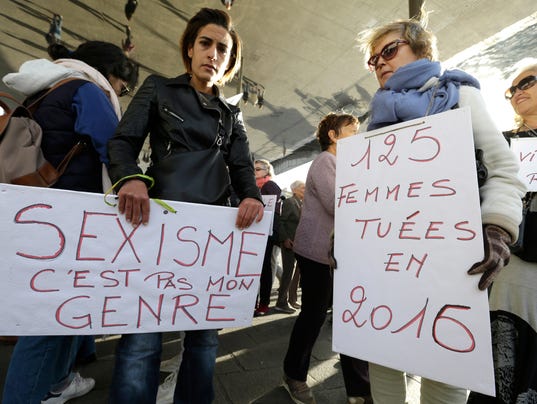
Demonstrators Gather to Protect Sexual Abuse and Harassment in France. Photo Courtesy of Claude Paris.

France’s government has proposed new laws, one of which makes the age of sexual consent fifteen years. The legislation will be one of several measures taken by the government to combat sexual harassment and violence in the country.

The current law in France criminalizes sex with children under fifteen. However, prosecutors in those cases must prove that the sex was by force.

New measures also include increased prison sentences for perpetrators. There will  be on-the-spot street fines issued for sexual harassment. Repeat offenders will face increasing fines.

The bill will also present sanctions for online harassment.

Additionally, underage rape victims will be able to report sexual violence until they are 48 years old, ten years longer than the current limit.

Prison sentences for rape involving penetration will  increase from the current sentence of five years to ten years.

The push for new laws has gained momentum recently in France due to two high-profile cases involving eleven-year-old girls. The perpetrators in those cases, who were 28 and 30, were acquitted, causing an uproar in France and prompted the government to discuss tightening laws aimed toward combating sexual violence.

Marlene Schiappa, French Equality Minister, said that “we want to fix an age in the law below which it’s always forbidden to have sex with children, with young girls. Below which it’s always considered as a rape.”

President Macron supports the bills and hopes that the new laws ensure that “women are not afraid to be outside.”

In polls conducted in the country, ninety-two percent surveyed support extension of the statute of limitations, ninety percent support on-the-spot street fines and sixty-nine percent support setting the age of consent at fifteen years of age.

It is crucial that the laws of the republic make it clear that it is not allowed to harass or intimidate women…whether in the public space, on public transport or online” Schiappa said. “There can be no lawless zones.”

Age of consent laws vary internationally. Neighboring European countries such as the United Kingdom, Spain and Russia set the age of consent at 16, whereas in Germany, Italy and Hungary it is 14.

Fore more information, please see:

BBC News – France to set Legal age of Sexual Consent at 15 – 6 March 2018

CNN – France to set age of Sexual Consent at 15 After Rape Outcry – 6 March 2018

Newsweek – France to set age of Sexual Consent at 15, Paving way for Rape Charges – 6 March 2018

NPR – France Moves to Make 15 Legal age of Consent for sex – 6 March 2018

USA Today – French Bull Puts 15 as age of Consent for sex, Includes on-the-spot Fines for Harassment – 21 March 2018

Vietnam Jails Six Human Rights Activists

By: Brian Kim
Impunity Watch Reporter, Asia

HANOI, Vietnam – In Vietnam, six human rights activists were sentenced to between 7 and 15 years in jail. The activists were charged for “attempting to overthrow the state” on Thursday, April 5th, 2018. The sentenced imposed on the activists is the harshest sentence in years in Vietnam. All of them will face up to five years under house arrest when they are released from prison.

Human rights lawyer Nguyen Van Dai was sentenced to 15 years in prison on Thursday, April 5, 2018. Photo courtesy of Lam Khanh via REUTERS.

The six activists were connected to the Brotherhood for Democracy group. They were accused of pushing multi-party democracy and receiving money from overseas. Blogger Pham Van Troi, priest Nguyen Trung Ton, journalist Truong Minh Duc, entrepreneur Nguyen Bac Truyen, and human rights worker Le Thu Ha were all sentenced on Thursday.

The Hanoi People’s Court gave Nguyen Van Dai, a human rights lawyer, the longest sentence for “trying to overthrow the people’s administration.” He was sentenced to 15 years in prison. Ms Vu Minh Khanh, Dai’s wife, expressed her disappointment with the trial. She claims that “he is innocent and he pleaded innocent at the trial.”

Since the end of the Vietnam War in 1975, the Communist Party of Vietnam has ruled the country. Although the country has been reforming its economy and its social policies, the government retains a tight grip on media censorship.

Amnesty International believes that there are around 97 prisoners being held in jail for their human rights work in the country.

On the recent actions taken by the Vietnamese government, the United States State Department stated that “the United States is deeply concerned by the Vietnamese government’s efforts to restrict these rights, through a disturbing trend of increased arrests, convictions, and harsh sentences of peaceful activists.” Moreover, the spokesperson went further by stating that “individuals have the right to the fundamental freedoms of expression, association, and peaceful assembly, both online and offline.”

CNN – Six activists jailed in Vietnam amid crackdown on dissent – 5 April, 2018

The Guardian – Vietnam jails six activists for up to 15 years for trying to ‘overthrow state’ – 5 April, 2018

The Straits Times – Vietnam jails human rights lawyer, five other activists – 6 April, 2018

Syria Deeply: Another alleged chemical attack in Eastern Ghouta, evacuations begin from Douma, and a missile strike on one of the largest Syrian army air bases

Syria Deeply
Apr. 9th, 2018
This Week in Syria.

Welcome to Syria Deeply’s weekly summary of our coverage of the crisis in Syria.

Suspected Chemical Attack: A suspected chemical attack in the town of Douma killed dozens of people late Saturday night in the Eastern Ghouta suburbs of Damascus.

The Syrian Civil Defense (SCD) said they documented at least 42 fatalities, while the Syrian Observatory for Human Rights put the death toll at 80, including 40 people who reportedly died from suffocation. More than 500 patients being treated in medical facilities in Douma reported symptoms compatible with exposure to poison gas, including difficulty breathing, foaming at the mouth and burning eyes, according to a joint statement released by the SCD and the Syrian American Medical Society.

Activists and medics blamed the Syrian government for the attack, but Damascus denied allegations, saying they were “fabrications” by the Jaish al-Islam rebel group.

The Organisation for the Prohibition of Chemical Weapons, which has investigated previous claims of chemical weapons use in Syria, expressed “grave concern” about the alleged attack and opened a new investigation. However, Russian foreign minister Sergei Lavrov said Moscow’s “military specialists have visited this place, along with representatives of the Syrian Red Crescent … and they did not find any trace of chlorine or any other chemical substance used against civilians.”

U.S. president Donald Trump accused the Syrian government on Twitter of carrying out the alleged attack, warning that there would be a “big price to pay” for using chemical weapons. So far, Washington has not specified if, when or how it would respond – Trump is reportedly expected to make a decision on the matter in the next 24-48 hours. U.S. defense secretary James Mattis said on Monday that he would not “rule out anything right now.”

The United Nations Security Council met on Monday to discuss the situation in Douma. The U.S. circulated an updated version of a draft resolution calling for a U.N. inquiry into chemical weapons use in Syria that Washington had initially put forward last month, according to Reuters.

Missile strike: Russia and Syria have accused Israel of launching a missile strike on a Syrian airbase near Homs on Monday. As of Monday afternoon, Israel had not confirmed nor denied the reports.

At least 14 people were killed in the strike on the Tiyas, or T-4 base, including members of Iran-backed paramilitary groups, Reuters reported. At least two Iranians were among those killed, the semi-official Iranian Fars news outlet said, according to Reuters.

T4 is one of the Syrian army’s largest bases, and is allegedly also used by Iranian and Iranian-allied militias.

Russia’s defense ministry said that two Israeli fighter jets launched eight missiles on the T4 air base from Lebanon’s airspace. Syria shot down five missiles, and the remaining three hit the western part of the air base, according to Moscow. The Lebanese army confirmed that four Israeli warplanes had violated its airspace on early Monday, flying in the direction of the Syrian border, but did not specify whether the jets were responsible for the strike on T4.

Syria initially accused the U.S. of carrying out the strike, as it came after Trump’s “big price to pay” warning for the Douma attack. Syrian state media called it an American “aggression.” U.S. officials denied responsibility.

“At this time, the Department of Defense is not conducting airstrikes in Syria,” the Pentagon said in a statement. “However, we continue to closely watch the situation and support the ongoing diplomatic efforts to hold those who use chemical weapons, in Syria and otherwise, accountable.”

Rebel evacuations: Jaish al-Islam, the last rebel group in Eastern Ghouta, began to exit the town of Douma on Sunday, in the first phase of a Russian-backed evacuation agreement, Reuters reported. Dozens of fighters from Jaish al-Islam and their families were bussed to the northern city of Jarablus after striking an evacuation deal with the Syrian government. Almost simultaneously, hostages freed by Jaish al-Islam arrived at a government-held crossing.

Both developments are part of an evacuation deal brokered on Sunday between the government and rebels, with mediation from Russia. Under the agreement, the Syrian government grants rebels safe exit to northern Syria in return for the release of hundreds of hostages and prisoners held by the group.

The deal also grants an offer of reconciliation for those rebels who wish to stay in Douma. Citing the Russian RIA news agency, Reuters said that Jaish al-Islam will evacuate Douma in two batches. Syrian state media said the rebels will be evacuated within 48 hours. If completed, the complete evacuation would give the government complete control of Eastern Ghouta.

Read our Daily Executive Summaries

f020b569-7455-410e-8ef8-f41b0077a844.png MOST POPULAR

This Week’s Top Articles

WAR ECONOMY

After Decree 66, Some Residents Fear Reconstruction Means Eviction

Construction has begun in the Basateen el-Razi district in southwestern Damascus, under a government development plan. Experts warn though that construction efforts are not geared towards repair and recovery.

DISPLACEMENT

The Second Exodus: Tracing the Footsteps of Palestinian Refugees in Syria

An estimated 550,000 Palestinian refugees registered in Syria are now facing secondary displacement due to the conflict, and many of them are facing deteriorating conditions and a protection gap in host countries, writes humanitarian expert Hanan Elbadawi.

973ab3c3-9b8d-4a6d-9ac8-50621f4257fe.png EDITOR’S PICKS

Community Insight

ISIS

Analysis: Washington Still Has Work to Do in Former ISIS Territories

Emily Burchfield,  Program Assistant at the Atlantic Council’s Rafik Hariri Center for the Middle East

Before the U.S. pulls out of Syria, Washington needs to address a governance gap left in some former ISISterritories. Otherwise, marginalized Arab communities will likely ally with the Syrian government or extremist forces, writes Emily Burchfield of the Atlantic Council.

FIRST LOOK

Upcoming coverage

We are always looking for new writers, experts and journalists who are covering the crisis in Syria and are interested in writing about a variety of topics. Please send us your ideas, story pitches and any other thoughts about our coverage via email, Twitter or Facebook.