Brazilian Threesome Enter Into Civil Union

By Brendan Oliver Bergh
Impunity Watch Reporter, South America

BRASÍLIA, Brazil – Civil Union in Brazil links three individuals together in legal matrimony. Some have seen the unions as a logical progression of civil rights, while others in conservative and religious groups have criticized its morality and legality.

San Paulo skyline, where the first Brazilian gay marriage was legalized. (Photo Courtesy of Telegraph)

The trio – a man and two women – have been living together in Rio de Janeiro for three years before tying the proverbial civil knot. The trio decided to keep their identities a secret in May when the union was formed. The public was made aware of the union in late August.

Each member of the union is connected to each other equally, unlike in traditional polygamous marriages which are followed by some religious sects.

According to the public notary who granted the civil union this union may be labeled as a “polyfidelitous union.” Claudia do Nascimento Domingues, the notary who performed the ceremony, had the couple legally registered as a “stable union” which extends all the benefits of marriage. The union entitles the trio to legal rights concerning the division of property in case of separation and death. The debate continues as to death benefits, child welfare, homeownership and health insurance plans and discounts. The legal question of what would happen with a child is thought to be left to the courts, should the trio pursue the matter.

A judge in San Paulo approved Brazil’s first gay marriage in July of 2011, converting their civil union to a marriage. While same sex unions have been legal in Brazil since 2004, this is first multi-partner union of its kind.

Critics, however, claim that “the union is void of any legality.” Regina Beatriz Tavares da Silva, the head of the family law committee of a lawyers’ association in Sao Paulo believes that it would be impossible for a civil union between three to be equal to that of union of two. “It goes directly against the constitution,” da Silva said. “Monogamy is defined as relations between two, not three or four or five.”

Religious groups have voiced their outcry as well, fearing the often cited “slippery slope” that would lead to a devaluing of the institute of marriage and family.

“The institution of family cannot be defended with the approval of actions that seek to distort its definition,” the religious, conservative Plinio Correa de Oliveira Institute said in a statement. “The purpose of this (union) is not to build families, but to destroy them.”


For further information, please see:

CNN – Unprecedented Civil Union Unites Brazilian Trio – 31 August 2012

Journal de Uberaba – Marriage Between Three People – 29 August 2012

The Telegraph – Three People Enter Into Civil Union In Brazil – 28 August 2012

The BBC – Three-Person Civil Union Sparks Controversy In Brazil – 28 August 2012
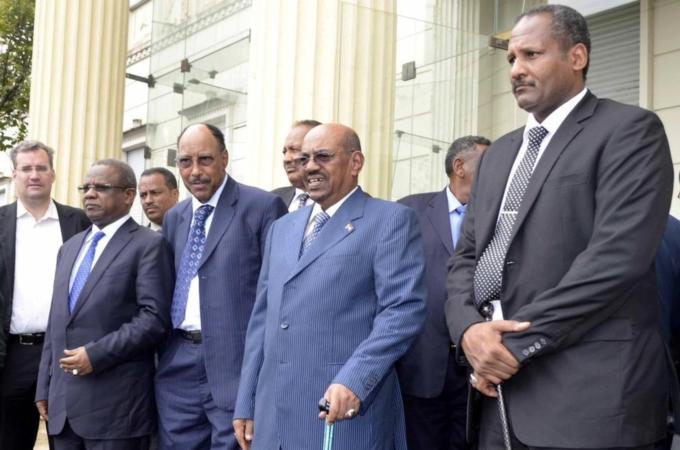
Sudan and South Sudan to Reach Settlement Over Border Disputes

By Heba Girgis
Impunity Watch Reporter, Africa

KHARTOUM, Sudan—Yesterday, the United Nations Security Council welcomed the progress made by both Sudan and South Sudan in Addis Ababa in negotiations to narrow the differences between the two rival countries. They are both still working to resolve the issues outlined in UN Resolution 2046—an attempt to create a road map for a peaceful new border security system between the two regions.

Presidents From Both Countries Hope to Reach a Deal by the End of the Day. (Photo Courtesy of Aljazeera)

Badr el-Din Abdullah, the spokesman for the Sudanese delegation noted, “We have agreed on many topics but there are still issues for which we don’t have a deal yet, specifically the security issue.” Diplomats on both sides have put in an effort to mediate between the rivals, who both have a history of signing but not actually implementing deals.

Yesterday, Sudan created hope for the situation by conditionally accepting an African Union map creating a demilitarized border zone after having objected to it for months.

Jean Ping, the African Union Commission chairperson, encouraged the presidents of both South Sudan and Sudan, to take advantage of this opportunity for settlement and to reach an agreement on several topics including: their shared border, disputed areas, oil transportation costs, citizenship, and any other issues that have come up as a result of South Sudan’s newly established independence.

The United Nations gave the two countries the deadline of September 22 as their final deadline to reach a comprehensive agreement. The President of South Sudan, Salva Kiir and his Sudanese rival, Omar al Bashir, should have also met today in Ethiopia to wrap up talks on a series of matters yet to be settled between the two countries.

The presidents of the two countries are also expected to come to a conclusion and a solution for the disputed region of Abyei. Previous attempts to solve this dispute have failed because neither side could agree on who could vote on this decision.

Ban Ki-Moon, the United Nations Secretary General, congratulated the heads of these two nations but also urged them to fully take responsibility for this resolution so that the summit can conclude with success and the two can maintain future peaceful relationships. He said, also, that their commitment will “mark an end to the era of conflict and ushers in a new era of peace, cooperation and mutual development for the two countries and their people.”


For further information, please see:

Aljazeera – Sudanese Presidents Hold Talks in Addis Ababa – 23 September 2012

Sudan Tribune – African Union Calls for “Comprehensive” Deal Between Sudan and S. Sudan – 23 September 2012

The Washington Post – Sudan, South Sudan Leaders to Meet in Ethiopia to Resolve Disputes as UN Deadline Expires – 23 September 2012

All Africa – UN Security Council Urges Sudan and South Sudan to Reach Comprehensive Agreement – 22 September 2012

UK Indeterminate Sentences Breach Prisoner Human Rights

By Madeline Schiesser
Impunity Watch Reporter, Europe

Strasbourg, France – The European Court of Human Rights (ECtHR) has ruled that the operation of indeterminate sentences for the protection of the public (IPPs) breaches human rights.  Under an IPP in the United Kingdom (UK), a court could sentence a prisoner to serve not only time for a committed crime, but to also to remain in prison until he had completed rehabilitation courses, which are difficult to gain access to.  Of the more than 6500 prisoners currently serving IPP terms, 3500 have completed their minimum sentences, but need to demonstrate rehabilitation. The ECtHR found that the IPP system has a “lack of resources,” without which prisoners whose minimum sentences have expired cannot realistically qualify for release.

IPPs were created to ensure that dangerous prisoners were rehabilitated before reentering the population, but the supporting system quickly became overwhelmed. (Photo Courtesy of BBC News)

Brett James, Nicholas Wells, and Jeffrey Lee, who were each imprisoned over two years longer than their minimum sentences, brought their cases before the ECtHR. They, like other IPP prisoners who had completed their minimum sentence found themselves in a catch 22; they could not qualify for release without rehabilitation courses, and such courses could not easily be obtained.  The three argued that there were “delays” in accessing the prison courses necessary to be eligible for release, caused by “a lack of resources.”  The ECtHR agreed.

Specifically, the ECtHR found that the IPP operation violated Article 5:1 of the European Convention on Human Rights, which bans arbitrary detention.  The ECtHR characterized the IIP operation as “draconian measures for indeterminate detention without the necessary planning and without realistic consideration of the impact of the measures”.

The court further explained that “once the applicants’ tariffs had expired, their detention was justified solely on the grounds of the risk they posed to the public.”  At that point, the need for rehabilitative services becomes all the more urgent.   The applicants’ imprisonment was “arbitrary and therefore unlawful” when without an effort to progress them through the prison system “with a view to providing them with access to appropriate rehabilitative courses”

James, Wells, and Lee were awarded £14,000 in damages and close to £30,000 in costs.   It is estimated that if the British government were required to compensate all 3500 IPP prisoners held beyond their minimum sentence, it would cost about £16 million.

The new Justice Secretary, Chris Grayling, expressed that he was “very disappointed by the ECHR decision,” further elaborating that he intends to appeal the decision: “it is not an area where I welcome the court seeking to make rulings, it is something we intend to appeal.”  The government has three months to do so.

The IPP was introduced in 2005 by Labour as a way to ensure that dangerous prisoners were rehabilitated before reentering the population by providing them with courses.  However, the system quickly became overburdened.  Since then, Ken Clarke, the last Justice Secretary, announced the cancelation of the IPP last year.

For now, the ECtHR decision will not affect prisoners in the UK currently serving IPP sentences.  A spokesman for the Ministry of Justice stated: “”Public protection will not be put at risk – the judgment does not find that indeterminate sentences are unlawful, and will not mean prisoners currently serving IPP sentences will have to be released.”

However, the decision will likely cause the UK to change the way that it sentences prisoners.  The government had already announced plans for a new regime of tough, determinate sentences.  The Ministry of Justice says “[t]his will see more dangerous criminals given life sentences, and others spending longer periods in prison, with tough license conditions on release.”

For further information, please see:

BBC News – Indeterminate Sentences ‘Breach Human Rights’ – 18 September 2012

Guardian – Strasbourg Judges Rule Indeterminate Sentences Unlawful – 18 September 2012

Independent – Indefinite Sentences Ruled Unlawful – 18 September 2012

Telegraph – Prisoners Locked Up Indefinitely Could Claim Millions in Compensation – 18 September 2012

Syrian Revolution Digest – Friday 21 September 2012

It Continues!

It continues: the rallying, the killing, the cluelessness, the downright indifference. It continues. They all continue, mercilessly gnawing at our humanity until they reduce it to utter insignificance.

Friday September 21, 2012

Today’s Death toll: 117. The Breakdown: 48 in Damascus and Suburbs (including 17 martyred in a massacre in Buwayda town), 17 in Aleppo, 15 in Homs, 15 in Idlib, 9 in Deir Ezzor, 9 in Daraa, 2 in Hama, 1 in Lattakia, and 1 in Raqqah (LCC).

Other Developments (LCC):

On Friday:

Aleppo: Heavy artillery shelling of Sakhour neighborhood is renewed, with more than 12 shells landing; Heavy artillery shelling of Massaken Hanano neighborhood is reported; Heavy shooting by warplanes on Bezagha Area.

Daraa: Shajra: Heavy gunfire is reported from heavy machine guns located west of the town, next to Abdeen checkpoint

Hama: Shahshabo Mountain: Sounds of heavy shelling shake the mountain’s villages. They are from the artillery located in Seqelbiya

Damascus Suburbs: Hamourieh: Mortar shelling targets the city; Jdeidet Artouz: Shelling targets Dahra area at a rate of one shell per 2 minutes; Daraya: Gunfire from light and medium-grade weapons is reported from checkpoints to scare residents; Diabiyeh: Heavy mortar shelling targets the area; Saqba: Shelling targets Bassateen area in the city.

On Thursday, September 20, the Kurdish activist Mahmoud Wali, AKA Abu Jandi, was assassinated by an unknown assailant on a motorcycle in his hometown of Ras Al-Ain (Seri Kanye). He was the founder of the independent Kurdish grassroots movement, Shabab Al-Thawrah, which played an important role in galvanizing support for the Syrian Revolution among Kurdish youth. The assassination comes at a time of increasing tensions between different Kurdish factions as well as between Kurdish and Arab population in Kurdish-majority areas.

Also, on Thursday, rebels in Eastern Ghoutah Region in Damascus Province managed to shoot down an attacking helicopter gunship.

News

Syrian rebels say government airstrikes killed 30 in Raqqah. Long deemed a bastion of support for President Bashar Assad, Raqqah may be the latest battle zone.

Special Reports

Besides growing reservations about the dynamic on the ground in Syria, last week’s killings at the U.S. consulate in Benghazi have raised new questions about Libya as a model for intervention

A Lebanese solution for Syria, in which different areas have different outside backers, may be the end result, but it is nobody’s goal.

The Times’s C.J. Chivers travels with an antigovernment fighting group in and near Aleppo, where the war for Syria’s future has hardened all involved.

The statements of Iranian military involvement can also be interpreted as the IRGC’s way of threatening to increase its intervention, which would transform civil war in Syria into a regional war. The threat obviously aims to force Westerners, Turks, and Saudis to think twice before getting further embroiled in a proxy war.

Ammar Abdulhamid & Khawla Yusuf: The Shredded Tapestry: The State of Syria Today

Video Highlights

Pro-Assad militias open fire on protesters in Raqqah City as the city joins the revolution in full force http://youtu.be/3yjo44MX1Xk ,http://youtu.be/m9pYLjmon94

The pounding of restive neighborhood in Damascus City continues: Tadamonhttp://youtu.be/niKnlC-yUoE Qadam http://youtu.be/sGiKsWuks40 ,http://youtu.be/rbFDzxiGSb8 , http://youtu.be/yw5T2Fop9Ps ,http://youtu.be/D3oCT1bRQdg But in nearby Jobar, locals held a rallyhttp://youtu.be/DiIHrSlGbPo

In Damascus Suburbs, street battles raged in Doumahttp://youtu.be/RDqGgrjs8Ns A pro-Assad sniper taking up position in Doumahttp://youtu.be/kFmGoP5U4Cg , http://youtu.be/WDYbs8Rb7HU The pounding ofSaqba http://youtu.be/kU7x6tWt9FY But earlier in the day locals held a rallyhttp://youtu.be/AtaeGlhTF2k The pounding of Misrabahttp://youtu.be/Inj9FCjQJGA victims of summary executions fo0und in Buaydahttp://youtu.be/gu6ABUxfy2k More such executions took place in Yelda: victims came from the same family http://youtu.be/knAow4BcnlI

Rallies took place across the country: (Idlib, Maraat Al-Nouman)http://youtu.be/_aKhE3Zhl6A (Idlib, Kafar OUaid) http://youtu.be/6T7AnehGvsc(Hama City, Aleppo Road) http://youtu.be/Uvmdr6GmscY (Hama, Khattab)http://youtu.be/W5Ac1ATRb9I (Dabeq, Aleppo) http://youtu.be/g0Mk59sRNrc(Hassakeh, Amoudeh) http://youtu.be/WlXpiL3QKm4 (Arbeen, Damascus)http://youtu.be/ivBozhabv3U (Harasta, Damascus) http://youtu.be/j71S60vujgQ(Jisreen, Damascus) http://youtu.be/E6gVkzXg4J4 (Nasseeb, Daraa)http://youtu.be/WG1rjiNA02c

Syrian Government Accused of Using ‘Barrel Bombs’

By Emily Schneider
Impunity Watch Reporter, Middle East Desk

DAMASCUS, Syria – The Syrian opposition has reported that the Syrian government used ‘barrel bombs’ this past weekend.  ‘Barrel bombs’ are large drums that are filled with explosives, oil, and pieces of steel.  The crude explosives are dropped from helicopters or low-flying jets and usually result in craters close to seven meters deep where they fall.  Their purpose is not only to destroy its target, but also to cause terror and permanently maim its victims.

Based on eye-witness accounts and amateur videos, a large number of people were killed on Saturday when a barrel bomb was dropped by a low-flying military aircraft in Aleppo.  Macit Abdunnur, a local activist, claimed that a residential building was destroyed by the blast and several corpses of women and children have been pulled from the rubble so far.

“The sound was like nothing else I’ve ever heard. It was an almighty whoosh,” Mohammed Ibrahim, a rebel fighter who got caught by the explosion, told the Telegraph. He lost his cousin in the blast and his own eardrums were perforated by the noise. He told reporters, “I was lucky I was standing behind a corner, but I was still knocked off my feet.  When I came round my ears were bleeding.”

There have been amateur videos posted online of the bombs exploding in Aleppo, although news agencies have not been able to independently verify the location of the videos. There are also videos of the helicopters and military planes hovering above targets while the crew pushes the barrel bomb out of the door.

The recent use of barrel bombs follows Syrian government’s use of indiscriminate shelling and bombing in an attempt to quell the opposition for the past several weeks.  These recent indiscriminate strikes constituted deliberate targeting of civilians, far from the front lines of the battle. Some opposition members speculated that the recent use of a barrel bomb is in response to the opposition’s attack on the regime’s security buildings in the Aleppo area on Friday.

A spokesman for the Local Coordination Committee in northern Aleppo said that the barrel bombs have been used in at least two areas of the city previous to this incident.

“How long are we going to sit and watch while an entire generation is being wiped out by random bombardment and deliberate mass targeting?” asked Turkish Foreign Minister Ahmed Davutoglu.

For further information, please see:

CNN – Syria Accused of Using ‘Barrel Bombs’ – 11 Sept. 2012

Turkish Weekly– Syrian Opposition Says Military Jets Drop “Barrel Bombs” on Aleppo – 10 September 2012

Israel National News – Video: Syria Drops New ‘Barrel Bomb’ on Aleppo – 2 Sept. 2012

Telegraph – Syrian Regime Deploys Deadly New Weapons on Rebels – 31 August 2012