Sudan Withdraws its Candidacy From UN Human Rights Council

By Heba Girgis
Impunity Watch Reporter, Africa

KHARTOUM, Sudan—On Thursday, August 30, Sudan withdrew its candidacy on the United Nations Human Rights Council after receiving strong criticism from several human rights and pro-democracy groups around the world. Sudan’s representatives to the United Nations wrote a letter declaring its withdrawal and noted that, “it is no longer interested in taking up one of the vacancies available in the Human Rights Council.”

Sudan Will Not Be Seen Under This Ceiling at the UN Human Rights Council After its Withdrawal From the Candidacy. (Photo Courtesy of The Sudan Tribune)

The current coordinator for East African countries at the United Nations, Djibouti, first received Sudan’s letter which gave no reason for the country’s decision to pull out of the election that will take place in November at the United Nations General Assembly.

The criticism from human rights groups and pro-democracy groups developed from human rights violations that took place in Sudan. Sudan’s president, Omar al-Bashir, has been accused of genocide and other war crimes in Darfur, and his regime has been accused of other human rights violations in other parts of the country. Ileana Ros-Lehtinen, a U.S. congresswoman who heads the U.S. House Foreign Affairs Committee, noted that “As Sudan appears poised to win a seat on the United Nations Human Rights Council, the United Nations has hit a new low. Allowing this genocidal dictatorship, which has killed thousands of its citizens, to serve on such a body is beyond hypocrisy, it is callous, dangerous and tragic.”

Despite these accusations, Sudan was almost guaranteed a seat on the United Nations Human Rights Council. The Council itself is made up of forty-seven members and Sudan would have been one of the five African candidates for the only five African seats available.

While Sudan gave no indication as to why the country has withdrawn its candidacy, Philippe Bolopion, the United Nations director for Human Rights Watch, was happy with Sudan’s decision and noted that, “the worst human rights offenders are slowly recognizing they are not welcome on the Human Rights Council.” He further commented saying, “Sudan joins notorious rights violators Syria, Iran, Belarus, Sri Lanka and Azerbaijan whose hypocritical aspirations to sit on the Council have properly let to embarrassing retreat.”

Eight years ago, in May 2004, the United States representative at the United Nations Human Rights Commission left the room after Sudan was elected to sit on the Commission at the peak of the Darfur conflict. Despite the growing animosity toward Sudan, one African ambassador noted that no African country wants to jeopardize their own relations with Sudan by telling them that they don’t qualify because of their own human rights problems. The Ambassador further added, “we will be sitting at the table with them in the future.”

The famous actress Mia Farrow has been a leading campaigner for victims in Darfur. Farrow has also been campaigning against the Sudanese government and sought to have the country’s United Nations candidacy disqualified because of al-Bashir’s crimes. The Sudanese government has refused to arrest the president and the African group will now have to choose a replacement for Sudan in order to fill the fifth seat on the Council.


For further information, please see:

The Journal – Sudan Withdraws Candidacy for UN Rights Council – 1 September 2012

Zee News – Sudan Withdraws Candidacy for UN Rights Council – 1 September 2012

Boston News – Sudan Withdraws Candidacy for UN Rights Council – 31 August 2012

Sudan Tribune – Sudan Quietly Withdraws Controversial UNHRC Candidacy – 31 August 2012
The Washington Post – Sudan Withdraws Candidacy for UN Human Rights Council Seat After Criticism on Rights Record – 31 August 2012

Reports of (Another) Massacre of Yanomami Indians by Brazilian Gold Miners

By Margaret Janelle R. Hutchinson
Impunity Watch Reporter, South America

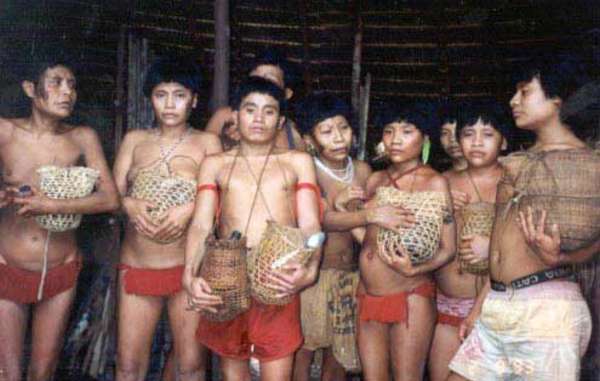
 CARACAS, Venezuela – Dozens of members of the Yanomami indigenous group were reportedly massacred back in July, according to a document released on Wednesday by various indigenous rights organizations. Reports of the incident are only now reaching Venezuelan authorities due to the remoteness of the indigenous villages.  The killing may be the latest tragedy in a pattern of vicious encounters between Yanomami and Brazilian gold miners.

Survivors of 1993 Haximu massacre hold urns containing the ashes of their relatives. Gold miners reportedly killed 16 Yanomami in the attack. (Photo courtesy Survival International)

Residents of the Hokomawe village said they discovered charred bodies and the torched “shabono” or communal house during a visit to the indigenous community of Irotatheri in early July.  Of the approximately eighty residents of Irotatheri, only three survivors were discovered hiding in the forest.

The survivors reported that they had been out hunting at the time of the attack, which they blamed on miners from nearby Brazil. The hunters said they heard gunshots, explosions and the sound of a helicopter, which miners sometimes use to ferry supplies.

According to the survivors’ account, the miners attacked because some in the community had been “rescuing Yanomami women” from miners.

The Yanomami have often had to contend with Brazilian gold miners, known in Portuguese as garimpeiros, who for years have crossed into Venezuela and torn up the forest, leaving pits of water laced with mercury.

In 1993, activists say, 16 people were killed by Brazilian miners in a Yanomami community in the area of Haximu.  In 2010, Venezuelan authorities said four people in an indigenous community died after drinking water contaminated by miners.

The Yanomami are one of the largest isolated indigenous groups in the Amazon, with a population estimated at roughly 30,000 on both sides of the Venezuela-Brazil border.  They have maintained their language as well as traditions that include face paint and wooden facial ornaments piercing their noses, cheeks and lips.

The isolation of the Yanomami caused the delay in reporting.  The account of villagers from Hokomawe who saw the victims’ remains and talked with the three survivors was later relayed to others in the village of Momoi after days of walking through the forest.  Others then took the news to the larger community of Parima.

The site where the attack is alleged to have happened, in the Venezuelan municipality of Alto Orinoco, near the Brazilian border, is a five-hour helicopter ride, or 15 days on foot, from Puerto Ayacucho, the main Venezuelan city in the Amazon.

Prosecutors were appointed to investigate after leaders of the Yanomami organisation Horonami alerted them to the account, Venezuela’s Public Ministry said in a statement Wednesday.

As of Friday, no headway had been made in the investigation.

Brazil’s Foreign Ministry said on Friday its embassy in Caracas had asked the Venezuelan government to provide it with any information that could help it determine whether the attack had happened and whether Brazilians had been involved.

Brazil’s National Indian Foundation, a government body that oversees indigenous affairs, said it would seek a joint investigation by officials from both countries at the site.

Venezuelan Interior Minister Tareck Al Aissami said in televised comments on Friday that officials had managed to speak with seven of the nine known groups of the Yanomami tribe and thus far had no proof of an attack in any of their settlements.

There has been an outcry from native rights groups across the globe.

Stephen Corry, Director of Survival International said, “This is another appalling tragedy for the Yanomami – heaping crime upon crime. All Amazonian governments must stop the rampant illegal mining, logging and settlement in indigenous territories. It inevitably leads to massacres of Indian men, women and children. The Venezuelan authorities must now bring the killers to swift justice, and send a signal throughout the region that Indians can no longer be killed with impunity. The mining and logging must be stopped.”

The Yanomami have complained of increasing encroachment by the miners.

“The presence of garimpeiros in this area has been documented since at least four years ago, and complaints have been made various times,” said Aime Tillett, an activist with the indigenous rights organization Wataniba in Caracas. “What we’re asking is for the government to take sufficient measures to control the garimpeiros.”

Though the exact death toll is unknown, Linda Manaka, a representative of the Venezuelan Association of Indigenous People in Puerto Ayacucho, said that based on the account she believes dozens died.

“Generally a ‘shabono’ is made up of dozens of people,” she said. “At least there are about four, five dozen people.”

For further information, please see:

The Guardian – Brazil asks Venezuela to investigate village massacre claims – 1 September 2012

Chicago Tribune – Brazil presses Venezuela on alleged Amazon massacre – 31 August 2012

CNN – Venezuela to investigate reports of massacre of Indians by gold miners – 30 August 2012

Fox News – Indigenous Amazon Reports Massacre in Venezuela – 30 August 2012

Survival International – Yanomami Indians ‘massacred’ by goldminers in Venezuela – 29 August 2012


High Court of Ukraine Upholds Tymoshenko Conviction

By Pearl Rimon
Impunity Watch Reporter, Europe

KIEV, Ukraine – A three judge panel in Ukraine’s highest court upheld a guilty verdict against former Prime Minister Yulia Tymoshenko. In October 2011, Tymoshenko was convicted of abuse in office for negotiating and signing a natural gas contract with Russia.

Supporters of Yulia Tymoshenko hold a rally. (Photo Courtesy of Reuters)

The United States, Russia and the European Union have condemned the high court’s ruling.

Ukrainian Judge Oleksandr Elfimov said in his ruling that he “found no grounds to uphold the appeal,” and that the prison term is “adequate to the gravity of the crime.”

The EU issued a statement that Ukraine needs to “redress the effects of selective justice.” This is not the firs time the EU has commented on the Tymoshenko affair, in 2011 they released the statement that the trial “did not respect the international standards as regards fair, transparent and independent legal process.”

Sergiy Vlasenko, Tymoshenko’s lawyer, said that they are filing another appeal in the EU Court of Human rights.

“Today we again received a shameful decision which proves that a dictatorship is establishing itself in Ukraine,” Eugenia Tymoshenko, the daughter of Yulia Tymoshenko, told reporters.

Even Ukraine’s close allies’, Poland and Sweden, have expressed their concern about the Tymoshenko verdict.

Vice prime minister Sergei Tigipko, said “It is clear to us there is a clear violation. This was a criminal case, not a political case.” The Yanukoyvch government blames Tymoshenko’s gas deal with Russia for the Ukraine having the most expensive gas prices in Europe. Tigipko says that the deal cost the country six billion dollars in 2011.“Under Ukrainian law the cabinet should approve all such international agreements and this agreement was not approved by the cabinet,” added Mr Tigipko.

The European Court of Human rights in Strasbourg opened hearings on Tuesday probing into Tymoshenko’s pre-trial detention being politically motivated and if her rights were violated in prison.

Tymoshenko was the leader of the opposition party, All-Ukrainian Union “Fatherland Party”. She is credited as helping organize the 2004 Orange Revolution that resulted in massive protests across the country.


For further information, please see:

Focus News Agency– Yulia Tymoshenko’s Jail Sentence Confirmed — 29 August 2012

International Business Times — Former Ukrainian PM Yuliya Tymoshenko Loses Court Appeal, Stays In Jail – 29 August 2012

The Telegraph — Ukraine Minister Insists Yulia Tymoshenko Broke The Law – 29 August 2012

Call for Refugee Safe Zones in Syria

By Mark McMurray
Impunity Watch Reporter, Middle East

DAMASCUS, Syria — On Thursday, Turkey asked the U.N. Security Council to create refugee safe zones within Syria.  The plea came with a strong warning from the country that it cannot handle the amount of people fleeing the crisis in neighboring Syria.

Syrian men sit on the rubble of a shop destroyed by government forces in northern Syria.  (Photo Courtesy of Winnipeg Free Press)

Thursday’s Security Council meeting, which was called by France to discuss Syria’s humanitarian crisis, was attended only by France, Britain, Colombia, Morocco, and Togo of the 15 total members serving on the committee.

UK Foreign Secretary William Hague, speaking ahead of the meeting, said there are “considerable difficulties” with the safe zones idea.  “We have to be clear that anything like a safe zone requires military intervention and that of course is something that has to be weighed very carefully,” he said.  However, he went on to add, “We are excluding no option for the future.”

Speaking in front of the Security Council on Thursday, Turkish foreign minister Ahment Davutoglu appealed for international assistance.  “The U.N. should initiate the establishment of IDP [internally displaced peoples] camps within Syria without delay.   Needless to say these camps should have full protection,” he said.

Davutoglu described the “serious difficulty” faced by Turkey in dealing with 4,000 refugees crossing the border every day.  With more than 80,000 Syrians in camps in Turkey and with 10,000 refugees waiting at the border separating the two countries, the humanitarian crisis is accelerating.

“The scale of the tragedy is growing so out of proportions that Turkey finds it increasingly difficult to cope with the ensuing challenges all by itself,” he continued.  According to the UN, over the past two weeks, the number of Syrians seeking refuge in Turkey and Jordan has jumped from 400-500 people per day to as many as 5,000 per day.

Releasing a statement ahead of the Security Council’s meeting, the opposition Syrian National Council pushed for a no-fly zone and for safe zones for refugees.  “The SNC considers that if the Security Council does not take serious measures to halt the regime’s massacres and crimes, it will have abandoned its role as guarantor of world peace and protector of people against genocide,” it read.

Responding to the human corridor appeal, U.N. officials expressed concern with the potential threat to the neutrality of humanitarian rights workers presented by military-protected zones.  The calls for safe zones “raise serious questions and require careful and critical consideration” U.N. Deputy Secretary General Jan Eliasson said.  “Bitter experience has shown that it is rarely possible to provide effective protection and security in such areas,” U.N. High Commissioner for Refugees Antonio Guterres added.

Meanwhile, refugees continue to suffer throughout the region.  Speaking from a camp housing 5,000 refugees on the border crossing into Turkey, Abdul Qadir Haj doubts the likelihood of the proposal.  “The safe zone is a dream.  It will not happen.  The world is against us,” the former Syrian policeman turned refugee said.

For further information, please see:

Al Arabiya – Syria Buffer Zone Plans Raise Serious Questions: United Nations – 30 August 2012

BBC News – ‘Difficult’ Demand for Refugee Camps in Syria Vexes UN – 30 August 2012

Christian Science Monitor – Amid Squalor and Fear on Turkish Border, Syrians Make Plea for Safe Zone – 30 August 2012

France 24 – Turkey Calls for Refugee Camps Inside Syria – 30 August 2012

Obama-inspired Gay Marriage Bill Passes First Vote in New Zealand

By Mark O’Brien
Impunity Watch Reporter, Oceania

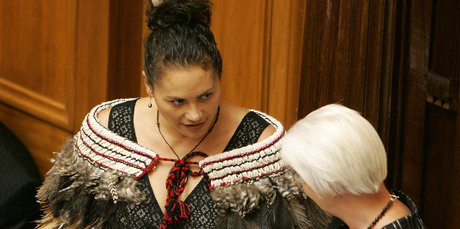
WELLINGTON, New Zealand — New Zealand lawmakers overwhelming supported a gay marriage legalization bill this week that the bill’s sponsor said was inspired, in part, by U.S. President Barack Obama.

In its first of several votes, New Zealand Parliament overwhelmingly approved MP Louisa Wall’s gay marriage bill, which she said was partially inspired by U.S. President Barack Obama’s public support of the issue. (Photo Courtesy of The New Zealand Herald)

Parliament voted 80 to 40 after the bill’s first reading, well more than the simple majority needed to ensure a second vote.  Three votes are needed before the bill becomes law.

“I think the catalyst was around Obama’s announcement,” the bill’s sponsor, Labour MP Louisa Wall, told the Associated Press, referencing Obama’s declaration in May supporting gay marriage in the United States.  “Then obviously our prime minister came out very early in support, as did the leader of my party, David Shearer.  The timing was right.”

If the law ultimately passes, then New Zealand would become the 12th country to recognize same-sex marriage since 2001.  Recent polls show roughly two-thirds of New Zealanders support gay marriage.

But some political leaders cautioned observers that the vote was not an accurate reflection of the population.

Colin Craig of the Conservative Party indicated some MPs might not have done enough to get the views of their constituents.

“My biggest concern is the MPs who are just not consulting with their electorates at all,” Craig told Newstalk ZB.  “They’re being swayed by those who lobby with them directly, and we see that as a key point in terms of going forward on this one.”

Indeed, New Zealand media reported switches of support before the vote.  The New Zealand Herald reported that some of the significant turnarounds were National MP Paul Hutchison, who the day before the vote told the Herald he would oppose the measure; Labour MP David Clark, a former Presbyterian minister who was unsupportive of marriage equality a year ago; and, ACT MP John Banks, who was quoted as describing the gay marriage bill “evil” and its potential passing as a “sad and sickening day.”

Labour MP Phil Twyford explained to the Western Leader that it took him a month of talking with voters before he could reach a decision on how to vote.  Ultimately, he said the choice came down to doing “the right thing.”

“While there were differing views on the bill and some people have strong feelings, I believe the community on balance is ready to support the measure,” he said.  “I have been heartened to hear so many people express the view that all New Zealanders should have every chance in life regardless of color, sex, where they grew up, what school they went to, or who they choose to love.”

Still, opponents hope to stop the bill from becoming law.  Family First, a conservative lobby group, helped organize a petition drive that received signatures from 50,000 people against the measure.  The group’s founder, Bob McCoskrie, said government should not redefine marriage when civil unions suffice.

“Equality doesn’t mean sameness,” he told the Associated Press.  “Marriage has always been about the relationship of a man and a woman because of their natural potential to have children.”

For further information, please see:

The Western Leader — MPs Back Gay Marriage — 31 August 2012

The New Zealand Herald — NZ ‘Gayest Place on Earth’? — 30 August 2012

The Huffington Post — New Zealand Gay Marriage: 1st Stage of New Law Passed — 29 August 2012

Newstalk ZB — Day Has Arrived for Govt Vote on Gay Marriage — 29 August 2012