Report on Extrajudicial Killings of Children
Report on Extrajudicial Arrest and Torture
Report provided by:
Report on Extrajudicial Killings of Children
Report on Extrajudicial Arrest and Torture
Report provided by:
Press Release
World Affairs — 2 August 2012

Two days before leaving for the August recess, the leaders of the US House of Representatives announced that the two interconnected Russia bills—the extension of permanent normal trade relations (PNTR) and the Sergei Magnitsky Rule of Law Accountability Act, which proposes to sanction Russian human rights violators by denying them US visas and freezing their US assets—will not be considered on the floor until September and, most likely, until the lame-duck session after the November election. One of the key reasons, according to several sources on the Hill, is the unwillingness of some Republican lawmakers to extend PNTR, which they consider “a gift to Vladimir Putin.” Rep. Ileana Ros-Lehtinen, the chairman of the Foreign Affairs Committee, suggested that PNTR would constitute “yet another concession to a regime that abuses the human rights of its citizens,” urging her colleagues to pass the Magnitsky Act on its own.
The reality is that the Magnitsky Act, opposed by the White House (in unison with the Kremlin) from the very beginning, can only become law if connected with PNTR. The choice, in this case, is both or neither. PNTR would not represent any kind of “gift” or “concession” to Putin. Russia is set to join the World Trade Organization on August 22nd regardless of what the US Congress does. After that date, the only ones who would be hurt by the lack of PNTR with Russia are US exporters. Furthermore, the retention of the 1974 Jackson-Vanik amendement, which deals with the (non-existent) emigration restrictions in the (non-existent) Soviet Union, does not in the least bother the Kremlin leaders. In fact, it allows them to portray the US as “anti-Russian” for maintaining sanctions that are no longer relevant.
What would be a gift to Vladimir Putin is the failure to pass the Magnitsky Act—a bill that directly addresses the very real (and very grave) problems with the rule of law in today’s Russia, and which establishes much-needed personal accountability for Kremlin officials complicit in corruption and human rights violations. The nervous reaction from Moscow shows beyond doubt how afraid the Putin regime is of this bill becoming law. In fact, Yuri Ushakov, Putin’s foreign policy adviser, has publicly stated that, given this choice, the Kremlin would prefer to keep Jackson-Vanik. Conversely, the leaders of Russia’s democratic opposition (including Boris Nemtsov, Mikhail Kasyanov, and Garry Kasparov) have publicly advocated replacing the 1974 amendment with the Magnitsky Act. As Nemtsov and Kasparov argued in a recent article, “replacing Jackson-Vanik with [Magnitsky] would promote better relations between the people of the US and Russia while refusing to provide aid and comfort to a tyrant and his regime.”
The time is running out. Delaying consideration of the PNTR/Magnitsky package increases the likelihood not only of a lack of place on the legislative schedule, but also of a post-election White House veto. It would be ironic if those who do not want to provide any “concessions” to Putin would hand him the greatest victory of all.
Newsflash Update
On Thursday evening, House Majority Leader Eric Cantor (R-VA) issued the following statement:
“Upon our return from the August constituent work period, the House is prepared to take up under suspension of the rules a bill to extend Permanent Normal Trade Relations (PNTR) to Russia, combined with the Sergei Magnitsky Rule of Law Accountability Act, should the Senate and President commit to support passage before the end of September.”
By Vicki Turakhia
Impunity Watch Reporter, Africa
KAMPALA, Uganda – The deadly Ebola outbreak is sweepings its way across Uganda. The fast acting disease has taken the life of a 3-month-old girl, at her funeral 15 others contracted the disease, 11 which have died.
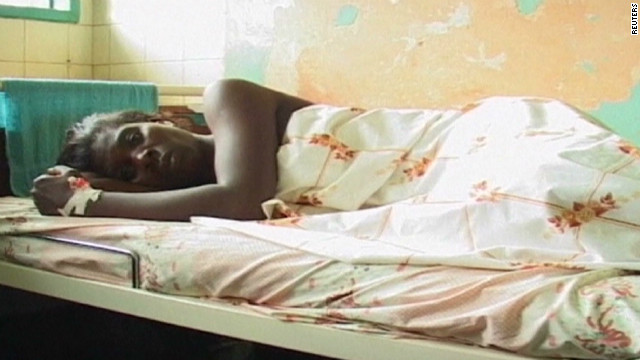
According to the U.S. Centers for Disease Control (CDC) diagnosing someone who has Ebola can be difficult because the early symptoms are similar to other more common and less dangerous diseases. The fatality rate for Ebola is 65%, requiring most people to be in a strong, healthy condition in order to survive.
Police intervention has become necessary to prevent hostility among Ugandan citizens. Ugandan officials have asked that anyone who is suspected of dying from Ebola not be buried, instead officials should be contacted immediately so actions can be taken to prevent the further spread of Ebola.
Some Ugandan people are fearful of the treatment and the hospital stay. One patient ran away from the hospital and was tracked down, now the concern becomes who the patient may have come in contact with and if the disease has spread to those people.
There was a month delay in identifying the outbreak because there was a belief in the community that there was a curse. This delay prevented any early detection and prevention.
However, the World Health Organization (WHO) has not recommended any travel nor trade restrictions for Uganda. Instead, there is an advisement to refrain from public gatherings. Over 250 schools are closed in Uganda as well as markets and public gatherings.
An additional difficulty in combating the spread of Ebola has been the shortage of healthcare workers. Uganda has only 56% of the healthcare worker positions in the country filled. Other healthcare workers are frightened after seeing colleagues pass away.
Some health centers do not have the vital supplies to protect from Ebola and have been unable to provide the full healthcare needed to patients. Food shortages have also been present in Uganda this year.
The hospitals do not have enough money to feed the patients, but arrangements are being made to provide for them. Such as the $1 million dollar reserve fund that Uganda keeps for emergencies, decisions are being made now about the use of the reserve.
For further information, please see:
All Africa – Uganda: Containment Worries As Ebola Numbers Rise – 2 August 2012
All Africa – Uganda: Ebola Claims Four More At Kagadi, Mulango – 1 August 2012
CNN – Ugandan officials, international experts tackle Ebola outbreak that’s killed 14 – 1 August 2012
Huffington Post – Ebola Virus Uganda Outbreak: What is it? – 30 July 2012
Yahoo – Ebola was spread widely at funeral of first victim – 2 August 2012
By Karen Diep
Impunity Watch Reporter, Asia
BEIJING, China – On August 9th, Gu Kailai’s murder trial will begin in the eastern city of Hefei. Ms. Gu, the wife of former Communist Party member, Bo Xilai, will face a jury for the alleged murder of British businessman, Neil Heywood.

In early April, authorities arrested Mr. Gu and last week, prosecutors charged Ms. Gu with intentional homicide. If convicted, Ms. Gu may face the death penalty.
On November 15, 2011, Mr. Heywood was discovered dead in his hotel. Chinese authorities allegedly quickly categorized his death as overconsumption of alcohol. Furthermore, Mr. Heywood’s body was cremated without an autopsy.
Prior to his death, Mr. Heywood resided in China for over a decade with his Chinese wife. Moreover, he consulted with various companies, including a company founded by former MI6 agents, Britain’s secret intelligence service.
When Wang Lijun, Mr. Xilau’s long-time lieutenant, sought political asylum last February at a U.S. Consulate, suspicion arose. According to CNN, Mr. Lijun feared for his life because he was holding incriminating information against Mr. Xilau, the former Communist Party chief.
Mr. Wang had previously headed Mr. Xilau’s campaign against organized crime. However, after Mr. Wang voiced that Mr. Heywood might have been poisoned during a business dispute with Ms. Gu, trouble between the two ignited.
According to The Telegraph, Ms. Gu poisoned Mr. Heywood after he allegedly threated her son. Mr. Heywood and Ms. Gu’s son purportedly clashed over their “economic interests.” Fearing for her son’s safety, Ms. Gu, with her house aid, who is also facing the jury, poisoned Mr. Heywood.
A UK Foreign Office spokesman reassured that Britain is dedicated to finding justice for Mr. Heywood’s family. “The details of the ongoing investigation are a matter for the Chinese authorities,” shared a Foreign Office spokesman last week. “However, we are glad to see that the Chinese authorities are continuing with the investigation. We are dedicated to seeking justice for him and his family and we will be following developments closely.”
For more information, please see:
Telegraph News – Gu Kailai poisoned Neil Heywood ‘after he threatened her son’ – 05 Aug. 12
BBC – Heywood murder: China sets Bo Xilai wife trial date – 04 Aug. 12
CNBC – China to hold Gu Kailia muder trial on Aug 9: sources – 04 Aug. 12
CNN – Murder trial starts next week for Chinese politician’s wife, friend says – 03 Aug. 12