SA Constitutional Court Prohibits Extradition of Individuals at Risk of Death Penalty

By Ryan Aliman
Impunity Watch Reporter, Africa

 PRETORIA, SOUTH AFRICA – In a landmark decision, the South African Constitutional Court ruled, on Friday, 27 July 2012, that any person living in South Africa accused of offences abroad cannot be extradited or deported to a country that allows the death penalty unless that country provides written assurance that the accused will not be executed.


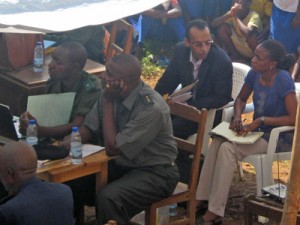
South African Constitutional Court decides on the Phale and Tsebe case. (Photo Courtesy of Eyewitness News)

The Constitutional Court in Johannesburg rejected an appeal brought by the government in an attempt to overturn an earlier ruling that any transfer of Batswana nationals Jerry Phale and Emmanuel Tsebe to Botswana without prior assurances that the death penalty would be unlawful.

The highest Court’s ruling applies to any extradition or deportation case that puts an individual at risk of the death penalty.

Both Phale and Tsebe were wanted in Botswana for murder — an offense punishable by death. To escape prosecution, they fled to South Africa illegally. Upon notice of their illegal status, South Africa’s Department of Home Affairs sought to deport them.

If extradited, the two men were likely to face the death penalty.

Both Phale and Tsebe were included in the judicial process and decision despite the fact that Tsebe had already died before the Court could render a verdict. This was because both his lawyers and the state wanted the original application to be heard.

In the ruling, Justice Edwin Cameron reasoned, “when the constitution was adopted in 96 we as a nation chose a path to create a new society based among others the values of human dignity and the advancement of human rights and the court holds that handing over someone to a state will be a breach of the state’s obligation.”

The South African government voiced concerns over the ruling. The government was highly concerned that South Africa could be perceived “as a safe haven for illegal foreigners and fugitives from justice”. Acting Justice Zondo said that the situation would not arise “if countries seeking an extradition of someone in Mr. Phale’s position would be prepared to give the requisite assurance”.

Meanwhile, Amnesty International Africa Deputy Director Noel Kututwa said that the Constitutional Court’s decision is meant to exemplify to other states who have abolished the death penalty that they cannot simply “wash their hands” of their possible contribution to death sentences elsewhere. “Under international law, an abolitionist state is absolutely prohibited from forcibly transferring a person, who could be subject to the death penalty, to a retentionist State, unless reliable assurances have been obtained which effectively eliminates that risk,” Kututwa added.


For further information, please see:

Amnesty International – Landmark Legal Ruling says South Africa Cannot Deport People at Risk of Death Penalty – 30 July 2012

East Coast Radio – Concourt Upholds Death Penalty Ruling – 27 July 2012

Eyewitness News – Death Penalty Ruling Welcomed – 27 July 2012

Business Day – Top Court Clamps Down on Extradition to Death- Penalty Countries – 27 July 2012

SABC News – Two Botswana Citizens won’t be Deported – 27 July 2012
Syrian Revolution Digest – Tuesday 31 July 2012

The Mother of All Transitions Looming!

… But into what exactly? As deadly battles rage on throughout the country, and the international community continues to differ any decision on intervention to some undermined point in a seemingly mythical near future, in the hope that the situation will miraculously work itself out, somehow, while, somehow, producing all the “right” results, Syria’s myriad opposition groups and coalitions are now rushing headlong to form myriad competing transitional governments, each armed with its own detailed transitional plan. Moreover, we now have the Americans and the Germanscompeting to take credit for helping some in the Syrian opposition form a transitional plan in what was supposed to be an exercise wholly-owned by the Syrians! But initial suppositions change, I guess, especially when the Americans and the Germans need to show that they are doing something at a time when they are doing absolutely nothing. Meanwhile, the killing, the pounding of cities, the cold-blooded massacres, continue, unfettered, unabated, unrelenting. Oh, this will be the Mother of All Transitions all right. But again, into what exactly?

Tuesday July 31, 2012

Today’s Death toll: 86. The Breakdown: 24 in Damascus and Suburb, 19 in Aleppo, 13 in Idlib, 11 in Homs, 10 in Deir Ezzor, 7 in Daraa and 1 in Lattakia.

Cities & Towns Under Shelling: Harasta, Arbeen, Moadamiah, Harran Al-Awameed, Ain Terma, Zabadani, Madaya, Eltal, Dmeir, Hameh, Yelda, Rankous, Qarrah (Damascus Suburbs), Sit Zeinab, Al-Qadam, Midan, Al-Hajar Al-Aswad, Yarmouk, Kafar Sousseh, Mazzeh, Qaboun, Barzeh(Damascus City), Daraa City, Khirbet Al-Ghazaleh, Tafas, Bostra Al-Sham, Na’eemah, Mseifrah, Jimreen, Hraak (Daraa), Rastan, Talbisseh, Houla, Tal Kalakh, Al-Qusayr, Al-Hosn, Al-Ghanto, Al-Bouaydah, Old Homs (Homs Province), Hreitan, Elbab, Eizaz, Marei, Bayanoun (Aleppo Province), Haffeh, Jabal Al-Akrad (Lattakia), Deir Ezzor City, Mouhassan, Albou Kamal (Deir Ezzor Province), Kafar Zeiteh, Hawash, Shahshabo, Hama City (Hama Province), Jabal Al-Zawiyeh, Ma’rrat Al-Nouman, Saraqib, Maar Shoureen, Ariha, Kafroumah, Al-Rami, Khan Shaikhoon (Idlib).

News

Op-Eds & Special Reports

Syria’s Kurds Unite against Assad, but Not with Opposition A sudden political shift among Syria’s three million Kurds, who now control much of the country’s border with Turkey, provides an opportunity for the United States to better coordinate its policy with regional allies and to encourage the Syrian opposition to respect minority rights.

As Syrian War Drags On, Jihadists Take Bigger Role As the uprising against President Bashar al-Assad’s government grinds on with no resolution in sight, Syrians involved in the armed struggle say it is becoming more radicalized: homegrown Muslim jihadists, as well as small groups of fighters from Al Qaeda, are taking a more prominent role and demanding a say in running the resistance.

Spinmeister Ammar al-Wawi Peddles Upbeat Message of Syrian RebellionAs the Assad regime bombards Aleppo, the rebels are desperate not only to repel the military, but to shore up morale and build outside support. Ammar al-Wawi, the Free Syrian Army’s leading spin doctor, tells Mike Giglio the government is “like the walking dead.”

For besieged Syrian dictator Assad, only exit may be body bag “In his mind he is fighting against the imperialists and their pernicious allies for the people of Syria,” Lesch said. “He believes that’s his legacy. Perhaps that is the way he will want to go down.”

Syria rebels suspicious over defector’s motives Ammar Abdulhamid, a Washington-based Syrian dissident, said that while Tlass could provide valuable information, the opposition on the ground will not accept him as a leader. After so many months of “confrontations and sacrifice,” he said, “legitimate leaders of the transitional period can only rise from the ranks of the internal revolutionary movement.”

In cooperation with Impunity Watch and the Summer Institute for Human Rights and Genocide Studies in Buffalo, it’s my pleasure to announce the launch of the “I Am Syria” Campaign – an effort designed to raise awareness in the U.S. and the world regarding the revolution in Syria and the massacres perpetrated daily by pro-Assad militias and troops, highlighting the need for immediate international action. You can follow our activities on YouTubeFacebook,Twitter and our official website. Please, “Like” us and spread the word…

The Battle for Aleppo City

One of the main factors helping the rebels in their fight for the city so far is the increased number of desertions in Assad armies, while not all deserters are choosing to become defectors at this stage, but clearly, and as reports by locals who came in contact with the deserters and often provided them shelter, soldiers in Assad’s army, especially the Sunnis, are becoming increasingly aware and resentful of their role as fodder. Many are also clearly ill-fed as well as ill-informed about the situation, they don’t believe their commanders, but they don’t enough about the rebels to know if they could trust them. Many just want to go home to their families, or at least they regions.

Scenes from the Battle of Salaheddine: A MIG in actionhttp://youtu.be/Qa9fBOgOW_k The pounding http://youtu.be/x1mHxpbPhec ,http://youtu.be/WYhdp3kuZv0 , http://youtu.be/WYhdp3kuZv0 ,http://youtu.be/mTvHu2OmeEs More MIG action http://youtu.be/gd1zeql4E4o ,http://youtu.be/jtUso_U04zs Al-Jazeerah correspondent is hit during his coverage of the battles http://youtu.be/OpCnO2YtceY At end of the day, the rebels remain in control, as one of their leaders speaking from his headquarters in Salaheddine assures us http://youtu.be/WejTfY-oYVw Impact of shellinghttp://youtu.be/sBbYxgFmFx8 , http://youtu.be/ZnAdHH0Eyfo More scenes from the ballte http://youtu.be/MbDMbu4F1Wk

In order to control Aleppo City, Assad relied heavily on two Sunni clans of smugglers: Al Birri and Al Hmeideh. Today, rebels put an end to the rule of al Birri, killing and capturing many of their senior members including their top leader, Ali Zein Al-Abdeen Birri, shown here http://youtu.be/RJMiMuMUk9I Despite specific instructions from rebel leaders to refrain from summary executions, Ali and few of his commanders were executed http://youtu.be/5Pjk1sYEjuU

In Bab Al-Nayrab Neighborhood, rebels wrest control of the local police station killing everyone inside http://youtu.be/bhSMVXyA8yc The protests we hear at the end is against shooting the dead bodies in order to conserve the dwindling supplies of ammunition. The rebels lose fighters toohttp://youtu.be/gXUzTPMKQ6A Scenes from the battlehttp://youtu.be/9HXasuWYeqg

In Salihein, rebels capture and kill the local police chief, Ali Nasr, who chose to fight to the end, and drag his body in the streets http://youtu.be/V8NLDfHLyeI ,http://youtu.be/cFhbAflScWI Rebels had given the General a chance to give himself up along with his men, but he refused http://youtu.be/4cZCRJdc7QAsome of the soldiers who surrendered himself http://youtu.be/11LAIJF7vN0Rebels celebrate their victory http://youtu.be/kxvyY5tVF74 More scenes from the battle http://youtu.be/Yt3BJlZQgjY The battle started at dawnhttp://youtu.be/gXSN1q-GEbg

In Marjeh, rebels battle to “liberate” the local police stationhttp://youtu.be/WrjmsJuo1h0 , http://youtu.be/PuXlUCuVVQA

The police station in Hanano, after “liberation” http://youtu.be/IOA7ItCz3uE ,http://youtu.be/6yEzU5r8ACk , http://youtu.be/kALkZkME5HY One of the torture devices used in Hanano station http://youtu.be/17UBC-bU1NA

On July 30, head of the Aleppo Military Council, Abdul Jabbar Okaidi, toured parts of the liberated neighborhoods, Al-Shar Neighborhood, and was warmly welcomed by then local inhabitants http://youtu.be/94FIRFDvc2U ,http://youtu.be/Iy_tmXm8llE , http://youtu.be/HdYecOBc-r4 Un Monitors also paid a visit to the city and met leaders of Al-Tawhid Brigadehttp://youtu.be/__OIWNtAOJM

Other neighborhood in Aleppo city remain under the control of pro-Assad troops and militias http://youtu.be/VRVX5kiTRiQ , http://youtu.be/clhXH9KNyzw

While Aleppo City and the Rural areas to the North have come under rebel control for the most part, the regrouping process to the south continues, with the formation of a new brigade http://youtu.be/gMpU7bzIcII But more units are formed in the north as well http://youtu.be/FXO7Hj1pdq4

Other Highlights

In Damascus Suburbs, the pounding of Eastern Ghoutah Region continues:Harasta http://youtu.be/wguKbLnQGE8 tanks and helicopter gunships subject the suburb of Zamalka to heavy pounding http://youtu.be/W6xiJtVsQAA The dead line the streets http://youtu.be/2ZKXlPc5RxE , http://youtu.be/aZnTn8fb9nsSaving the injured http://youtu.be/qUulgHgTA9M In nearby Yelda, the pounding claims more lives (July 30) http://youtu.be/xVKhGfecLYw In harasta, People inEastern Ghoutah keep regrouping as they welcome more defectorshttp://youtu.be/AIFVFRNcPBY In Ain Terma, rebels fight backhttp://youtu.be/lDBkSpqvrw4 and destroy a tank http://youtu.be/a6kyiQusz_k ,http://youtu.be/smlRmHtBQAA

In Yabroud to the north, flood gave people a respite from the shellinghttp://youtu.be/6YcAJK12vy0

In Damascus City, another massacre uncovered in Al-Hajar Al-Aswadhttp://youtu.be/UuVe9hWLoRM

Sheikh Miskeen, Daraa Province: mew massacre (July 30)http://youtu.be/tAmDQIDKVms , http://youtu.be/dVkJnQWDAOk Locals say the people were burnt alive http://youtu.be/d7Pbhz-wLQ0

In Daraa City, we can see pro-Assad troops as they remove the bodies of the dead and injured from a car they hit and take them away on board their tankhttp://youtu.be/lLR_Uy0owtQ The continuous pounding of Daraa City claims more lives http://youtu.be/vAVAmswAAQQ

The pounding of Talbisseh, Homs Province, continues http://youtu.be/LPakyV-Q_Mw , http://youtu.be/sq7KZKodRwY Locals keep finding bodies in the nearby fields http://youtu.be/tPJFXa73tjM The pounding of Old Neighborhoods in Homs City continues http://youtu.be/zTkAnhgd96g In Qusayr, people the spirit of defiance alive, despite the continuing siege and poundinghttp://youtu.be/0DQJexoEKR0

The pounding of Ghneimiyeh Village in Lattakia http://youtu.be/wF68fiM2xVIAkko http://youtu.be/aoHmyxfN5ag

In Deir Ezzor Province, the pounding of the town of Mayadeen continueshttp://youtu.be/xjq73cNBRLk , http://youtu.be/jNTZyRzqfJM But defections keep plaguing Assad troops, as more of them form a new rebel unithttp://youtu.be/S0bHufMbJso Scenes from a local battlehttp://youtu.be/OKxXvCCJ2RA , http://youtu.be/xc9Dw5UOeVo

DRC Combats Sexual Violence with Mobile Gender Courts

By Tara Pistorese
Impunity Watch Reporter, Africa

KINSHASA, Democratic Republic of the Congo—Since 1996, approximately 500,000 people in the Democratic Republic of the Congo (DRC) have fallen victim to sexual violence according to United Nations (UN) estimates. Although UN members and the Security Council have condemned the sexually motivated injustice, the sufferers of these violent crimes are often stigmatized by their own communities and rarely see their attackers brought to justice.

Mobile court hears a rape case in South Kivu. (Photo Courtesy of ABA Rule of Law Initiative)

“As violence escalates in the eastern [DRC], I am deeply concerned that sexual violence is once again a pattern of the conflict,” said the acting Special Representative of the Secretary-General on Sexual Violence in Conflict, Vijay Nambiar, in a statement. “In the context of illegal activities of armed groups, serious crimes have been reported.”

A lack of funding and issues of integrity have contributed to the overall failure to bring many perpetrators of these crimes to justice in DRC. Moreover, many victims are unable to reach a police station or afford the costs of bringing a case to trial.

Specifically, in South Kivu in 2005, fewer than 142 of incidents of sexual violence faced a tribunal, although 14,200 were recorded that year. Similar failures have surfaced within DRC’s national courts, although the Ituri district boasts some progress, including ten recent rape convictions.

In an effort to curb judicial shortcomings, a project was initiated in South Kivu in 2009 whereby mobile courts travel from city to city to bring justice to the victims of sexual violence. The mobile gender courts—supported by the Open Society Justice Initiative, the American Bar Association Rule of Law Initiative, and the Open Society Institute for Southern Africa in collaboration with the Congolese government—have emphasized locally-led justice.

The project has enjoyed considerable success. Within the first twenty months of its existence, fourteen court sessions took place, 248 cases were tried, and 140 perpetrators were convicted of rape. Mobile courts have held sessions in many cities and villages from urban regions, such Baraka and Bakavu, to more remote villages, like Kamituga and Mwenga.

However, limitations on the mobile courts call their sustainability and effectiveness into question. The itinerant agencies often require staff to travel by plane and automobile very far distances and through difficult terrain to reach remote service areas. Sadly, the courts also lack funding for basic and necessary equipment and supplies, such as paper.

Mobile trials typically last two weeks, in compliance with international law requiring crimes of this nature to conclude within three months. Additionally, this timeline provides “timely redress to individual victims in communities still struggling with the chaotic aftermath of war and political upheaval,” according to Judge Mary McGowan Davis, who was recently invited to assess the productivity of the mobile courts. On the other hand, the speed of the trials and their conclusions make important components of an effective trial, such as obtaining witnesses, very difficult.

The court sessions, which are exclusively staffed by Congolese citizens, are typically made open to the public in an effort to break down the stigma surrounding victims of sexual crimes.


For further information, please see:

All Africa—Africa: Mobile Gender Courts-Delivering Justice in the DRC—30 July 2012

UN News Centre—UN Official Condemns Sexual Violence by Renegade Soldiers—18 July 2012

News 24—UN Condemns Eastern DRC Attacks—17 July 2012

Open Society Initiative for Southern Africa—Helping to Fight Impunity for Sexual Crimes in DRC—7 May 2012


Belarus Government Punishes Officials and Perpetrators for Teddy Bear Incident

By Connie Hong
Impunity Watch Reporter, Europe

MINSK, Belarus – A Swedish advertising company, Studio Total, flew a small plane across the Belarusian border and dropped hundreds of teddy bears to draw attention to violations of freedom of expression in Belarus on the country’s Independence Day, July 4. Photographer and journalism student, Anton Suryapin, now faces up to seven years in prison after posting pictures of the incident on his website.

Swedish teddy bears supporting freedom of expression in Belarus. (Photo Courtesy of Amnesty International) Swedish teddy bears supporting freedom of expression in Belarus. (Photo Courtesy of Amnesty International) Continue Reading