Case Western Reserve University School of Law and the Public International Law and Policy Group
By Ali Al-Bassam
Impunity Watch Reporter, Middle East
DAMASCUS, Syria — Fierce fighting continued in Damascus between Syrian troops and rebels for the second day in a row. According to the Syrian Observatory of Human Rights (SOHR), the clashes that occurred across the country last Sunday left 105 dead including 48 civilians, 16 rebels, and 41 soldiers.

The fighting on Monday briefly closed the highway between the capital and Damascus International Airport, which is located to the city’s south. Troops backed by armored vehicles are said to have advanced through the central neighbourhood of Midan, driving out rebels who had secured a foothold within striking distance of major state installations. The military deployment has been described as the largest one in the capital since the start of the uprising. Monday’s offensive reportedly battered several other neighbourhoods in the capital, including Midan, Tadamon, Kfar Souseh, Nahr Aisha, and Sidi Qadad.
Fighting between government and rebel forces also occurred in the town of Qatana, 20 kilometers away from the capital. Elsewhere, government troops shelled the besieged Homs districts of Khaldiyeh, Jourat al-Shiah, and Qarabees. SOHR also reported that government forces raided the city of Hama, just north of Damascus.
UN observers again visited the central Syrian village of Treimsa, where, according to SOHR, Thursday’s shelling and fighting left more than 150 people dead, including dozens of rebels. The opposition and part of the international community declared it a “massacre.” In a statement made Sunday night, the UN mission said that “more than 50 houses were burned and/or destroyed” in Treimsa, stating the presence of “pools of blood and body parts.”
On Monday, Russian foreign minister Sergei Lavrov accused the west of “elements of blackmail,” warning that the UN observer mission would not see its mandate extended later this month if Moscow did not agree to UN sanctions. Russia, which has strong ties with Syria and has vetoed several calls for foreign intervention , circulated its own draft resolution calling for the mandate’s extension but without the threat of sanctions. Mr. Lavrov said that it was “not right” to say that pressure should only be brought upon the government of Bashar Al-Assad and not on the opposition.
“We do not support Assad,” he said. “We support what has been agreed on by all sides.”
Mr. Lavrov also said it was unrealistic to expect Russia to persuade Assad to step down.
Kofi Annan, who is acting as the UN and Arab League’s special envoy for Syria, arrived in Moscow on Monday. He will meet with Mr. Lavrov and Russian President Vladimir Putin on Tuesday. Mr. Annan is expected to urge Russia to put more pressure on Syria’s leaders to begin a political transition.
UN Secretary-General Ban Ki-Moon will meet with Chinese leaders in Beijing next week. Like Russia, China has also vetoed several Western-backed UN draft resolutions. Friday is the deadline for the end of the UN observer mission’s mandate will expire.
For further information, please see:
Al Bawaba — Clashes in Damascus as Over 100 Dead Across Syria — 16 July 2012
Al Jazeera — Violence Rages in the Syrian Capital — 16 July 2012
BBC News — Syria Unrest: Second day of Fierce Damascus Clashes — 16 July 2012
The Guardian — Syria: Fierce Fighting in Damascus — 16 July 2012
By Connie Hong
Impunity Watch Reporter, Europe
MOSCOW, Russia – Last year, Human Rights Watch joined other rights groups in demanding an investigation into the murder of rights activist Natalia Estemirova. Little has been done in the past year and the group, once again, urged Russian authorities to conduct a thorough investigation, including an inquiry into possible official involvement, of her death.
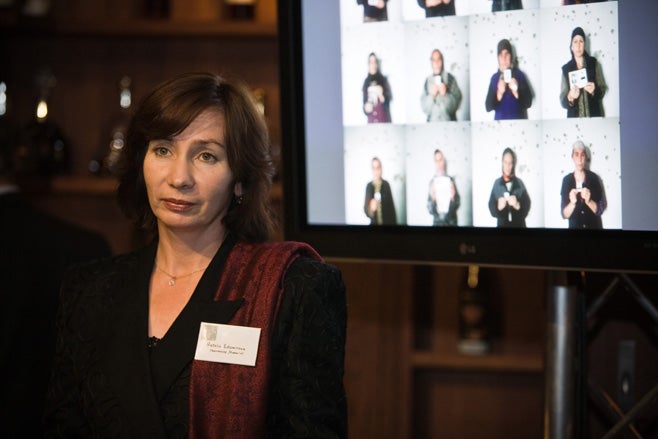
Estemirova reported on human rights abuses committed by the Chechen government, such as extrajudicial killings, torture, and enforced disappearances. On July 15, 2009, Estemirova was kidnapped outside her home in Grozny. Her body was later discovered in Ingushetia, covered with multiple gunshot wounds.
Although three years have passed since her murder, those responsible for her death have yet to be identified. Russian authorities stated that investigations are still ongoing, but believed that Estemirova’s death was likely caused by Chechen insurgents as a result of her exposing some of their crimes.
Their preliminary conclusion left both leading Russian human rights activists and Human Rights Watch unconvinced. Human Rights Watch criticized the authorities for failing to conduct an in-depth investigation that considered more plausible theories, including one that involved government officials. The group also pointed to the number of discrepancies in the evidence that the authorities have provided in order to bolster their belief that Estemirova was murdered by insurgents.
The group called the authorities to reveal and make public all the steps that were taken to examine the possibility of official involvement in the killing.
The situation for human right defenders in the region continues to worsen after Estemirova’s death. Aside from Estemirova, Maksharip Aushev, Zarema Sadulayeva, Alik Dzhabrailov, Andrei Kulagin, and Stanislav Markelov have also been slain.
In its recent statement, Humans Rights Watch expressed concern regarding the safety of other Russian rights activists and groups. It noted that the Chechen authorities have repeatedly harassed rights groups providing legal aid and assistance to victims of law enforcement abuses in Chechnya.
One rights group being targeted is the Joint Mobile Group, which sends rotating teams of human rights lawyers to Chechnya to provide legal assistance. The group was founded in response to the death of Estemoriva. Igor Kaliapin, one of the co-founders of the Joint Mobile Group, have been threatened with criminal proceedings for allegedly disclosing confidential information in his blog, articles, and interviews about cases of human rights abuses.
Human Rights Watch have called on the authorities to cease all criminal inquiry against Kaliapin, and instead, focus their investigations on the attacks and murders of other activists in the region.
For further information, please see:
Amnesty International — Russia must deliver justice for Natalia Estemirova and other murdered activists — 14 July 2012
Human Rights Watch — Russia: Bring Natalia Estemirova’s Murderers to Justice — 13 July 2012
Jurist — HRW: Russia authorities must investigate rights activist’s murder — 13 July 2012