Magnitsky’s Mother Challenges Russian Senators Over Posthumous Defamation of Her Son in DC, Russian Senator Leading Delegation to DC is Linked To Organized Crime

Press Release
Hermitage Capital

16 July 2012 – Today, Natalia Magnitskaya, mother of the late Sergei Magnitsky, wrote an open letter to Valentina Matvienko, head of the Russian Federation Council (the upper chamber of the Russian Parliament), demanding answers over the defamatory remarks made posthumously against her dead son in Washington DC last week by Russian multi-millionnaire senator Vitaly Malkin, who was previously named as “a member of a group engaging in organized or transnational crime” by the Canadian government in court proceedings.


Russian multi-millionnaire senator Vitaly Malkin. (Photo Courtesy of Forbes)

“I believe that an attempt to slander the good name of my son posthumously looks shameful and not deserving of the honorable title of people’s representative,” said Natalia Magnitskaya in her open letter to the leader of the Russia’s Federation Council (http://russian-untouchables.com/rus/docs/D524.pdf).

On the trip, Mr. Malkin and three other Russian senators met with U.S. congressmen to lobby against the passing of the Magnitsky Act, a piece of legislation which would impose U.S. visa bans and asset freezes on corrupt officials and human rights abusers. In their meetings, Vitaly Malkin and his Federation Council colleagues circulated a report defaming Sergei Magnitsky, which they claimed was the result of an official “parliamentary investigation”. The mandate of the Malkin’s report was immediately put into question by Mikhail Margelov, head of the Federation Council’s Foreign Relations Committee, who  stated that it was not “a parliamentary investigation in the accepted meaning of the word” (see further Interfax news agency http://russian-untouchables.com/eng/2012/07/senator-denies-russian-report-on-magnitskiy-case-based-on-official-inquiry/).

It has now transpired that Mr. Malkin, who led the Russian delegation to DC and lobbied against visa sanctions, had a conflict of interest due to his visa applications being repeatedly rejected by the Canadian government on the grounds of his reported links to “organized or transnational crime”, and “association with individuals involved in money laundering, arms trade and trade in Angolan “conflict diamonds,” according to court documents revealed by Canadian National Post and The Moscow Times (http://www.themoscowtimes.com/news/article/billionaire-senator-cant-get-canadian-visa/378307.html).

According to the Moscow Times, between 1994 and 2009, Mr. Malkin applied for a permanent residence permit in Canada and subsequently for a tourist visa to Canada. Both applications were rejected because of his reported links to individuals involved in organized or transnational crime.

“A visa officer told the Canadian court that Malkin was a shareholder in a company thought to have received money diverted from a debt-reduction deal with Angola. “Mr. Malkine is reported to have personally received some $48 million in the transaction,” a passage published by the court in May reads,” reported Moscow Times in 2009.

“The visa officer also noted Malkin’s association with individuals involved in money laundering, arms trade and trade in Angolan “conflict diamonds, the document say,” according to the Moscow Times.

Mr. Malkin filed a lawsuit in Canada over his entry being denied, the outcome of the proceeding is not known.

“It’s remarkable that a Russian official, who has been linked to organized crime and arms trading by a major Western government, would be sent by the Russian parliament to lobby against US legislation to ban similar types of Russians coming to the United States. It is even more remarkable that such a compromised character would have the nerve to slander Sergei Magnitsky on US soil. Mr Malkin should go back home and publicly apologize to the Magnitsky family for the disgraceful way he insulted Sergei Magnitsky’s memory,” said a Hermitage Capital representative.

During the trip to Washington Mr. Malkin made a number of public and defamatory statements about Sergei Magnitsky claiming Magnitsky was a “drunk”, “out of shape” and that he didn’t die from his injuries after a severe beating. Mr. Malkin’s report has been condemned by Sergei Magnitsky’s mother as echoing the same false accusations made by the Russian Interior Ministry officials who had tortured and killed her son in custody.

In her open letter, Ms. Magnitskaya said:

“The statements by Russian senators are identical to the misleading version of events concocted by the  investigators and prosecutors who are responsible for my son’s death. They completely ignore the conclusions of the Moscow Public Oversight Committee and the President’s Human Rights Council.”

The Russian President’s Human Rights Council concluded that Magnitsky had been arrested illegally, using a falsified report from the FSB (the Russian secret police), that Magnitsky was denied justice and was persecuted by the same investigators he had accused of a corrupt scheme to steal $230 million of budget funds, and that all attempts to investigate the role of officials in the thefts have been blocked by the Russian government.

Ms. Magnitskaya stressed that the report released by the Federation Council members in Washington was prepared secretly and that the authority of the Russian officials who presented it has not been disclosed to the public. She asked Valentina Matvienko, head of the Russian senate, to address three points:

1) Disclose which senators in the Federation Council made the decision to carry out the secret investigation into the Magnitsky case and under what authority the senators carried it out;

2) Provide Magnitsky’s family lawyer all documents that the senators claimed to have received from government bodies and the notes they drafted;

3) Disclose the budget and sources of financing of the senators’ trip to Washington.

On the trip, Mr. Malkin was accompanied by three other Russian senators: Valery Shnyakin, Alexander Savenkov, and Aslambek Aslakhanov.

“Abusing their status, these people allowed themselves to posthumously defame the memory of my son. They used the fact that my son can no longer defend himself. I ask of you as the leader of the upper chamber of the Russian parliament to give an objective assessment of the actions of these individuals,” said Ms. Magnitskaya in her letter to the leader of the Federation Council.

Mr. Malkin, head of the Federation Council’s delegation to DC, has represented the East Siberian republic of Buryatia in the Federation Council, Russia’s senate, since 2004. He is a multi-millionaire currently ranked 7th on the Forbes’ list of Russia’s richest officials, and is the 163rd richest businessman in Russia, with a net worth estimated at US$ 600 million (2012) (http://www.forbes.ru/profile/vitalii-malkin).

For further information please contact:
Hermitage Capital
Phone:          +44 207 440 17 77
E-mail:         info@lawandorderinrussia.org
Website:       http://lawandorderinrussia.org
Facebook:      http://on.fb.me/hvIuVI
Twitter:         @KatieFisher__
Livejournal:   http://hermitagecap.livejournal.com/
ECOWAS Calls on ICC to Investigate “War Crimes” in Mali

By Tara Pistorese
Impunity Watch Reporter, Africa

BAMAKO, Mali—The Economic Community of West African States (ECOWAS) has called for the formation of a Malian “national unity government” in light of present humanitarian disaster.

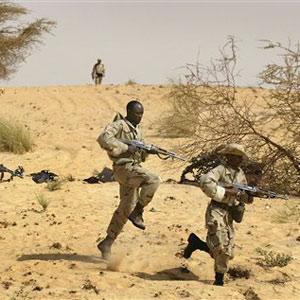
Islamists Gain Ground Against Tuareg Rebels. (Photo Courtesy of Mail and Guardian)

Led by Captain Amadou Sanogo, the National Movement for the Liberation of Azawad (MNLA), a largely Tuareg rebel group, staged a coup d’état on March 22, ousting former President Amadou Toumani Toure one month before elections were to take place. The Islamist group, Ansar Dine, meaning “Defenders of Faith,” soon joined the rebellion.

The coup was internationally condemned by the United Nations Security Council, the African Union, and ECOWAS, among others.  After facing considerable regional and international pressure, the rebels agreed to relinquish power over the area to a civilian government. However, the coup stagers have retained substantial influence in the northern parts of the country.

The instability of the current interim government, led by President Dioncounda Traore, has alarmed the international community, especially considering of the eighteen million people presently at risk of starvation and one million children facing immediate danger.

In May, President Traore sustained injuries after a group of coup supporters attacked him in his office. He has been treated in Paris, France and has not returned to Mali since the incident. The rebel alliance, too, has recently ruptured as Islamist fighters reportedly chased Tuareg rebels out of several northern towns.

Last week, Islamist fighters invaded cemeteries housing the remains of Sufi Saints of Timbuktu, a city listed on the World Heritage List by the United Nations Educational, Scientific, and Cultural Organization (UNESCO) as one of particular international significance.

The rebels, who believed the memorial to be inconsistent with Islamic law, methodically destroyed the six of the most famous tombs, an attack that may be considered a “war crime” by the International Criminal Court (ICC).

“The destruction of historical sites is outrageous,” said UN Deputy Secretary General Jan Eliasson. “Extremist groups and criminal networks are spreading rampant fear and insecurity. Weapons are being [trafficked] over porous borders.”

Earlier this month, six West Africa leaders met in Ouagadougou, Burkina Faso and, after considering the crisis in northern Mali, identified strategies for Malian authorities to implement as a “roadmap to end the crisis.”

Although leaders of the Ivory Coast, Niger, Togo, Benin, and Nigeria, attended the meeting, the interim Malian President and the nation’s Prime Minister, Cheikh Modibo Diarra, whose relations with ECOWAS have been strained, were absent. In a similar vein, a number of northern representatives walked out just prior to the opening of the meeting for unknown reasons.

While some blame the President’s nonattendance on the attack suffered in May, others believe his failure to report had more to do with his perceptions of Mali.

In addition to the formation of a new regime, ECOWAS and the United Nations (UN) has urged Malian leaders to end the political strife in Mali by July 31, before the Ramadan Muslim month of fasting. According to ECOWAS, failure to do so will result in Mali’s suspension from sub-regional groups and forfeiture of ECOWAS recognition.

Furthermore, ECOWAS has encouraged President Traore to request the deployment of ECOWAS forces to restore order to the area. ECOWAS has approximately 3,300 troops ready to enter the conflict zone.

“[The leaders] are asking the ICC to proceed with necessary investigations to identify those responsible for war crimes and to take the necessary action against them,” read a statement issued by ECOWAS.

However, in a telephone conversation from an undisclosed location in northern Mali, a representative told Al Jazeera that Ansar Dine did not recognize either the UN or the ICC.


For further information, please see:

Xinhuanet—Leaders at AU Summit Express Deep Concern with Crisis in Mali, DR Congo—15 July 2012

Al Jazeera—ECOWAS Call on ICC Over “War Crimes” in Mali—7 July 2012

BBC News: Africa—Mali Interim Government Urged by ECOWAS—7 July 2012

Raw Story—West African Presidents Urge War Crimes Probe in Mali—7 July 2012

Peru Launches Project to Fight Child Labor

By Heba Girgis
Impunity Watch Reporter, South America

LIMA, Peru—Manuel is one of many young Latin American boys who wake up around four in the morning to help his family with the harvest before setting off for an hour-long walk to school. Manuel is one of 215 million children around the world who faces this type of lifestyle—sometimes he doesn’t go to school at all.

According to International Labor Organization, About 2 Million Children Work in Peru. (Photo Courtesy of BBC)

In Latin America, one in ten children and adolescents work like young Manuel, and mostly in agriculture. The majority of them grow up in poverty, and while this problem percolates throughout Latin America, the International Labor Organizations notes that it is the most serious in Peru. In Peru, about 28% of children have a job—often in dangerous jobs such as mining and construction.

Last week, on Wednesday July 11, 2012, Peru’s labor ministry announced a $13 million project to improve access to education in rural areas of the country. The $13 million grant given by the United States will also help parents by augmenting their incomes and crop yields so that they become less dependent on their children for labor.

United States Ambassador to Lima, Rose Likins, welcomed the grant and said, “This pilot project will speed up the reduction of child labor, encouraging girls and boys to go, and stay, in school.” She also noted that education is the key to ending the cycle of poverty in Peru.

This Project will fund training and assistance for rural families to increase incomes without the use of child labor and expand opportunities for vocational training for Peruvian children. The Project also aims to help at-risk communities to partner with government institutions to organize and improve public services.

The Project Director, Maro Guerrero, said that the project may not end child labor altogether, as Peru is not opposed to children working, however, their work should not interfere with school and should never involve dangerous activities.

Some children and young adults oppose this Project, arguing that it will take away their right to work. Peruvian children have worked in the fields since Inca times, and Manthoc, a Peruvian organization representing child workers, believe this tradition should continue as part of the normal development of the Peruvians.

The Peruvian government hopes to persuade rural families not to send their kids to work. Government officials know that it will not be easy unless they can improve income and employment opportunities for the millions of Peruvian who live in poverty.


For further information, please see:

The Guardian – Peru Takes its First Step in the Eradication of Child Labor – 16 July 2012

Angola Press – Peru Launches Project to Fight Child Labor – 12 July 2012

International Business Times – Peru Launches Anti-Child Labor Project With $13M US Grant – 12 July 2012

BBC News – Peru Launches Project to Fight Child Labor – 11 July 2012


Graffiti Activist, Muhammad Jameel Rahmah, Killed for Work Criticizing Assad

Jameel was born in 1995 in Al-Qaboun neighbourhood in Damascus. He lived in an ancient small Arabic house facing the neighborhood’s water tank.

Activist Jameel works on one of his slogans in the streets of Damascus. (Photo Courtesy of Syrian Network for Human Rights)

Jameel was the breadwinner for his family, including his mother and three younger sisters.  His father passed away in 2010, so Jameel was forced to work to meet the needs of his family.

Just like many free Syrians, Jameel called for freedom, justice and dignity.  He participated in all the demonstrations in the Al-Qaboun neighborhood in Damascus.  He contributed to the revolution by writing sings and banners that condemned despotism, injustice, corruption, and the fact that the wealthy of the country steal from the poor.  He left his job to focus solely on his activism; fully dedicating his time, efforts and strength to the revolution against injustice and aggression.

Having investigated and detected Jameel’s activities and contributions to the revolution, particularly within the media, Syrian Air Force Intelligence detained him on 22 July 2011.  He was detained for a total of 115 days.  Upon his release, he told of his experiences, including the different types and methods of torture he was subjected to at Air Force Intelligence detention facilities.   This included electricity shocks and tying him to a car tire.  There was also psychological torture such as leaving him in isolation for long periods of time, public humiliation, and denial of food and water.

Despite the varying means of torture used on him, Jameel’s activist spirit was not quelled.  He returned to doing his graffiti with even more energy and vigor than before.  His main mission, for which he was killed for, was spraying the walls of the neighborhood with graffiti that called for justice, freedom and the toppling of the regime of dictatorship and slavery.  He was clearly seen as a threat to Assad’s intelligence agencies because of his inflammatory artwork decorating walls all across the Damascus’ neighborhoods.

This video shows Jameel, writing one of his slogans.  These include phrases like: “Freedom forever whether you like it or not, Assad;” “Bashar, You Are Going to Be Ousted;” and “Syria is Free.”

On the morning of 6 July 2012, while Jameel was writing anti-regime graffiti, calling for the downfall of Assad and bringing freedom for Syria, he was killed by a gunshot from Assad’s security forces.  He died carrying the sprayer he used to call for freedom.

The body of Jameel is readied for burial and transport to the mosque.

Information and videos contained in the report provided by:

Syrian Network for Human Rights

Damascus Center for Human Rights Studies in Syria

Al-Qaeda Suicide Bomber Kills 10 Police Cadets

By Melike Ince
Impunity Watch Reporter, Middle East

SANAA, Yemen – Ten police cadets in Yemen’s capital of Sanaa were killed in a suicide bombing allegedly carried out by a member of al-Qaeda.

The aftermath of a suicide bomber's attack on cadets in Sanaa, Yemen. (Photo Courtesy of Al Jazeera)

On Wednesday, reports came in that the cadets were leaving their academy after class for a weekend with their families when the bomber threw himself into the crowd and detonated the explosives attached to his body.  At least fifteen people were wounded in the attack.  Authorities stated that the bomber died from severe injuries shortly afterwards.  Those who witnessed the aftermath detailed the deadly scene that ambulances rushed to.

“We ran to the place and found dozens of cadets covered in blood. Blood was everywhere. The scene was horrific,” said police official Fadel Ali.

According to security officials, twelve suspects were originally arrested in connection tothe attack.  The government released the attacker’s name as Mohamed Nasher al-Uthy, but later retracted that statement and announced that the body had not yet been officially identified.  The family of the man accused stated that al-Uthy was a driver who routinely drove cadets home and had no affiliation with al-Qaeda.  Opposition parties claim that this “mistake” was done to undermine the new regime by those in the government who maintain loyalty to former President Ali Abdullah Saleh.  President Abed Rabbo Mansour Hadi, who took office after the uprisings that ended Saleh’s three decade rule, has launched an investigation into the attack.

Al-Qaeda has claimed responsibility for the bombing.  The organization, which is particularly prevalent in the southern tip of the Arabian Peninsula, has been known to target security forces in the past and has been labeled the global terror movement’s most dangerous group.  In May, another al-Qaeda suicide bomber killed more than ninety people in a military establishment during a rehearsal for a parade.

The weakening of the government’s rule during the Arab Spring uprising allowed the terrorist organization to take certain territories that would later be turned over following US-backed attacks.  The militants have vowed to attack areas all across Yemen in retaliation for the continuing offensive on their strongholds.

For further information, please see:

Yemen Online – Yemen President Launches Investigation into Cadet Attack – 14 July 2012

BBC News – Yemen Attack Deadly Bombing at Sanaa Police Academy – 11 July 2012

Al Jazeera – Deadly Bombing at Yemen Police Academy – 11 July 2012

The Washington Post – Suicide Attack on Yemeni Police Cadets Kills at Least 10; Government Blames Al-Qaeda – 11 July 2012