American Red Cross Chapter Holds War Simulation “Raid Cross” to Educate Youth

By Eric C. Sigmund
Legal Advisor, International Humanitarian Law Dissemination, American Red Cross NHQ

Washington, DC – On June 25, 2012, the District of Columbia Chapter of the American Red Cross held a war games simulation called Raid Cross to educate children about international humanitarian law.  This body of law, also referred to as the “laws of war” or “laws of armed conflict,” is the body of law which applies during armed conflicts and limits the means and methods of warfare.  The Raid Cross this year consisted of 25 youth volunteers between 13 and 18 years of age.  The interactive event teaches young citizens the importance of preserving human dignity in times of conflict.
Featuring seven different stations, Raid Cross placed youth volunteers in simulated combat situations to provide an experience of some of the hazards that exist in conflict zones.  As the volunteers began the half-day activity they were asked to assume the roles of soldiers or medics in the “Haddarian Army,” or humanitarian aid workers for the Red Cross.

The soldier participants were placed in the position of a commander, forced to make tough choices about whom to target in battle.  Playing the role of medics, youth participants were asked to decide to whom they would provide critical medical assistance after an intense battle.  Those assigned to be humanitarian aid workers attempted to dodge a sniper (armed with a water gun), who indiscriminately shot at volunteers, as they sought to deliver aid to soldiers in distress.  These were just three of the thought- provoking wartime scenarios in which the volunteers participated.  At the end of each station, the participants were debriefed about their performance and the laws of war applicable to each situation.

Raid Cross is one of a number of unique educational tools utilized by the American Red Cross to spread awareness about international humanitarian law.  Under Article 47 of the first Geneva Convention, all nations party to the treaty are required to educate both their military and citizenry about the laws of armed conflict.  Within the United States, the duty of educating the public has been assigned to the American Red Cross.

By the end of the simulation the youth volunteers were familiar with the rules and principals of international humanitarian law.  They had also experienced the task of making difficult decisions quickly that were still in accordance with the laws.  Armed with this knowledge of the law, the volunteers were encouraged to think critically and strategically about the current conflict situations existing around the world and to become more global citizens.  Educating the public through fun and interactive programs, like Raid Cross, the American Red Cross continues its mission to spread awareness about armed conflicts and the need to protect vulnerable populations under the law.

For additional information about this event and other international services contact your local Red Cross chapter or email Eric Sigmund at eric.sigmund@redcross.org.


For further information, please see:

Leesburg Today – Teens Hit Paintball Course for Mock Militia Games – June 26, 2012
The Magazine of the International Red Cross and Red Crescent Movement – Raid Cross – Are You Game? – Feb. 26, 2006
Russian Government Facilitates Lobbying by Convicted Criminal Klyuev Against Magnitsky Sanctions at the OSCE Parliamentary Assembly in Monaco

Press Release

8 July 2012 – Dmitry Klyuev, convicted in 2006 for a $1.6 billion attempted fraud, and lawyer Andrey Pavlov, who were shown to be central to $800 million of successive frauds against the Russian treasury uncovered by the late Sergei Magnitsky, both attended the OSCE parliamentary assembly in Monaco today in order to lobby against the Magnitsky sanctions. Their participation was facilitated by members of the official Russian delegation.

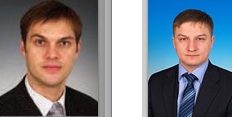
In order to gain access to the OSCE parliamentary assembly facilities, two members of the Russian delegation gave their badges and escorted Klyuev and Pavlov to the OSCE Convention Center at the Grimaldi Forum in Monaco. The Russian officials helping Klyuev and Pavlov’s attendance at the OSCE assembly were Gleb Reshetnikov, secretary of the Russian delegation to the OSCE Parliamentary Assembly (gleb@duma.gov.ru), and Ilya Kostunov, a deputy of the Russian Duma (http://www.duma.gov.ru/structure/deputies/131106/).

Gleb Reshetnikov (L) and Ilya Kostunov (R) helped Klyuev gain access to the OSCE parliamentary assembly.

“It is remarkable that Russian officials would advocate for convicted felon and his partner shown to have stolen $800 million from Russian people and involved in crimes that Sergei Magnitsky discovered for the exposure of which he was killed,” said a Hermitage representative.

Russian Duma deputy Ilya Kostunov who assisted Klyuev and Pavlov in Monaco is a former activist of Nashi youth movement, which is an organisation involved in attacks on Russian opposition figures and foreign diplomats. Most recently, in June 2012, Ilya Kostunov initiated an attack on Alexei Navalny, a prominent Russian blogger, over his anti-corruption work.

The details of the serial $800 million thefts and role played by Klyuev, Pavlov and his associates were revealed last month in “The Magnitsky Files,” an 18-minute movie shown in Washington by U.S. Senator John McChain and Freedom House David Kramer, and which is now available on Youtube (http://www.youtube.com/watch?v=mL9b5LP4Ubc)/.)  Over 280,000 Russians have watched it in the first week since its release.  The movie shows a pattern of joint trips by Russian government officials, Klyuev and Pavlov to Dubai, United Kingdom, and Cyprus after various crimes were committed.

Summarising the links between Russian government officials, Klyuev and his associates, U.S. Senator John McCain called on President Obama to proscribe the Klyuev group as a “transnational criminal organisation” and introduce targeted economic sanctions.

“Public information, much of it uncovered by Mr. Magnitsky himself before his arrest in Russia in 2008, suggests that the Klyuev Group has colluded with senior Russian officials to engage in bribery, fraud, embezzlement, company thefts, and other serious financial crimes…Activities of the Klyuev Group appear to put the U.S. and international financial systems at serious risk of abuse,” said Senator McCain (http://www.scribd.com/doc/98337177/Untitled).

“I write to you today to request that you begin a process to determine whether to designate and impose sanctions, under the Executive Order 13581, against a dangerous transnational criminal organization known as the “Klyuev Group,” said Senator McCain in the letter.

Sergei Magnitsky, a 37-year old Russian lawyer who was investigating the money laundering by the KOCG, was falsely arrested, tortured and killed in police custody two and a half years ago. His killers have not been brought to justice in Russia.

The theatrics of swapping badges with the government officials for Klyuev and Pavlov to get access to the OSCE Parliamentary assembly was unnecessary. According to the communications director for OSCE PA Neil Simon:

“The annual session is open to the press and the public.”


For further information please contact:

Hermitage Capital

Phone:             +44 207 440 17 77
E-mail:             info@lawandorderinrussia.org
Website:          http://lawandorderinrussia.org
Facebook:        http://on.fb.me/hvIuVI
Twitter:            @KatieFisher__
Livejournal:     http://hermitagecap.livejournal.com/

Press Contact for OSCE PA:

Neil Simon
Director of Communications
OSCE Parliamentary Assembly
+45 60 10 83 80
neil@oscepa.dk
www.oscepa.org

Syrian Network for Human Rights and Damascus Center for Human Rights: June 2012 Casualty Report

The following crimes reported were all carried out by the Syrian regime forces during the killing campaign they launched on unarmed civilians.  June is considered to be the bloodiest month, with at least 2,336 confirmed dead.  This includes 203 children and 225 women.  It averages out to roughly80 people per day.  The statistics from June show that Syrian citizens have been subjected to the gravest violence at the hands of the army and security forces. The Syrian regime perpetrated a large number of massacres, in various Syrian governorates, and harvested the lives of dozens.

The enclosed link includes the documentation of most of the victims’ names, location, photos and videos.  The diagram also illustrates their distribution throughout the duration of the Syrian revolution.  Another diagram shows their distribution in Syrian governorates.  We have been able to document 2,336 victims in June 2012 including:

203 children
225 women
64 killed under torture
151 military personnel

The link below includes the full report of all the names of civilian and military victims as well as most available details for each case. The first few pages include diagrams showing the distribution of victims across Syrian governorates.
http://www.syrianhr.org/Attach/June.pdf

The distribution of victims on governorates was as follows:

Damascus Suburbs: 512
Homs: 447
Idleb: 285
Daraa: 276
Hama: 234
Deir Ezzour: 220
Aleppo: 159
Lattakia: 105
Damascus: 62
Hasakeh: 13
Rakka:12
Tartous: 1
Suweida: 1
Non-Syrian victims: 3

This is the data we were able to collect through the work of more than 200 of our members stationed in different Syrian governorates.  They were able to document and verify the full name, place and time of death for each case.  It must be noted that there have been many cases where it was hard to get access to such details, particularly where massacres took place.  This is because it is standard practice during these massacres for regime forces to besiege the town and black-out all communications.  Thus, the real number of victims is likely to be much higher than recorded.  Additionally, the Syrian government denies all human rights organizations access to its territories.

SNHR and DCHRS hold Bashar al-Assad, the Syrian president and commander in chief of the Syrian army, responsible for all acts of homicide, torture, and massacres committed in Syria.  He holds the command responsibility for all of these acts.  All Syrian regime members and heads of the security and military forces, who are directly complicit in these acts, are held responsible.  Further, all the financiers and supporters of this regime, which is committing massacres on a semi-daily basis and killing dozens around the clock, are also responsible.  All these people must face severe consequences and implications stemming from these acts which they are responsible for.

SNHR and DCHR call on the Security Council of the UN and all member states to honor their moral and legal obligations by acting with the utmost urgency to undertake all necessary measures for the protection of Syrian civilians and to accelerate the process of referring all those implicated in the massacres to the International Criminal Court.

All information and data in this report provided by:
Syrian Network for Human Rights in London
Damascus Center for Human Rights Studies in Syria

Syrian Network for Human Rights: The Zamalka Massacre

On Saturday 30 June 2012 in the morning, the Syrian regime’s security forces raided the city of Zamalka in al-Ghouta al-Sharqia to the east of the Syrian capital Damascus.  They opened gunfire around 11:00 a.m., killing Abdul Hadi al-Halabi and injuring many others.

Zamalka residents then held the traditional funeral procession for the victims by marching to the Great Mosque.  Security forces then wired a bomb to a car and put it along the path that the mourners would march along.  When mourners passed by it, security forces carried out the explosion, killing at least 72 citizens and wounding 400 others in just a single minute.


A video filmed by a local that shows the car bomb blast just as the funeral procession goes by.

SNHR and DCHRS verified this information by contacting ten different local eyewitnesses.  All ten of the eyewitnesses are still alive and can be contacted by any authority or organization.  These eyewitnesses confirmed that security forces were deployed near al-Tawba Mosque where the car bomb was planted.  In addition, Zamalka Revolution Committee published news, prior to the blast, noting that many suspicious cars had entered the city and that the security forces  stationed at checkpoints had removed their uniforms and dressed in civilian clothing.

About 4,000 citizens walked in the funeral procession for the victim Abdul Hadi al-Halabi.  They marched from the victim’s home towards the Great Mosque and as they passed the al-Tawaba Mosque at 6:40 p.m. the car bomb exploded.

Security forces immediately besieged the city.   They denied medical aid for the wounded and killed a doctor, Jamal Tabranin, with sniper fire while he gave aid to the wounded. There is hard evidence that proves the Syrian regime did not give aid to the wounded rather they chased them down and killed them.  Some of the wounded were transported to the city of Kafr Batna’s hospital al-Fatih Hospital.  Security forces followed the transports, besieged the hospital and attacked both the wounded receiving medical attention and the doctors providing it.

**WARNING: THE VIDEO BELOW CONTAINS GRAPHIC IMAGES**

A video showing the wounded and dead inside a makeshift hospital immediately following the blast.  The wounded are given treatment using only basic medical tools and without the basic necessities like sanitized areas to perform medical operations.  Residents of Zamalka refuse to transport them to public or private hospitals because regime forces have threatened to arrest and kill them.

By a field visit to the site of the crime and by contacting relatives of the victims, SNHR & DCHRS have verified and documented the names of 72 victims killed in the blast.  SNHR & DCHRS notes that there are lost citizens whose whereabouts have not been confirmed.  This fact makes it likely that the number of victims of the massacre will increase.

The mass burial of about 80 victims of the car bomb.


All information and videos provided by:

Syrian Network for Human Rights