THE COMMENTARY IN THIS PIECE DOES NOT NECESSARILY REFLECT THE VIEWS OF IMPUNITY WATCH.
*WARNING VIDEOS MAY CONTAIN GRAPHIC IMAGES*
Putin’s Gambit!
By Jenna Furman
Impunity Watch Reporter, Asia
NEW DELHI, India—Last Thursday the Indian Central Reserve Police Force (CRPF) killed twenty alleged Maoist rebels in the central state of Chhattisgarh.

Nineteen of the rebels died at the scene of the clash, another died shortly thereafter at a nearby hospital. Six of the paramilitary police officers were wounded in the attack.
The CRPF and the State police were undergoing a counter-insurgency operation late June 29 in dense forests located in the Maoist-dominated Bijapur district. The joint governmental forces planned to intercept a Maoist company at Silger in the Sukma district but encountered alleged Maoist rebels a mere three kilometers from their camp.
Prime Minister Manmohan Singh has described the Maoist rebels as the biggest internal security challenge facing India.
Maoist rebels are active in more than a third of India’s districts. They have been mobilizing throughout India in an attempt to form a people’s government. The Maoist insurgents fight for the rights of India’s poor peasants and laborers.
In the past two years, 1611 people have died in thousands of incidents alleged to be part of the Maoist rebellion in India.
Following the June 29 encounter, Union Home Minister P. Chidambaram praised the combined State and CRPF forces for their courage and skill in addressing the insurgency.
The Indian police stated that a large number of arms and ammunition were recovered from the area where the fire-fight began, some of which were the homemade variety of Maoist rebels. They also stated that the wounding of six of their officers provides proof enough that the encounter was not “fake” as the Opposition Congress declared three days following the incident.
Local tribal villagers have protested the police’s claim that Maoist insurgents were the victims of police fire but state that those killed were innocent villagers. Activists are calling the incident a “cold-blooded murder” of tribal villagers including women and children.
Former Delhi high court Chief Justice Sachar and other activists demanded a judicial inquiry into the alleged fire-fight between the police and Maoist rebels. Activists state that a delegation with President Pratibha Patil and Prime Minister Manmohan Singh will soon take place.
Their sentiment is echoed by Indians who have lost faith in India’s police system – a system where imagination substitutes for information, according to one police officer.
The chief of Central Reserve Police Force, K. Vijay Kumar stated, “We identified the Maoist and conveyed to the media on the same day. We have used extreme restraint.” When asked about the death of a teenage girl in the skirmish between police and alleged rebels, Kumar responded, “A bullet is gender blind, a bullet is age blind.”
A magisterial inquiry into the sequence of events surrounding the killings has been ordered.
For further information, please see:
The Hindu – Chhattisgarh Congress Contradicts Chidambaram on Bijapur Encounter – 2 July 201
NY Times – Controversy Grows in India Over Police Killing of Alleged Maoists – 2 July 2012
The Times of India – Chhattisgarh Maoist Encounter: Activists call it cold-blooded murder, CRPF denies allegations – 2 July 2012
BBC News – India Police Kill ’17 Maoists’ in Chhattisgarh – 29 June 2012
By Tara Pistorese
Impunity Watch Reporter, Africa
KAMPALA, Uganda—The United Nations (UN) and the U.S. Foreign Affairs Committee have endorsed plans to propel the hunt for Joseph Kony and neutralize the Ugandan rebel group, the Lord’s Resistance Army (LRA).

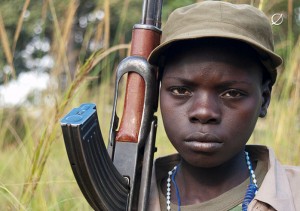
For twenty-six years, northern Uganda was victimized by atrocities at the hand of Kony and his army. After years of massacres, mutilations, and child abductions, resulting in female children becoming sex slaves and males becoming child soldiers, the United States designated the LRA a terrorist organization in 2001. Kony is currently wanted by the International Criminal Court for these human rights violations.
After 2004, most of the LRA combatants were driven out of Uganda; however, remnants of the guerilla group continued to attack Ugandan citizens and neighboring countries, including the Central African Republic and the Democratic Republic of Congo.
In March, Invisible Children, a human rights group based in San Diego, California, released “Kony 2012,” an Internet video bringing Kony and the LRA brutalities into the public eye. The organization received credit from diplomats and activists, such as Human Rights Watch, for keeping pressure on the initiative to find and prosecute Kony.
Francisco Madeira, a representative of the African Union (AU), praised Invisible Children, saying the organization “has been able to make the world know there is a tyrant in Africa who is maiming, raping, and destroying the lives of young, young Africans.”
Although one senior LRA commander was recently captured, Kony’s forces remain extremely dangerous and capable of inflicting considerable damage and suffering on the civil population, according to Abou Moussa, the Secretary-General’s Special Representative and head of United Nations Regional Office for Central America (UNOCA).
The recently approved UN Security Council plan focuses on five key strategic objectives, including, but not limited to: promoting further protection of civilians; expanding current disarmament, demobilization, expatriation, resettlement, and reintegration activities; and, coordinating a humanitarian and child protection response in the affected areas. The UN plan also aims to implement 5,000 AU soldiers in the impacted areas by next year.
Similarly, the United States House Panel approved legislation last week expanding State Department awards for the justice program, which targets the world’s most serious human rights abusers.
Currently, locating Kony, one of the program’s highest priority targets, warrants a reward of anywhere between $1-25 million. The newly approved program and legislation received bipartisan support.
But some question the delayed international response. “On the one side, we are so grateful there is this new regional program,” said Jan Egeland, deputy executive director of Human Rights Watch. “On the other side, we are now in the 26th year of the problem.”
For further information, please see:
Boston Herald—Staying Focused on the Hunt for Kony—1 July 2012
All Africa—Central Africa: Security Council Endorses UN Regional Strategy to Combat LRA Threat—29 June 2012
The Sacramento Bee—U.N. Endorses AU Force to Hunt Kony—29 June 2012
The Philadelphia Inquirer—Lawmakers Back Funding of Human-Rights Rewards—28 June 2012
By Heba Girgis
Impunity Watch Reporter, South America
SANTIAGO, Chile—On June 21, 2012, investigations confirmed that General Alberto Bachelet’s fatal heart-attack was induced by torture while he was held in captivity.

In 1973, Bachelet was charged with treason after showing support for the socialist President Salvador Allende in opposition to the military coup led by the late Augusto Pinochet. Bachelet died in captivity. Investigations as to the cause of his death were reopened by the Santiago Court of Appeals last year in 2011, along with another 700 cases of human rights violations under Pinochet’s regime and dictatorship.
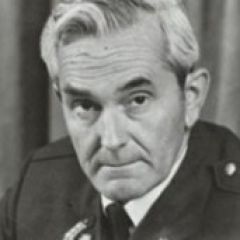
Bachelet joined the Chilean army in 1940. He served as Brigaidier General in the Chilean Air Force and also served as a Secretary for President Allende’s government. Bachelet strongly opposed Pinochet’s military coup in 1973. Because of this, he was held captive at the Air Force’s War Academy along with many of his colleagues, where they were interrogated and tortured. Bachelet’s wife, Angela Jeria, and his daughter Michelle, did not escape Pinochet’s regime. They too were tortured and held in captivity until they were able to escape to Australia where they lived with relatives.
During the investigation, a forensic study was conducted by Judge Carroza, who was assigned to study and review the complaint brought by Bachelet’s relatives alleging that he had been tortured to death. The study convinced Carroza that “all the interrogations to which General Bachelet was submitted damaged his heart and was the likely cause of death.” Judge Carroza has also been assigned to investigating the death of former President Allende himself. While a team of international experts concluded that Allende committed suicide, many of his supporters suspect that he was killed by military soldiers.
Deputy Guillermo Tellier of Chile’s Communist Party (PC), who was also detained and tortured alongside Bachelet stated that, “The information submitted by Minister Carroza on the death of the father of former President Bachelet, apart from being painful for the family, is also painful for our entire society, which must relive these atrocities every time the justice system is able to establish the truth about the fate of our countrymen.”
In the General Cemetery, in Chile’s capitol city of Santiago, stands a memorial to honor more than 3,000 people who disappeared or were executed under Pinochet’s dictatorship. It is here that Alberto Bachelet is buried and his name appears on the monument along with thousands of other Chilean victims.
For further information, please see:
I Love Chile – Investigations Confirm Bachelet’s Father Died of Torture – 21 June 2012
Merco Press – Father of Former President Bachelet Was Tortured to Death by Pinochet Dictatorship – 21 June 2012
The Santiago Times – Bachelet’s Father Confirmed Among Chileans Tortured Under Pinochet – 21 June 2012
BBC News – Chile to Probe General Bachelet’s Death Under Pinochet – 25 August 2011
By Stuart Smith
Impunity Watch, North America Desk
PORT-AU-PRINCE, Haiti- The prosecution of rape and sexual assault cases in Haiti remains alarmingly slow, with victims only rarely receiving justice, the United Nations Stabilization Mission in Haiti said in a report released June 26, 2012.

The report, conducted by the U.N.’s human rights section in Haiti in cooperation with law enforcement and judicial officials, examined 62 rape complaints filed in Port-au-Prince during a three month period in 2010, reported the ABC News. According to the report, more than a year after they were filed with police, none of the 62 complaints had gone to trial. As of December 2011, only one of the 62 rape complaints had been recommended for trial by judicial authorities, although the trial had not yet begun.
Yet, the lack of prosecution is not the only problem- so, too, is the lack of information and resources.
According to ABC News, obtaining accurate and comprehensive information on rape and sexual assault cases is difficult because there is no national database pooling data from the government, aid groups, and the U.N. Further, in part due to the 2010 earthquake, police lack the basic resources, such as computers, vehicles, and furniture, necessary to perform their duties.
Moreover, currently, the government allocates 1.4 percent of the national budget to the Ministry of Women’s Rights. Addressing these issues , the U.N. report recommended, that the government increase the funding dedicated to the ministry and other agencies helping women.
Yet, concern over rape and sexual assault cases in Haiti is not new.
According to an Amnesty International report, more than 250 rape cases were reported in the 150 days following the 2010 earthquake. A year after the earthquake, detailed the report, rape victims continued to arrive at local women’s support groups almost every other day.
“Women, already struggling to come to terms with losing their loved ones, homes and livelihoods in the earthquake, now face the additional trauma of living under the constant threat of sexual attack,” said Gerardo Ducos, Amnesty International’s Haiti researcher.
Further exacerbating the problem are allegations of rape against U.N. peacekeepers. In May 2010, a 19-year-old Haitian man accused six Uruguayan soldiers, serving as UN peacekeepers in Haiti, of raping him, reported Al Jazeera. And on March 14, 2012, a Pakistani military tribunal convicted three peacekeepers of sexually assaulting a 14-year-old boy, sentencing them to one year in jail, said an Amnesty International press release.
“For the prevalence of sexual violence to end, the government must ensure that the protection of women and girls in the camps is a priority. This has so far been largely ignored in the response to the wider humanitarian crisis,” said Ducos.
Unfortunately, the sexual violence continues today, and the government response remains woefully inadequate to combat this crisis.
For further information, please see:
ABC News — UN Report on Haiti Rape Shows Few Prosecutions — 27 June 2012
Al Jazeera — Haiti ‘rape victim’ set for court testimony — 10 May 2012
Amnesty International — Convictions against UN peacekeepers in Haiti do not serve justice — 15 March 2012
Amnesty International — Haiti: Sexual violence against women increasing — 6 January 2011