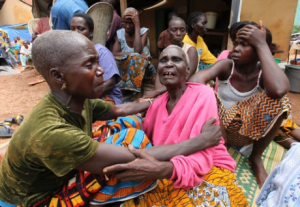
Notes From India: Harsh Realities of Sterilization Camps

Courtney Schuster
Special Contributor, Blog Entry #2

Controlling the population growth in India has become a priority for government officials.  Yet, 25% of patients seeking contraception at public health facilities are turned away.  Instead, in order to slow the population increase, government hospitals are encouraged to hold sterilization camps.  Most sterilization camps are aimed at encouraging women to undergo tubal ligation, though some also perform vasectomies on men.  All of the patients are poor and most are considered, Below Poverty Line (BPL).  Those with enough money and time, choose to visit the private hospitals.

The Indian government set certain standards for sterilization camps; those standards are similar to what exists in developed countries.  For instance there must be: a trained staff of eighteen members; clean running water, a clean operating room with surgical lighting; clean gloves and equipment for each procedure;  patients must undergo a pre-operative test during which their vitals must be monitored; and post-operative care must be provided.  The camps typically operate from 9 am to 4 pm and a maximum of thirty sterilizations can be performed in that time.  Under no circumstances are the camps to be held at school buildings.

Unfortunately,  operational sterilization camps fall extremely short of the standards written on paper.  One of the cases I have been working on involves a sterilization camp that took place in the state of Bihar.  It violated almost every standard set by the Indian government.  There was a single doctor and an unqualified staff, totaling only five people.  Between 8 pm and 10 pm, operations were performed on a total of fifty-three women.  That means that the doctor spent, on average, 2.26 minutes per woman.  The camp operated out of a school that had no running water; additionally, no water was supplied to wash hands or sterilize the equipment.  There was no blood supplies available in case of an emergency.

The women were even required to buy some of the medical equipment and bring those purchases with them to the surgery.  They  were not given sterilized clothing to wear and were administered expired anesthetics.  They did not undergo a pre-operative check up, nor were they counseled about repercussions and side effects of the operation or alternatives to surgery.

School desks were used as operating tables without any sheets or sterilization.  The only light source was a  single, dim, generator-powered light bulb.  The doctor used the same gloves for multiple procedures.  None of the womens’ vital signs were monitored during the procedure.

After the women underwent the procedure, they were placed on a straw mat and left uncovered with no bandages to protect the incision.  They did not receive any post-operative care and they were not given a sterilization certificate for their medical records.

This case is just one of the many sterilization camp cases in which HRLN is involved.  Unhygienic and poorly run sterilization camps are commonplace in India because the government is pushing states to lower their population growth rate.  In turn, state governments are pushing public hospitals to sterilize a substantial portion of the population, at any cost.  For example, in the state of, Madhya Pradesh, the goal of 3,000,000 sterilizations in one year was set by the state government.  Basic cleanliness and patient health and safety is sacrificed to meet this outrageous goal and pacify both state and federal governments.

It seems odd that family planning via sterilization operation is emphasized since less invasive forms of contraception are available.  However, these less invasive methods are rarely promoted.  Condoms, hormonal birth control, and IUD’s are almost never handed out or prescribed by doctors around India.  Perhaps sterilization camps are so popular because the monetary incentives for operating a camp (totaling 1500 rupees per sterilization) are far more appealing to doctors and health centers than achieving a long-term solution to population growth by promoting the alternative contraceptive techniques available.


Courtney Schuster is a third-year student at Syracuse University College of Law.  She is currently working as an intern in India for the summer.  She will be contributing personal blog entries throughout her internship, documenting the challenges of solving human rights issues in international settings.  


Syrian Network for Human Rights: Violations Report 14 June 2012

**WARNING: THE VIDEOS BELOW MAY CONTAIN GRAPHIC IMAGES**

Al-Houla | Homs

http://www.youtube.com/watch?v=m_CI6hdLZD8

A clip showing the body of a man who was tortured to death by regime forces.

Homs | Al-Rasten

After regime forces besiege a village for four days with shelling, a make-shift hospital is full of the victims and wounded, most of them women and children. 

Lattakia | Hama

Pro-government Shabeeha militias stop a UN international observer’s car to prevent the workers inside from reaching Al-Hiffeh and documenting the crimes and abuses being perpetrated for the fourth day in a row. 


CASUALTY REPORT

78 confirmed casualties killed by the regime on Thursday, 14 June 2012.

Damascus & Rural Damascus: 27
Homs: 19
Dar’aa: 13
Lattakia: 4
Deir Ezzor: 4
Aleppo: 3
Idleb: 2
Hama: 2
Al-Hasakah: 1
Raqqa: 1

74 confirmed casualties killed by the regime on Wednesday, 13 June 2012.

Homs: 26
Deir Ezzor: 13
Dar’aa: 8
Idleb: 7
Latakia: 4
Aleppo: 2
Damascus and Rural Damascus: 2
Hama: 10
Raqqa: 1
Qunaitera: 1

65 confirmed casualties killed by the regime on Tuesday, 12 June 2012.

Homs: 20
Aleppo: 15
Latakia: 8
Damascus & Rural Damascus: 6
Idleb: 5
Deir Ezzor: 3
Hama: 3
Raqqa:2
Daraa: 2
Qunaitera: 1

91 confirmed casualties killed by the regime on Monday, 11 June 2012.

Idleb: 34
Damascus & Rural Damascus: 15
Homs: 14
Deir Ezzor: 14
Hama: 5
Aleppo: 4
Latakia: 3
Daraa: 2

66 confirmed casualties killed by the regime on Sunday, 10 June 2012.

Homs: 26
Latakia: 9
Idlib: 14
Aleppo: 5
Damascus: 6
Daraa: 5
Al-Hasaka: 1


For further information, please see:

Syrian Network for Human Rights – Violations and Casualty Reports  – 10–14 June 2012


Human Rights Group Reports 423 Political Arrests in Cuba Last Month

By Mark O’Brien
Impunity Watch Reporter, North America

HAVANA, Cuba — A Cuban human rights organization reported Thursday that the Cuban government arrested more than 400 people for political reasons during the month of May.

Cuban police released opposition leader Jorge Luis García Pérez after U.S. leaders denounced his arrest and beating. (Image Courtesy of The Miami Herald)

The opposition Cuban Commission on Human Rights and National Reconciliation said there were at least 423 arbitrary arrests last month, part of what it calls a “disturbing” trend.

“The Cuban government has among the highest number of prisoners per 100,000 inhabitants in the world,” said activist-leader Elizardo Sanchez in the commission’s monthly report, according to Fox News Latino.

The report came less than a day after police released Cuban opposition leader Jorge Luis García Pérez amid U.S. demands for his release.

Many dissidents believe Cuban authorities arrested García Pérez because of his testimony to a U.S. Senate subcommittee about recent harassment of oppositionists in Cuba.  Police arrested García Pérez within 48 hours of his testimony, which happened via teleconference from the U.S. Interests Section in Havana.

Reports quickly surfaced that García Pérez was beaten by Cuban authorities.  According to the Wall Street Journal, “An activist who was with (García Pérez) at the jail said that police pumped pepper spray into his mouth until he lost consciousness.  He was later taken away to a detention center, and his wife was not allowed to see him for more than three days.”

Sen. John Kerry (D-Mass.) was among those denouncing the beating of García Pérez and accusing Cuba of retaliation.

“I want to be crystal clear that I strongly condemn any efforts to intimidate Mr. Perez or any other Cuban citizen into silence,” Kerry was quoted as saying in the Charlotte Observer.  “I echo the calls of my Senate colleagues, demanding an end to repression in Cuba and urging international observers to conduct and investigation into his detention.”

The Miami Herald reports criticism has grown in recent days because President Raúl Castro has increased efforts to block opposition plans to honor political prisoners on Father’s Day this Sunday.  The government has reportedly blocked cell phones of several dissidents so they cannot communicate with supporters or journalists.

“These actions highlight once again the repressive nature of the Cuban government,” said U.S. State Department spokeswoman Victoria Nuland, “particularly with regard to citizens who peacefully express opposite points of view.”

For the opposition Commission on Human Rights, however, they continue to speak out.  The group also said Thursday that the government released data on Cuba’s prison population for the first time in 50 years.  The official number of inmates stands at 57,337, but the commission estimates the total may reach 70,000.

Sanchez and his organization are calling on Cuba to open its jails to inspection by international organizations, including the Red Cross.

For further information, please see:

Fox News Latino — Commission Reports 423 Political Arrests in Cuba Last May — 14 June 2012

The Miami Herald — Speaking Truth to Cuba’s Despots — 14 June 2012

The Miami Herald — Cuban Opposition Leader Jorge Luis García Pérez Released by Police — 13 June 2012

The Wall Street Journal — Cuban Payback — 13 June 2012

The Charlotte Observer — Dissidents, US Denounce Cuba on Man’s Beating — 12 June 2012

Civil Organization’s Report Stirs Concern Over South Africa’s Deportation Practices

By Ryan Aliman
Impunity Watch Reporter, Africa

PRETORIA, South Africa — A recent report by two civil society organizations on South Africa’s immigration policies brought to light the discrepancies between the legal requirements for the deportation of migrants and its anomalous application.

Migrants waiting outside the Home Affairs offices in Johannesburg. (Photo Courtesy of Tshepo Lesole/Eyewitness News)

The findings of this report reveal that the deportation process involves an array of inconsistencies, violations and abuses consistent with other reports that have been carried out in the area over the last decade. This is despite the fact that South African law regulates the arrest, detention and deportation of illegal foreigners.

For instance, some of the undocumented immigrants were not informed of their illegal status and of their rights to contest their deportation at the time of their arrest.

The manner by which detention is conducted was found to be abusive. Detainees held in Lindela reported not going through any medical screening before detention. Data also shows a lack of access to medical services.

The report was also concerned with length of detention. According to law, detention must not last for more than 120 days. Contrary to this rule, however, it has been common practice to hold detainees for a much longer period. Several reports from legal experts described a release and re-arrest cycle of immigrants used to circumvent the 120 day maximum.

Another anomaly unearthed by the report is that the law leaves the detention of illegal foreigners on the discretion of immigration officers. The report shows that Immigration officers tend to favor detention such that suspected illegal immigrants are automatically detained as soon as they fail to provide the officers proof of their legitimate status.

South Africa receives more asylum seekers than any other country in the world with people mainly coming from Zimbabwe, the Democratic Republic of Congo, Burundi, Ethiopia, Rwanda, and Somalia to escape poverty, insecurity, and political turmoil.

The report noted that South Africa’s focus on deportation practice stretches the resources of the government to combat real criminals and creates a climate that encourages xenophobia.

“Deportations are an ineffective and an expensive policy as those deported almost always return within days,” the report said. “In a survey carried out by the civil groups, over 200 respondents out of 227 said they would return if they were deported, while 144 of them had already been deported before and returned,” it added.


For further information, please see:

IOL News – Groups Question SA Migrant Handling – 8 June 2012

News Day – Over 25,000 Zimbos Deported – 8 June 2012

SW Radio Africa – Concern Raised Over Ongoing Abuses in SA Deportations – 6 June 2012

The Zimbabwean – Over 7 000 Zimbabweans Deported From South Africa – 6 June 2012


For the report, please see:

The Solidarity Peace Trust and the refugee rights group PASSOP (2012) Perils and Pitfalls – Migrants and Deportation in South Africa. Durban: Solidarity Peace Trust: http://www.solidaritypeacetrust.org/1192/perils-and-pitfalls/

Syrian Revolution Digest – Wednesday 13 June 2012

THE COMMENTARY IN THIS PIECE DOES NOT NECESSARILY REFLECT THE VIEWS OF IMPUNITY WATCH.  

*WARNING VIDEOS MAY CONTAIN GRAPHIC IMAGES*

Assad the Warlord!

A dismal failure as president, Assad is emerging as an accomplished warlord. After all, all it takes is a willingness to kill and destroy with an air of nonchalant.

Wednesday June 13, 2012

Death tolls: Tuesday 65. Wednesday 77 (23 in Homs, 12 in Hama, 12 in Daraa, 10 in Deir Ezzor, 9 in Idlib, 7 in Aleppo, 2 in Lattakia, 1 in Raqqah, 1 in Daamscus Suburbs).

On Tuesday, most local resistance fighters withdrew from the besieged town of Haffeh, Lattakia Province, having run out of ammunition. But the situation was still tense on Wednesday despite reports that loyalist troops and militias have retaken villages surrounding the town.

In Deir Ezzor City, war conditions continue to prevail. Clashes between the local resistance and pro-Assad militias continue http://youtu.be/sWbKDHJSiA0 But reports from local activists indicate that defections are increasing, so are and casualties among loyalists. The massacre caused by the shelling of a rally on Monday leaving over 50 dead, was “avenged” on Wednesday, when attacks by local fighters left over 60 loyalist troops dead and 17 tanks destroyed http://youtu.be/hILRWjE5fJM Loyalists, however, continue to pound the city with heavy artillery and helicopters http://youtu.be/KclXHk1TBds ,http://youtu.be/pm_bVUi3p5Y .

Pounding of Rural Aleppo, Old Homs neighborhoods, Rastan, Qusayr, Talbisseh on Rural Homs, and Daraa communities, and Damascene suburbs continues. Helicopters are now taking over from tanks as the main weapons for attacking specific targets in restive communities.

News

Op-Eds & Special Reports

Though rebels have also been found to have kidnapped, tortured and killed Syrians fighting for the government or backing it, the vast majority of abuses were carried out by Syrian government forces and allied militias, Amnesty International said, in a widespread and systematic campaign against civilians.

Accurate reporting in Syria is difficult, and has been made more so by the widespread violence. And despite the existence of legitimate data furnished by Syrian citizens, there is a cottage industry of nonsensical reports presented specifically to alter the perceptions of observers. Autocratic regimes retain their own propagandists and have a cordon of “useful idiots” disseminating the former’s data for their own reasons; Syria is no different. Damascus has its “Baghdad Bobs”; they’ve just been taken more seriously. As the West sits on its hands to see what may become of Syria, analysts must be circumspect in assessing the situation.

The cannons taking part in the pounding of Homs City http://youtu.be/0gYWKJXB5_M ,http://youtu.be/AoYSyXVmLuE I have asked before and I ask again, why can’t such position be struck from the air? Why can’t this crime in action that we are all watching be stopped?

The pounding of Rastan continues http://youtu.be/M71DEESe5Ds Using heavy artillery and helicopters http://youtu.be/eP3qURsstys So does the pounding of Talbissehhttp://youtu.be/V0xpLm2bNxE and the old neighborhoods in Homs Cityhttp://youtu.be/H2UghNtCgIw , http://youtu.be/9ArA_PRPYKQ ,http://youtu.be/ZYleI9JWHEo , http://youtu.be/tJeT2ksIE5o , http://youtu.be/4-2EZGeBByE , http://youtu.be/6_qjMQUzj_M

Nighttime in Homs City http://youtu.be/J8R8QAVS8bw Nighttime in Rastanhttp://youtu.be/ZZTfqdBz6GY

Rastan: children are among the victims of pounding http://youtu.be/GFgBSjA5osk Whole families continue to be victimized http://youtu.be/X0umnLIsEwI

In Bosra Al-Sham, Daraa, helicopter take part in pounding the cityhttp://youtu.be/MkqNs3AYCy0