Notes From Kampala: For the Least of These

By Reta Raymond
Associate Special Features Editor

I visited a different orphanage, the Oasis of Life, which I believe has failed due to a lack of transparency.  My prior article highlighted Sanyu Babies Home, an orphanage that is largely succeeding, despite the lack of government assistance.  Oasis exemplifies how corruption and few direct donations can dramatically affect children’s health and well-being.  Much of what I have heard about Oasis can’t be independently verified, but I will still repeat what I have heard.  Oasis’ story is one that has broken my heart.
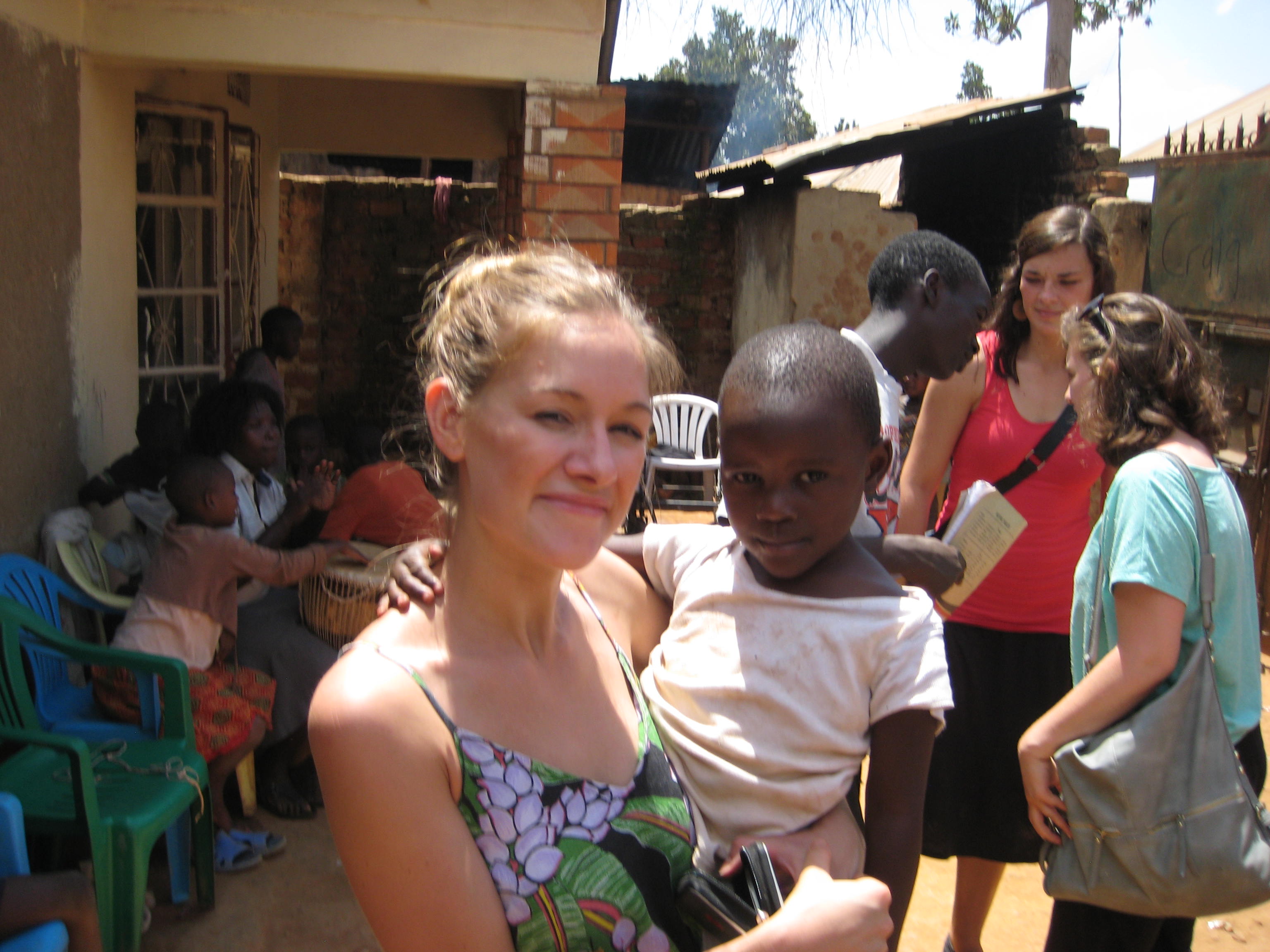
Notes From Kampala: For the Least of These; Reta holding one of the children at Oasis Orphanage (Photo by Reta Raymond)
Reta holding one of the children at Oasis Orphanage (Photo by Reta Raymond)

There are around seventy children at Oasis who are between zero and eighteen-years-old, and there is not enough money to support them.  The two or three live-in caretakers at Oasis are unpaid.  The children eat one meal per day, but have been known to go without food for days at a time.  To ration food, the children do not eat on Wednesdays; they simply pray. Tragically, it is rare that these children are sent to the hospital when they fall ill. Some of the children go to school, where the headmasters have waived their school fees, but others don’t.  Oasis hopes to start a school for the children on the compound.
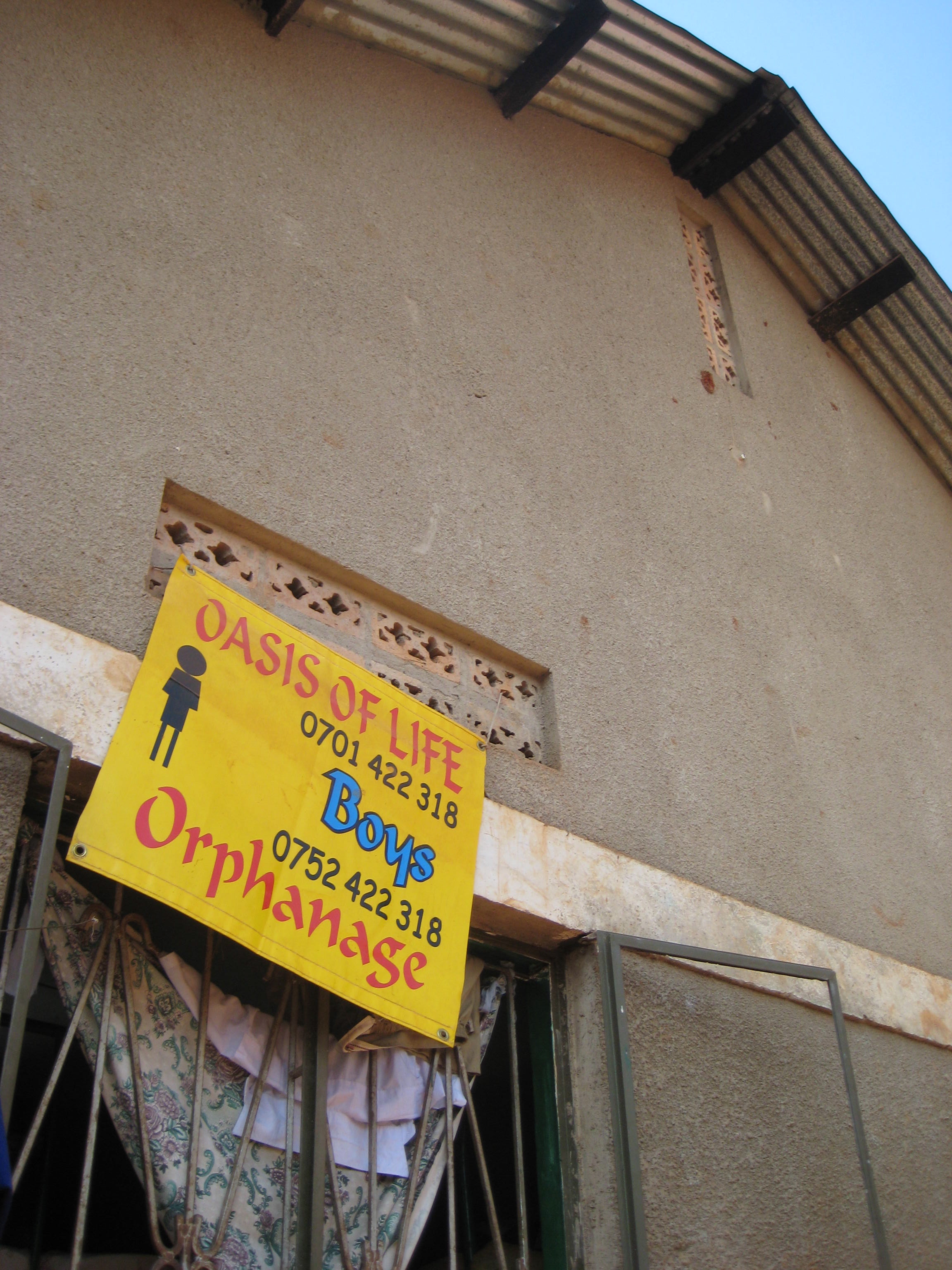
Notes From Kampala: For the Least of These; Oasis Orphanage (Photo by Reta Raymond)
Oasis Orphanage (Photo by Reta Raymond)

The children sleep three to a bunk, and even the teenagers must have a bunkmate.  The compound is split into a boys’ and a girls’ house, and the older girls sleep away from the little girls.  However, all the boys sleep in the same room, at least three per mattress.  Many of the foam mattresses are thin and falling apart from having been washed so often when the children wet the bed.  The boys’ house did not even have electricity.  The children were not sleeping under mosquito nets when one group of travelers visited, so they bought some for the children. However, a couple months later a friend told me that the nets were gone.

Despite these hardships, when my group of friends and I visited, there were only happy, smiling faces to greet us.  The children danced to the beat of the drums and sang songs about how grateful they were to God.  We kicked balls around with the children and they taught us how to wrap strips of colored paper to make beads for necklaces they would sell.  However, when we broke out the boxes of cookies to give out to the children, you could see the desperation on their faces.  These children were so hungry they would pile up on each other to get more cookies.  They couldn’t help themselves.
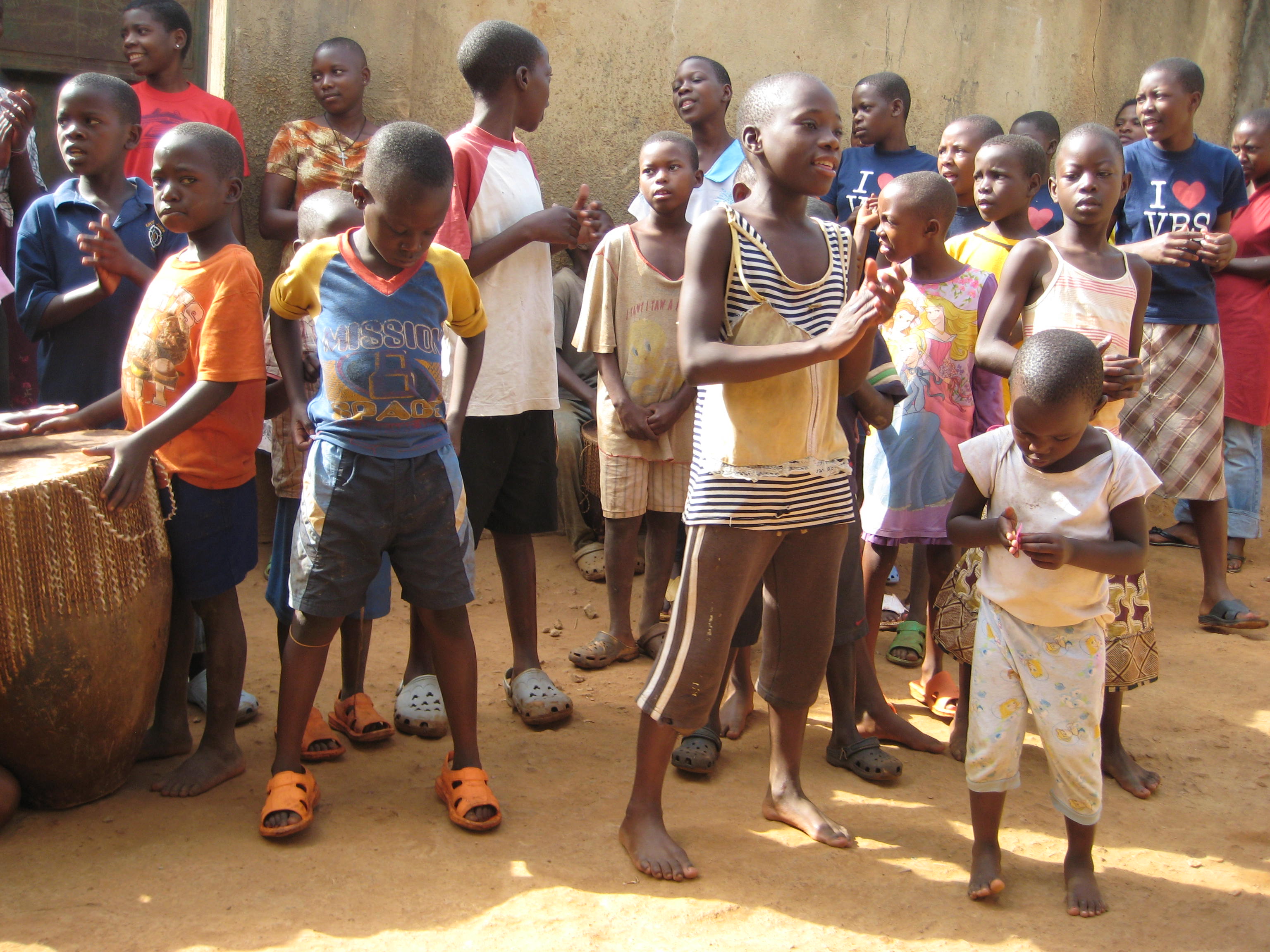
Notes From Kampala: For the Least of These; children at the Oasis Orphanage (Photo by Reta Raymond)
Children at the Oasis Orphanage (Photo by Reta Raymond)

The Oasis children are a very special group, who are pleasant, thankful, and polite.  One of my friends took Dixon, one of the young boys from Oasis, to the doctor one day, and then out for ice cream and fried chicken.  Dixon saved a piece of chicken and brought it back for his best friend at the orphanage.  It is amazing how well-adjusted, kind, and pleasant Oasis’ children are in spite of such hardship; but seeing the love that the caretakers and Pastor Robert, the in-house manager, have for these children makes it seem plausible.
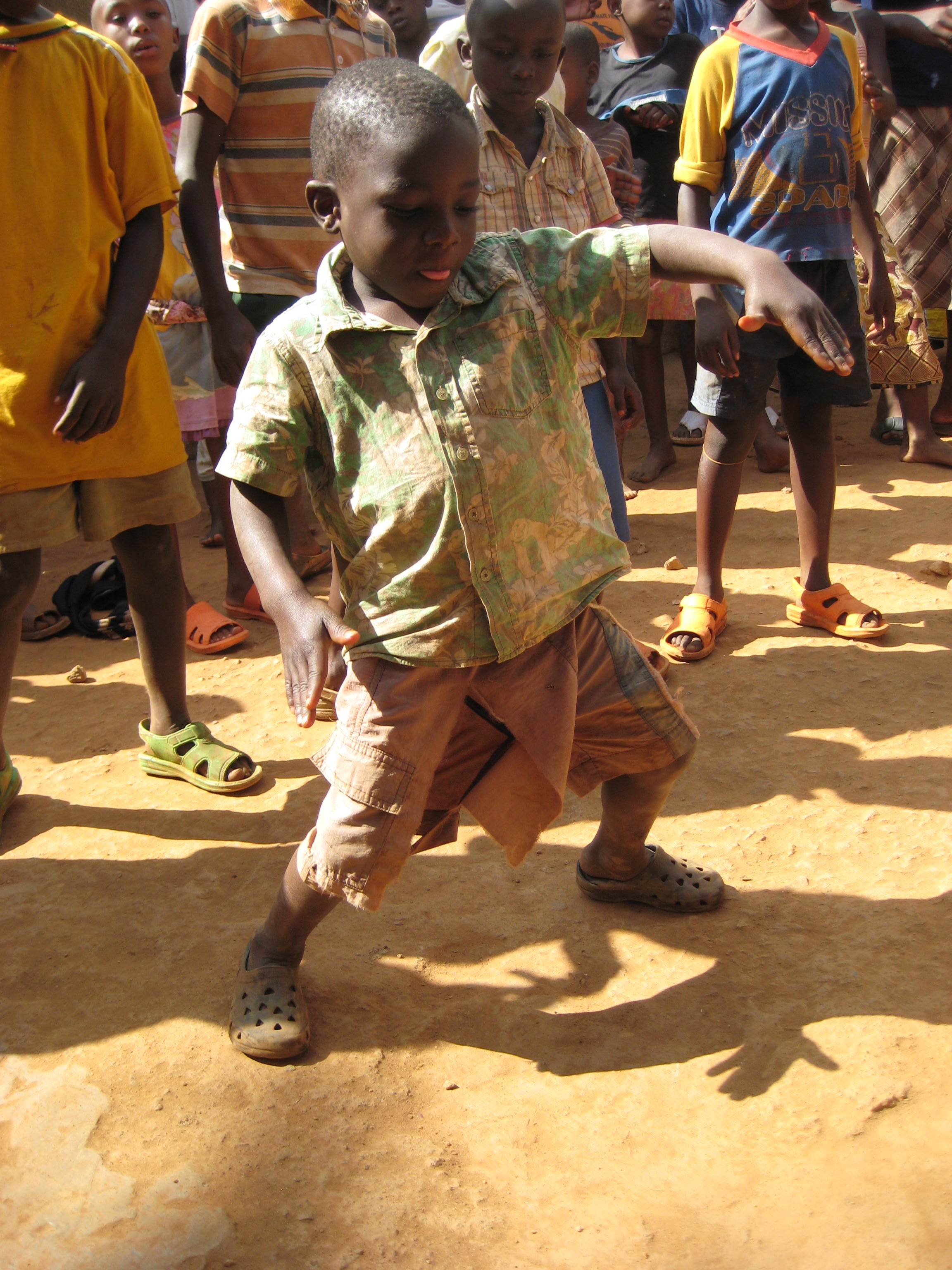
Notes From Kampala: For the Least of These; children at the Oasis Orphanage (Photo by Reta Raymond)
Children at the Oasis Orphanage (Photo by Reta Raymond)

The government doesn’t support any orphanages in Uganda, so they all rely on private donations.  The head pastor for Oasis travels all over the United States seeking donations for Oasis, but these children are going hungry and living in unsanitary conditions.  I can only speculate on his success in finding donations, but his multiple trips between the United States and Uganda alone are evidence of some level of success.  Regardless of how much he is able to raise, it seems pretty clear that most of the donations are not making their way back to the orphanage.  A dollar goes a very long way in Uganda. For example, the estimated cost of food for fifty children at Sanyu Babies Home, another orphanage, is about $3500 per year.  I was also told stories of church groups who send Oasis hundreds of dollars per month, and still, these children skip meals on a regular basis.

Something doesn’t sit well with me over this fact pattern.  While there is no hard evidence available, it seems clear that there is some degree of misappropriation going on. Corruption, which is such a huge problem in Uganda, rears its ugly head yet again, and this time it is the children who pay.  Unfortunately, none of my contacts in Uganda have found a local group that they would trust to receive donations on behalf of Oasis.  Friends tell me to only give money to people who you know would directly deliver supplies to the orphanage.

Meeting the children of Oasis was one of the best experiences in Uganda, but I left that country so heartbroken knowing that there are so few meaningful ways to help these children from my own country.  This was certainly one of the most inhumane and appalling examples of corruption that I have ever heard of in Uganda, and I hope that the corruption ends soon for the sake of these children.

Physicians for Human Rights: Destruction of Medical Samples in Magnitsky Case is a Clear Obstruction of Justice

Press Release

6 June 2012–Physicians for Human Rights, an independent US organisation supporting victims of torture and abuse using scientific and medical analysis, released a statement revealing that Russian authorities have destroyed evidence in the Magnitsky case files which could be used to determine the true cause of his death. In particular, they pointed out that certain of Magnitsky’s tissues samples which had been taken at the time of his death and stored have now been destroyed by Russian authorities. These are the same tissues samples which Magnitsky’s family has repeatedly requested to be given access to and whose requests were repeatedly denied by the Russian State Investigative Committee.

Physicians for Human Rights (PHR) pointed out that the Russian government also refused Magnitsky family’s request seeking PHR’s independent investigation into Magnitsky’s death. PHR said in their statement that the destruction of samples in the Magnitsky case appears to be “a deliberate and calculated attempt to prevent justice” on the part of the Russian government.

For further information, please visit:

Syrian Revolution Digest – Tuesday 5 June 2012

THE COMMENTARY IN THIS PIECE DOES NOT NECESSARILY REFLECT THE VIEWS OF IMPUNITY WATCH.  

*WARNING VIDEOS MAY CONTAIN GRAPHIC IMAGES*

The Milkshake At Road’s End!

This revolution is against the Assad regime not just against Assad, the sooner the Russians (and Chinese) understand that the better.

Tuesday June 05, 2012

Today’s death toll: 54. The Breakdown: 15 in the town of Hiffen (Lattakia Province), 13 in Hama, 9 in Homs, 6 in Idlib, 5 in Daraa, 2 in Aleppo, 3 in Damascus, and 1 in Hassakeh.

Battles in the mountainous Hiffeh District in Lattakia Province have intensified today as the local resistance managed to repel an advance by pro-Assad militias. 15 locals were killed, and 5 tanks were destroyed. But the continuous pounding of the towns did force many inhabitants to flee their villages. Naturally, pro-regime websites spread stories of Salafist- take-over of villages where a Salafi Emirate is said to have been declared. This is the usual propaganda that proceeds a mass assault. With this, the ethnic cleansing of the coastal area will now begin at earnest. As western leaders watch on, Abkhazia on the Mediterranean inches closer to reality, with Russian, Chinese and Iranian backing. At night, intensive gunfire was heard in the majority Sunni neighborhood of Sleibeh in Lattakia City:http://youtu.be/jjNiKlHCgYQ.

Turkish officials declare that over 27,000 Syrians have crossed the border into Turkey over the last 5 days alone after loyalist troops set fire to fields and forests in an effort to flush out members of the local resistance.

So-called Jabhat Al-Nusrah today claimed the killing of the 13 locals in Deir Ezzor Province whose bodies were discovered last week. The victims, the announcement claimed, were pro-Assad informants and security agents. But this account contradicts with reports from locals who now say the dead were defectors insisting that the Jabha, which had earlier claimed responsibility for the most recent bombings in Damascus, is nothing but a regime creation.

Meanwhile, the war continues to rage in the countryside of Aleppo and Hama, with the continuing pounding affecting the towns of Eizaz and Hayan and reaching the outskirts of Aleppo City itself. In the town of Kafar Zeiteh, Hama Province, members of the local resistance was forced to evacuate after days of fighting.

Battles in Daraa City left Colonel Mohammad Aslan, one of the architects of the local crackdown dead.

News

Op-Eds & Special Reports

KAFER ZAITA, SYRIA — For four days, Syrian army units and armed rebels of the Free Syrian Army fought for control of this town in a battle that demonstrated the strengths and weaknesses of both sides. In the end, the rebels abandoned their positions, but only after fighting off multiple assaults by the army… (More)

Joshua says: “Let’s be clear: Washington is pursuing regime change by civil war in Syria. The United States, Europe, and the Gulf states want regime change, so they are starving the regime in Damascus and feeding the opposition. They have sanctioned Syria to a fare-thee-well and are busy shoveling money and helping arms supplied by the Gulf get to the rebels. This will change the balance of power in favor of the revolution. It is also the most the United States can and should do.”

Let’s be clear indeed: everything that Joshua said above is false. At this stage the best thing that can be said about U.S. policy towards Syria is that they are pursuing regime change in rhetoric. So far, the opposition is ill-fed if not severely malnourished, while the regime can still count on the support of its allies to meet its basic crackdown needs, then some. U.S. and allies have come to us bearing the good intentions outlined above by Joshua, but so far, their support remains conceptual.

So, if we have asymmetrical civil war conditions currently prevailing in Syria, we have the Assads and their allies to thank for this (and it’s indeed noteworthy that the role of Assad’s allies has been completely ignored in Joshua’s analysis). The U.S. can be blamed only for its absence and for allowing the situation to devolve to this point. The kind of U.S. intervention that we seek is meant exactly to stop this civil war, asymmetric as it is, and ensure that some of our basic expectations are still met. There is no “democratization Kool-aid” to be drunk in this conflict, as Joshua implied, but there a milkshake at end of the road, and there will be blood on the way to it. Democratization is never easy, and, in a region like ours, it cannot be a purely internal affair as so many are advocating. There are too many players involved, domestic, global and regional, and too many intersecting and clashing interests to allow for this.

The situation needs to be judged on its merits. Not on what happened before or what sort of mistakes could be made in the future. Inaction might indeed save the U.S. and its allies from having to deal with a logistical nightmare and can help them avoid some blame for the unavoidable mistakes that come with intervention, but this inaction might just amount to an all-out betrayal of the values that America stands for, while jeopardizing certain of her interests.

If inaction is the lesson that some are drawing from the experiences of Iraq and Libya, Bosnia, Kosovo and Rwanda have more compelling lessons to teach in this regard.

It’s also interesting to see how analysts like Joshua who have advocated and helped chart yesterday’s wrong policies toward Assad, namely: engagement, are now advocating inaction, something that still benefits Assad. After all, inaction gives him the needed time to lay the necessary foundations for his Abkhazia on the Mediterranean.

No, this is not a personal swipe against Joshua. After all, he is not the only analyst that fits in this category. Almost all engagement-advocates of the days of yore are now inaction advocates. But Advocating inaction after advocating the wrong policy is a way for shirking responsibility for doing the right thing, just to avoid dealing with the headaches and the mess that come with it.

By the way: yes, a policy that calls for arming rebels and watching from the sidelines, while providing occasional advice, is inaction. Stopping a civil war and keeping a country, or most of it, together, requires far greater involvement than allowing arms to flow in. There is a need for some micro-level involvement while managing this situation.

Video Highlights

The Battle for Hiffeh, Lattakia Province: members of the local resistance confiscate a tankhttp://youtu.be/mEZHdt0KcZk

Father Paolo visits the activists in Homs http://youtu.be/mbwDARff8Ok Including Dr. Mohammad Al-Mohammad, the former field doctor of Baba Amr neighborhoodhttp://youtu.be/d3_W33xcur8

In Aleppo City, nighttime protesters in Salaheddine Neighborhoodhttp://youtu.be/4GQLSlRU78c  come under fire http://youtu.be/MJG-HkbvEUMExplosions heard at the outskirts of the city http://youtu.be/UakcBKRsl3k

The town of Hayan, Aleepo province, is pounded http://youtu.be/TcHs1pvqdnYBayanoun as well http://youtu.be/VEX6XWu5qzo Choppers take part in bombing of the town of Eizaz http://youtu.be/pfBLn5UtYQM

The Jib Neighborhood in Hama City comes under heavy nighttime poundinghttp://youtu.be/u2fbYSsV_hc

After retaking the town of Kafar Zeiteh, Hama Province, pro-Assad militias venture into town o their motorcycles for a brief victory parade http://youtu.be/p2Pk2fmJJqE

The city of Ma’arrat Al-Nouman, Idlib Province comes under heavy poundinghttp://youtu.be/fVx5Qo2_4dA

Clashes come within meters of the Syria-Turkish borders: Kilishttp://youtu.be/ZC6geke9MfU

UN Monitors pay a visit to the town of Qouriyeh, Deir Ezzor Provincehttp://youtu.be/uCf2uvDHcNI

The pounding of Homs City continues: Qoussour http://youtu.be/74r46Blr18c ,http://youtu.be/_krfG6q5rGw

In Damascus, tanks storm through the town of Saqba http://youtu.be/zsXaw89xOWU

Daraa City received its fair share of pounding today as well http://youtu.be/F1kDzWAv-jsespecially the area of the Palestinians camps http://youtu.be/F1kDzWAv-js Attempt by loyalist troops to storm the camps at night was repelled by members of the local resistancehttp://youtu.be/7Qozj5gllx0 , http://youtu.be/9Yj3D45VzI4

Bolivian Right-Wing Politician Seeks Refuge in Brazilian Embassy

By Heba Girgis
Impunity Watch Reporter, South America

SUCRE, Bolivia — Roger Pinto, the head of an opposition party in Bolivia took political refuge in the Brazilian Embassy, in La Paz, Bolivia. Pinto stated that he and his family face death threats and political persecution after alleging that links existed between corrupt government officials and drug trafficking.

Roger Pinto Seeks Refuge in Brazilian Embassy. (Photo Courtesy of JournadaNet)

Pinto, a long-time foe of the current Morales government, stated that “I have no other alternative to the relentless harassment and persecution to which I was subjected to under the government of Evo Morales.”

President Evo Morales is head of the Movimiento al Socialismo (Movement for Socialism, MAS), a left wing, Socialist party founded in 1997. The MAS has governed the country since 2006 after the first majority victory by a single party in the elections held in December 2005. The MAS regime grew out of a movement to defend the interests of local Bolivian coca growers.

Since Morales came into the Presidency, international law enforcement officials have said that drug activity has increased dramatically. In 2006, Morales promised to expand the cultivation and growing of the coca plant which is the raw material of cocaine—a legal crop in Bolivia, used often as a chewable, mild stimulant.

This is not the first time Pinto has taken a stand against the Bolivian government. Recently, Pinto made several claims presenting documents alleging meetings between several senior level Morales officials and drug traffickers.

Since presenting these allegations, Pinto says he became a victim of at least 20 criminal investigations including sedition and defamation. These investigations developed into death threats which prompted him to seek political asylum in the Brazilian embassy. In a letter Pinto wrote to the Embassy, he said “I have been a victim of constant death threats, and my family has also been threatened.” His daughters also mentioned that they received many anonymous calls that they believed were from people affiliated with the Bolivian government.

As of yet, Brazil has not yet decided whether to grant Pinto the asylum he has requested. While Brazil continues to work for good relations with its neighbors, the country is also hoping to avoid a repeat of the 2009 coup in Honduras. In 2009, Honduran leader Zelaya took up residence in a Brazilian embassy claiming that he was under attack by unseen Israeli agents. Because Brazil lost some credibility in trying to resolve this situation, the country remains hesitant to offer Pinto political asylum.


For further information, please see:

ABC News–Bolivia: Senator’s Asylum Bid Embarrasses Morales–1 June 2012

The Republic–Bolivia says right-wing senator’s asylum bid seeks to embarrass Morales on eve of OAS summit–31 May 2012

Topix–Bolivia: Senator’s asylum bid embarrasses Morales–31 May 2012

The New York Times–Bolivian Politician Takes Refuge at Brazilian Embassy–30 May 2012