
http://www.scribd.com/doc/91376939/Charles-Taylor-Summary-Judgement
Redress for Placement on Government Kill List? Justiciability, Separation of Powers, and International Law in Al Aulaqi v. Obama
By Warren Popp
Bolivian Public Sector Teachers and Doctors Continue Strike Against Increased Hours Without Additional Pay
By Emilee Gaebler
Impunity Watch Reporter, South America
LA PAZ, Bolivia – Public workers, including teachers and health service providers, throughout Bolivia continue to strike in protest of the recent passage of Supreme Decree 1126. The newly-passed decree mandates that the previous 6-hour work day be increased to an 8-hour work day, with no increase in salary, for those in the public sector.

The strike began on March 28, and just last week, a number of the groups began hunger strikes. News sources in Bolivia report that close to 500 workers have joined in on the national hunger strikes. Saúl Azcárraga, the leader of the Federation of Urban Teachers expressed the hunger strikers stance from a small school room in La Paz.
“Not a single drop of water nor food will enter their room. We assume this measure because in 2010 the government signed an agreement about salaries and hours but is not honoring the agreement,” Azcárraga said.
Rural teachers in Bolivia currently make almost twice the amount of an urban teacher. In 2010 the Morale’s administration agreed to work to equalize pay rates progressively; but almost no steps to achieve this were taken.
Medical workers in state facilities echo similar concerns. They are outraged over the labour reforms by President Evo Morales because they violate earlier agreements made in the 1970s that established this 6-hour day for them. Currently, Bolivian public sector doctors make roughly $200 a week, receive no benefits, no pension, and no overtime pay.
President for the Committee of Doctors on Strike, Francisco Sanchez, emphasized that those in the medical profession have previously asked and presented reasonable arguments for their incorporation into the General Labour Act. Each time the government refuses to listen.
“We workers have always said that we do not agree to work eight hours of the working day . . . . Unfortunately, the authorities do not take this request seriously, or the arguments we give them. For this reason, in a situation of despair, not knowing what else to do, we have taken this extreme measure, the hunger strike, to raise awareness in front of the authorities,” said Sanchez.
Juan Carlos Calvimontes, the Minister of Health, maintains that the strike is “illegal.” Calvimontes is calling for the docking of doctors pay during the time that they are on strike. On March 31 the protestors hosted a “White Apron” March through downtown La Paz and burned an effigy of Calvimontes while calling for a repeal of the decree.
President Morales expressed his unwillingness to consider revoking the decree in a conference held on Tuesday last week. Morales said that the decree was not his own initiative but one proposed at the Plurinational Social Meeting and supported by the Bolivian people.
On Tuesday, Morales emphasized the government’s firm stance that any worker’s who choose to strike are acting illegally. Morales also announced that workers will have their pay reduced for each day that they take to the streets in protest.
“[A] day worked, a day paid, he who doesn’t work does not get paid,” said Morales.
For more information, please see;
NTN24 News – More Than 500 Public Workers Join Bolivian Hunger Strike – 19 April 2012
Bolivia Weekly – Striking Medical Workers Will Get no Pay – 18 April 2012
Bolivia Weekly – Doctors and Teachers on Strike – 17 April 2012
Latino Life – Bolivia: Doctors and Teachers go on Strike – 16 April 2012
World Socialist Web Site – Bolivian Doctors and Health Workers Strike, Demonstrate Against Decree – 3 April 2012
Press Release: The Parliamentary Assembly of the Council of Europe Takes Steps Towards Launching an International Investigation into the Murder of Sergei Magnitsky
Press Release
Law and Order in Russia
25 April 2012 – Yesterday, at the Spring Session of the Parliamentary Assembly of the Council of Europe (PACE) meeting in Strasbourg, 69 members of Parliament from 29 countries signed a motion entitled: “Refusing impunity for the killers of Sergei Magnitsky”. The motion calls for a ‘dedicated report’ to investigate the death of Sergei Magnitsky and return the findings to the Assembly at a later date this year.
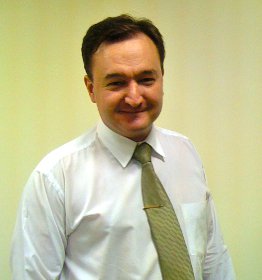
The motion states:
“The conspiracy leading to Mr Magnitsky’s death was exposed by journalists and investigated by the Presidential Human Rights Council and other civil society bodies, which concluded in the summer of 2011 that a number of named officials were indeed apparently responsible for this crime.
According to investigators, following the events in question, the officials concerned acquired luxury properties and other assets whose value far exceeds what they could afford on their salaries as public servants. The competent authorities have nevertheless failed to properly investigate and prosecute those responsible for Mr Magnitsky’s death. Instead, they have continued to accuse Mr. Magnitsky, even seeking to prosecute him posthumously.”
It further states:
“For the sake of its own credibility and that of the Russian Federation, the Assembly should now engage in co-operation with Russia, through the preparation of a dedicated report, in order to fully elucidate this landmark case.”
The motion was introduced by Pieter Omtzigt, a Member of Parliament from the Netherlands and member of the European People’s Party (EPP) at the Parliamentary Assembly of the Council of Europe.
Mr Omtzigt said:
“It is a highly unusual step within the Council of Europe to focus on one case from one country for a report. The high number of supporters from so many countries within the Council of Europe suggests the truly emblematic nature of the Magnitsky case and the Russian Government’s inadequate response.”
The motion will be considered by the PACE Bureau at the Council of Europe on Friday 27 April. The Bureau is made up of the President of the Assembly, 18 Vice –President’s (each from a different member state), the Chair of each Political Group and Chairs of each PACE Committee. Once the Bureau approve the motion, steps will be taken to commission a special report into the Magnitsky case and assign a rapporteur to conduct the investigation and write the final report.
Special reports have previously been conducted into the Khodokovsky case, CIA extraordinary rendition and organ thefts in Kosovo.
The Magnitsky case was previously raised at length in the August 2009 Legal Affairs and Human Rights Committee report written by the former Rapporteur Sabine Leutheusser-Schnarrenberger, currently serving as Germany’s Minister for Justice. This report can be found here: http://russian-untouchables.com/docs/D42.pdf
The full text of the “Refusing impunity for the killers of Sergei Magnitsky” motion submitted at yesterday’s PACE Spring meeting can be found here: http://assembly.coe.int/ASP/Doc/XrefViewPDF.asp?FileID=18232&Language=EN
For further information please contact:
Hermitage Capital
Phone: +44 207 440 17 77
E-mail: info@lawandorderinrussia.org
Website: http://lawandorderinrussia.org
Facebook: http://on.fb.me/hvIuVI
Twitter: @KatieFisher__
Livejournal: http://hermitagecap.livejournal.com/
Full list of PACE Signatories:
OMTZIGT Pieter, Netherlands, EPP/CD
ACKETOFT Tina, Sweden, ALDE
AGRAMUNT Pedro, Spain, EPP/CD
ANDERSON Donald, United Kingdom, SOC
ÁRNASON Mörður, Iceland, SOC
AXELSSON Lennart, Sweden, SOC
BACKMAN Þuriður, Iceland, UEL
BARDINA PAU Josep Anton, Andorra, ALDE
BARNETT Doris, Germany, SOC
BOROWSKI Marek, Poland, NR
BREMER Tor, Norway, SOC
BUGNON André, Switzerland, ALDE
CEDERBRATT Mikael, Sweden, EPP/CD
ČIGĀNE Lolita, Latvia, EPP/CD
CILEVIČS Boriss, Latvia, SOC
CONNARTY Michael, United Kingdom, SOC
CORSINI Paolo, Italy, SOC
CRAMON-TAUBADEL Viola, von, Germany, SOC
DEBONO GRECH Joseph, Malta, SOC
FLEGO Gvozden Srećko, Croatia, SOC
FRUNDA György, Romania, EPP/CD
GARDETTO Jean-Charles, Monaco, EPP/CD
GUNNARSSON Jonas, Sweden, SOC
GUŢU Ana, Republic of Moldova, ALDE
HARANGOZÓ Gábor, Hungary, SOC
HAUGLI Håkon, Norway, SOC
HOLOVATY Serhiy, Ukraine, ALDE
JENSEN Michael Aastrup, Denmark, ALDE
JOHANSSON Mats, Sweden, EPP/CD
LĪBIŅA-EGNERE Inese, Latvia, EPP/CD
LOKLINDT Lone, Denmark, ALDE
LØHDE Sophie, Denmark, ALDE
LUNDGREN Kerstin, Sweden, ALDE
LYDEKA Arminas, Lithuania, ALDE
MAELEN Dirk, Van der, Belgium, SOC
MANZONE-SAQUET Nicole, Monaco, EPP/CD
MARCENARO Pietro, Italy, SOC
MARIN Christine, France, EPP/CD
MATEU PI Meritxell, Andorra, ALDE
MATUŠIĆ Frano, Croatia, EPP/CD
MAURY PASQUIER Liliane, Switzerland, SOC
MEALE Alan, United Kingdom, SOC
MONTAG Jerzy, Germany, SOC
MOTA AMARAL João Bosco, Portugal, EPP/CD
NEGELE Gebhard, Liechtenstein, EPP/CD
O’REILLY Joseph, Ireland, EPP/CD
PAPADIMITRIOU Elsa, Greece, EPP/CD
PELKONEN Jaana, Finland, EPP/CD
PFLUG Johannes, Germany, SOC
PHELAN John Paul, Ireland, EPP/CD
POURBAIX-LUNDIN Marietta, de, Sweden, EPP/CD
RAČAN Ivan, Croatia, SOC
REISSMANN Mette, Denmark, SOC
ROSEIRA Maria de Belém, Portugal, SOC
RUPPRECHT Marlene, Germany, SOC
SANNEN Ludo, Belgium, SOC
SCHOU Ingjerd, Norway, EPP/CD
SCHUSTER Marina, Germany, ALDE
SHERIDAN Jim, United Kingdom, SOC
SVEINSSON Gunnar Bragi, Iceland, ALDE
TOMLINSON John E., United Kingdom, SOC
TRETTEBERGSTUEN Anette, Norway, SOC
TUIKSOO Ester, Estonia, ALDE
VAREIKIS Egidijus, Lithuania, EPP/CD
VERCAMER Stefaan, Belgium, EPP/CD
VIROLAINEN Anne-Mari, Finland, EPP/CD
VUČKOVIĆ Nataša, Serbia, SOC
WADEPHUL Johann, Germany, EPP/CD
XUCLÀ Jordi, Spain, ALDE
Libya Bans Religious Political Parties
By Carolyn Abdenour
Impunity Watch Reporter, Middle East
TRIPOLI, Libya – On Wednesday, 24 April, the National Transitional Council (NTC), Libya’s governing body, enacted a law that banned political parties founded on religious, tribal, or geographic ideals. However, parties that stand on Islamic principles intended to campaign for assembly seats during the 19 June election. Parties including the Muslim Brotherhood denounced this surprise move.
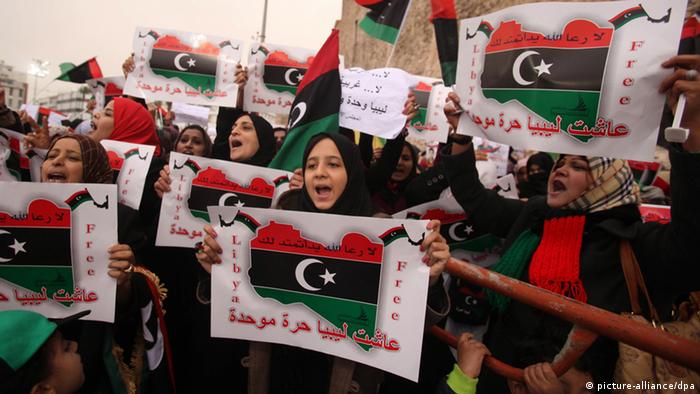
NTC spokesperson Mohammed al-Hareizi emphasized the law encourages “national unity”. He said, “Parties are not allowed to be based on religion or ethnicity or tribe”. He added, “We don’t want the government to be divided by these ideological differences.” The NTC developed this law to regulate the swelling of political parties in Libya.
This law also combats geographical division in the nation. This month, eastern Benghazi has called for autonomy and possibly secession from Tripoli as the area prepares for its local council elections. Libyans throughout the nation are calling for TNC leaders to resign because they failed to establish a functional government.
In two months, Libyans will elect a 200-member assembly responsible for forming a government and compositing a constitution. Independent candidates will fill 120 of these seats while political organizations will fill the remaining 80 seats. Free elections will occur in Libya once this assembly has fulfilled its objectives. Diplomats believe several strong religious leaders will run in the free election once the country ratifies a new constitution.
Parties and organizations intending to campaign for these seats must receive approval to run. For approval, parties must have at least 250 founding members where organizations need at least 100 founding members. Mustafa Landi, a member of the NTC legal committee, clarified these groups “cannot be an extension of a political party abroad or receive foreign funding.”
The Muslim Brotherhood, Libya’s most organized political group, founded the Freedom and Development party and the Justice and Construction party this year. The Muslim Brotherhood reported that rather than directly contesting these elections, the organization will advocate for social issues and development in Libya. During his dictatorship, Moammar Gadhafi banned many of these political organizations
Spokesperson for the Freedom and Development party Mohammed Gaira asserted “This is not democracy” after the law passed. He added, “We don’t understand this law…It could mean nothing, or it could me that none of us can participate in the election…We are a nationalist party and Islam is our religion. This law is unacceptable and only suits liberals.”
For further information, please see:
All India Radio – Religious Political Parties Banned in Libya – 25 Apr 2012
Deutsche Welle – Libya Bans Party Formation Based On Religion, Tribe – 25 Apr 2012
The Telegraph – Libya Tries To Hold Off Rise Of Religious Parties With New Election Rules – 25 Apr 2012
The Voice of Russia – Religion-Based Parties Banned in Libya – 25 Apr 2012
The Washington Post – Libya Bans Political Parties Based On Religion; Islamists Denounce Move – 25 Apr 2012