Options for People with Mental Illness in America Continue to Decline

By Sarah Purtill
Impunity Watch Reporter, North America

Washington, D.C., U.S. – Psychiatric Services published a study that estimates about 3.4% of Americans suffer from some sort of serious psychological problems. That amounts to over 8 million Americans, roughly the population of New York City.  What’s worse is that there is a severe shortage of inpatient care in the United States which continues to rise wit the number of people suffering from psychological problems.
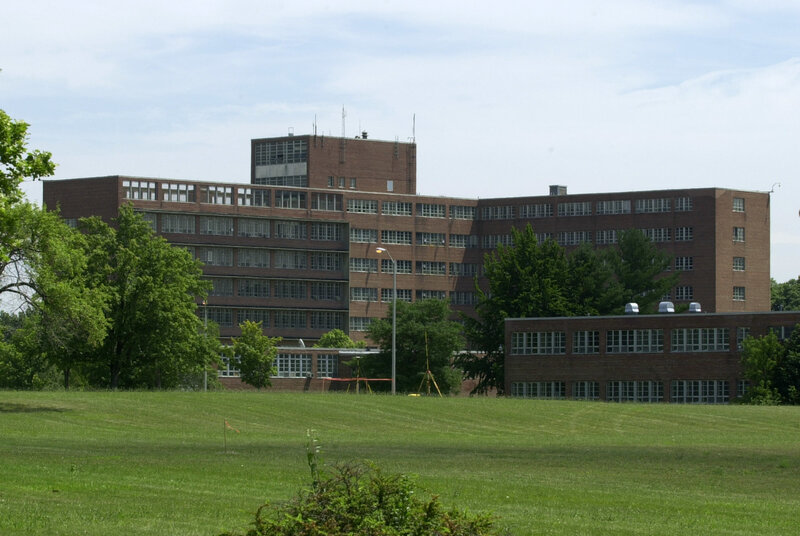
Psychiatric hospitals across America continue to shrink in number. Photo Courtesy of Paul Sancya.

The Treatment Advocacy Center, a nonprofit organization that works to remove treatment obstacles for people with mental illness, published a study finding that, in 2012, there were only 50,509 state psychiatric beds. In raw numbers, that means that there were only 14 beds available for every 100,000 people suffering from a mental illness.

“Many times individuals who really do require intensive psychiatric care find themselves homeless or more and more in prison,” said Dominic Sisti, director of the Scattergood Program for Applied Ethics of Behavioral Health Care at the University of Pennsylvania“Much of our mental health care now for individuals with serious mental illness has been shifted to correctional facilities.”

Of the facilities that are still up and running today, many do not accept insurance. Considering most cost upwards of $30,000 a month, many people cannot afford the care. For low income individuals, their only hope is that they qualify for Medicaid. But even Medicaid has its limits. A provision in the law prevents the government from paying for long term care in such institutions.

Since so many cannot afford the care that they need, many end up in the emergency room during a mental health crisis. “We are the wrong site for these patients,” Dr. Thomas Chun, an associate professor of emergency medicine and pediatrics at Brown University, told NPR last year. “Our crazy, chaotic environment is not a good place for them.” Usually, hospitals only take people who need such care for up to 72 hours. At that point, they are released back into the community.

Over the last decade, the disappearance of such long term care facilities and psychiatric beds has increased. This is because of a trend in deinstitutionalization in the 1950’s and 60’s that has continued through today.”State hospitals began to realize that individuals who were there probably could do well in the community,” says Sisti. “It was well-intended, but what I believe happened over the past 50 years is that there’s been such an evaporation of psychiatric therapeutic spaces that now we lack a sufficient number of psychiatric beds.”

One place people may find new support is Nonprofits. NAMI Appalachian South, a regional chapter of the National Alliance on Mental Illness is one such nonprofit in North Carolina.

For more information, please see:

Smokey Mountain News – Nonprofits Offer Support, Funding to Mental Health – 21 February 2018

North West Herald – President Donald Trump’s Focus on Mental Health After School Shooting Denounced – 19 February 2018

NPR – How the Loss of U.S. Psychiatric Hospitals Led to a Mental Health Crisis – 30 November 2017

Pakistan’s Leading Human Rights Advocate Dies

By: Brian Kim
Impunity Watch Reporter, Asia 

ISLAMABAD, Pakistan – On February 11th, 2018, Asma Jahangir, Pakistani’s leading human rights advocate died. According to her sister, Hina Jilani, a prominent rights activist, announced that Jahangir died of cardiac arrest.

Asma Jahangir, leading human rights activist dies at the age of 66. Photo courtesy of Arif Ali/ AFP.

In 2014, Jahangir received France’s highest civilian award and Sweden’s alternative to the Nobel Prize for her rights work. She spoke out for women and minority rights throughout her life and criticized Pakistan’s rights violations. Specifically, she was critical of Pakistan’s military, intelligence and right-wing parties. The former United Nations special rapporteur was 66.

In 1983, she was arrested for pro-democracy activities. She was again put under house arrest in 2007 for opposing military leader’s removal of Supreme Court chief justice. She also co-founded the Human Rights Commission of Pakistan and the Women’s Action Forum.  She was the first female leader of Pakistan’s Supreme Court bar association. Jahangir served as the United Nations special rapporteur on freedom of religion and on human rights in Iran.

Some leaked documents suggested that some officers had planned to assassinate her. When the documents were leaked, she asked for an inquiry to find out “the forces who wanted to silence” her.

In the city of Lahore, thousands of people attended Jahangir’s funeral. Prime Minister Shahid Khaqan Abbasi in a statement expressed his condolences and said that her death was a great loss. Moreover, Malala Yousafzai, Nobel Peace Prize winner called Jahangir a “savior of democracy and human rights.” The United Nations Secretary-General, Antonio Guterres has paid tribute to Jahangir following her death.

For more information, please see:

BBC – Asma Jahangir: Pakistan human rights champion dies – 11 February, 2018

The Straits Times – Asia Briefs: Pakistan human rights advocate dies – 12 February, 2018

Al Jazeera – Thousands pay respects to Pakistan’s ‘human rights giant’ – 14 February, 2018

Financial Times – Asma Jahangir, 1952-2018, human rights activist and lawyer – 16 February, 2018

Syria Deeply: Join Our Deeply Talks – The Humanitarian Catastrophe in East Ghouta

Dear Syria Deeply community,

Please join us on Tuesday, February 27, at 10:30 a.m. EDT (4:30 p.m. CET), for a 30-minute conversation with Dr. Annie Sparrow, a critical-care pediatrician and public health professional, and Dr. Mohamad Katoub, advocacy manager for the Syrian American Medical Society (SAMS), about the deteriorating healthcare situation in East Ghouta. The call will be moderated by Alessandria Masi, Syria Deeply’s managing editor, and Hashem Osseiran, deputy managing editor.

We will discuss the humanitarian implications of the ongoing government offensive, the international community’s response, and the feasibility of civilian evacuations in light of escalated attacks on opposition-held areas further north.

To RSVP and receive dial-in instructions, click here.

We invite you to read up on our recent interview with Dr. Annie Sparrow. And please send us your questions, as well as any comments you would like us to address in the discussion. You can respond to this email or tweet @SyriaDeeply using the hashtag #DeeplyTalks.

Warm regards,

Kim Bode
Community Editor


RSVP
Copyright © 2018 News Deeply, All rights reserved.
You are receiving this email because you opted in at our website www.newsdeeply.com/syria

Our mailing address is:

News Deeply

246 5th Avenue

Suite 327

New York, NY 10001

Add us to your address book

Want to change how you receive these emails?
You can update your preferences or unsubscribe from this list

1 Tweet Brought 120 Volunteers to Shovel Snow for Elderly

By: Sarah Purtill
Impunity Watch Reporter, North America

CHICAGO, United States – Many elderly people struggle to get out of their homes following snowy weather. Particularly, those with asthma, neuropathy, and oxygen tanks. This was the case after snowy weather in Chicago on the weekend of February 10th. Many of these senior citizens called Jahmal Cole about their inability to shovel their drive ways and side walks. “When you’re getting emails and calls, you don’t want to let people down,” said Cole. “I wasn’t trying to make a campaign. This was literally me trying to help out my neighbors. We had to organize on the spot,” he said.

Chicagoan Jahmal Cole is a community organizer in Chatham who runs the non-profit, My Block My Hood My City. He runs it without office space and only two full time staff members. My Block My Hood My City both organizes and brings teenagers from under-served communities on different field trips. With one tweet, Cole called for volunteers to help clear the snow of elderly neighbors in Chatham . That one tweet was retweeted more than 22,000 times and liked over 64,000 times.

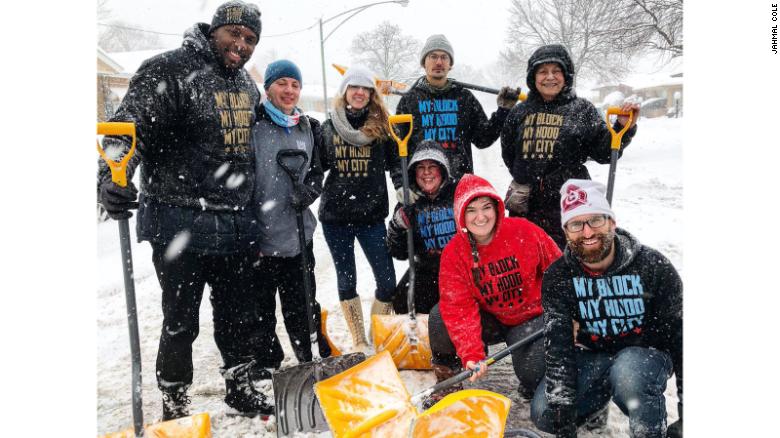
What did that tweet say? “Meet me at the 79th St. Red Line stop at 10:00 am tomorrow. I got hoodies, hats and lunch for anybody that comes through.” The following morning, 120 people showed up offering to help shovel, some even bringing shovels of their own. “The people who showed up, they showed that whether people have privilege or don’t have privilege, everyone recognizes a need,” said Cole. Cole had brought 10 shovels and his 15 person van. With all the volunteers, he had to go buy more shovels. Then, he sent the volunteers to dozens of addresses that needed snow removal.

Jahmal Cole and 120 volunteers shoveled snow for the elderly in a Chicago neighborhood. Photo Courtesy of Jahmal Cole.

The volunteers came from all over, including Rogers Park, Roseland and even Indiana (a two and a half hour bus ride away). Men and women of all ages shoveled for more than four hours. The next day, 11 more people showed up. About his efforts, Cole said, “My mindset is always, ‘What’s something simple that I can do that’ll have a positive impact on my block and my neighborhood’? You don’t have to have a law degree to shovel your neighbor’s walkway.”

When all was said and done, Cole and the all of the volunteers went out to lunch at a neighborhood restaurant. “I’m proud of our city. We’re getting things done,” Cole said. “People could have been doing anything in the world. They could have been home with families or making snowmen, but they came out to help.”

For more information, please see:

KMOV – How 1 Tweet inspired 120 People to Shovel Snow for the Elderly – 14 February 2018

CNN – How 1 Tweet Inspired 120 People to Shovel Snow for the Elderly in a Chicago Neighborhood – 13 February 2018

Independent – Chicago Man’s Tweet Asking for 10 Volunteers to Help Clear Snow for Elderly Draws 120 After Going Viral – 13 February 2018

Victims of Human Rights Abuses in UAE Share their Stories with UN Investigators

Justin Santabarbara
Impunity Watch Reporter, The Middle East

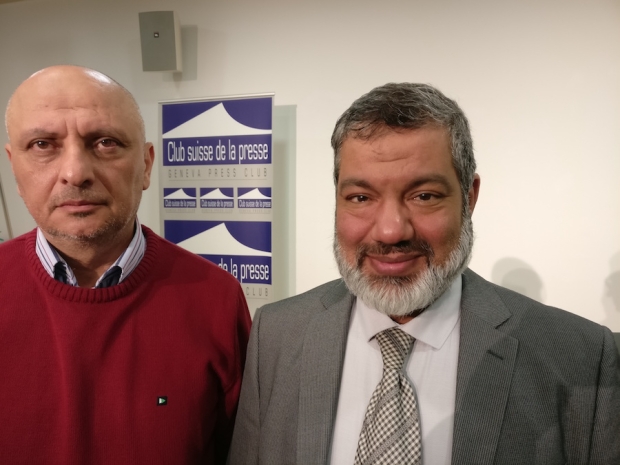
GENEVA, Switzerland – As the United Nations is preparing their annual human rights review for the Middle East, several of the investigators are taking some time to hear from individuals, who state that human rights abuses continue to be rampant and violent. Naji Hamdan, David Haigh, Mahmood al-Jaidah, and Khaled Mohamed Amed each sat on a panel at the Geneva Press Club to share their experiences with UN investigators and researchers.

Naji Hamdan (L) with Mahmood Al-Jaidah, survivors of torture in the UAE. Photo Courtesy of Middle East Eye.

The UAE human rights panel, which took place at the Geneva Press Club, detailed instances of rape, electrocution, and sleep deprivation. Each of the panel’s participants stated that they were detained for “anti-terror” crimes. Each were arrested by members of the secret intelligence services, which the UN has stated will weigh unfavorably against the UAE. the UN has counted arrests by intelligence services as kidnappings.

Hamdan, who gave the most detailed account of all the participants, stated that after being arrested by secret intelligence services, he was held in a freezing underground bunker with little food or water. Additionally, Hamdan stated that he was severely beaten over a period of 89 days, and for as long as 13 hours per day. Hamdan stated that despite being strapped to an electric chair, and the repeated blow to the head, the worst part was the threats made against his family for unsatisfactory answers to the interrogators’ questions.

Hamdan’s ACLU legal representatives asserted that he was tortured “by proxy” at the request of the United States.

In previous years, the UN has sent its researchers and investigators advisory notices regarding the purported human rights violations. The CIRI Human Rights Report has echoed this sentiment over the past violation reviews. CIRI has detected a strong decline in the state of personal integrity human rights in the UAE, as well as workers’ human rights. Additionally, the trends between the two subdivisions of review tends to echo much of the directives from the United Nations.

For more information, please see:

23 January 2018 – Middle East Eye -A Qatari citizen’s two years of abuse and false imprisonment by the UAE

21 January 2018 – Middle East Eye – Survivors of UAE Torture Detail Abuse Ahead of UN Human Rights Review 

CIRI Human Rights Report