Wade Concedes to End Contentious Election in Senegal

By Zach Waksman
Impunity Watch Reporter, Africa

DAKAR, Senegal – Sunday night marked the end of a long, contentious presidential election cycle in Senegal, the only West African country to have never been marred by a military coup or a civil war that reached the capital.  At about 9:30 p.m. local time, incumbent President Abdoulaye Wade placed a phone call to his opponent in the run-off vote, former protégé Macky Sall, to concede defeat.  Even before Wade conceded, proud Senegalese celebrated in the streets of Dakar in recognition of a change of the guard and a possible end to the violence that had left at least six people dead during the campaign.

Supporters of Macky Sall celebrate their candidate's victory Sunday night after using their ballots as weapons against President Wade. (Photo courtesy of Getty Images)

“Senegal, in a transparent election, has proven once again that it is and remains a great democracy, a great country,” Mr. Wade’s press secretary said in a statement announcing his concession.

This election had been a source of controversy for months.  The 85-year-old—but possibly older—Wade  attempted to circumvent the constitution’s two-term limit, which he installed, by claiming his first term did not count because he served it before the limit’s passage.  His decision was met by derision by opponents and civilians alike, who considered him to be too grandiose and, at times, a person who wasted resources.  Youth groups soon targeted him through the use of highly critical rap songs.

The first round of elections took place last month.  Wade earned the largest share of the vote, with 34.8%, followed by the 50-year-old Sall, at 26.6%.  Twelve other candidates had their names on the ballot, and all of whom backed Sall in Sunday’s second round.  As neighboring Mali stood on the verge of its first coup in more than twenty years, peace prevailed at the polls in Senegal, despite fears of vote rigging in order to ensure Wade’s defeat.  It proved unnecessary, as preliminary totals showed Sall supporters outnumbering Wade backers at a rate of more than two to one, including in Wade’s home constitutency.

“The real winner remains the Senegalese people,” he said in his victory address.  “We have shown to the world that our democracy is mature.  I will be the president of all the Senegalese.”

For Sall, a geologist who once served as prime minster under Wade, the results signify a return to prominence after five years away from Dakar.  While he was president of the National Assembly, he called Wade’s son, Karim, to the capital for questioning on public spending.  This action angered the president, who was believed to be grooming Karim as his successor.  From there, Sall returned to his hometown of Fatick, where he was elected mayor.  He ran a platform calling for “a style of government that is more sober and efficient” than the extravagant Wade.

Wade’s concession and the presumed easy transition that will follow stands in marked contrast to contentious and occasionally violent fights for control in Senegal’s neighbors.  But in this coastal country, where democracy has reigned, the voters turned to the polls to bring about changed.

“This is a great victory for Senegal — it shows the maturity of our democracy,” said sociologist Hadiya Tandian. “It shows that the Senegalese believe in their voter IDs, that a voter card can change something, can make a difference. It shows that our long democratic heritage continues to live in us day by day.”

General reaction was one of euphoria, but skepticism remains.  Sall’s connections to Wade are well-known, and his statements could be a façade.

“We have never seen a president elected with this kind of landslide victory [in Senegal]. It gives a lot of political capital [to Sall],” said Senegalese political analyst Aly Fary Ndieye.  “The question now is how will Macky Sall turn this win into political power.  The biggest challenge now is how to effectively implement policies to benefit Senegalese people.”

For more information, please see:

Al Jazeera — Senegal Opposition Celebrates Election Win — 26 March 2012

BBC — Macky Sall Senegal Election Win “Example for Africa” — 26 March 2012

BBC — Senegal Proud of Peaceful Election after Macky Sall Win — 26 March 2012

Senegambia News — Macky Sall Wins Senegal Run-Off Votes — 26 March 2012

New York Times — A Turbulence-Free Election in Senegal — 25 March 2012

Chinese Lawyers To Swear Party Loyalty

by Hibberd Kline
Impunity Watch Reporter, Asia

BEIJING, China– The Chinese Ministry of Justice announced Wednesday in a statement on its website that all attorneys in China will from now on be required to swear an oath of allegiance to the Chinese Communist Party.

China's ongoing crackdown has not only targeted human rights and pro-democracy activists, but often their attorneys as well. (Photo courtesy of BBC News).

According to the statement, attorneys must take the oath within 3 months of receiving or renewing their certificate of practice.

The oath reads in part as follows: “I pledge to faithfully fulfill the sacred mission of a worker of the socialist system of laws with Chinese characteristics, be loyal to the homeland, loyal to the people, support the leadership of the Communist Party of China…”

The Justice Ministry statement explains that the purpose of the oath is improve the “political, moral and professional quality” of China’s attorneys.

However, the oath has come under heavy criticism from many of China’s leading human rights lawyers.

Human rights attorney Pu Zhiqiang told the Financial Times that the oath was potentially problematic in that many of the leaders of the Communist Party often break the law. Therefore, Pu reasoned that pledging loyalty to both the party and the law will in some cases create a conflict for Chinese attorneys.

According to another prominent human rights lawyer, Jiang Tianyong, the existence of such an oath in modern society is “ridiculous.” Jiang was detained for two months last year by the Chinese authorities for his work defending aids activists and advocates of religious freedom. He believes that the oath is out of tune with international norms and that it will likely interfere with lawyer’s duties to their clients.

The new oath, which is the first of its kind for Chinese attorneys, has widely been decried as just another tool for restricting human rights lawyers. However, according to China’s official Xinhua News Agency the Chinese authorities have repeatedly hinted at the likelihood that such an oath would be implemented at some point in time. In 2000, the All China Lawyers Association (ACLA), an organization which carries out professional administration of all lawyers in China, proposed the adoption of a similar oath. However, the ACLA’s proposal never came to fruition. In September 2010, the Central Committee of the Chinese Communist Party and the State Council both suggested that loyalty oaths would be important to “improving lawyers’ integrity.”

Efforts by Chinese lawmakers to “modernize” the Chinese legal system often come under criticism for taking one step forward and two steps back as national security concerns and the desire to maintain the hegemony of the Communist Party often undermine the rule of law.

In recent years, the Chinese Government has worked hard to encourage the development of modern Chinese business law.

However, civil liberties, human rights and other politically sensitive subjects are not protected by law in China. Lawyers who represent clients in these matters often face harassment, jail time, lose their licenses or are “disappeared.” Some prominent human rights attorneys and activists have also allegedly been tortured by the Chinese authorities.

The loyalty oath comes against the background of increasing repression of lawyers and activists as part of an attempt by China’s expansive security apparatus to prevent Arab Spring-inspired protests in the run-up to this year’s transfer of political power to a younger generation of Communist Party leaders. The Chinese Government has also drastically increased spending on its police, militia and other security forces to an announced $111 billion for 2012. This amount surpasses China’s official military budget, which is steadily rising and is second only to that of the United States.

For more information, please see:

New York Times —  Chinese Lawyers Chafe at New Oath to Communist Party — 22 March 2012

ABC News — China Says Lawyers Must Swear Allegiance to Party — 21 March 2012

BBC News — Lawyers in China to Swear Allegiance to Communist Party —  21 March 2012

Financial Times — China Tightens Grip on Lawyers — 21 March 2012

Reuters — China Orders Lawyers to Pledge Allegiance to Communist Party — 21 March 2012

Xinhua News — China’s Lawyers to Swear Their Professional Loyalty — 21 March 2012

Racial Tension Rising in Trayvon Martin Shooting; Questions About “Stand Your Ground” Law

By Brittney Hodnik
Impunity Watch Reporter, North America

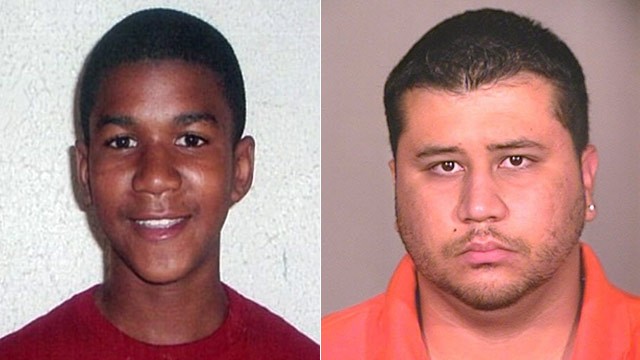
WASHINGTON, United States – By now, most of the country has heard of the shooting death of Trayvon Martin, an unarmed, teenage black male.  The shooter, George Zimmerman is the community watch captain in the neighborhood.  Students have staged walkouts, the President has expressed his opinions, and thousands across the country are outraged about the lack of an arrest.

Trayvon Martin and George Zimmerman. (Image courtesy of ABC News)

Zimmerman claims he was acting under Florida’s “stand your ground” law, in an act of self-defense.  As mentioned above, Martin was unarmed however, causing many to question whether deadly force was even necessary.  Furthermore, Zimmerman trailed Martin, following him on his walk home from a convenient store.

Under the law, a person may use deadly force anywhere they have a right to be if they have reasonable fear an assailant could seriously harm them or someone else, according to CNN.  Also, it eliminates the “duty to retreat” and allows people to “meet force with force.”

Former Florida governor, Jeb Bush signed the bill into law in 2005, according to The LA Times.  Although he was (and presumably still is) in favor of the law, he thinks it is being abused.  As reported by The LA Times, Bush said, “Stand your ground means stand your ground.  It doesn’t mean chase after somebody who’s turned their back.”

The problem with the law as written does not require a person to prevent a possible altercation, nor does it address whether one can pursue someone who has been perceived as a threat, according to The LA Times.  For example, a Florida judge ruled that a man who chased a burglar more than a block and a half and stabbed him to death, was acting within his rights under the “stand your ground” law.

The police have not arrested Zimmerman; there is no evidence to refute the claim that he acted in self-defense.  Now, however, the FBI and the Justice Department are investigating Zimmerman for possible civil rights violations, according to ABC News.

Zimmerman is white-Hispanic and Martin was black.  Zimmerman’s lawyer, Craig Sonner believes that Zimmerman’s life is in danger and has encouraged him to keep a low profile, reports CNN.  He said, “This case is spinning out of control…I hope there’s a way to rein things in so it doesn’t become an issue of a racial battle.”

Many believe that it already is a race battle and are insistent upon an arrest.

The New Black Panther Party (different from the more widely known Black Panther Party formed in the 1960s) has resorted to a reward.  The group put a $10,000 bounty for his capture.  According to CNN, the group is a “virulently racist and anti-Semitic organization.”  The City of Sanford responded to the bounty by demanding no vigilante justice.

Walkouts across the country including New York, Virginia, Georgia, California, and Trayvon’s old high school have become prevalent.  There is also a movement associated with the hoodie that Trayvon Martin was wearing when he was killed.  Miami Heat basketball players made a statement wearing the hoodies, and there are plans for a “Million Hoodie March” in Rochester, New York, reports CNN.

The Sunshine Slate reports that even though two major figures have stepped down in connection with the shooting, it does nothing to ease the rising racial tensions.  There is widespread and continued distrust of the Florida police by the black community.  The Sunshine Slate reports that historically, Sanford has already dealt with documented racial tensions.

The “stand your ground” law will be carefully looked at and possibly amended after this tragedy.  Sonner is questioning whether to argue that the law even applies to his client, or whether it was merely self-defense, which has always been an acceptable avenue to take.

For more information, please visit:

ABC News — Trayvon Martin Shooter ‘Could Not Stop Crying’ After Shooting — 25 Mar. 2012

CNN – Lawyer: Federal Hate Crime Charge Against Trayvon Shooter a “Challenge” — 25 Mar. 2012

The Los Angeles Times — “Stand Your Ground” Law Criticized After Trayvon Martin Shooting — 25 Mar. 2012

The Sunshine Slate — Trayvon Martin: State Attorney Steps Aside, Chief Steps Down — 24 Mar. 2012

Cuban Prisoners Faced with Inhumane Conditions; No Investigations Permitted

By Brittney Hodnik
Impunity Watch Reporter, North America

HAVANA, Cuba – A recent report and unverified video came out this last week showing the horrible conditions of Cuban prisons.  The environment in many of the 200 prisons throughout Cuba is inhumane and not fit for anyone.  The beds, toilets, food, and treatment of the prisoners are all inappropriate and appalling.

The Miami Herald reports that Cuba has between 70,000 and 80,000 inmates in about 200 prisons and labor camps on the island.  There are 11.2 million peoples in the country, making this a very high incarceration rate – 625 persons per 100,000.  Just for reference, the United States leads the way with 743 persons per 100,000 who are incarcerated.

Jose Miguel Vivanco, director of the Americas program at Human Rights Watch, said that prisoners told him back in 1995 that conditions were “absolutely awful, terrible, inhuman,” according to The Miami Herald.

Douglas Moore is an American convicted of a drug offense serving time in a Cuban prison, according to CNN.  In the hidden camera video released last week to publicize the terrible conditions, many of the inmates spoke about the atrocities.

Moore says in the video, “I cannot count all the times that I have been chained by my hands and legs and beaten mercilessly, then robbed of my meager possessions by the [guards] here at Combinado del Este,” reports CNN.  Complaints from other prisoners include meager rations of food, dilapidated cells, moldy walls, overcrowding, limited exercise hours, and persistent sewage leaks.

The major problem, reports CNN, is that the International Committee of the Red Cross and other human rights groups are unable to investigate conditions at the Combinado del Este.  A state released video in 2004 showed Cuban prisoners learning computer skills and exercising on a lawn.

According to an article by NBC Miami, Albert Mueller explains some of his time behind bars and the terrible things he went through.  He said that the prison was unsanitary, deteriorating, and unstable and that was over 40 years ago.  He recalls his first day in prison: “I [had] to suffer a simulation of a firing squad…It was a very bad experience.”

The narrator of the video wants it to be shared, and wants a change in the prisons in Cuba.  The Global Post reports the narrator says, “Show this video to the international community, how this miserable dictatorship commits cruelties against humanity.”  Hopefully the publicity will help the prisoners facing intolerable conditions there.

For more information, please visit:

Global Post — Cuban Prison Videos Filmed by Inmates Expose Living Conditions — 18 Mar. 2012

CNN – Cuban Prisoners Said to Make Videos Exposing Prison Conditions — 17 Mar. 2012

Miami Herald — Many Have Complained About Cuban Prisons, but No Independent Inspections Have Been Allowed — 16 Mar. 2012

NBC Miami — Ex-Cuban Prisoner Remembers his 15 Years Behind Bars — 15 Mar. 2012

Russian Ambassador Denies Intent To Seek Posthumous Magnitsky Conviction

By Terance Walsh
Impunity Watch Reporter, Europe

LONDON, United Kingdom – Alexander Yakovenko, the Russian ambassador to the United Kingdom, issued a statement denying reports of a posthumous prosecution of deceased Russian lawyer Sergei Magnitsky.  Yakoveno’s statement contradicts documentary evidence that Russian authorities are preparing to prosecute Magnitsky.

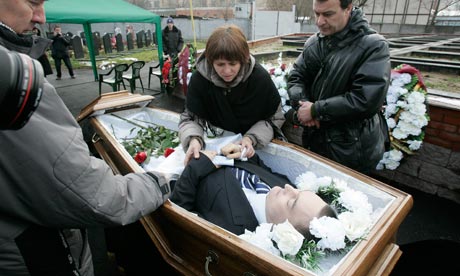
Sergei Magnitsky (Photo courtesy of The Guardian).

Magnitsky was a lawyer for Russian company Hermitage Capital.  In 2008 Magnitsky uncovered a tax fraud scheme coordinated by one of Hermitage Capital’s clients.  Upon reporting the fraud the Russian government turned the blame on Magnitsky.  He was imprisoned in depraved conditions, denied access to urgent medical care, and was allowed to die on the floor of the prison.

Several documents contradict Yakavenko’s assertion that Russian officials never planned on prosecuting Magnitsky posthumously.  A letter from Major Smirnov of the Russian Interior Ministry to Magnitsky’s mother, dated 10 February 2012 read, “During preliminary investigation, no grounds in support of the rehabilitation of deceased S. Magnitsky have been established, and under these circumstances his case must go to trial on common terms.”

Another letter on 24 February 2012 from General Romanov, the Deputy Chief of the Russian Interior Ministry’s Investigative Committee, to Magnitsky’s family stated, “The reopening of the preliminary investigation into S. Magnitsky has a direct aim to determine…all circumstances of the case in support of the accusation against S. Magnitsky and decide on that basis the matter about his guilt or innocence in the incriminated acts.”

And on 6 March 2012, Boris Kibis of the Russian Interior Ministry wrote a letter to Magnitsky’s mother naming her as a defendant in Magnitsky’s prosecution.  “You have been made a participant in the criminal case and now have the rights of a defendant.”

In his statement, Yakovenko gives an explanation for the continued proceedings involving Magnitsky and denies intentions to convict him.

 In accordance with general rules of the Russian penal legislation, a criminal investigation is discontinued in case of death of the accused person.

However, the Constitutional Court of the Russian Federation has recently decided that such a criminal investigation may be resumed or continued in case the person’s relatives insist on his posthumous rehabilitation. According to the information available, this is precisely what the mother of Sergey Magnitsky and his advocates insist on.

In this connection, the court is the only authority to decide on rehabilitation of Sergey Magnitsky or discontinuation of this criminal case “on account of the death of the defendant”. Russian law does not envisage conviction of a deceased person.

Thus, allegations of a posthumous prosecution of Sergey Magnitsky spread by the Hermitage Capital investment fund and some international organizations have no legal grounds.

Yakovenko’s statement follows a long debate in the British Parliament earlier this month, which concluded with a recommendation to impose sanctions against Russian officials for their role in Magnitsky’s death.

Througout the debate in Parliament, members of the British Parliament accused Yakovenko of attempting to gag discussions of sanctions.  These accusations stem from Yakavenko’s letter to British MP Dominic Raab complaining of “errors” in Raab’s motion for sanctions against Russian officials.

Raab responded to the letter by saying, “It’s bad enough Mr Putin’s regime corrupting elections in Russia. But it adds insult to injury for him to send envoys to try to subvert democracy in this country.”

Since the proceedings against Magnitsky began last July his family has sent over twenty complains to Moscow courts against the Russian Interior Ministry and General Prosecutor.  All of the complaints have been denied.

For more information please see:

Law and Order in Russia — Russia’s UK Ambassador Joins Cover Up In Magnitsky Case — 18 March 2012

The Embassy of the Russian Federation to the United Kingdom of Great Britain and Northern Ireland — On The Magnitsky Case — 16 March 2012

RIANOVOSTI — British MPs Urge Magnitsky List Sanctions — 8 March 2012

The Telegraph — Russia ‘Tries To Gag British Parliament’ — 7 March 2012