Colombian Military Kills FARC Guerrillas in Response to Soldier Murders
By Paula Buzzi
Impunity Watch Reporter, South America
BOGOTA, Colombia — 39 Revolutionary Armed Forces of Colombia, or FARC, rebels were killed on Wednesday after Colombian troops launched bombs into their Arauca camp. The bombardment comes five days after FARC guerrillas killed a non-commissioned officer and 10 other soldiers in the northeastern Arauca state. Defense Minister Juan Carlos Pinzon described this event on his Twitter account as the biggest blow against the FARC since he first took office in 2010.

General Ernesto Maldonado, commander of the Army’s 8th Division, confirmed that five air force planes bombarded the guerrilla’s camp from the air first, and then Colombian troops stormed the camp by foot shortly thereafter. According to Maldonado, the rebels that were killed on Wednesday were not the rebels responsible for Saturday’s killings, but they were part of the same unit as them.
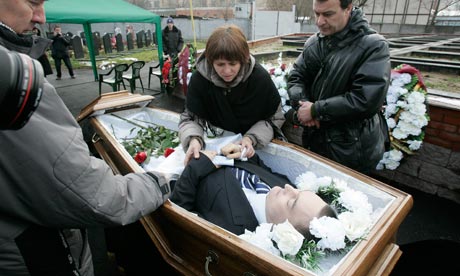
The bombardment against the guerrillas was in response to the murders of a non-commissioned officer and 10 other soldiers on Saturday in the city of Tres Cruces, inside the province of Arauca. The soldiers, who were guarding the oil industry infrastructure, were killed just hours after the FARC’s announcement that they would release hostages in exchange for allowing Women of the World for Peace members to visit rebels detained in the country’s jail.
The family and friends of the soldiers killed on Saturday have publicly criticized Santos’ government, saying their young sons were thrown into dangerous conditions with little preparation. Saturday’s attack by FARC rebels is the deadliest guerrilla attack against the Colombian government forces in many years.
The FARC is believed to currently have hostage at least 10 Colombian soldiers, despite it’s announcement late February that it would officially stop all abductions. President Juan Manuel Santos has announced that he will be willing to negotiate with the FARC only after all their hostages are released, and only after they pledge to stop “terrorist” actions.
The military estimates that approximately 600 to 700 members of the FARC operate in the Arauca area. Arauca has been a hotbed for leftist guerrilla activity recently, mainly because of the presence of foreign oil companies — potential targets for future attacks and extortion deals.
The FARC, which was founded in 1964 as an anti-government group, is Colombia’s largest and most dangerous guerrilla group with an estimated 8,000 members. The Colombian government has made fighting the FARC a top priority and has obtained billions in foreign aid to help combat the FARC’s terrorist acts. The FARC’s power has recently been dwindling, however, thanks in part to military and police who captured and killed it’s leader, Alfonso Cano late last year.
For further information, please see:
CNN – Colombian Troops Kill Dozens of Guerrillas, Defense Minister Says – 21 March 2011
The Wall Street Journal – Colombia Forces Kill 33 FARC Rebels in Arauca – 21 March 2012
Hispanically Speaking News – FARC Guerillas Kill 11 Soldiers at Colombia-Venezuela Border – 18 March 2012
USA Today – Colombian Rebels: Hostages To Be Freed – 18 March 2012
BBC News– Colombian Soldiers Killed in Farc Ambush – 17 March 2012
Sri Lankan Clergy Prays for Dismissal of UN War Crimes Resolution
By Greg Donaldson
Impunity Watch Reporter, Asia
COLUMBO, Sri Lanka – The United Nations Human Rights Council will vote this week on a resolution strongly sponsored by Britain and the United States. The resolution will explore potential war crimes that occurred during a Sri Lankan civil war that ended three years ago.

Citizens of Sri Lanka are upset over the resolution. Many Sri Lankans see the resolution as disruptive of the current peace. Hundreds of Buddhist, Hindu, Muslim, and Christian clergy gathered in Colombo to demonstrate against the UN resolution. The ceremony demonstration included members of each clergy carrying national flags and traditional drummers parading throughout the city.
The clergies also read a statement following the day’s events. The statements said “evil forces both local and international, have joined hands to deprive Sri Lanka of the present environment of peace… and take this blessed island back to an era of darkness.” The statement continued “we therefore pledge with national determination that the Sri Lankan government and people will be able to defeat the resolution and the evil forces behind it.”
It is alleged that both the Sri Lankan army and the Liberation Tigers of Tamil Eelam were responsible for major war crimes during the country’s civil war. Last year a United Nations appointed panel found that there were “credible allegations” that both sides had committed serious human rights violations.
The Sri Lankan government has rejected the report and instead commissioned its own internal investigation. The Lessons Learned and Reconciliation Commission found the armed forces had not acted inappropriately. The report was rejected by the U.N. and condemned by several human rights groups.
One of the examples the UN panel found in its investigation was a so-called humanitarian rescue operation carried out by the Sri Lankan army. The operation took place during the final stages of the civil war against the Tamil Tigers. The panel estimated that the operation was responsible for the deaths of over 40,000 people.
Eileen Donahoe, the U.S. ambassador to the United Nations Human Rights Council, has pushed hard for the proposed Sri Lankan war crimes resolution. In a statement she explained, “many thousands of Sri Lankans civilians died or suffered other violations in the final weeks of the long-running civil war in 2009. There has been no complete accounting of those deaths or other violations and no pursuit of accountability for them.
The resolution is currently being debated at the United Nation’s convention in Geneva. Both proponents of the resolution and the Sri Lanka government have received strong support from outside parties and countries.
For More Information Please See:
New York Times –U.N. Panel Seeks Vote on Carnage in Sri Lanka – 19 March 2012
Washington Post – Sri Lankan Clergy Pray for Defeat of UN Resolution Urging Investigation of Possible War Abuses – 19 March 2012
The Independent – Sri Lanka Resists UN Resolution Against Alleged War Crimes – 26 February 2012
Morocco to Revise Rape-Marriage Law after Shocking Suicide
By Zach Waksman
Impunity Watch Reporter, Africa
RABAT, Morocco – After sixteen-year-old Amina al-Filali killed herself on March 10, following a six-month forced marriage to the man who raped her, Morocco announced plans to revise its laws regarding the relationship between rape and marriage last Thursday. Protesters and feminists have long called for a controversial statute to be repealed, and the government has pledged to change its handling of rape.

Rape victims in Morocco are often subject to deep shame upon both themselves and their families, especially in rural areas such as where her hometown of Larache is located. Though the West African country’s laws provide for a prison sentence of 10 to 20 years for a person who rapes a minor, the rapist has a loophole that enables him to avoid incarceration. Under Article 475, an adult who has “corrupted a minor” may evade the charges by marrying the victim. A similar concept exists in the Christian Bible. This provision has often been used by families of rape victims to protect their honor. These “special circumstances” create an exemption to the requirement that both parties to a marriage be at least 18 years old.
“Another, more terrible failure is that the family agreed to the “amicable solution” offered by their friends. Rape is a crime in Morocco, but it is also a taboo. The woman who has been raped is often seen as having been shamed—her marriage prospects change radically, and her morals are called into question,” wrote Laila Lalami in a piece for The Daily Beast. “In other words, the victim is blamed and the perpetrator is forgotten. ‘If we married her off,’ Amina’s sister Hamida told a Spanish network, ‘it was to protect her, so that people would not speak ill of her.’ The Filali family apparently preferred to sacrifice their daughter’s physical and emotional well-being rather than live with the reminder that she had been raped.”
In Amina’s case, the family filed charges against the rapist last year. Her father, Lahsan al-Filali, said that the prosecutor advised him of the option to have her marry him. The judge ordered it. He told Morocco’s 2M Television that he had no choice but to allow the marriage.
“When the judge said they will marry, I did not agree, but I could not challenge the law. I wanted that man [the rapist] to go to prison,” he said. “At first I did not agree to this marriage, but when the court of family affairs called me and pressured me, I agreed.”
After the marriage, the husband’s treatment of Amina did not improve. She was beaten and deprived of food. When she told her family about the life she was living, she was reportedly disowned. By March, she could no longer take the punishment, so she swallowed rat poison to end her life. As Amina died, her enraged husband dragged her down the street by her hair. The Ministry of Justice’s preliminary investigation concluded that the relationship was consensual, meaning that it was not rape.
The stunning suicide prompted immediate calls for reform. A Facebook page called “We are all Amina Filali” has been created, and other protesters seek the incarceration of both the rapist and the judge who ordered the marriage.
“Amina was triply violated, by her rapist, by tradition and by Article 475 of the Moroccan law,” tweeted activist Abadila Maaelaynine.
Morocco is one of the more liberal Arab states with regard to women’s rights. In 2004, the country all but eliminated polygamy, abolished a duty of obedience to the husband, and permitted women to keep assets after a divorce. These reforms were hailed by the West as a step forward for women’s rights. But there is still more work to be done. Since 2006, the country has planned to adopt legislation banning all forms of violence against women, but it has yet to be seen. This incident might be the catalyst that drives the issue forward.
“It is unfortunately a recurring phenomenon,” Fouzia Assouli, the president of the Democratic League for Women’s Rights, told the Associated Press. “We have been asking for years for the cancellation of Article 475 of the penal code, which allows the rapist to escape justice.”
Moroccan communications minister Mustapha el-Khalfi confirmed the need for further reform.
“We can’t ignore what happened, one of the things we are looking for is to toughen the sentence for rape,” he told Al Jazeera. “We are also looking to creating a debate on the cultural and social aspects to create a comprehensive reform.”
Whatever the ultimate appearance of that reform may be, it is unlikely to constitute the end of the issue in Morocco. Last year, a government study found that about 25% of Moroccan women have been subjected to sexual assault at least once in their lives.
“Legal reforms are not enough so long as Moroccan society views the victim of a rape as something that needs to be solved,” wrote Lalami. “Rape is not puzzle. Rape is a crime. Amina Filali’s death is a stain on our collective conscience.”
For more information, please see:
Morocco Board — Morocco: Outrage Grows over Minor Rape & Suicide — 19 March 2012
The Week (UK) — Ordeal of Rape Victim Amina Filali Shocks Morocco — 19 March 2012
Morocco Board — Morocco: Antiquated Law Led to Suicide of Minor — 18 March 2012
Al Jazeera — Morocco Mulls Tougher Line on Rape-Marriages — 17 March 2012
BBC — Morocco Protest against Rape-Marriage Law — 17 March 2012
Montreal Gazette — Morocco to Revise Law after Rape Victim’s Suicide — 16 March 2012
Citizens of Damascus Feel The Burn of Syria’s Violence From The Ongoing Uprising
By Adom M. Cooper
Impunity Watch Reporter, Middle East
DAMASCUS, Syria–As the never-ending turmoil continues in Syria, heavy fighting has erupted between opposition fighters and security forces loyal to President Bashar al-Assad in a main district of Damascus. Witnesses report that this particular area is home to several key security installations. The intense fighting is taking place as al-Assad’s regime retains the contention that it has complete control of Damascus.

Syrian state television stated three “terrorists” and a member of Syria’s security forces were killed in the fighting. Since the beginning of the uprising, the Syrian state television has continually held that these “terrorists” are to blame for the violence around the country and has not repeatedly acknowledged the many deaths endured by innocent civilians.
Rami Abdel-Rahman, head of the Syrian Observatory for Human Rights, stated that at least 18 security troops were wounded in the fighting that broke out before dawn in the upscale and heavily guarded Mazzah neighborhood of Damascus. According to the Observatory, more than 9,100 people have lost their lives since the uprising began against the regime last March. Abdel-Rahman shared these words with the AFP.
“The clashes were the strongest and closes to security installations in the capital since the outbreak of the revolt a year ago.”
A member of the Revolutionary Leadership council in Damascus, referring to herself as Lena and not wishing to be identified further, shared these words with Al-Jazeera about the fighting in Damascus.
“Some people came to al-Mezzah and they are trying to attack residents. They are calling them names and taking them out of their houses, people have left their homes. They are in the streets. The security forces are all around the place. Security police have blocked several side streets and the street lighting has been cut off.”
Mourtadad Rasheed, an activist living in Damascus, shared these words with Ahram about his encounter of the violence, detailing that heavy shooting could be heard in Mazzaeh as well as two other districts, Qaboon and Arbeen.
“We woke up at 3AM to the sound of heavy machinegun fire and rocket propelled grenades (RPG). The fighting last about 10 minute, then eased before starting again.”
Al-Jazeera’s own Rula Amin reported from neighboring Lebanon that many residents believe that opposition is pressing into areas around Damascus that could make al-Assad much more vulnerable than he already is.
“Residents are telling us that there was intense gunfire for hours. They could hear from loudspeakers the army and the security forces asking armed men to leave one of the buildings. Al-Mazzeh is not geographically located in the heart of the capital but it’s a very important neighborhood. It is heavily guarded. There are a lot of high-ranking officials living in Al-Mazzeh, in addition to the UN headquarters, embassies, and ambassadors. This is taking place as the government claims they have control over the capital.”
The most recent clashes in Syria came after twin car bombs ripped through two neighborhoods of Damascus on Saturday 17 March 2012, which according to the Syrian interior ministry, claimed 27 lives. Another car bomb was detonated on Sunday 18 March 2012 in a residential neighborhood of Aleppo, claiming two lives.
The international community continues to struggle with the appropriate and consensus response to the situation. Former UN chief Kofi Annan, who met with al-Assad in Damascus earlier this month, ordered a team of experts to Syria to discuss a possible ceasefire and an international monitoring mission. The Arab League previously deployed a monitoring mission into Syria but it was short-lived as organizational issues and turmoil on the ground prevented its success.
Technical experts from the UN and Organization of Islamic Cooperation were in Syria on Monday 19 March 2012 to assess the humanitarian impact of the regime’s deadly crackdown on the protests. The mission, with three OIC experts in the team, will cover 15 cities and will submit a report to the Saudi-based Islamic grouping and UN on the humanitarian needs of the Syrian people. OIC assistant secretary general Atta Al-Mannan Bakhit shared these words with the AFP about the mission.
“The joint OIC-UN mission entered Syria on Friday to carry out an evaluation of humanitarian aid.”
Jacob Kellenberger, president of the International Committee of the Red Cross, flew to Moscow for talks on Monday 19 March 2012 with Russian Foreign Minister Sergei Lavror on the “extremely difficult” humanitarian situation in Syria’s protests hubs.
“A daily ceasefire of at least two hours is imperative to allow the evacuation of the wounded.”
While the wounded wait for the proper attention, it would seem foolish for the international community to not pursue harsh action against al-Assad directly. The security forces are clearly following his direction and it is costing many civilians their lives. When the Arab League had its monitoring mission, it was very against the idea of foreign intervention into Syria. But at this juncture, foreign intervention seems like the only possible course of actions to serve the interests of the civilians, especially the wounded. Without intervention, more suffering is imminent.
For more information, please see:
Ahram – Damascus Rocked By Fighting After Weekend Bombings – 19 March 2012
Al-Jazeera – ‘Heavy Fighting’ Shakes Syrian Capital – 19 March 2012
BBC – Syria Unrest: Fierce Firefight Erupts In Damascus – 19 March 2012
The Guardian – Syria: ‘Heavy Fighting’ In Damascus – 19 March 2012
NYT – Fighting Flares In Elite Area of Syrian Capital, Activists Say – 19 March 2012
Reuters – Syrian Captial Sees Heavist Fighting of Uprising – 19 March 2012