Press Release Originally sent by Hermitage Capital 3/9/12
Following the March 7th debate in the House of Commons which unanimously approved sanctions on the Russian officials in the Magnitsky case, the Russian Ambassador to the UK, Alexander Yakovenko, posted a letter on the official Russian embassy website (http://www.rusemb.org.uk/press/650). In his letter addressed to John Bercow, Speaker of the House of Commons, the Russian Ambassador argued against the sanctions and said that because the officials were not convicted in a Russian court, visa sanctions and asset freezes would be “extrajudicial punishment.”
Today, Hermitage Capital responded to the Ambassador’s letter.
“It is remarkable that the Russian Ambassador is fighting for the travel privileges of corrupt officials who stole $230 million from the Russian state and killed the man who exposed the theft,” said a Hermitage Capital spokesperson.
“It is now clear that the cover-up and protection of the 60 officials who killed Sergei Magnitsky has become a national policy. When foreign ambassadors get involved, this is no longer the case of rogue officers acting on their own initiative. It is a clear directive of the Russian state.”
The Ambassador does not mention in his letter that: 58 out of 60 Russian officials involved in the Magnitsky case have been exonerated; the investigation into corruption that Magnitsky uncovered has been closed; Magnitsky’s family has been denied access to his medical records for an independent medical examination, and that the same officers who arrested Magnitsky are now organizing the first ever posthumous trial in Russian history against him.
“The Ambassador argues that only the Russian judicial system can decide the guilt of the officers. The judicial system he is arguing should be relied upon is the same judicial system that refused Sergei Magnitsky’s desperate requests for medical attention, refused his requests for visits with his children and family, and excluded all exculpatory evidence which would have allowed Sergei Magnitsky to be freed before he died,” said a Hermitage Capital spokesperson.
“Visas are a privilege, not a right. They should not be available to the torturers and murderers,” said a Hermitage Capital spokesperson.
By Alexandra Halsey-Storch Impunity Watch Reporter, Europe
MOSCOW, Russia–On March 6, 2012 the Khamovnichesky District Court of Moscow heard a lawsuit filed by Ivan Cherkasov, a Hermitage Capital executive based in London, England, against the Russian Interior Ministry. The lawsuit challenges a fairly new law, enacted in April 2010, which allocates power to the Interior Russian Ministry to “arbitrarily deny any person the right to leave the country.”
Ivan Cherkasov files complaint against Russian Foreign Ministry (Photo curtesy of Forbes Magazine)
In September of 2011, Cherkasov, a colleague of the late Sergei Magnitsky, applied for a new passport through the Russian Embassy in London. The Embassy thereafter denied his application in December “on orders from the Russian Interior Ministry,” but refused to provide any further detail. Last week, however, the Embassy stated that Cherkasov’s request for a renewed passport had been denied based on paragraph 3 of Article 15 of the Russian Federal law entitled “On Procedure of Exit and Entry to the Russian Federation.”
The law provides that, “the right of citizens of the Russian Federation to leave the Russian Federation may be temporarily restricted in cases where the citizen is suspected or involved as a defendant, and for as long as the decision is made on the case or the court verdict comes into force.”
Denying Cherkasov’s request for a new passport appears to be yet another glimpse into the corrupt workings of the Russian government and the latest twist in a tax rebate fraud case. In May 2007, the Russian Secret Police and the Russian Interior Ministry began a “fabricated criminal case” against Cherkasov as a means to “gain access to” Hermitage Fund’s documents and files and then to steal $230 million of taxes that Hermitage had paid the year prior. The tax rebate fraud was exposed by an attorney, Sergei Magnitsky, who gave “sworn testimony against the officials involved.” Magnitsky was then arrested and detained; he died a year later at the hands of abusive Russian authorities. Cherkasov’s case has remained open for the past five years, thus allegedly falling within the bounds of the above-stated law.
As Cherkasov points out, he left Russia six years ago and has, since that time, lived abroad. “By refusing to issue me a passport of a citizen of Russian, the Russian Interior Ministry in fact denies me Russian citizen and denies me the right to emigrate.”
Cherkasov claims that, “with the new law in place, anyone who is being persecuted by the authorities no longer has the freedom to emigrate. The constitutional right of citizens of Russia to freedom of movement is left at the mercy of corrupt law enforcement officers.” Indeed, restricting one’s ability to emigrate has been method exercised by such totalitarian regimes under both Mussolini between 1922 and 1943 and Hitler from 1933 to 1945.
By Brittney Hodnik Impunity Watch Reporter, North America
KINGSTON, Jamaica – Amnesty International and other human rights groups are questioning the police tactics in use in Jamaica. Many accuse the Jamaican police of being “trigger happy,” and resorting to unnecessary use of guns.
Police forces not hesitant to engage in gun battles with local criminals. (Image courtesy of Amnesty International)
According to Amnesty International, police have killed forty-five people so far in 2012. Twenty-one of those killings occurred in a six-day period. Over the ten-year period between 2000 and 2010, Jamaica reported more than 2,220 fatal shootings by police and only two officers have been convicted over that span.
Most recently, on 5 March, there was a fatal shootout between the police and other gunmen. According to The Associated Press, six people were killed including a 13-year-old girl named Nicketa and two elderly men who were caught in the crossfire. Residents of the community blame officers for the killings.
Since the incident, the area has been under curfew and patrolled by security personnel armed with M16s and other machine guns, reports The Associated Press. Nicketa’s mother and aunts showed reporters bullet holes evidencing the officer’s carelessness in shooting. The gun battle lasted approximately forty minutes.
Police Commissioner Owen Ellington tried to ease the tension by speaking out and trying to put the officers’ actions in context. According to Go-Jamaica, he explained, that between 2007 and 2012, criminals using illegal firearms murdered 5,829 people. Additionally, in that same period, 62 police personnel were killed on duty and another 127 were shot and injured.
The news report indicated that he stands behind the officers and he maintains that the officers only shoot in self-defense. According to Go-Jamaica, Commissioner Ellington said that he recently reminded cops of the guidelines for using lethal force and non-lethal force in confrontations with criminals.
On 9 March, the officers returned to the same community in search of illegal weapons and criminals. About 50 persons were detained and many remain in custody.
Amnesty International said, “The problem is that police continue to enter marginalized inner-city communities as if everyone there was a criminal suspect.” Many human rights groups want more accountability for the police. “If human rights abuses such as police killings go unpunished, it will only open the door for more abuses to take place,” said Chiara Liguori, a Caribbean researcher at Amnesty International.
Overall, the Jamaican police are caught between using lethal force in self-defense and to prevent criminals from using illegal weapons, and being overzealous, intruding where they should not. Liguori said, “[T]he Jamaican authorities must take decisive steps to fight impunity.”
LONDON, United Kingdom — The parliament of the United Kingdom unanimously passed a resolution urging sanctions against Russian officials for the egregious arrest and murder of Sergei Magnitsky. The resolution was proposed by Dominic Raab and calls on the government of the UK to freeze the assets and visas of sixty Russian officials who were complicit in Magnitsky’s death.
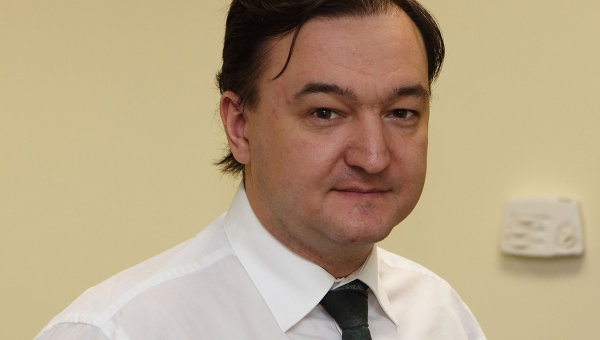
Sergei Magnitsky (Photo courtesy of RIANOVOSTI).
The measure is labeled “Human Rights Abuses and the Death of Sergei Magnitsky.”
The human rights issues surrounding Magnitsky arise from a $230 million tax fraud scheme perpetrated by tax agents who registered fake companies with Hermitage Capital. In 2008 Magnitsky uncovered the scheme. The Russian government, instead of punishing the wrongdoers, framed Magnitsky and blamed him for the scheme. The government subjected Magnitsky to abhorrent living conditions in prison and denied him urgent medical treatment. They allowed him to die on the floor of the Matrosskaya Tishina prison hospital while he waited for a doctor for over an hour.
An investigation by Hermitage Capital leader William Browder uncovered the framing scheme and found that the true criminals were all enriched by the scheme while truth tellers were punished. Meanwhile the Kremlin has perpetuated the cover-up by seeking to prosecute Magnitsky posthumously.
“All the suspects were cleared by Russian investigators. Some have been promoted, some decorated. In fact, the only people on trial are Magnitsky’s employer and Magnitsky himself, now the subject of Russia’s first ever posthumous prosecution,” Raab said.
The bill passed by the UK Parliament is meant to support the truth Magnitsky worked for and help those fighting for human rights improvements in Russia.
“The UK Parliament has spoken overwhelmingly in solidarity with Sergei Magnitsky and the other brave voices fighting for the rule of law and reform in Russia. The government should now heed its will and come forward with a bill to impose targeted sanctions on those responsible for torture, assassination and other crimes against those struggling to promote or defend the most basic freedoms we enjoy here,” said Mr. Raab, MP.
Other Members of Parliament have expressed enthusiasm over the measure. “I am delighted that the House of Commons has unanimously expressed its will that the UK should join other government around the world in refusing visas and travel rights into the UK for those responsible for the persecution and death of Sergei Magnitsky,” said Sir Malcom Rifkind, MP.
Alistar Burt, the UK’s Foreign Office Minister, said that he does not oppose the bill, but it is the policy of his office not to comment on individual cases.
Mr. Burt did mention, however, that “[t]he death of Sergei Magnitsky serves as a stark reminder of the human rights situation in Russia, and questions about the rule of law there.”
The measure calling for sanctions comes on the heels of Vladimir Putin re-taking the Russian presidency. Parliament declared its intent to shed light on Russian human rights abuses prior to debating the Magnitsky sanctions bill. Former foreign secretary William Millband stated, “[t]his is not about Russia-bashing but support for a Russia fit for the history of that country.”
The measure calls for sanctions for those who
“(a) were involved in the detention, physical abuse or death of Sergei Magnitsky;
(b) participated in efforts to conceal the legal liability for the detention, abuse or death of Sergei Magnitsky;
(c) committed the frauds discovered by Sergei Magnitsky; or
(d) are responsible for extrajudicial killings, torture or other gross violations of human rights committed in Russia or any other country against any individual seeking to obtain, exercise, defend or promote basic and internationally recognised human rights, including those set out in the International Covenant on Civil and Political Rights 1966.”
While the debate in Parliament was ongoing Russian officials objected to any proposed sanctions by the British government. The Russian ambassador to the United Kingdom sent written objections to Member so Parliament telling them of errors in their proposed sanctions.
Mr. Raab responded “It’s bad enough Mr Putin’s regime corrupting elections in Russia. But it adds insult to injury for him to send envoys to try to subvert democracy in this country.”
The United States and the Netherlands have both imposed visa bans against Russian officials involved in Magnitsky’s death. Russia responded by banning certain American and Dutch officials, but none of the countries have actually carried out the ban.
The United States Congress is currently considering a measure similar to the one urged by Parliament. The Obama administration has shown no urgency to pass the measure, however, likely because of the provision in the bill that requires sanctions for any official associated with “gross violations of human rights.” This proposition would drastically change the US’s human rights policy.
Last month the European Parliament’s delegation on relations with Russia requested that European Union member nations take action against Russia in response to the Magnitsky affair.
Raab has called on the UK government to pass the measure before the Queen’s speech, scheduled to take place on May 9th.
by Emilee Gaebler Impunity Watch Reporter, South America
BRASÍLIA, Brazil – The city of Sao Paulo, Brazil recently saw a massive strike by union truck drivers for petroleum companies. The drivers went on strike for almost three days in response to city officials passing new legislation that banned commercial truck’s from using main through fares during certain times of the day.
A customer arriving at a gas station in Sao Paulo is told that there is no fuel available to purchase. (Photo courtesy of BBC News)
Sao Paulo is a very congested urban center with over 11 million citizens and approximately 7 million vehicles. Throughout the city there are roughly 2,000 gas stations. By late afternoon yesterday, nearly all those stations were running short on gasoline, and many were already closed down as they had already emptied their gas and ethanol supplies.
The truckers union stated that the new legislation unfairly targets them by limiting their access to major highways during peak hours of the day. This then forces them to take alternative routes that increase their costs of driving and the time they spend working. All 800 of the city’s tank truck drivers participated in the strike.
On Tuesday afternoon, a state court judge issued a ruling that the strike must end or the union would be fined an amount of $1 million reais ($566,828 US). One of the most pressing concerns was that the strike would also shut down public transportation throughout the city.
Claudinei Pelegrini, the Vice-President of the Sao Paulo truck drivers union, enunciated the union’s goal that talks be initiated to revoke the new restrictions. Pelegrini noted, late on Wednesday, that his members move more than 90% of all petroleum in the city. He demanded that an agreement must be reached or else truck drivers for food and construction materials would also join the strike.
Despite enunciating these pressures, Pelegrini noted that emergency services would not be affected by the strike. He said deliveries to airports, hospitals, police and fire stations would take place. City officials expressed their opposition to the strike, noting that police and military escorts were being used to allow for deliveries of supplies by a few drivers not participating in the strike.
The strike stands to affect local business owners in a drastic way, even if it is successfully ended within the next few days. NPR reports that Marcelo Fernandes, a local gas station owner, will lose roughly $15,000 in sales for each 24 hour period that his gas tanks stand empty.
“They’re killing us, the government has got to give in to the guys. In the best-case scenario, if they ended the strike now, I don’t think I would get any fuel before Thursday,” said Fernandes.