YAOUNDE, Cameroon– Word is spreading that Cameroon is returning refugees to Nigeria despite the fact the country is still facing conflict with Boko Haram. UNHCR and other international organizations that work to protect refugees are deeply concerned by Cameroon’s actions. According to reports 2600 refugees have been forcefully returned to Nigeria from Cameroon.
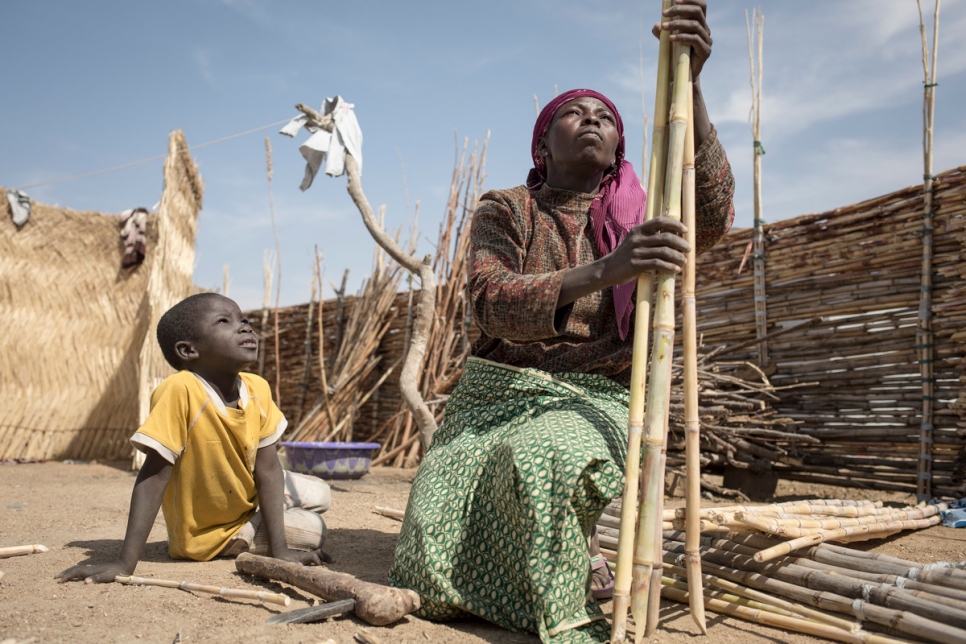
Refugees at a camp in Cameroon. (Photo Courtesy of UNHCR)
UNHCR spokesperson Babar Baloch detailed a specific situation where Cameroon soliders forced refugees out of the country. “UNHCR teams have heard and documented accounts about Cameroonian troops returning refugees against their will – without allowing them time to collect their belongings. In one incident on March 4, some 26 men, and 27 women and children, were sent back from the Cameroonian border town of Amtide, in Kolofata district, where they had sought refuge, according to UNHCR monitoring teams in the border regions.” UNHCR has acknowledged Cameroon’s generosity in accepting 85,000 refugees but is calling upon Cameroon to be responsible for its obligations under international law.
Boko Haram has killed 15,000 and displaced 2 million in Nigeria. While a regional coalition has been able to push back Boko Haram they have been successful in being more active in the the Lake Chad area. Boko Haram is also not only an issue for Nigeria, but Cameroon. 200,000 Cameroonian’s have left their homes because they fear Boko Haram’s violence may spread.
By Cintia Garcia Impunity Watch Reporter, South America
BOGOTÁ, Colombia— Within the past year there has been an increase in murders of indigenous activists by right-wing paramilitaries. The most recent assassinations of prominent activists occurred in Corinto and Medellin.
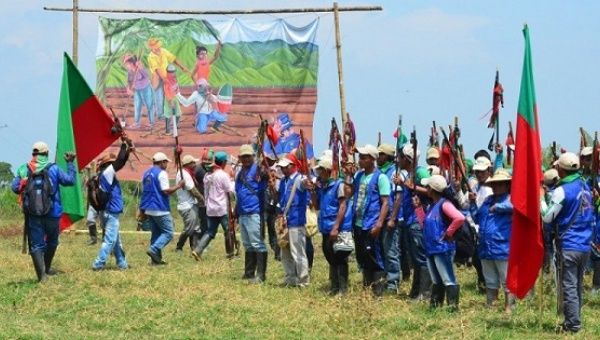
Nasa tribe members protest the assasination of land rights activist, Javier Oteca. (Photo Courtesy of Telesur)
Javier Oteca, a member of the Nasa tribe and well known indigenous land rights activist was shot to death by right-wing paramilitaries impersonating farm workers, according to witnesses. It is believed that the men that shot Mr. Oteca were private military officers. Although members of the National Army were in the vicinity where Mr. Oteca was shot, they were unable to detain the suspects. But members from Mr. Oteca’s tribe detained six suspects believed to be related to the incident. The tribe has decided to carry out its own investigation of the murder. The Nasa tribe has experienced an increase in violence. In 2016, Colombia’s Constitutional Court declared the tribe “at risk of extermination.”
In addition to Mr. Oteca’s murder, earlier this month, Alicia Lopez Guisao, a leader of the Asokinchas tribe was murdered in Medellin. Ms. Guisao was shopping at a grocery store when two men stormed the store and shot her. Ms. Guisao worked for the left-wing organization, the People’s Congress, whose objective is to organize indigenous peasants. Ms. Guisao distributed food and land to indigenous groups and afro-descendants through the program, the Agrarian Summit Project. The People’s Congress believe that, “her murder is an example of the fact that the right-wing organizations that operate today in the city of Medellin are the same paramilitaries who have murdered others in recent years.”
The increase in murders of indigenous activists, according to a report released by the Defense of the People, stated that “since the retreat of the FARC from the zones where they previously exercised control has allowed for the entrance of new armed actors who fight for territorial and economic dominance.” It was well known that the FARC and left-wing guerilla groups had defended the indigenous campesino groups and since their retreat these communities are vulnerable to violence. In January and February alone, 3,549 people have been displaced, mostly indigenous and black, according to the United Nations.
by Yesim Usluca Impunity Watch Reporter, Middle East
BAGHDAD, Iraq — After a one-day break, Iraqi forces resumed their operations against the Islamic State (“ISIS”) on Sunday, March 26th. The Iraqi army’s efforts were briefly put on hold following suspicions of a U.S.-led coalition airstrike killing dozens of civilians in Mosul on March 17th.
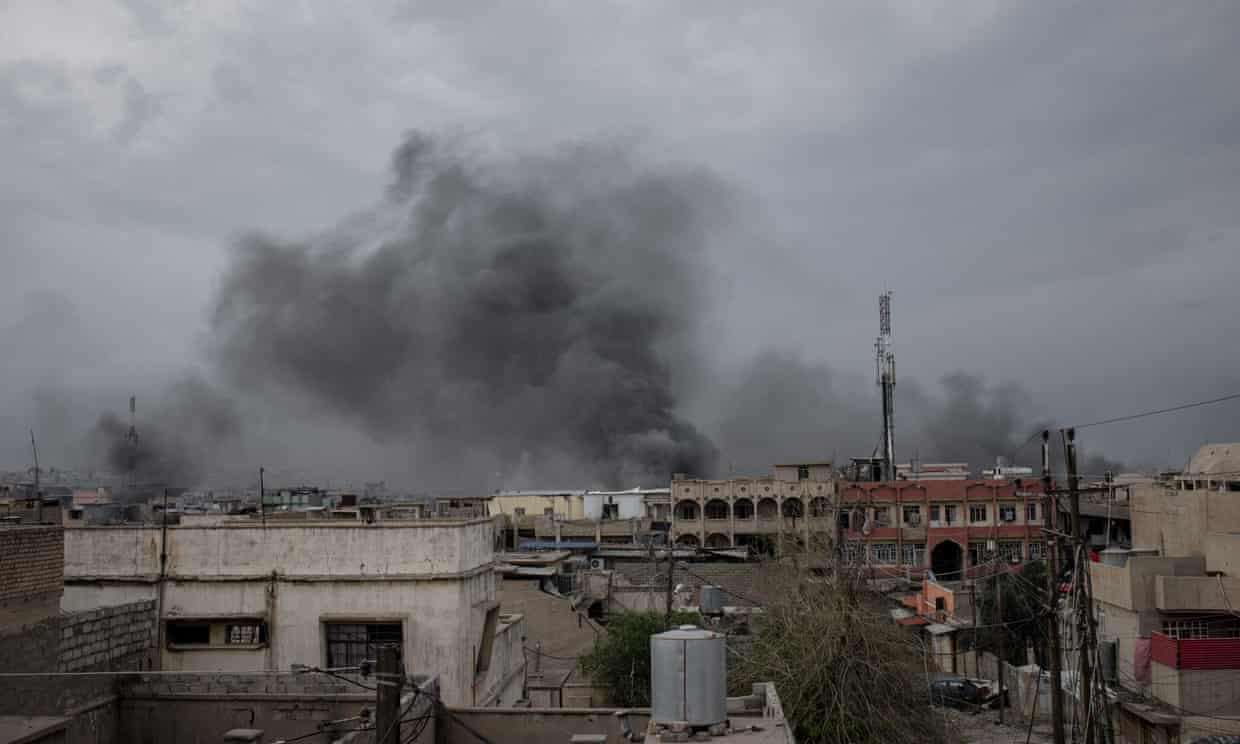
Hundreds of civilians lost their lives as a result of the airstrikes, and hundreds more are feared trapped or dead (Photo courtesy of the Guardian)
Local residents and witnesses stated that the bodies of over 200 civilians had been recovered from the rubble of a collapsed building in the area hit by the airstrike. Photographers at the attack site reported seeing twelve bodies, including those of women and children, being placed in blue plastic body bags. Hundreds more civilians are still believed to be trapped. An AlJazeera reporter, Ms. Hoda Abdel-Hamid, stated that she interviewed a man who had been trapped under rubble for several days before being rescued, and had lost twenty-two relatives in an airstrike.
According to Ms. Abdel-Hamid, local residents indicate that the “main problem” is the agility with which ISIS fighters move around. She stated that the fighters “go[] in and out of houses, on top of rooftops . . . and then disappear.” By the time an airstrike is called in, “the ISI[S] fighters have disappeared.”
U.S. defense officials confirmed that a coalition airstrike struck a target in Mosul on March 17th. U.S. Central Command (“CENTCOM”) officials indicated that the aircraft had acted at the request of Iraq. This is a stark contrast to the statement issued by Iraqi Vice President Osama al-Nujaifi, who characterized the conditions as a “humanitarian catastrophe” by blaming U.S.-led coalition airstrikes and “excessive force” used by federal police forces. Mr. al-Nujaifi subsequently called for an emergency parliament session to initiate an investigation into the attack. The spokesman for the Joint Operations Command further indicated that the Iraqi Defense Ministry opened an investigation into the attack.
While CENTCOM officials stated that coalition airstrikes are carried out in compliance with the Laws of Armed Conflict, March could produce the highest number of civilian deaths attributed to U.S. airstrikes since the beginning of the war. Estimates for the amount of civilians killed by the end of the month is currently set at 1,000. The U.N. Humanitarian Coordinator for Iraq indicated that the organization is “stunned by this terrible loss of life[.]”
A senior public information officer in Iraq with the U.N.’s refugee agency, Ms. Caroline Gluck, indicated that country conditions are “deteriorating daily.” Ms. Gluck noted that the fighting takes place closer to civilian homes in a “densely-packed area,” which results in families being “terrified by the mortars, the shelling and the airstrikes[.]” She stated that most families rely on one meal per day, which typically consists solely of water and flour. She further added that people are “desperate” due to the lack of fuel and heating. The U.N. estimates that over 600,000 people are still trapped in the city of Mosul.
NAYPYIDAW, Myanmar – In early February, workers demanding better conditions, wages, and benefits held a violent protest in a Chinese-owned factory which produces clothing for fashion label H&M. The workers of the factory, which is located in Myanmar, damaged company property and physically attacked store managers, prompting the company to temporarily halt further production in the facility.
A young woman works at a major garment factory. Photo courtesy of Reuters.
The dispute arose out of strikes which began in January 2017, after the leader of a labor union got fired. The incident speaks to the importance of protecting such labor unions, as many workers are generally unaware of their rights and protections while at work. Few large-scale garment factories are unionized, as union leaders and activists are often dismissed and blacklisted, which prevents them from finding other employment.
The labor dispute extends past the incident at the Chinese-owned H&M factory. Bangladeshi authorities have been accused of harassing and intimidating garment workers following demonstrations for higher wages. The garment industry in Bangladesh is a multi billion-dollar industry, which allows incredible opportunity for companies and factories to undermine worker’s rights and protections.
Labor rights activists are now calling on the international community to act by increasing pressure on corporations like H&M to ensure good working conditions and fair wages. The trouble in doing so is that companies like H&M often have little say in the implementation of those kinds of policies at the production phase. Likely, the most effective means of ensuring such protections are for local governments to pass stricter laws and regulations. There is little that the international community or activists can do to force such a measure, though an increased discourse on the issues certainly may help.
Brasilia, Brazil—A well known activist involved in the land rights movement was shot and killed on Monday in an Amazonian Hospital. The activist was recovering from a previous assassination attempt that took place two days prior to his death.
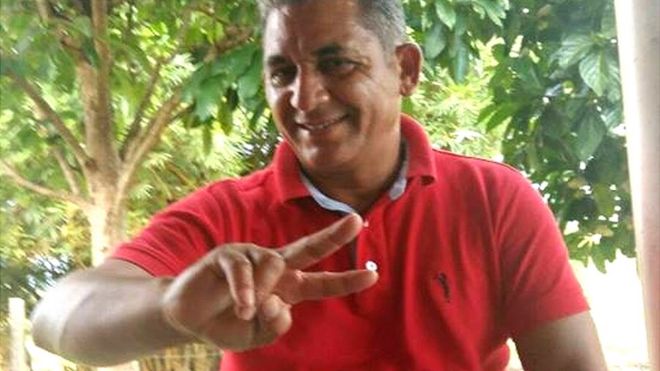
Prominent activist was shot dead in a Brazilian hospital. (Photo Courtesy of BBC)
Waldomiro Costa Pereira, an activist in the Movement of the Landless Rural Workers (MST) was admitted to the intensive care unit in the city of Paraupebas in northeastern Brazil after assassins shot Mr. Pereira in his home. On Monday, a group of five men wearing helmets overtook the hospital and its security guards. The men shot Mr. Pereira dead. A motive for his assassination has not been released. Mr. Pereira has been a member of the MST since 1996 but at the time of his death he was not directly involved with the movement. Instead, Mr. Pereira was an advisor to the local government on agricultural initiatives. The MST blamed the government for its “incompetence in taking care of the security of the population.”
The MST is a social movement in Brazil with an estimated 1.5 million members in twenty-three of the twenty-six states. The purpose of MST is “to fight for general access to the land for poor workers though land reform in Brazil and through activism around social issues impinging on the achievement of land possession, such as unequal income distribution, racism, sexism, and media monopolies.” Over the past year, an estimated sixty-one land rights activists were murdered in Brazil. Clashes between MST and wealthy landowners have increased since one percent of the population own nearly half of the land in Brazil.