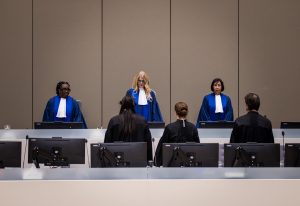
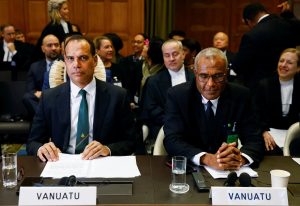
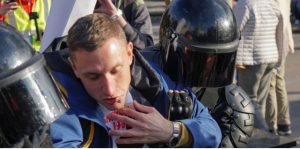
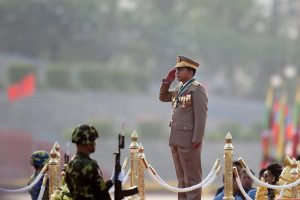
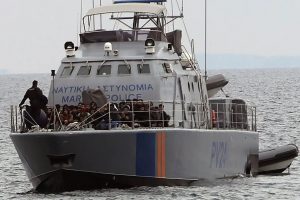
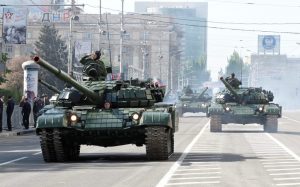
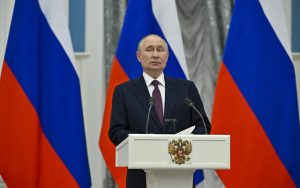
An exterior view of the International Criminal Court in The Hague, Netherlands, March 31, 2021. Photo Courtesy of Reuters and Piroschka van de Wouw.
THE HAGUE, Netherlands – Russia has requested the Dutch Ministry of Justice and Security to extradite International Criminal Court (ICC) president and Japanese national, Tomoko Akane, among eight other ICC officials.
The Russian Prosecutor General’s Office announced on October 8, 2026, that it had sent a request to the Dutch government for the extradition of the nine ICC officials following their conviction in absentia in a Moscow City Court in December 2025. The named officials include the court’s current president Tomoko Akane, first vice-president Rosario Salvatore Aitala, second vice-president Reine Alapini-Gansou, and judges Haykel Ben Mahfoudh, Luz del Carmen Ibáñez Carranza, and Sergio Gerardo Ugalde Godínez. The remaining three individuals named no longer sit on the court, including former president Piotr Hofmański, former judge Bartram Schmitt, and former ICC prosecutor Karim Khan.
The Russian Court found all nine individuals guilty of knowingly bringing an innocent person to face criminal liability, unlawful detention, and an attack on persons enjoying international protection. The named officials received prison sentences ranging from three and a half years to fifteen years.
This move from Russian authorities comes as retaliation for the ICC’s warrants issued in 2023 against Russian President Vladimir Putin and Maria Alekseyevna Lvova-Belova, the presidential commissioner for children’s rights, for alleged war crimes in Ukraine. The ICC has held them responsible for the unlawful deportation of Ukrainian children from occupied territories to Russia.
According to the Russian Prosecutor General’s Office, the 2023 warrants issued by ICC officials violated international law and were issued without any evidence.
Russia has cited its 2016 presidential order withdrawing its intention to become a party to the Rome Statute as the grounds for not recognizing the ICC’s jurisdiction. The Rome Statute is the international treaty that founded the ICC in 2002, to which neither Russia nor the United States are parties.
This action coincides with the United States’s sanctions on ICC officials, including president Akane, as a result of the U.S. campaign launched in July 2026 to “dismantle the threat posed by the International Criminal Court to U.S. sovereignty.” The ICC authorized an investigation in 2020 into alleged crimes committed by U.S. military personnel in Afghanistan, as well as targeting the U.S. and Israel in its investigation into the conflict in the Gaza Strip.
This conflict creates a point of contention for Japan as it navigates continued support for the ICC while its closest ally, the United States, works to dismantle the institution. Japanese spokesman Masanao Ozaki stated that the Japanese government plans to “respond appropriately, including by making further representations to Russia” and “maintaining communication with the ICC and other states parties.”
Japan’s Prime Minister Sanae Takaichi, during a recent parliamentary session, stated, “We have consistently supported the ICC in accordance with our efforts to uphold the rule of law, and we will continue to do so.”
Journal of Global Rights and Organizations, Associate Articles Editor
On September 30th, 2026, Louisiana, Arkansas, and Alabama filed a lawsuit with the United States Supreme Court to overturn ‘Shield Laws’ enacted in the wake of the Dobbs’ decision. These laws ensure medical professionals practicing in pro-choice states are protected from legal action by state governments that deny patient access to reproductive care.
Governor Kathy Hochul and pro-choice activists, including Dr. Margaret Carpenter, at the signing of the New York State’s “Shield Law” on December 19th, 2025 (Photo Credit: Center for Reproductive Rights)
Washington, D.C – The filing, Louisiana; et al. v. New York; et al., asserts that the defendant states are engaged in a scheme to nullify the decision to overturn Roe made in Dobbs v. Jackson Women’s Health Organization by circumnavigating state level abortion bans. They present a legal theory that the defendant states have violated multiple constitutional provisions including the Full Faith and Credit Clause, the Equal-Sovereignty Doctrine, and the Commerce Clause prescription on the interstate transfer of goods, in this case medications banned for purchase or use by state law.
The rapid closure of reproductive health facilities following Dobbs has led to one in five women in the US reporting that they are geographically isolated from any form of contraceptive care. This collapse in women’s health services is reflected in all three of the plaintiff states, being ranked 46th to 50th in a national ranking of quality of women’s health care. Reproductive rights activists and medical professionals have created inroads into southern states through telehealth prescription services and the mailing of medication intended to empower patients to exercise agency over their right to become or remain pregnant. This has led to a series of lawsuits directed at New York medical personnel by plaintiffs in Texas and Louisiana for civil damages alleging harm from prescribed medications including the case of Dr. Margaret Carpenter, which resulted in a call for extradition by Louisiana Governor Jeff Landry to face criminal charges and potentially up to 15 years in prison for providing prescription medication. As of this writing New York Governor Kathy Hochul has declined to extradite Dr. Carpenter in line with the state’s ‘Shield Framework’ and has described the attempted removal as political theater on behalf of state Republicans in Louisiana.
With the 2022 Dobbs decision, the United States has been designated as one of four countries to curtail access to abortion following legalization. In a stunning turn Michelle Bachelet, UN High Commissioner on Human Rights, at the time of the decision was forced to comment, claiming that the outcome was a threat to the rights of millions of women, particularly those who are poor or from minority backgrounds. This judicial outcome was championed by the Republican Party and its ideological perspective on the purported immorality of abortion has been extended by the Trump administration’s foreign policy approach. The 2025 reinstatement of the Mexico City Policy or “Global Gag Rule” with regards to family planning services internationally has resulted in the United States being identified as a contributor to the erosion of women’s health resources globally.
“The Global Gag Rule” predicates funding for women’s health care on ending public support for abortion. It creates a conditional metric that limits international aid organizations from providing complete women’s health care based on their acquiescence to American domestic political prerogatives. This policy as well as other attempts by Trump administration to withdraw from women’s health efforts have imperiled women’s health globally. Almost 11.7 million women and girls across the globe are estimated to have lost access to contraceptive care due to American withdrawals from global sexual and reproductive health efforts.
The United Nations Gender equality chief has stated that this confluence of new legal barriers on women’s reproductive freedom and influence by political actors in the United States and other nations have weakened the legal position of women worldwide. Based on reports published by the United Nations there has been an observable backslide in women’s rights that began with the current legal regime in the United States. Under the current United States administration’s focus on Republican social prerogatives and historical trends regarding the “The Global Gag Rule” during previous Republican administrations it is likely that American disengagement from global women’s health care will continue and this may lead to a further erosion of women’s reproductive rights in the United States and abroad.
Journal of Global Rights and Organizations, Associate Articles Editor
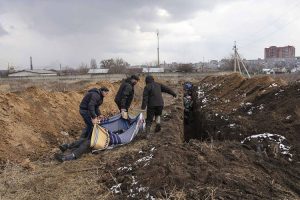
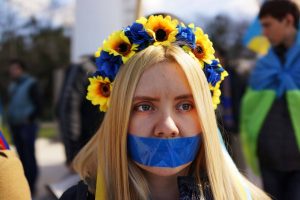
Strasbourg, France – Ten children, ages one to five at the time, have not been heard from since Russia took control of Crimea in 2014. On September 22, 2026, a Ukrainian human rights group asked the European Court of Human Rights to recognize that silence as an enforced disappearance.
Women with children in strollers pass armed men believed to be Russian servicemen outside a Ukrainian military base near Simferopol, Crimea, in March 2014. Photo Courtesy of Vasily Fedosenko/Reuters.
The Ukrainian Helsinki Human Rights Union (UHHRU) filed the application in January 2023 on behalf of the ten children. When Russia asserted jurisdiction over the peninsula in 2014, they were living in state childcare institutions and under the care of the Ukrainian state. According to UHHRU, more than 4,000 children in Crimea without parental care were automatically declared Russian citizens after the occupation began. Ukrainian authorities requested their return. Russia declined and instead opened adoption procedures. Profiles of these ten children later appeared on Russian adoption and foster placement databases, and information about some has since disappeared from public sources. The applicants say this may indicate that the children have been adopted.
The application relies on two provisions of the European Convention on Human Rights: Article 5, which guarantees the right to liberty and security, and Article 8, which protects private and family life. Under international law, enforced disappearance combines deprivation of liberty with a refusal to acknowledge a person’s fate or whereabouts. The applicants argue that the children were unlawfully detained and their whereabouts concealed, constituting an enforced disappearance under Article 5, and that the arbitrary change of their citizenship violated their rights under Article 8.
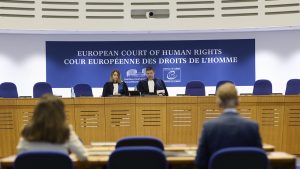
The Court held the public hearing at the applicants’ request. It will rule on admissibility and the merits later.
Represented by the European Human Rights Advocacy Centre, the applicants argued that the conduct must be read cumulatively. They submitted that imposing Russian citizenship, combined with the ability to change a child’s name, date of birth, and place of birth, erased the children’s social identity as Ukrainians.
Several third parties intervened. International Partnership for Human Rights and the Humanitarian Research Lab at the Yale School of Public Health jointly submitted that the removal, adoption, and Russification of Ukrainian children are not isolated wartime incidents, but amount to “a deliberate state policy,” planned at the highest levels of the Russian government, codified in federal legislation, and administered by permanent federal institutions. The Government of Ukraine and the International Bar Association’s Human Rights Institute also addressed the Court.
The Russian Government filed no observations and did not appear. The judges pressed the parties on the evidence showing that any of the children had in fact left Crimea or been placed with a family, and on why the application was lodged nine years after the events.
The International Criminal Court has charged similar conduct under a different theory. In March 2023, its judges issued arrest warrants for Vladimir Putin and Children’s Rights Commissioner Maria Lvova-Belova for the war crimes of unlawful deportation and transfer of children, covering conduct dating back to at least February 24, 2022. Neither warrant has been executed, and the ICC has no power to make an arrest itself. By contrast, the case before the European Court of Human Rights requires no arrest and reaches back to 2014.
Journal of Global Rights and Organizations, Associate Articles Editor
ARUSHA, Tanzania – On June 5, 2026, the African Court on Human and Peoples’ Rights delivered its final judgment in the case of Masudi Said Selemani v. United Republic of Tanzania. The court ruled that the imposition of a mandatory death sentence without judicial discretion violates due process.
On July 15, 2010, the appellant killed his cousin, following false reports made by his cousin’s family to the village authorities that the appellant stole maize from a neighbor. Subsequently, on October 18, 2012, Selemani was arrested and arraigned. Selemani was later convicted on May 15, 2013 of murder. Due to the nature of his crime, Selemani was automatically sentenced to death by hanging. Selemani appealed to an appellate court, but the court dismissed his appeal on November 22, 2014.
On August 19, 2019, Selemani filed an application to the African Court on Human and Peoples’ Rights seeking for the court to set aside his death sentence and remove him from death row. The application was accepted.
African Court on Human and People’s Rights during the ruling of the case in Arusha, Tanzania on June 5, 2026. Photo courtesy of The East African.
During the hearings, Selemani argued that Tanzania violated his right to life under Article 4 of the African Charter on Human and Peoples’ Rights, and his freedom from cruel, inhuman, and degrading treatment or punishment under Article 5.
The court found the imposition of a mandatory death sentence without the allowance of judicial
discretion is a violation of due process. The mandatory death sentence also violates Article 4 because it arbitrarily deprives life. The court additionally found that Article 5 was violated due to Selemani’s prolonged detention on death row, dehumanizing conditions, and the execution method of hanging being implemented.
Due to its findings, the court ordered Tanzania to take all necessary measures to remove the mandatory death sentence provision quickly and to disallow the use of hanging as a method of execution. Additionally, the court directed Tanzania to vacate Selemani’s sentence, remove him from death row, and rehear his case through a procedure allowing judicial discretion. The court awarded Selemani 300,000 Tanzanian shillings in moral damages.
Journal of Global Rights and Organizations, Associate Articles Editor
THE HAGUE, Netherlands — The International Criminal Court (ICC) has rejected a request to open an examination into the complicity of European arms dealers contributing to the Yemen conflict.
Yemen’s Houthi followers on December 17, 2024, on the outskirts of Sana’a, Yemen. (Photo by Mohammed Hamoud/Getty Images)
In 2019, the European Center for Constitutional and Human Rights (ECCHR), along with other organizations such as Mwatana for Human Rights and Amnesty International, filed a formal communication submitted to the Office of the Prosecutor (OTP) of the ICC requesting an investigation to determine whether European corporate and government actors aided and abetted war crimes committed by Saudi Arabia in conjunction with the war in Yemen.
The communication details 26 incidents of airstrikes conducted by the Saudi-UAE Coalition on residential buildings, schools, hospitals, a museum, and heritage sites which could amount to war crimes under the Rome Statute.
According to the ECCHR, the Office of the Prosecutor did not provide any specific legal reasoning as to why it declined to open an investigation, coming to this conclusion almost seven years after the communication was submitted.
The OTP is granted the ability to initiate investigations based on information received by non-governmental organizations (NGOs), such as the ECCHR, and may do so if the OTP determines that the crimes fall under the jurisdiction of the ICC, pursuant to Article 15 of the Rome Statute. The ICC may then choose to exercise its jurisdiction over the matter.
Because the OTP did not provide specific legal reasoning as to why it did not initiate a preliminary investigation, NGOs are left to speculate. The Arms Trade Litigation Monitor (ATLM) argues that there could be a hurdle in establishing a causal link between the conduct of the alleged accomplices of the war crimes and the crimes themselves, reasoning that ambiguity in the nature of arms dealing, such as end-user transfer dates, is a significant challenge to establishing criminal liability.
An argument made in support of prosecution is that European arms dealers should be held criminally liable for war crimes, or crimes of aggression, under Article 25(3)(c) of the Rome Statute, which says that a person shall be held criminally liable for a crime if they aid, abet, or provide the means for the commission of the crime.
Opponents of the OTP decision say that the lack of international accountability lets arms dealers continue to act with impunity.
Similar cases had been filed in ICC member states such as in Italy; however, there is currently a lack of investigation happening in domestic jurisdictions in Europe regarding criminal liability for arms dealers’ involvement in war crimes.
Journal of Global Rights and Organizations, Associate Articles Editor
WASHINGTON, D.C., United States – Filing suit in 2011, practitioners of Falun Gong, a religious movement that started in China in the 1990s, alleged that an American technology company built the surveillance tools China used to find and detain them.
Surveillance cameras in operation in Shanghai, China in January of 2022. Photo Courtesy of Qilai Shen/Bloomberg News.
Under the Alien Tort Statute (“ATS”) and the Torture Victim Protection Act, plaintiffs, who are practitioners of the Falun Gong religious movement, contended that the Chinese Government persecuted them due to their religious beliefs. Specifically, these victims alleged that Cisco Systems, Inc., aided and abetted international law violations including torture, cruel, inhumane, or degrading treatment, forced labor, detention, crimes against humanity, extrajudicial killing, and forced disappearance. Through developing surveillance technology that allowed China to identify and apprehend Falun Gong practitioners, the plaintiffs believed that Cisco aided and abetted in violating international law. One plaintiff sought to go so far as to bring a claim against two Cisco executives individually for aiding and abetting torture. Defendant, Cisco, is an American multinational technology corporation that designs and manufactures internet networking devices and services for the communications and information technology industries.
Among the statutes involved, the Alien Tort Statute is a procedural tool that grants federal district courts jurisdiction over civil suits brought by foreign nationals “for a tort only committed in violation of the law of nations or a treaty of the United States.” The Torture Victim Protection Act creates civil liability for anyone acting under color of law of any foreign nation who subjects an individual to torture or extrajudicial killing.
In June of 2026, the Supreme Court of the United States resolved whether a judicially implied private right of action for aiding and abetting exists under the ATS and under the Torture Victim Protection Act.
As Cisco would ultimately convince the Court, the Alien Tort Statute is a jurisdictional statute that does not create new private actions for violations of international norms because Congress is tasked with creating private rights. Cases involving the ATS inherently implicate the political branches.
In reaching its decision, the Court drew on Sosa v. Alvarez-Machain, which established that the ATS is a jurisdictional statute that creates no new causes of action. However, Sosa left open a narrow possibility that courts could recognize new causes of action under a two-part test guided by the international norm and judicial discretion. Sosa determined whether a Mexican national who was abducted and arbitrarily detained in Mexico could sue those involved in U.S. courts. On the issue of interpreting the Torture Victim Protection Act, the majority found that the statute’s silence on aiding and abetting created no liability for the two Cisco executives.
In dissent, Justice Sotomayor argued that under the Torture Victim Protection, subjecting an individual to torture ordinarily means the person “consciously and culpably participates in the torture so as to help make it succeed.”
As American companies continue to operate and sell abroad, the decision forecloses aiding and abetting liability under both statutes for U.S. corporations and their executives, redirecting foreign nationals seeking redress to Congress, the Executive, or other international actors.
PARIS, France — On Monday, April 13, 2026, the Paris Criminal Court (Tribunal correctionnel de Paris) convicted French cement giant Lafarge and eight individuals, including four of its former senior executives, of financing terrorism for paying jihadist groups, among them the Islamic State (ISIS) and the Al-Nusra Front, to keep a cement plant operating in northern Syria during the country’s civil war. Nearly a decade after Syrian former employees and two civil-society organizations first brought the case, the ruling marks the first time a French company has ever been found criminally responsible for financing a terrorist organization.
Former Lafarge CEO Bruno Lafont arrives at the Paris courthouse on the day of the verdict, April 13, 2026. Photo courtesy of Mustafa Yalcin/Anadolu via AFP/OCCRP.
The court fined the company €1.125 million ($1.32 million), the maximum penalty available, on the terrorism-financing charge, and imposed a joint customs fine of €4.57 million ($5.35 million) against Lafarge and four of the executives for violating international financial sanctions and a trade embargo. Former chief executive Bruno Lafont was sentenced to six years in prison, effective immediately, and the remaining individuals received prison terms reported to range from eighteen months to seven years. Among the eight individuals convicted alongside the company were two local security managers and two intermediaries, including the Syrian businessman Firas Tlass.
According to evidence presented during the six-week trial, which opened in November 2025, Lafarge funneled roughly €5.5 million to armed groups operating around its facility between 2013 and 2014 in order to keep the plant running and to protect its commercial interests amid the escalating conflict. Investigators found that the money moved through monthly “security payments” and through purchases of raw materials from intermediaries linked to the armed groups, and they argued that some of these funds helped finance the network behind the 2015 terror attacks in France. The plant at the center of the case was Lafarge’s roughly $680 million facility at Jalabiyeh, in northern Syria. As the war intensified, the company evacuated its foreign staff in 2012 but left its Syrian employees behind to keep the site operational—a decision that, according to former workers, exposed them to checkpoints, threats, and daily danger. In a statement issued through the plaintiffs, former employees said the company knew what they were enduring but “chose to risk the lives of its employees for profit.”
A ruling described as “historic” on two counts
The organizations behind the case were quick to frame the verdict as a watershed for corporate accountability. Sherpa, the French anti-corruption NGO that filed the original criminal complaint in 2016 together with the European Center for Constitutional and Human Rights (ECCHR) and eleven former Syrian employees, called the decision “historic and highly symbolic.”
Anna Kiefer, a Litigation and Advocacy Officer at Sherpa, said the judgment was the first instance of a French multinational being convicted of financing terrorism, crediting the years-long judicial investigation and the journalists who first exposed the company’s conduct. She said Sherpa hoped the ruling would send a strong signal to companies operating in conflict zones that they can be held accountable in court for crimes connected to their conduct abroad. Observers and the plaintiffs have pointed to two distinct reasons the decision breaks new ground. First, it is the first time a French company has been convicted of financing a terrorist organization—a charge previously untested against a corporation in the French courts. Second, no terrorism-financing case examined by French courts had ever involved sums of this magnitude. Sherpa and ECCHR argued that the precedent has implications well beyond the cement industry: a French parent company, they said, can no longer shelter behind a foreign subsidiary to escape responsibility for what is done in its name overseas.
A decade-long road through the French courts
The proceedings trace back to a complaint filed in November 2016, in which the former Syrian employees, Sherpa, and ECCHR accused Lafarge of making arrangements with ISIS and other armed groups to sustain its operations. The case wound through years of judicial wrangling. In 2021, France’s highest court, the Cour de cassation, examined the matter, addressing both the earlier dismissal of crimes-against-humanity charges and the standing of the two NGOs to act as civil parties. The Investigating Chamber later confirmed charges against Lafarge for financing a terrorist organization, endangering the lives of its employees, and violating an embargo, while setting aside the complicity-in-crimes-against-humanity charge.
In October 2024, investigating judges ordered Lafarge and four former executives to stand trial for financing a terrorist organization and breaching the embargo, with four additional individuals also referred for trial. The trial itself ran before the Paris Criminal Court from November into December 2025, with prosecutors ultimately asking the court to convict all defendants.
Notably, the matter is not fully closed. Lafarge remains under separate investigation for complicity in crimes against humanity—a charge that the plaintiffs stress goes further than terrorism financing, because it concerns participation in some of the gravest crimes under international law. Sherpa and ECCHR have said they will continue to press for that strand of the case to be brought before a court, and have underscored that, despite the conviction, the former Syrian employees are still awaiting compensation.
An echo of the U.S. prosecution
The French verdict follows a parallel reckoning in the United States. In 2022, Lafarge pleaded guilty in U.S. federal court to conspiring to provide material support to designated terrorist organizations over its Syrian operations and agreed to pay a fine of approximately $778 million—at the time, the first occasion on which a corporation had faced that particular charge. Holcim, the Swiss group that merged with Lafarge in 2015, has maintained that it had no knowledge of the Syrian dealings when the merger took place.
Taken together with the U.S. case, the Paris ruling adds to a slowly emerging body of law holding that multinational corporations can be criminally answerable for the financial relationships they cultivate in war zones. For the former employees who testified—many of whom waited the better part of a decade for a verdict—the judgment is a partial vindication, even as the fight for crimes-against-humanity accountability and for reparations continues.
THE HAGUE, Netherlands – On January 26, 2026, Pre-Trial Chamber I of the International Criminal Court (ICC) formally referred Italy’s non-compliance to the Assembly of States Parties (ASP). The referral stems from Italy’s failure to arrest and surrender Osama Elmasry Njeem, a senior Libyan official wanted by the ICC for war crimes and crimes against humanity.
Osama Elmasry Njeem arrives at Mitiga International Airport in Tripoli, Libya, on January 21, 2025, after being released from Italian custody and flown home aboard an Italian government aircraft. Photo Courtesy:The Tripoli Post
Njeem served as chief of Libya’s judicial police and reportedly ran the Mitiga detention facility near Tripoli. The ICC issued a sealed arrest warrant against him on January 18, 2025, alleging crimes including murder, torture, rape, sexual violence, enslavement, and persecution committed against detainees held at Mitiga from at least February 2015 onward. Many of the victims were migrants and refugees.
Italian anti-terrorism police arrested Njeem at a hotel in Turin on January 19, 2025. Two days later, he was released. Italian authorities cited procedural grounds, stating that the Rome Court of Appeal had not validated the arrest because it was awaiting approval from the Minister of Justice. Njeem was then flown back to Tripoli aboard an Italian government aircraft. The ICC was not notified before his release. The Italian interior minister also ordered Njeem’s expulsion on national security grounds, a justification the ICC later found unsupported.
On October 17, 2025, Pre-Trial Chamber I found that Italy had failed to comply with its obligations under the Rome Statute by not executing the warrant and by not consulting with the Court. The Chamber noted that Njeem was returned to Libya as a free man, not handed over under any formal process. On January 26, 2026, the Chamber referred the matter to the ASP. Italy was invited to appear before the ASP Bureau on April 1, 2026, to explain how it intends to cooperate going forward.
Italy is a founding member of the ICC. Former Prime Minister Giuseppe Conte called the episode “a humiliation,” and opposition leaders demanded accountability. Italy’s refusal to carry out an arrest warrant for a suspect accused of crimes against detained migrants and refugees, some of the world’s most vulnerable people, undermines the Court at a moment when it already faces U.S. sanctions and repeated failures by member states to execute warrants. For victims of the abuses at Mitiga, the referral offers little immediate relief. The suspect is free, and the Court’s only remaining enforcement tool is political pressure from other states.
Associate Editor Journal of Global Rights and Organizations
On March 30th, the Israeli Knesset approved legislation that significantly expanded the use of the death penalty, marking a major shift in Israeli criminal law and raising concerns about compliance with international human rights standards. The development comes in the wake of the International Court of Justice’s (ICJ) July 2024 Advisory Opinion, which found Israel in violation of international legal obligations in the Occupied Palestinian Territory.
Israeli Knesset Building situated in Kiryat HaMemshala:
The newly approved law introduces capital punishment as the default sentence for individuals convicted of intentional killings classified as terrorism in the West Bank. While Israeli law has historically permitted the death penalty in limited circumstances such as genocide, it has not been applied since 1962, and the new framework allows military courts to impose death sentences by a simple majority absent a prosecutorial request requirement, and mandates execution within 90 days with no possibility of commutation or pardon.
Critics of the new framework argue that it disproportionately targets Palestinian because Israeli settlers in the West Bank are excluded from its application, despite the framework not explicitly targeting a specific nationality or ethnicity. Within Israel, civilian courts may also impose the death penalty for intentional killings deemed to threaten the existence of the state. Human rights organizations argue that the law introduces discriminatory practices and weakens due process protections such as limited access to legal counsel and reduced oversight mechanisms.
The ICJ’s 2024 Advisory Opinion provides a critical legal context for evaluating the law’s implications, where the Court emphasized that states must ensure equal protection under the law and uphold fundamental rights, including the right to life.
Human rights advocates argue that the new death penalty law contravenes both these principles, as well as obligations under the International Covenant on Civil and Political Rights (ICCPR). Article 6 of the ICCPR restricts the use of capital punishment to the “most serious crimes” and requires stringent fair trial guarantees.
Moreover, the European Union has reiterated its long-standing position that the death penalty is incompatible with human dignity and has called for measures in response to Israel’s actions.
The broader significance of the legislation lies in its potential to deepen concerns about systemic discrimination and accountability. In expanding capital punishment within a contested legal and territorial framework, the law may further strain compliance with international humanitarian and human rights law.
Furthermore, as international scrutiny intensifies following the ICJ’s findings, the implementation and legal challenges to this legislation will likely remain a focal point in ongoing debates over justice and impunity in the region.
By: Eric Boutros Journal of Global Rights and Organizations, Associate Articles Editor
A proposed “Finalissima” match between Argentina and Spain, envisioned as a high-profile soccer contest between continental champions, ultimately failed to materialize amid governance constraints, security concerns, and unresolved institutional accountability. While framed as a logistical and scheduling issue, the collapse of the fixture reflects deeper structural questions about how authority is exercised and reviewed in international sport.
Lionel Messi (left) and Lamine Yamal (right) symbolize the anticipated Finalissima clash between Argentina and Spain, and the generational contrast between one of football’s greatest players (Messi) and one of its rising stars (Yamal). Source: The Athletic (New York Times)
The Finalissima, originally scheduled for March 27, 2026, in Qatar, and jointly organized by the Union of European Football Associations (UEFA) and the South American Football Confederation (CONMEBOL), and coordinated with the Fédération Internationale de Football Association (FIFA), represents more than a sporting event. These organizations operate as transnational regulators, establishing binding rules governing player release, competition structure, and international scheduling. Although formally private associations, they exercise authority resembling that of public regulatory bodies: their decisions shape labor conditions, commercial markets, and access to international competition on a global scale.
This quasi-public role has increasingly drawn scrutiny in international legal discourse, particularly when decisions affect the rights and interests of athletes and affiliated stakeholders. In this regard, the reasoning of the European Court of Human Rights in Mutu and Pechstein v. Switzerland is instructive. There, the Court recognized that the regulatory framework of international sport, though formally private, can have significant implications for individual rights, particularly when affected parties are effectively bound to centralized dispute-resolution mechanisms. The decision reflects a broader acknowledgment that sports governing bodies, by virtue of their structural dominance, operate within a space that implicates principles traditionally associated with public law.
Initial support for the fixture centered on its commercial appeal and symbolic significance. A match between Argentina and Spain promised substantial global engagement and reinforced ongoing cooperation between European and South American football institutions. However, even before external risks emerged, the proposal encountered structural resistance. FIFA’s international match calendar strictly limits available windows, while clubs retain contractual control over player participation. These overlapping constraints reflect a system in which authority is distributed among multiple actors, each with veto power, yet no single entity capable of unilaterally resolving conflicts.
Geopolitical instability ultimately proved decisive. The match was under consideration for Qatar, placing it within a region affected by escalating conflict in the Middle East. As security conditions deteriorated, governing bodies were forced to assess whether proceeding would expose players, staff, and spectators to foreseeable risks. The decision to cancel the fixture can therefore be understood as a form of institutional risk mitigation, consistent with broader expectations that entities exercising regulatory authority take reasonable steps to avoid foreseeable harm.
At the same time, the failure to relocate the match underscores the limitations of the current governance structure. UEFA, CONMEBOL, and FIFA each possess partial authority over scheduling, venue selection, and competition approval, yet none exercises comprehensive control. This fragmentation creates gaps in accountability, where collective decision-making can obscure responsibility. When outcomes result from the interaction of multiple institutions, it becomes difficult to identify a single actor responsible for either the failure to proceed or the inability to find alternatives.
The diffusion of authority is further compounded by the absence of meaningful avenues for review. The cancellation of the Finalissima was not subject to judicial scrutiny, nor was there a clear forum for affected stakeholders, such as players, clubs, or commercial partners, to challenge the decision. As highlighted in Mutu and Pechstein v. Switzerland, the governance structures of international sport often rely on internal or specialized dispute mechanisms that may limit access to independent judicial oversight. In circumstances such as this, where no formal dispute resolution process is triggered, the accountability gap becomes even more pronounced.
The collapse of the proposed Finalissima, therefore, illustrates a broader structural concern: governing bodies exercise regulatory power with transnational impact, yet remain only partially constrained by legal mechanisms designed to ensure transparency, reviewability, and responsibility. While the decision not to proceed may have been justified by legitimate safety concerns, the process by which that decision was reached, and the absence of oversight, raise important questions about governance in a system that increasingly resembles public administration in all but name.
Going forward, this episode highlights the need to reconsider how authority is structured and reviewed in global soccer. As international soccer competitions grow in scale and significance, the institutions that govern them may face increasing pressure to adopt more transparent procedures, clearer lines of responsibility, and mechanisms for independent review. Without such reforms, similar disputes may continue to expose the tension between private governance and public accountability on the global stage.
Journal of Global Rights and Organizations, Associate Articles Editor
Strasbourg, France – Osman Kaval (Mr. Kaval), a prominent businessman and human rights advocate, remains unlawfully detained despite two rulings from the European Court of Human Rights declaring his detention arbitrary and politically motivated.
Osman Kavala is seen at European Parliament headquarters in Brussels, Belgium, on December 11, 2014. Photo Courtesy of CNN.
Mr. Kaval is well-known for his involvement in numerous civil society initiatives. Mr. Kaval was arrested in Istanbul in 2017 and placed in pre-trial detention one month after his arrest. Mr. Kaval faced criminal charges related to his alleged participation in the mass protests in the 2013 Gezi protests and the attempted coup on July 15, 2016. Mr. Kaval is serving an aggravated life sentence in Marmara Prison for attempting to overthrow the government. Currently, Mr. Kaval is serving an aggravated life sentence in Marmara Prison, along with other high-profile prisoners, for attempting to overthrow the government.
After unsuccessful attempts to challenge the proceedings in domestic courts, Mr. Kaval appealed to the European Court of Human Rights. In 2019, the Court determined that his detention was arbitrary and politically driven, finding that he was detained for exercising fundamental human rights. Further, the Court found that Turkish authorities aimed to silence him. However, despite this judgment and a subsequent European Court of Human Rights decision in 2022 regarding Turkey’s failure to implement the 2019 ruling, Mr. Kaval was convicted and sentenced to life imprisonment.
Mr. Kavala has since filed a second application to the European Court of Human Rights, alleging violations of rights under numerous Articles of the European Convention on Human Rights. Specifically, Mr Kavala argues that his rights under the European Convention on Human Rights Articles 3 (prohibition of inhuman or degrading treatment), 5 (right to liberty and security), 6 (right to a fair hearing), 7 (no punishment without law), 10 (freedom of expression) and 11 (freedom of assembly and association, taken together with Article 18 (limitation on use of restrictions on rights) have been violated as a result of the continuing arbitrary and politically motivated deprivation of his liberty which breached the terms of the ECtHR’s 2019 judgment.
The European Court of Human Rights will hold a Grand Chamber Hearing to review Mr. Kaval’s continued detention following the Court’s 2019 decision ordering his immediate release. The proceedings will address whether Turkey’s refusal to comply with that judgment, as well as Turkey’s later imposition of a life sentence in 2022, constitutes ongoing violations of Mr. Kaval’s rights. Mr. Kaval’s continued imprisonment illustrates the broader systemic failures in Turkey’s legal system by using excessive and prolonged detention. Furthermore, Osman Kaval’s imprisonment has become a defining test of whether the European Court of Human Rights’ judgements carry meaningful authority when member states fail to comply with its orders.
ACCRA GHANA & ABUJA NIGERIA – In the long constitutional history of Ghana, few episodes have generated as much legal and political debate as the removal of former Chief Justice Gertrude Araba Esaaba Sackey Torkornoo.
The controversy, which began with petitions alleging misconduct in early 2025, quickly expanded into a complex legal saga spanning domestic courts and the ECOWAS Community Court of Justice in Abuja. Nearly two years after the events that triggered the dispute, the case remains a reference point in discussions about judicial independence, constitutional procedure and the limits of executive authority.
Justice Torkornoo assumed office as Ghana’s 15th Chief Justice on 12 June 2023, following her nomination by then-president Nana Addo Dankwa Akufo-Addo and approval by Parliament.
Former Chief Justice of the Republic of Ghana, Gertrude Araba Esaaba Sackey Torkornoo Photo Courtesy: Graphic Online
Her elevation marked another milestone for women in the judiciary—she became the third woman to lead the country’s Supreme Court since the beginning of the Fourth Republic.
For nearly two years, her tenure appeared relatively stable. That changed in March 2025.
On 25 March 2025, three petitions seeking her removal were submitted to President John Dramani Mahama. The petitions accused the Chief Justice of administrative misconduct and irregularities in the management of judicial resources.
Under Article 146 of Ghana’s 1992 Constitution, the removal of a superior court judge—including the Chief Justice—follows a defined procedure. The president must consult the Council of State of Ghana and determine whether the petitions disclose a prima facie case before appointing an investigative committee.
After reviewing the petitions and consulting the Council of State, the president announced on 22 April 2025 that such a prima facie case existed. Justice Torkornoo was suspended pending an investigation by a five-member committee.
The most senior justice of the Supreme Court of Ghana, Paul Baffoe-Bonnie, stepped in as acting Chief Justice.
The First Legal Challenges
The suspension immediately triggered litigation.
One of the earliest challenges came from legislator Vincent Ekow Assafuah, who asked the Supreme Court to halt the removal process. His argument centered on whether the president had followed the correct constitutional procedure before determining that a prima facie case existed.
On 6 May 2025, the Supreme Court dismissed the application, allowing the process to continue.
A second challenge soon followed, again questioning the legality of the suspension and the committee proceedings. On 21 May 2025, the Supreme Court rejected that challenge as well.
These rulings cleared the way for the investigative committee to proceed with hearings.
Inside the Investigation
The committee began its hearings on 15 May 2025, meeting regularly to examine the allegations contained in the petitions.
Because Article 146 proceedings are held in camera, much of the investigation unfolded outside the public eye. Nonetheless, the process generated intense public debate and scrutiny.
Justice Torkornoo herself publicly criticized the proceedings during a national address on 25 June 2025, describing what she believed to be fundamental procedural flaws.
“The perversion of law, rules and due process… are driving the proceedings,” she said at the time, arguing that the investigation had strayed from constitutional standards.
Turning to the Regional Court
While the committee hearings continued in Ghana, the dispute also reached the regional level.
On 4 July 2025, Justice Torkornoo filed a case against the Ghanaian state at the ECOWAS Community Court of Justice. The application alleged violations of her rights under regional human-rights law and argued that the suspension prevented her from carrying out the constitutional duties of her office. She sought reinstatement or other relief and $10 million in damages.
Her legal team asked the court to declare that Ghana had breached its obligations and to grant remedies that could include restoration of her judicial status or compensation.
The filing added an international dimension to a dispute already dominating Ghana’s constitutional landscape.
The Historic Removal
The committee eventually completed its investigation and submitted its report to the president.
On 1 September 2025, President Mahama announced that he had accepted the committee’s recommendation and removed Justice Torkornoo from office for “stated misbehavior.”
The decision marked an unprecedented moment: no sitting chief justice had previously been removed through the Article 146 procedure in Ghana’s Fourth Republic.
For supporters of the process, the decision demonstrated that constitutional accountability mechanisms could be applied even to the judiciary’s highest office. Critics, however, warned that the episode risked undermining public confidence in judicial independence.
Litigation Continues
The removal did not end the legal battle.
On 17 September 2025, Justice Torkornoo filed a new challenge at the High Court in Accra, seeking judicial review of the decision to remove her. The case questioned whether the investigative committee and the president had strictly complied with constitutional requirements.
Meanwhile, the ECOWAS court case continued to move through preliminary stages in Abuja.
Legal observers pointed out that while the ECOWAS court can determine whether a state violated international human-rights obligations, it cannot directly overturn decisions made under a country’s constitution. Instead, the court can issue declaratory judgments and order compensation if violations are found.
Beyond One Case
Even as the legal proceedings continued, Ghana’s political institutions moved forward with filling the vacancy in the judiciary’s top office. Parliament began considering the nomination of Justice Paul Baffoe-Bonnie as substantive Chief Justice.
The episode nevertheless left a lasting imprint on Ghana’s constitutional discourse.
For scholars and legal practitioners, the Torkornoo affair has become a case study in how constitutional removal mechanisms operate—and how fragile the balance between judicial independence and accountability can be.
A year after the first petitions were filed, the dispute continues to echo in courtrooms, legal journals and public debates across West Africa.
Key ECOWAS Court Decisions
Interim Measures Request – Dismissed
On 19th November 2025, the ECOWAS Court dismissed her application for provisional measures, which sought to halt the investigation and removal process while the case was pending.
The court held that she failed to demonstrate urgency or imminent irreparable harm, partly because she filed the request months after the suspension.
However, the court acknowledged that the case raised a prima facie human-rights issue, meaning the main lawsuit could proceed.
Amendment of the Case – Granted
On 30th January 2026, the ECOWAS Court granted Torkornoo permission to amend her claim so that it explicitly challenges not only her suspension but also her final removal from office.
The court rejected Ghana’s objection and directed the government to file an amended defence within 30 days responding to the expanded allegations.
Present Legal Position March 2026
At the moment, the case is still pending before the ECOWAS Court as only procedural rulings have been issued.No final judgment on the merits has been delivered and Ghana has been ordered to respond to the amended claims.
Journal of Global Rights and Organizations, Associate Articles Editor
THE HAGUE, Netherlands – On January 29, 2026, the International Court of Justice (ICJ) concluded public hearings on the merits for the case of The Gambia v. Myanmar. The Court now enters deliberations, which will concern an evaluation of the application of the Convention on the Prevention and Punishment of the Crime of Genocide.
Myanmar leader, Aung San Suu Kyi, attends ICJ hearing. Photo Courtesy of Reuters/Yves Herman
In 2019, The Gambia brought a case before the ICJ, alleging Myanmar was committing genocide against members of the Rohingya, a distinct minority group residing in Myanmar’s Rakhine State, in violation of the Genocide Convention. Eleven states have intervened in the case since it was initiated by The Gambia.
The Gambia alleges that Myanmar has subjected the Rohingya to persecution since late 1989. Since then, the Rohingya have been subject to restrictions on the right to marry and freedom of movement; a systematic hate campaign aimed at dehumanizing the group; and clearance operations. These operations involved the systematic detention, torture, assault, and killing of members of the Rohingya by state police forces.
Provisional measures were granted in by the ICJ in January 2020, calling on Myanmar to take action to prevent all violations of the Genocide Convention within its territory, and to ensure the preservation of evidence related to the allegations. The order also called for compliance reports every six months.
Public hearings on the merits opened on January 12, 2026. It involved two rounds of oral argument, as well as closed sessions where witnesses testified. Three eyewitnesses lived in villages where clearance operations had occurred. Alongside these testimonies, The Gambia relied in part on expert testimony and information from the United Nation’s Report of the Detailed Findings of the Independent International Fact-Finding Mission on Myanmar.
Counsel appearing on behalf of Myanmar, Ko Ko Hlaing, called the United Nation’s report a “condemnation without trial,” and “neither reliable nor objective.” Myanmar’s case, in part, asserted that the clearance operations were counter-terrorism operations, in response to attacks by the Arakan Rohingya Salvation Army, a Rohingya insurgent group operating in the Rakhine State. Myanmar does not deny that people were killed, only denying that this killing was done with a genocidal intent.
It is unlikely that the results of this case will be announced anytime soon, as deliberations at the ICJ usually last between three and nine months. However, this case has been called a landmark moment in international law and human rights. It marks the first time in ICJ history that a country without any direct connection to the alleged crimes has brought a case to enforce the Genocide Convention. Importantly, the outcome of this case will have a direct impact on other cases pending before the ICJ, including South Africa’s genocide case against Israel.
Journal of Global Rights and Organizations, Associate Articles Editor
Author Note: For me, as a Ukrainian living abroad, February 24th is more than a date on the calendar – it is my painful loss and the enduring fight for dignity and freedom.
Today, Ukraine marked the 1,461st day of Russia’s full-scale invasion. Still, more than a decade has passed since Russia first violated Ukraine’s sovereignty by annexing Crimea.
Слава Україні! (“Glory to Ukraine”)
KYIV, UKRAINE – As the temperature in Ukraine dropped below zero, Ukrainians once again braced for the consequences of blackouts. Electrical grids and power plants are struck. The heating systems fail. First responders rely on generators. Kyiv and cities across Ukraine were left without power. Nonetheless, Ukraine is strong and continues to fight for its independence.
People in Kyiv warm their hands over a barbecue at a blackout party during an electricity outage on 24 January 2026. Photograph: Thomas Peter/Reuters
Since 2014, Russia’s actions have breached a myriad of international humanitarian laws, including systematically attacking infrastructure and cutting off power supplies.
While blackouts have been an ongoing issue, they have become alarming in recent weeks. Winter itself turned out to be Russia’s weapon against Ukraine.
Targeting Civilian’s Objects is a War Crime
Russia neglects that power plants, electrical grids, and water reservoirs are notmilitary objects; they are essential to civilian survival. Extensive and intentional targeting of infrastructure leads to complex legal concerns – war crimes and a humanitarian crisis that the international community cannot ignore.
International Law is unquestionably clear. The Geneva Convention and the Rome Statute expressly forbid targeting civilian objects that are indispensable for an individual’s survival. Such conducts were affirmed as war crimes by the ICTY (“Internation Criminal Tribunal for the Former Yugoslavia”).
The International Criminal Court (“ICC”) has initiated investigations into all war crimes committed by Russia in this war. In 2024, the ICC issued warrants against two Russian military commanders: Sergei Kobylash and Viktor Sokolov, alleging their responsibility for the deliberate targeting of infrastructure. Yet the ICC’s prosecution remains fruitless.
In late January 2026, the Nordic-Baltic countries urged Russia to immediately cease its tactics and demanded the international community hold Russia’s leaders accountable for these “potential” war crimes. Nonetheless, accountability in the international arena is challenging.
Targeting Infrastructure Is Not a Consequence of War – It is Russia’s Strategy
As Ukraine approached one of its coldest winters, its air defense system has been overwhelmed. Russia intensified strikes against infrastructure, leaving cities across Ukraine without electricity, heat, and necessities.
On January 21, 2026, approximately 60% of Kyiv, nearly 4,000 apartment buildings, were left without electricity. Heavy bombing in Kharkiv left over one million consumers without power. Every day, first responders work tirelessly trying to restore electricity to some extent. Yet the restored power remains temporary.
Russia’s strikes continue.
On February 17, 2026, Russia launched nearly 400 drones and 29 missiles overnight. As a result, in Kyiv alone, over 2,600 buildings remained without heating, power, and water. Across Ukraine, civilians’ daily lives once again are being dictated by power outage schedules.
Missile is a Partial Weapon, and Cold Completes It
Civilians have been forced to live in freezing apartments and to bundle up in layers with limited or no opportunities to warm up. Elderly individuals and people with disabilities are even more vulnerable. Recent reports show an increase in cases of hypothermia and deterioration of chronic health conditions from prolonged cold exposure.
Childhood is being stolen. Education is severely disrupted as schools close due to the inability to maintain safe heating.
Yet, despite being worn out, Ukrainians are stronger than ever. They managed to cook and warm up with portable devices. In Kyiv, a city that is constantly under attack, neighborhoods gather for a barbecue party, with music and dancing to stay warm and show resilience.
On this 4th anniversary of full-time invasion, and every day at 9:00 AM, Ukraine freezes for a minute of silence honoring every life unjustly taken by this devastating war, carrying forward the memory of its heroes.
Also, gratitude is owed to the Ukrainian soldiers, first responders, and medical personnel, who work through sleepless nights, and to all Ukrainians who remain resilient despite the relentless hardship.
Ukrainians once again remain undefeated. Nonetheless, the wounds of this war will never fade.
Journal of Global Rights and Organizations and Impunity Watch News
Medmoune v. France arises out of doctors’ decision to withdraw life-sustaining medical treatment from patient “A.M.”. This decision was made despite A.M.’s drawn up advance directives, which stated his wishes for the continuation of life-sustaining treatment, even in the case of permanent loss of consciousness and ability to communicate. This raises the legal question of whether this decision was a violation of Article 2 (right to life) of the European Convention on Human Rights.
Strasbourg, France – April 22, 2014: Information sign of the European Court of Human Rights. The European Court of Human Rights is an international court established by the European Convention on Human Rights, it is located in Strasbourg, France.
Background – Bruay-sur-l’Escault, France:
In May of 2022, A.M., a 44-year-old male, was run over by a commercial vehicle that he was repairing. He suffered severe trauma, including cardiorespiratory arrest and prolonged oxygen deprivation. A.M. was admitted to the Valenciennes Hospital ICU, where it was determined that he no longer had brain-stem reflexes or brain activity and had sustained anoxic injuries.
On May 31, 2022, pursuant to Article R. 4127-37-2 of the French Public Health Code, the hospital began its collective procedure, the process doctors follow when deciding whether to limit or withdraw treatment. On June 1, 2022, the doctors decided that treatment would be withdrawn on June 9, 2022. The applicants challenged this decision, and before the withdrawal date on June 8, 2022, the Lille Administration Court suspended it. Revisiting the decision on July 15, 2022, the head of the ICU again decided to withdraw treatment on July 22, 2022. The applicants again challenged this through an urgent application for protection of a fundamental freedom, which the Administrative Court dismissed on July 22, 2022.
The applicants appealed to France’s highest administrative court, the Conseil d’État, seeking review of the constitutionality of the legal provision authorizing the hospital’s decision. The Constitutional Council upheld the constitutionality of the provision on November 10, 2022, and the Conseil d’État dismissed the applicants’ action.
As a final recourse, the applicants requested an interim measure from the ECHR under Rule 39. They hoped to be granted a stay of execution of the July 15, 2022, decision, and continuation of treatment while their case was pending. The judge denied the applicants’ request.
Treatment was withdrawn on December 26, 2022, and A.M. passed away that day.
Applicants’ Claim/Argument
The applicants claimed that A.M.’s right to life under Article 2 was violated, as was his right to respect for private life under Article 8, and his freedom of thought, conscience, and religion under Article 9 of the Convention.
They criticized France’s Public Health Code for permitting doctors to override patients’ advance directives deemed “manifestly inappropriate,” arguing that this grants excessive discretion to doctors which in turn creates a risk of arbitrary interference with Convention rights.
Decision
The Court upheld the French legislation framework as compatible with Article 2. Under the Convention, States have the discretion to determine which factors to consider and how to weigh competing rights and interests.
The Court acknowledged that the doctors were initially unaware of A.M.’s advance directives. After reviewing them, the medical team concluded that following the directives was not compatible with A.M.’s medical condition, and that continuing treatment would be considered “unreasonable obstinacy,” meaning it would provide the patient with no real benefit. The team also considered the family’s objections but decided that these could not override their medical judgment. The Court found that A.M.’s wishes were properly considered throughout the process.
The Court found that the State had provided the applicants with prompt and reasonable judicial remedies, which considered various factors, such as medical evidence and A.M.’s advance directives. Therefore, the State has complied with its positive obligations under Article 2 of the Convention.
The Court referenced prior rulings to reiterate that while Article 8 protects personal autonomy, it does not bind States to advance directives, as they may utilize their discretion. On this basis, the Court found the French framework compatible with Article 2. Further, the Court held that applicants’ Article 9 complaints were sufficiently addressed by its Article 2 analysis.
Significance
This case is the first before the ECHR where it involves not a patient’s advance directives to withdraw life-sustaining medical treatment, but their directives to continue the treatment.
NUEVA SAN SALVADOR, El Salvador – On October 6, 2025, the Inter-American Court of Human Rights received a submission to hear Case 12.787, Natividad de Jesús Ramírez and Family v. El Salvador. This case arises from the extrajudicial killings and forced disappearances of several Ramírez family members in 1982, after they were labeled subversive enemies during El Salvador’s civil war, when the military government targeted Catholic Church activists as communist threats.
During El Salvador’s internal armed conflict (1980-1991), the Ramírez family was active in the Catholic Church which subjected them to raids, threats, arrests, and assaults by public state officers. In 1982, state forces killed Rufino and Teresa Ramírez, while five other family members, Natividad de Jesús Ramírez, Salvador Ramírez, José Elías Ramírez, Jorge Alberto Ramírez, and Guadalupe Roble, were forcibly disappeared and their whereabouts remain unknown today.
Memorial for members of the Ramírez family who were murdered and disappeared from the Ramírez family. Photo courtesy of https://voces.org.sv
Since then, the Ramírez family has made numerous efforts to find answers and bring justice to their family, including seeking assistance from the Attorney General of El Salvador and the Inter-American Commission. The Commission launched an investigation and concluded that El Salvador is responsible for violating multiple rights of the victims, including their right to life in Merits Report 150/23. The Merits Report was sent to El Salvador and after efforts to reach a settlement failed, the Commission submitted the case to the Court.
The victims’ family wants the truth about what happened to their loved ones and accountability for their loss. They claim, and the Commission found, that El Salvador failed to investigate, preserve crime scenes, perform autopsies, or conduct effective searches. The Commission’s recommendations urge the Court to order El Salvador to investigate disappearances, identify remains, provide healthcare to relatives, pursue criminal investigations with gender perspective, and adopt non-recurrence measures like DNA databases and accession to the Inter-American Convention on Forced Disappearance of Persons.
Although the Inter-American Court of Human Rights has yet to decide whether to accept the case, doing so would give the Court an opportunity to clarify the standards of investigation and specialized procedures required of each state when cases involve disappeared persons.
This case represents the challenge of holding El Salvador’s government for what occurred during the civil war, during which an estimated 75,000 civilians were killed or forcibly disappeared, with 85% of violence committed by state forces according to the UN Truth Commission. El Salvador’s amnesty law, which blocked prosecution of civil war atrocities, was struck down by the Inter-American Court in 2012 and invalidated by El Savador’s Supreme Court in 2016. However, investigations into civil war crimes have remained stagnant with many cases still in impunity decades later.
By: Ethan Kassem, Journal of Global Rights and Organizations, Associate Articles Editor
Individuals with disabilities have a legal right to participate in decisions that impact their lives according to international human rights law. Against that backdrop, states are generally required by the Convention on the Rights of Persons with Disabilities (CRPD) to actively and closely consult with individuals with disabilities along with the organizations that represent them when developing laws and policies that impact such individuals. Accordingly, Australia’s recent policy changes offer an increasing attempt at matching both national and international programs with evolving legal requirements for participation and inclusion.
Photo Courtesy of Talanoa, 2025 Australia invests $50 million to strengthen disability rights across the Indo-Pacific
The Australian government announced a historic $50 million investment on December 3, 2025, aimed at bolstering disability rights throughout the Indo-Pacific area through its flagship program “Stronger Movements, Stronger Futures.” Despite the disproportionate number of individuals with disabilities residing in the Indo-Pacific, the announcement was made to coincide with the International Day of People with Disabilities, signifying both a symbolic and practical commitment at advancing equality and inclusion in an area where disability remains widely under-addressed in law, policy, and development practice.
The initiative, which primarily aims to strengthen organizations led by individuals with disabilities by enabling their participation in national, regional, and international decision-making, represents the largest Australian international investment specifically dedicated to disability rights and equality. This initiative seeks to foster collaboration and peer-to-peer learning in order to build a stronger and more unified disability rights movement. Additionally, this policy aligns with the growing body of international human rights legislation concerning the participation and inclusion of individuals with disabilities.
As part of this investment, Australia will partner with three leading organizations of people with disabilities: the International Disability Alliance, Pacific Disability Forum, and ASEAN Disability. Australian Minister for Foreign Affairs, Penny Wong, has gone on to state that this movement primarily seeks as a means of empowering individuals with disabilities to lead change, remove barriers, and create opportunities for full and equal participation in society. Australia has since placed a large emphasis on its commitment to removing barriers and creating opportunities for full participation in society nothing that inclusive societies demonstrate greater potential for both economic growth and social cohesion.
Unlike prior disability-related funding, which sought to place a larger emphasis on support services, this initiative primarily seeks to invest in the infrastructure of the disability rights movements themselves. By funding disability-led organizations rather than what might be deemed a more “traditional” assistance program, this initiative serves as an effective means of strengthening the ability for individuals with disabilities to have a larger influence on government legislation while holding governments accountable. Australia’s initiative highlights the fact that disability rights are viewed as an essential feature of human rights governance and democratic participation, as opposed to an incidental social issue.
Journal of Global Rights and Organizations, Associate Articles Editor
THE HAGUE, Netherlands – Ali Muhammad Ali Abd-Al-Rhaman, also known as “Ali Kushayb,” was sentenced by the International Criminal Court (ICC) on December 9, 2025, to 20 years imprisonment. Back in October 2025, Abd-Al-Rahman was convicted of 27 counts of war crimes and crimes against humanity in connection to his involvement in events taking place in Darfur, Sudan between August 2003 and March 2004.
Sudan Militia Leader, Ali Muhammad Ali Abd-Al-Rahman. Photo courtesy of International Criminal Court case file.
Background
In the early 2000s, conflict began between the Government of Sudan, backed by the Janjaweed militia, and Darfur rebel groups. During this time, Abd-Al-Rahman was a senior leader of the Janjaweed who conducted coordinated attacks in villages of Darfur whom the Janjaweed believed to be in support of the rebellion against the Government of Sudan.
After being charged with 31 counts in connection to war crimes and crimes against humanity between 2003 and 2004, Abd-Al-Rahman surrendered himself to the International Criminal Court in 2020. Following a trial taking place over a period of 2.5 years, Abd-Al-Rahman was found guilty of 27 charges relating to murder, sexually violent crimes, forcible transfer, pillaging, torture, and outrages upon personal dignity. He was found to have both given orders to the Janjaweed which led to these crimes, as well as being a direct perpetrator himself.
Sentencing
In its sentencing procedures, the ICC has broad discretion and seeks to achieve aims of retribution and deterrence through its punishments. The sentence given must be proportional to the crime committed, appropriately reflect culpability of the defendant, and take into consideration all relevant circumstances, including the gravity of the crimes, aggravating factors, and mitigating factors.
The Prosecution sought a joint sentence of life imprisonment, highlighting Abd-Al-Rahman’s deep involvement in the crimes, the profound impact of his crimes on the community, the cruelty of these crimes, and the defenseless victims. The Defense argued a life sentence to be inappropriate, urging Abd-Al-Rahman’s immediate release, or in the alternative a seven-year imprisonment sentence. In offering mitigation, the Defense submitted to the court that a life sentence for Abd-Al-Rahman would not be appropriate considering his age, personal circumstances, his degree of culpability, his lack of prior criminal history, and the fact that he voluntarily surrendered himself to the ICC.
In sentencing Abd-Al-Rahman to 20 years imprisonment, the Chamber noted that the sentence would have been longer had the mitigation offered by the Defense not been accepted. The Chamber found this sentence to be appropriate considering the purposes of punishment, the victims’ harm and suffering, Abd-Al-Rahman’s good behavior while in detention, and his voluntary surrender. The Chamber also noted factual overlap between some of the crimes, which played a role in the sentencing determination.
The time that Abd-Al-Rahman has already spent in detention, which began after his voluntary surrender and subsequent custody on June 9, 2020, will be accounted for as “time served” and will be deducted from his sentence.
Significance
This is the only trial that has taken place after the United Nations Security Council referred the Darfur situation in 2005 to the ICC, and conflict in the region is ongoing. Other individuals in Sudan are wanted by the ICC for their roles in genocide, war crimes, and crimes against humanity, including former President of Sudan Omar Al Bashir. However, Abd-Al-Rahman’s conviction is regarded as a step forward and a sense of justice for those victimized by the Janjaweed.
New York, New York — On 11 November 2025, the United Nations General Assembly (UNGA) convened in New York for a plenary debate under Agenda Item 74 : The Report of the International Criminal Court (ICC). This annual review of the ICC’s activities unfolded at a critical inflection point for the global justice system, as the Court faces unprecedented political pressures, challenges in state cooperation, and existential threats to its independence.
Judge Tomoko Akane, President of the ICC, delivered the institution’s 2025 Annual Report, underscoring both its judicial work and the growing obstacles to its mission. In her address, Akane warned that “attacks, threats and coercive measures against the Court and its officials pose a serious threat to the administration of justice by the Court and to the global fight against impunity.”
The backdrop to these remarks is striking. Over the past year, member states and civil society have documented multiple instances of non-cooperation with arrest warrants, cyberattacks, and economic and visa sanctions targeting ICC judges and prosecutors, notably through a U.S. Executive Order imposing sanctions on the Court in February 2025. These measures were triggered in part by ICC decisions related to investigations in Palestine and other high-profile situations and have become a flashpoint in debates over the Court’s legitimacy and reach.
Akane’s message was clear: the fight against impunity requires unwavering multilateral support. She reiterated that “crimes that shock the conscience of humanity continue to plague this world,” and that only robust cooperation with states and institutions can enable justice to reach victims and survivors wherever national systems fail.
Following the President’s report, a chorus of States Parties reaffirmed their commitment to the ICC. In a statement delivered on behalf of the European Union, representatives characterized the Court as a “cornerstone of the international fight against impunity,” urged all states to honor cooperation obligations, and condemned attacks on the Court’s personnel and mandate. Other delegations echoed these sentiments, stressing the need for both political and practical backing as the ICC navigates an increasingly polarized political landscape.
The resonance of this debate extended beyond the halls of the United Nations. In the run-up to the 24th Assembly of States Parties (ASP24), scheduled in The Hague from 1–6 December 2025, civil society actors and advocacy groups used the UNGA moment to amplify calls for decisive action. Human rights organizations have urged states not merely to issue statements of support, but to translate political goodwill into cooperation on arrest warrants, financial support, and defense of judicial independence.
At its heart, the UNGA debate illuminated a broader tension in the international justice architecture: as grave crimes proliferate in conflicts from Ukraine to Sudan and beyond, the institutions designed to hold perpetrators accountable are themselves under pressure from geopolitical interests and selective compliance. The ICC’s annual report and the subsequent state debate were thus not only a routine procedural milestone but a crucial political moment, one that showcased both enduring commitment from many states and persistent fault lines in the global fight against impunity.
If the ICC is to endure as a credible mechanism for accountability, the support expressed at UNGA must translate into concrete cooperation and protection of judicial independence, a challenge that states will revisit in The Hague and beyond.
WASHINGTON, D.C. – Ten years after launching their landmark climate lawsuit against the U.S. government, a group of youth activists have brought their fight for environmental justice to the Inter-American Commission on Human Rights (IACHR), arguing that America’s long-standing fossil fuel policies violate international law and endanger basic human rights — including the rights to life, health, and equality.
Fifteen of the original Juliana v. United States plaintiffs filed their petition on September 23, 2025, represented by the nonprofit Our Children’s Trust, arguing that U.S. fossil-fuel policies violate international law and endanger the rights to life, health, and equality.
Background The petition comes a year after the Juliana case — which accused the U.S. government of violating the constitutional rights of youth by promoting fossil fuel dependence — was dismissed by U.S. courts. With domestic remedies exhausted, the petitioners turned to the regional human rights system.
The IACHR, headquartered in Washington, D.C., reviews complaints under the American Declaration on the Rights and Duties of Man, which protects the rights to life, liberty, security, health, and equality before the law. The youth argue that by expanding fossil fuel production and denying them access to meaningful remedies, the United States has breached these obligations and committed an internationally wrongful act.
Their appeal follows two historic Advisory Opinions on climate change, one issued on May 29 by the Inter-American Court of Human Rights and another on July 23 by the International Court of Justice, both recognizing climate change as a human rights emergency. The IACtHR ruling — the first to declare climate change a human rights emergency — found that States have binding legal duties to adopt ambitious, science-based, and equity-centered climate action. According to the Court, failure to prevent climate harm violates fundamental rights, including those to life, personal integrity, and a healthy environment.
Justice and Health in the Climate Crisis For the petitioners, the crisis is personal. Rising seas, extreme storms, and heat events have destroyed homes and schools, displaced families, and worsened public health conditions. “We were born into a rights violation,” said petitioner Levi Draheim, now 18. “Our home, our safety, and our health have all been compromised.”
The filing argues that climate change, driven by government policy choices, has deprived young people of the ability to enjoy a safe and stable climate system — a precondition for exercising every other human right. Citing the IACtHR’s opinion, the petition underscores that States and corporations share a legal duty to prevent irreversible climate damage, regulate high-emitting industries, and protect vulnerable communities most affected by environmental harm.
Significance If accepted, the petition would mark the first time an international human-rights tribunal undertakes a full review of U.S. climate policy.
Together, the IACtHR’s Advisory Opinion and the IACHR petition form a powerful one-two statement: climate inaction is not merely environmental neglect — it is a human rights violation. For the youth petitioners, the message is clear: protecting the planet is inseparable from protecting life and health.
As the Commission considers their plea, their case may help define a new frontier in international law — one where justice for the climate becomes synonymous with justice for humanity.
THE HAGUE, Netherlands – Judges at the International Criminal Court (ICC) have disqualified Chief Prosecutor Karim Khan from the case against former Philippine president Rodrigo Duterte, citing a “reasonable appearance of bias” tied to Khan’s prior representation of Filipino victims of Duterte’s anti-drug campaign. The Appeals Chamber’s ruling, issued on October 2 and made public on October 15, removes Khan from the ICC’s highest-profile active prosecution but leaves the case intact under Deputy Prosecutor Mame Mandiaye Niang.
Court spokesperson Fadi El Abdallah emphasized that “this disqualification has no impact on the case itself,” and that the Office of the Prosecutor’s work “continues to be led by the Deputy Prosecutor.”
International Criminal Court (ICC) Prosecutor Karim Khan attends an interview with Reuters in The Hague, Netherlands January 16, 2025. REUTERS/Piroschka van de Wouw/File Photo Purchase Licensing Rights
Background Duterte, who served as president from 2016 to 2022, was arrested in March under an ICC warrant alleging crimes against humanity for thousands of extrajudicial killings committed during his “war on drugs.” He has denied the charges, calling his arrest unlawful and maintaining that he is medically unfit to stand trial.
In August, Duterte’s defense team, led by Nicholas Kaufman, petitioned to disqualify Khan, arguing that the prosecutor’s prior legal work on behalf of victims before joining the ICC created a conflict of interest. Before his election as ICC Prosecutor in 2021, Khan had represented the Philippines Human Rights Commission and a group of victims in submissions identifying Duterte as a suspect. The defense argued this earlier advocacy rendered him incapable of impartiality.
Khan countered that his former representation created no conflict and urged the Chamber to reject the motion. The five-judge Appeals Chamber, however, unanimously ruled that a fair-minded observer could conclude there was a reasonable appearance of bias under Rule 34(1)(c) of the Rules of Procedure and Evidence, which bars participation by anyone whose prior functions could “adversely affect the required impartiality.”
Court’s Decision and Next Steps
The Chamber’s decision followed similar findings earlier this year, when Khan was ordered to recuse himself from the Venezuela investigation because of family connections to counsel for that government. Khan has also been on administrative leave since May pending an unrelated United Nations inquiry into alleged sexual misconduct, which he denies.
With Khan’s removal, the Deputy Prosecutor Niang—who has himself faced U.S. sanctions linked to the ICC’s probe of alleged war crimes in Gaza—will continue leading the Philippine investigation. The Office of the Prosecutor reaffirmed that the case “advances solely on the strength of independently gathered evidence,” including witness statements, cooperation from states, and information from civil society.
Significance
The disqualification of a sitting ICC Prosecutor from an ongoing case is unprecedented, raising questions about leadership ethics and institutional credibility. Yet the decision also demonstrates the Court’s willingness to apply its own impartiality standards rigorously, even at the highest level.
For victims of the Philippine drug war, the ruling provides reassurance that the proceedings will continue unaffected and that the Court remains committed to pursuing justice “impartially and independently.”
As the case moves forward under Deputy Prosecutor Niang, the episode underscores the ICC’s central challenge—upholding global accountability while preserving confidence in the integrity of those who prosecute it.
The Hague, Netherlands – The International Criminal Court (ICC) has rejected Israel’s appeal against the arrest warrants issued for Prime Minister Benjamin Netanyahu and Defense Minister Yoav Gallant, reaffirming that the matter raised “was not an appealable issue.” The decision, delivered by the ICC’s Appeals Chamber, marks another procedural loss for Israel as it continues to contest the Court’s jurisdiction over alleged crimes committed during the war in Gaza.
Reuters October 31, 2024. Benjamin Netanyahu (L) and Yoav Gallant (R) attend a ceremony at an army base near Mitzpe Ramon, Israel.
The warrants, first authorized by Pre-Trial Chamber I in November 2024, allege that Netanyahu and Gallant bear individual criminal responsibility for war crimes and crimes against humanity under Articles 7 and 8 of the Rome Statute. The Prosecutor’s Office, led by Karim A. A. Khan KC, claims the two officials oversaw policies that resulted in intentional attacks on civilians and the use of starvation as a method of warfare. Israel, a non-party to the Statute, has repeatedly argued that the ICC lacks jurisdiction because the State of Palestine does not meet the criteria of statehood under international law.
In its latest ruling, the Appeals Chamber underscored that Israel’s appeal sought to contest a prior interlocutory finding rather than a final decision. The judges held that “issues of admissibility or jurisdiction may only be raised through established procedural channels” and that Israel’s filing did not meet that threshold. While the Chamber’s reasoning was narrowly procedural, the outcome effectively preserves the status quo—Netanyahu and Gallant remain subjects of outstanding arrest warrants enforceable by ICC member states.
Legal observers note that the Court’s ruling reinforces the autonomy of the Prosecutor and the Pre-Trial Chamber to proceed with cases involving non-member states when crimes are alleged on the territory of a State Party. In 2021, the ICC determined that its territorial jurisdiction extends to Gaza, the West Bank, and East Jerusalem following Palestine’s 2015 accession to the Rome Statute. That determination remains a cornerstone of the ongoing proceedings, despite diplomatic pushback from Israel and the United States.
Reactions to the ruling were sharply divided. Israeli officials denounced the decision as “an assault on sovereignty,” while human rights groups welcomed it as a reaffirmation of judicial independence. “This outcome demonstrates that even powerful states cannot unilaterally shield their leaders from accountability,” said one Hague-based legal expert, noting that procedural formalism often masks deeper questions about global inequality in international justice.
The rejection also raises questions about enforcement. Neither Israel nor the United States is obligated to cooperate with the ICC, and previous attempts to execute warrants against sitting heads of state, such as Sudan’s Omar al-Bashir, have faced political resistance. Still, the ICC’s position signals its intent to uphold jurisdictional consistency, even amid geopolitical pressure.
As proceedings move forward, the Court is expected to revisit admissibility and complementarity issues, including whether ongoing Israeli investigations preclude ICC intervention. For now, the ruling underscores a familiar tension in international criminal law: between law’s universality and the limits imposed by state sovereignty.
THE HAGUE, Netherlands – On September 9, 2025, the International Criminal Court (ICC) opened a landmark evidentiary hearing against fugitive Lord’s Resistance Army (LRA) leader Joseph Kony, in what has become the Court’s first-ever in-absentia proceedings. Kony, who has evaded capture since his indictment in 2005, faces 39 counts of war crimes and crimes against humanity for atrocities committed in northern Uganda and neighboring states.
Kony founded the LRA in the late 1980s, leading a violent campaign of abductions, child soldier recruitment, sexual enslavement, and mass killings that terrorized Central Africa for decades. The ICC issued its first arrest warrants against Kony and senior LRA commanders in 2005, charging them with crimes including murder, rape, enslavement, and the conscription of children under 15. While several commanders have since been captured or tried domestically, Kony has remained at large despite multinational efforts to arrest him.
Until recently, ICC procedure required the accused to be physically present. However, Rome Statute amendments and judicial interpretation now allow in-absentia proceedings when suspects remain fugitives but have been given reasonable opportunity to appear. The Kony case is the first to invoke this expanded procedure.
Prosecution, Defense, and Victims
The Office of the Prosecutor (OTP) argued that proceeding without Kony was essential to preserve fragile evidence and to recognize victims who have waited nearly two decades for judicial acknowledgment. The charges, brought under Articles 7 and 8 of the Rome Statute, allege crimes against humanity and war crimes tied to widespread and systematic attacks on civilians.
Although Kony was not present, the Court appointed standby defense counsel to safeguard his procedural rights. Counsel raised concerns about the challenges of mounting a defense without the accused’s participation, including difficulties contesting evidence or questioning witnesses.
At the same time, hundreds of victims have registered to participate in the case, and several survivor testimonies were heard in the opening days. Victim representatives stressed that the proceedings are not only legal milestones but also critical for community healing and truth-telling.
Judicial Developments
The judges of Pre-Trial Chamber II ruled that in-absentia hearings were justified under the Rome Statute, citing Article 63(2) (which allows proceedings without the accused in exceptional circumstances) and recent amendments permitting such hearings when fugitives have been given a reasonable opportunity to appear. They emphasized that Kony has been under an active ICC arrest warrant since 2005, has repeatedly failed to surrender, and therefore cannot indefinitely block justice by evasion.
The charges against Kony include crimes against humanity (Article 7) and war crimes (Article 8), encompassing murder, enslavement, rape, and the conscription of children. While judges stressed that any final conviction and sentencing would still require Kony’s physical presence, they determined that preserving evidence, hearing victims, and formally recording proceedings outweighed further delay. Early sessions included documentary evidence, NGO reports, and expert testimony on the LRA’s command structure and Kony’s personal role in ordering atrocities.
Significance
The Kony in-absentia proceedings represent a historic expansion of the ICC’s toolkit for combating impunity. For victims, the hearings provide long-delayed recognition and an official record of the crimes. For international justice, the case raises important debates about how to balance fair-trial rights with the imperative to ensure accountability, even when suspects remain beyond the Court’s reach.
As the hearings progress, the ICC’s handling of Kony’s case may set precedent for addressing other long-term fugitives and will test whether international criminal law can adapt without compromising legitimacy.
CENTRAL SAHEL, Africa – on September 22, 2025, Burkina Faso, Mali, and Niger announced their withdrawal from the International Criminal Court (ICC). The three countries issued a joint statement justifying their withdrawal, stating “the ICC has proven incapable of addressing and judging proven war crimes, crimes against humanity, genocide, and crimes of aggression,” further describing the Court as, “an instrument of neo-colonialist repression in the hands of oppression.”
From left, the heads of state of the three countries: Mali’s Assimi Goita, Niger’s General Abdourahamane Tchiani and Burkina Faso’s Captain Ibrahim Traore. Photo courtesy of Mahamadou Hamidou/Reuters
This announcement comes amid persistent insecurity and fragile governance across the Central Sahel region. These three West African countries form the Confederation of the Sahel States (AES). While each country faces its own distinct challenges, they share a legacy of structural vulnerability and limited state authority. The regions insurgency traces back to the 2012-2013 conflict in northern Mali during the Tuareg-led National Movement for the Liberation of Azawad (MNLA). Tuareg rebels joined by jihadists groups lead an improvised military coup that succeeded in destabilizing Mali. The collapse of state authority has opened the door for jihadist groups to expand their influence across Burkina Faso, Mali, and Niger.
The Central Sahel area has faced significant political upheaval since 2020. Amid military takeovers, regimes have taken several measures to repress civic and political spaces to reduce international scrutiny into these countries’ human rights situations. These besieged areas are being blocked from humanitarian aid, and the jihadists groups have worked to destroy places of worship, health centers, food reserves and water services.
Withdrawal from the ICC comes shortly after the AES’s departure from the Economic Community of West African States (ECOWAS). On January 28, 2024, the AES announced they would leave ECOWAS after accusing the organization of becoming a threat to its members of being under the influence of foreign powers and of betraying its founding principles. They officially withdrew on January 29, 2025, marking the most significant crisis in the Western African region since the founding of ECOWAS in 1975.
AES’s departure from the ICC reflects a complex web of security concerns and institutional failures. Critics argue that withdrawal poses significant challenges to these nations, especially in the face of persistent threats of terrorism and economic dependence. This move risks weakening collective efforts to address these issues and could lead to further fragmentation among West African states. Withdrawal will only take effect one year after the official submission of the case to the UN general secretariat.
NAGOYA AND OSAKA, Japan – In March 2025, Japan’s Nagoya and Osaka High Courts issued landmark rulings declaring the country’s ban on same-sex marriage unconstitutional, marking significant progress in the nation’s marriage equality movement.
Gay Pride Parade in Tokyo. Photo Courtesy of Erika Lu.
The Nagoya High Court ruled on March 7, 2025, that the provisions of the Civil Code and the Family Register Law, which do not recognize same-sex marriages, violate the constitutional guarantee of equality under Article 14. Presiding Judge Nobuhiro Katada stated that excluding same-sex couples from legal marriage lacks a reasonable basis and constitutes unlawful discrimination. The court emphasized that same-sex couples are equally capable of forming lasting psychological connections and that denying them marriage rights can lead to serious issues, particularly for children raised by such couples. Despite this, the court did not find the government liable for compensation, citing the recent and rapidly increasing awareness of the need to legalize same-sex marriage.
Shortly thereafter, on March 25, 2025, the Osaka High Court held that Japan’s lack of recognition of same-sex marriage is unconstitutional. Presiding Judge Kumiko Honda ruled that the Civil Code and Family Register Act provisions violate the right to equality as set out in Article 14 of the Constitution. While upholding the lower court’s decision not to award damages, the court recognized that the marriage ban breaches constitutional rights.
These rulings represent the fourth and fifth high court decisions in Japan declaring the same-sex marriage ban unconstitutional, following similar judgments from the Sapporo, Tokyo, and Fukuoka High Courts. Despite growing judicial consensus, the Japanese government has been slow to respond, and legislative action remains conspicuously absent. Chief Cabinet Secretary Yoshimasa Hayashi stated that the government will monitor pending lawsuits and public opinion.
Advocacy groups and plaintiffs have expressed frustration over the lack of legislative action, emphasizing that the overwhelming number of court victories should prompt the government to act swiftly in legalizing same-sex marriage. Public support for marriage equality has been growing, with surveys indicating increasing acceptance of same-sex marriage among Japanese citizens.
These rulings underscore a significant shift in Japan’s legal landscape concerning LGBTQ+ rights. The outcomes of these cases may influence future deliberations in Japan’s Supreme Court and potentially prompt legislative changes to ensure marriage equality.As Japan’s legal institutions increasingly affirm marriage equality, the pressure mounts on lawmakers to translate these rulings into lasting legislative reform—both for Japan’s LGBTQ+ citizens and as a signal to its neighbors in East Asia.
THE HAGUE, Netherlands—On March 11, 2025, former Philippine President Rodrigo Roa Duterte was arrested in Manila and transferred to the International Criminal Court (ICC) in The Hague. The ICC issued a warrant for Duterte’s arrest for crimes against humanity, including murder, torture, and rape, committed during his presidency. His arrest is a landmark moment for human rights and justice, signaling that impunity for mass atrocities is no longer a given.
Pre-Trial Chamber I Judges, in the initial appearance of former President of the Philippines Rodrigo Roa Duterte. Photo Courtesy of ICC-CPI.
Rodrigo Duterte, who served as President of the Philippines from 2016 to 2022, was infamous for his brutal “war on drugs.” Under his leadership, thousands of suspected drug offenders—many of whom were never given due process—were executed extrajudicially. Human rights groups estimate the death toll to be between 6,300 and 30,000, with the poor disproportionately affected. Prior to his presidency, as Mayor of Davao City, Duterte allegedly orchestrated the Davao Death Squad (“DDS”), a vigilante group responsible for at least 1,400 killings. His tenure was marked by his open endorsement of violence, promising to kill criminals and drug users rather than subject them to trial. Despite withdrawing the Philippines from the ICC in 2018, the court-maintained jurisdiction over crimes committed while the country was still a member.
The ICC issued Duterte’s arrest warrant under Article 58(1) of the Rome Statute, which requires reasonable grounds to believe a suspect committed crimes within the court’s jurisdiction and that arrest is necessary. The prosecution established that crimes against humanity, including systematic extrajudicial killings, fall under the jurisdiction of the ICC. Duterte’s leadership of the Davao Death Squad and Philippine law enforcement, along with his public directives to kill drug suspects, provided compelling evidence for his arrest. Testimonies from former police officers and victims’ families further substantiated these claims. Given Duterte’s extensive influence in the Philippines and his previous refusal to cooperate with the ICC, his arrest was deemed necessary to prevent obstruction of justice and to ensure the protection of witnesses.
The ICC Pre-Trial Chamber ruled that Duterte’s arrest was warranted, citing the gravity of his alleged crimes and the absence of any expectation that he would voluntarily appear before the court. The decision reaffirmed the fundamental principle of equal protection under the law—no individual, regardless of status, should be above justice.
Duterte’s arrest carries profound implications. The Philippines has become only the second country in history to arrest and transfer a former head of state to the ICC, setting a significant global precedent. For the thousands of victims denied due process—and for their grieving families—this moment offers renewed hope that justice is possible. More broadly, Duterte’s arrest sends a clear warning to other world leaders with outstanding ICC warrants, including Russia’s Vladimir Putin, Israel’s Benjamin Netanyahu, and Sudan’s Omar Al-Bashir: international justice is slow, but it is relentless.
Duterte’s fall marks a turning point in the fight against impunity. His victims were denied their right to life and due process, but his arrest proves that the rule of law can still prevail.
PORT OF SPAIN, Trinidad and Tobago – In a landmark move to bolster press freedom and human rights across the Caribbean, the Caribbean Court of Justice (CCJ) and the United Nations Educational, Scientific and Cultural Organization (UNESCO) have formalized a partnership aimed at enhancing freedom of expression, access to information, and the safety of journalists. The agreement, signed in October 2024, underscores a commitment to upholding Article 19 of the Universal Declaration of Human Rights, which guarantees the right to seek, receive, and impart information.
Photo of UNESCO and CCJ members holding the signed Memorandum of Understanding. Photo Courtesy of the CCJ.
The Caribbean region has faced persistent challenges regarding press freedom, including threats against journalists, restrictive defamation laws, and government-imposed censorship. In recent years, journalists in countries such as Guyana, Trinidad and Tobago, and Jamaica have faced harassment and intimidation for covering sensitive topics such as corruption and organized crime. For example, in 2022, Guyanese journalist Glenn Lall, the publisher of Kaieteur News, faced legal threats and alleged government pressure for his investigative reporting on oil contracts. Similarly, in 2014, Trinidadian investigative journalist Mark Bassant had to go into hiding due to death threats linked to his reporting on drug trafficking networks. Additionally, restrictive defamation laws in the region, such as the controversial criminal libel laws in Grenada and Antigua and Barbuda, have historically been used to silence critical voices in the media. In some cases, governments have imposed censorship measures, such as suspending broadcast licenses or restricting access to certain publications, further limiting press freedom.
While the CCJ has long been regarded as a guardian of constitutional rights, this new collaboration signals an increased judicial commitment to protecting journalists and fostering transparency. UNESCO’s involvement brings a wealth of resources and expertise in media development, training programs, and policy advocacy. By working together, the CCJ and UNESCO seek to create an environment where journalists can operate freely without fear of persecution. This initiative aligns with global efforts to combat disinformation, promote access to justice, and safeguard democratic institutions.
As the final appellate court for several Caribbean nations, the CCJ plays a crucial role in interpreting constitutional provisions related to freedom of speech and the press. The court has historically ruled on defamation cases and media restrictions, balancing national security concerns with fundamental human rights. This partnership is expected to enhance judicial training and legal frameworks that support media independence.
One of the key components of this initiative is capacity-building among legal professionals. Judges, lawyers, and policymakers will receive training on international standards related to freedom of expression, ensuring that future rulings reflect best practices in human rights law. Additionally, efforts will be made to revise outdated laws that stifle press freedom, such as criminal defamation statutes, which have been used to silence dissent.
For journalists operating in the Caribbean, this partnership represents a potential turning point. Investigative reporters and independent media organizations have often faced legal intimidation, harassment, and physical threats for exposing corruption and human rights abuses. The collaboration between UNESCO and the CCJ is expected to provide journalists with stronger legal protections and recourse when their rights are violated.
Moreover, the initiative aims to improve access to public information by advocating for stronger transparency laws. This is particularly significant in a region where government secrecy and limited access to official records can hinder investigative journalism. By promoting open governance and legal safeguards for journalists, the CCJ and UNESCO are taking a proactive stance in ensuring that democracy and accountability are upheld.
The partnership between the CCJ and UNESCO marks a significant step forward in the fight for press freedom in the Caribbean. By reinforcing legal protections, educating judicial actors, and advocating for policy reforms, this collaboration has the potential to reshape the media landscape in the region. Moving forward, its success will depend on the commitment of Caribbean governments, media professionals, and civil society to uphold the fundamental right to free expression.
Kivu, Demographic Republic of Congo (DRC) — This year, the M23 rebel group has significantly expanded its territorial control in the DRC, capturing Goma and Bukavu, the capitals of North and South Kivu provinces, as well as the strategic mining hub Walikale in North Kivu. As a result, the total number of displaced individuals has now surpassed 7 million. Widespread human rights violations, including those targeting civilians, journalists, and human rights activists, have been reported, with both M23 forces and, in some cases, state actors implicated. As the conflict reaches its most severe point in over a decade, mounting evidence suggests the commission of war crimes and crimes against humanity in violation of international law.
A displaced woman at a Goma IDP camp in front of her shelter. In early 2025, many such camps near Goma were destroyed amidst conflict with non-state armed groups, displacing residents once again. Photo Courtesy of Mireille Ngwamba for the IRC.
Amnesty International and other human rights groups have documented numerous violations committed by the Rwandan-backed M23 fighters, including summary executions, sexual violence, forced recruitment, mass displacement, village raids, and looting. Many of these acts constitute war crimes under Article 8(2) of the Rome Statute, to which the DRC acceded in 2002. However, M23 rebels are not the sole perpetrators of human rights violations in the DRC. The Congolese government has increasingly suppressed press freedom in response to the ongoing conflict. On January 7,the President of the Communication and Broadcasting Board (Conseil supérieur de l’audiovisuel et de la communication, CSAC) announced that Radio France Internationale, France 24, and TV5 Monde’s Africa program were at risk of suspension for their coverage of the “alleged advances of terrorists.” On January 9, 2025, Justice Minister Constant Mutamba issued a warning on his X social media account that individuals, including journalists, who disseminate information regarding the M23 and Rwandan forces would face severe legal repercussions, including the death penalty. The increased violence and territorial gains by M23 rebels signal a profound shift in the conflict, disrupting the food supply for millions and further straining humanitarian efforts.
Several international courts have increased their monitoring of events in the DRC. In October 2024, International Criminal Court (“ICC”) Prosecutor Karim A.A. Khan KC announced that the Office is renewing its second investigative effort in the DRC, with a priority focus on alleged Rome Statute crimes committed in North Kivu since January 1st, 2022. This investigation is active. The first investigation commenced in 2004 and led to three convictions, in the cases The Prosecutor v. Thomas Lubanga Dyilo, The Prosecutor v. Germain Katanga, and The Prosecutor v. Bosco Ntaganda and to the acquittal of Mr Ngudojolo Chui. In February 2025, The African Court on Human and Peoples’ Rights (“AfCHPR”) held its first interstate public hearing regarding the DRC in the case of the Democratic Republic of Congo v. Republic of Rwanda. The DRC accused Rwanda of various human rights violations in relation to their backing of the M23 rebel group, marking a significant development in the court’s history.
In February 2025, concern over the escalating conflict in the DRC grew among European officials. Volker Türk, United Nations High Commissioner for Human Rights, warned that the risk of regional escalation is at its highest, calling for parties to cease hostilities and resume dialogue within the framework of the Luanda and Nairobi processes, emphasizing the need for all parties to uphold international human rights and humanitarian law. The European Parliament issued a Motion for a Resolution on the escalation of violence in the eastern Democratic Republic of the Congo, calling for the suspension of EU budget support and mineral trade agreements with Rwanda, as well as targeted sanctions against individuals and entities responsible for supporting the M23 rebels and perpetuating violence in the region.
STRASBOURG, FRANCE— On February 11, 2025, in the case Novaya Gazeta and Others v. Russia, the European Court of Human Rights (ECHR) issued a ruling against the Russian Federation,finding that it violated the European Convention on Human Rights by passing laws that oppressed free speech regarding the war in Ukraine.
Yevgeny Roizman, a Russian opposition politician, was detained and investigated for criticizing Russia’s involvement in the military conflict in Ukraine. Photo Courtesy of REUTERS.
On February 24, 2022, when Russia invaded Ukraine, their Federal Services for Supervision of Communications, Information Technology and Mass Media (Roskomnadzor, the “RKN”) mandated that media outlets utilize only official Russian sources for reporting on the operation, threatening immediate blocking of materials deemed “false” as well as issuing take-down requests (“TDRs”). Then, on March 4, 2022, Russia’s parliament enacted legislation that made sweeping amendments to their Code of Administrative Offences (the “CAO”) and their Criminal Code – criminalizing the dissemination of “fake news” about the military, with penalties of up to 15 years in prison. Subsequently, numerous independent media websites were blocked for their coverage of the conflict. Individuals were also implicated under these new laws. This case comprises two (2) independent media outlets, Novaya Gazeta and Dozhd TV, as well as 161 other individual applicants who faced convictions through criminal or administrative proceedings for expressing dissenting views on Russia’s military action in Ukraine. In May 2022, the RKN charged Novaya Gazeta with disseminating “fake news”, an offence under Article 13.15(9) of the CAO. Most individuals in this case were charged under either Article 207.3 of the Criminal Code or Articles 13.15 and 20.3 of the CAO.
The ECHR concluded that Russia’s actions constituted a coordinated effort to suppress dissenting opinions regarding the war in Ukraine. The Court emphasized that the imposed sanctions were exceptionally severe and served to intimidate society, effectively silencing independent voices on matters of critical public interest. Consequently, the Court held that Russia violated Articles 10 and 34 of the European Convention on Human Rights, along with other provisions concerning specific applicants.
The Court determined unanimously that Russia violated Article 10, citing systematic suppression of dissenting voices, with national courts penalizing any narratives using the term “war” instead of the official portrayals of the invasion as “special military operations.” The Court emphasized that even during emergencies, freedom of political speech must be protected under the public interest of democratic society and that applicant’s statements did not incite violence or unlawful activities. Finally, the Court noted an absence of efforts by Russia to balance national security interests with the public’s right to information on significant issues like armed conflict and alleged war crimes.
The Court found a violation of Article 34 concerning the Novaya Gazeta media outlet. Despite interim measures issued by the Court, Russian authorities revoked the newspaper’s publication license and blocked access to its websites, undermining the right to individual petition.
The court identified additional breaches involving five (5) applicants. First, Article 3 (Prohibition of Inhuman or Degrading Treatment), applicants were subjected to confinement in metal cages or narrow glass cabins during detention hearings. Second, Article 5 §§ 1, 3, and 4 (Right to Liberty and Security), issues included unwarranted arrests, pre-trial detentions, and delays in reviewing appeals against detention orders. Finally, Article 8 (Right to Respect and Family Life), unjustified searches of applicants’ homes were conducted by Russian officials without proper justification.
Journal of Global Rights and Organizations, Associate Articles Editor
New York City, U.S. — Mahmoud Khalil, a recent Columbia graduate and lawful permanent resident who was arrested by Immigration and Customs Enforcement (“I.C.E.”) on March 8 and faces deportation, will remain at a detention facility in Louisiana while the court determines whether or not to grant a motion to compel that would require the government to return Khalil to New York City, where he lives and was arrested.
Mahmoud Khalil at Columbia University in New York during a pro-Palestinian protest on April 29, 2024. Photo Courtesy of AP Photo by Ted Shaffrey.
The motion was heard as part of a brief hearing before Judge Jesse M. Furman — a federal judge of the United States District Court for the Southern District of New York — on March 12, during which Judge Furman also ruled that Khalil would be granted one attorney-client call on March 12 and one the following day. Khalil had been previously barred from speaking to his lawyers or family while in detention.
Despite being a green card holder, many believe Khalil has been targeted for his role as a pro-Palestine student activist. A petition for the writ of habeas corpus was filed by Khalil’s attorney, Amy Greer, on March 9, stated that this activism included “calling on the rest of the world to stop providing weapons and support to enable the genocide in contravention with international law.” The petition stresses that speech regarding international law and the obligations of the U.S. therein is “clearly protected by the First Amendment.” During his arrest, I.C.E. agents indicated that Khalil’s green card may have been revoked without due process. A March 10 order by Judge Furman blocked Khalil’s deportation pending court order.
The American Civil Liberties Union and the New York Civil Liberties Union joined Khalil’s legal team shortly after his arrest. An amended petition for the writ of habeas corpus was filed on March 13. The amended petition states that the respondents, members of the Trump administration, have adopted a retaliatory policy to punish non-citizen protesters who are critical of Israel, a U.S. ally. A motion to compel under the All Writs Act, 28 U.S.C. § 1691, was also filed on behalf of Khalil for an order to return him to New York for the duration of proceedings.
Khalil’s arrest has gained widespread criticism by First Amendment and international human rights advocates as many view it as an attempt by the Trump administration to chill free speech — particularly by international students on college campuses — as it ramps up aggressive deportation campaigns. The ACLU called Khalil’s arrest and possible deportation “unlawful” and a representation of the administration’s “efforts to silence speech of which they are critical.”
THE HAGUE, Netherlands – In January 2025, Belize, Cuba, and Ireland joined the growing list of countries that have applied with the International Court of Justice (ICJ) for permission to intervene in the high-profile case of South Africa v. Israel, concerning the Application of the Convention on the Prevention and Punishment of the Crime of Genocide in the Gaza Strip. South Africa initiated the case in December 2023, alleging that Israel violated its obligations under the Genocide Convention through actions taken during its military operations in Gaza. These operations followed the October 7, 2023, attacks by Hamas, which resulted in over 1,200 Israeli deaths and hundreds of hostages. In response, Israel launched military action in Gaza, leading to widespread destruction, tens of thousands of Palestinian casualties, and a humanitarian crisis.
Photo of the Peace Palace in The Hague, Netherlands. Photo Courtesy of the ICJ.
The ICJ issued provisional measures on January 26, 2024, when the Court ordered Israel to “take all measures within its power to prevent the commission of all acts within the scope of Article II of [The Genocide Convention]”, including killing members of the group, causing serious bodily or mental harm, deliberately inflicting “conditions of life calculated to bring about its physical destruction in whole or in part”, and imposing measure intended to prevent births within the group. Per the Court’s order, Israel is required to ensure its military comply with the order, take all measures within its power to prevent and punish direct and public incitement to commit genocide, enable humanitarian aid, preserve evidence, and report compliance with the Court. The case has drawn international scrutiny, prompting several nations to seek involvement through legal intervention.
The interventions by Belize, Cuba, and Ireland reflect a growing international interest in the case, as states invoke their rights under Article 63 of the ICJ Statute. This provision allows any state party to a convention under interpretation, in this case the Genocide Convention, to intervene if it has an interest in the legal questions at hand. While intervening states do not become parties to the dispute, their submissions can influence the Court’s interpretation of international law.
Each country’s decision to intervene highlights differing global perspectives on the conflict and the application of international legal norms. Belize and Cuba have historically aligned with pro-Palestinian positions in international forums, while Ireland has been vocal about human rights issues in the region, often criticizing Israel’s policies in the occupied Palestinian territories. Their involvement underscores the broader geopolitical implications of the case, as debates regarding military actions and the protection of civilian populations remain central to international relations.
As the proceedings continue, the ICJ’s eventual ruling could have far-reaching consequences for the interpretation of the Genocide Convention, state accountability for alleged violations, and the future of international humanitarian law. Beyond its legal implications, the case may influence diplomatic relations and shape global norms on accountability for mass atrocities. The Court’s decisions in the coming months will be closely watched by governments, legal experts, and human rights organizations worldwide.
SAN JOSÉ, Peru – After Peru commenced the privatization of state-owned companies in 1991, the government liquidated the Empresa Comercializadora de Alimentos S.A. (ECASA), along with the jobs of approximately three thousand employees. Although a salary increase was established through bargaining agreements, the government suspended them. In response, the dismissed workers of the ECASA filed an action of protection. The Supreme Court of Justice ruled in favor of the workers and ordered execution of its decision in February of 1993. The process for execution of this decision has remained open for twenty-six years. TheInter-American Commission on Human Rights referred the case to the Inter-American Court of Human Rights (IACHR) after finding that Peruvian judicial authorities failed to definitively resolve the issues.
Finally, the case was heard by the IACHR which reached a decision on June 6, 2024. The American Commission on Human Rights asked the IACHR to declare the State of Peru responsible for multiple violations of the American Convention on Human Rights, including the right to a fair trial. The IACHR agreed and ruled in favor of the workers. Article 25 of the Convention gives the right to judicial protection. The court found that in order for judicial protection to be effective, states must have the ability and mechanisms to execute final judgements. Peru is to pay $5,000 to each victim identified in the case. In case there are more victims unaccounted for, the court also stated Peru is to create a trade union register.
Attendees of a hearing of the Inter-American Court of Human Rights (IACHR). Photo courtesy of EFE/Alexander Otarola.
This decision relates to a bigger issue: The Peruvian State has failed to enforce judgements against state entities since the 1990s. At a domestic level, courts often delay execution or do not execute the judgement at all. This creates complications as victims die while waiting for enforcement. Peru has not adopted or created the measures necessary to remedy this pattern and avoid future violations. As a result, the IACHR also urges Peru to hold a forum for debate and reflection to analyze the structural issues and allow the workers of ECASA and their family members involved in this case to participate. In an effort to decrease unreasonable delays and increase efficiency, the IACHR also ordered the Peruvian State to implement a mandatory training to inform judges who are unaware of how to handle and execute actions of protection.
Journal of Global Rights and Organizations, Senior Article Editor
ITALY – The European Court of Human Rights ruled late last month that inaction by the Italian State in addressing the illegal dumping, burning, and burying of garbage on private land across the Campania region. The waste included hazardous materials, and increased rates of cancer and groundwater pollution have been recorded in the area, effects linked to illegal dumping in the area. This dumping has overwhelmingly been carried out by organized crime syndicates that operate in the Terra dei Fuochi region of Campania.
The court announced in a Chamber judgement that the Italian government’s failure to adequately respond to the situation constituted a violation of the ECHR’s Article 2 Right to Life. The Court paid particular attention to what it perceived to be a serious failure to act diligently and expeditiously despite the State’s knowledge of the situation and its severity. The ECHR Court requested that the state draft a “comprehensive strategy” to address the situation, including the creation of independent monitoring mechanisms and creation of a means of informing the public of the situation, and any dangers presented to them. A 2-year time-limit has been set by the Court for Italy to meet these requests, during which time the pending applications against the State will be adjourned.
Illegal burn pile in Scafati, Italy, near Naples. Photo courtesy of Angelo Ferrillo.
Campania holds 90 municipalities including Naples, the regional capital, and is home to roughly 2.9 million Italian citizens. The initial suit was brought by 41 Italian nationals who live in the Campania region, as well as 5 different organizations based in the region.
The epidemic is largely linked to criminal organizations operating illegal waste disposal services. The Camorra, the primary syndicate behind such operations, began waste disposal operations in the mid-1980’s due to the significantly lower risk compared to other illicit operations, paired with the high potential for profits. The organization operates by undercutting legitimate waste disposal companies who are bound by environmental regulations, taxes on business, and safety requirements that have the effect of driving up the prices of waste disposal. Costs are cut by completely disregarding these safety guidelines, dumping hazardous waste and municipal garbage in quarries, glens, and private property all across the region. This tactic of undercutting legitimate waste disposal services has led to a near monopoly on waste management in Campania for The Camorra.
While the Italian government has taken steps to address issues of land pollution and air pollution due to burning of hazardous waste (increasing law enforcement efforts cracking down on illegal dumping; increasing punishments for illegally burning trash; adoption of legislative decrees creating government groups to combat the issue) efforts only began as late as 2014, and have not been effective in combatting the environmental damage and health crisis posed by such operations. Recent crackdowns by law enforcement, bolstered by harsher penalties, have been effective in causing Camorra members to inform on their organization to authorities. With any hope, the international pressure of the ECHR will provide further pressure to address the issue more effectively.
SAN JOSÉ, Costa Rica – The Inter-American Court of Human Rights ruled that the State of Nicaragua violated political rights, judicial guarantees and judicial protection of Mr. Fabio Gadea Mantilla in the 2011 presidential elections. The IACHR determined that the judicial system of Nicaragua lacked an effective judicial remedy to review decisions.
Fabio Gadea Mantilla giving a speech. Photo Courtesy of El País.
Bolivian attorney Jaime Aparicio, one of Mr. Mantilla’s representatives, discussed the importance of the ruling. He commented, “this is one of the first times the court refers to the electoral issue, meaning that it incorporates the protection of the right to be elected in free and transparent elections into human rights violations.”
This holding follows a year where the Inter-American Court of Human Rights took action on multiple fronts to protect free and fair elections in the Americas. On 30 April 2024, the IACHR released a resolution recognizing election observers as human rights defenders. This resolution mirrored recent statements issued by the UN. The IACHR also issued an extensive report regarding human rights violations in Venezuela following the presidential election of July 2024. Following the election results, the State of Venezuela under President Nicolas Maduro arrested protestors en masse, generating reports of torture and extrajudicial killings.
The IACHR’s holding came the same week as the President of Nicaragua consolidated power. President Daniel Ortega proposed widespread reform to extend executive control over judicial and legislative duties. Under these reforms, the president would have the authority to order the army to intervene to support the police or take executive branch positions. International commentators from the UN have expressed concern about the appointment of Ortega’s wife as “co-president” and a newfound ability for either co-president to name “vice presidents.” This mechanism could be used to keep the presidency of Nicaragua within the family, strengthening the autocratic regime.
Journal of Global Rights and Organizations, Associate Articles Editor
THE HAGUE, Netherlands – On March 29, 2023, the U.N. General Assembly adopted a resolution requiring the International Court of Justice (ICJ) to issue an advisory opinion on “the obligations of States in respect to climate change.” The ICJ held public hearings for this opinion from December 2 to December 13.
Members of Vanuatu’s government at an ICJ hearing in December 2024. Photo Courtesy of Piroschka Van De Wouw.
96 countries and 11 international organizations participated in the hearings, including Germany, the United Kingdom, Canada, Saudi Arabia, the World Health Organization, and the European Union. 90 countries sent written testimony into the ICJ. This case is the largest in ICJ history.
Climate change activists behind this case emphasized that climate change threatens the human rights of people around the world. The nation of Vanuatu, a collection of islands in the South Pacific Ocean, led the movement for the ICJ to consider this case. Vanuatu is increasingly susceptible to the impacts of climate change because of sea-level rise in the Pacific Ocean. Vanuatu’s lawyers believe that many of its citizens will die because of rising sea waters and want those who are responsible to be held accountable for the rise in sea level.
Various courts have recently considered the link between human rights and climate change. In 2024, the European Court of Human Rights held that Switzerland violated its citizens’ human rights by failing to decrease greenhouse gas emissions. In 2019, the Dutch Supreme Court held that human rights are affected by climate change and the government must protect its citizens’ human rights through climate-friendly actions. These decisions acknowledged that human rights are affected by climate change. This link between human rights and climate change is likely to be discussed in the ICJ’s opinion.
This is not the first request for an advisory opinion on climate change from the ICJ. Palau and the Marshall Islands tried to request an opinion around 10 years ago. However, that attempt failed because of political resistance.
This ICJ opinion has not been released yet, but is expected in 2025. Even though this opinion is not binding, it could further the link between human rights and climate change, and serve as a reference for future climate litigation. Many courts use the ICJ’s rulings as guidance, and this decision could lead to increased climate litigation.
STRASBOURG, France – On November 24th, The European Court of Human Rights (“ECHR”) found that the Russian Federation violated the European Convention on Human Rights in their handling of criminal proceedings against applicant Konstantin Aleksandrovic Kotov. The court found that Kotov’s punishments were disproportionate, and he had been punished for actions protected under the Convention.
Russian Police arrest activist Konstantin Aleksandrovic Kotov. Photo Courtesy of Amnesty International.
The case related to convictions Kotov received under administrative and criminal law proceedings regarding public political protests and encouraging others to attend those protests. The protected conduct the Russian Federation punished him for included chanting anti-government slogans, participating in peaceful protests, and calling upon others to do the same.
The Constitutional Court of the ECHR referenced their previous rulings in determining that the sentence was disproportionate. The Court has held that sentencing a person to prison for assembling was only possible when the assembly is not peaceful, where significant harm is inflicted, or where there was real threat of significant harm.
Kotov’s original trial in Moscow lasted less than a day and had a complicated procedural history in Russia itself before reaching the ECHR. His original trial lasted less than a day and he earned a four year sentence in prison for violating Russia’s notorious Article 212.1. The Constitutional Court of Russia remanded the case and the sentence was reduced to a year and a half.
This case is part of a larger effort repress political competition on the part of the Russian Federation, and represents only the first time Mr. Kotov was been targeted. The Russian Federation uses vague anti-extremism laws to prosecute opposition. The Russian court system has prosecuted members of the media under legislation that labels them as “foreign agents,” “undesirables” or “extremists.”
Following this arrest, the Russian government arrested Kotov again in 2024 for donating to Alexei Navalny’s political organizations. The Russian government had labeled them as “extremist.” In August 2024, A Moscow court ruled to place Kotov under house arrest until October. The donation in question was 3,000 rubles, equivalent to $32.60 USD.
THE HAGUE, Netherlands – On December 12, 2024, the ICC’s Pre-Trial Chamber III scheduled a confirmation of charges hearing in the case of The Prosecutor v. Joseph Kony. The hearing will take place September 9, 2025, marking the first time in the Court’s history that it conducts a hearing in absentia, as Kony remains at large.
Two child soldiers of Uganda’s rebel group, the Lords Resistance Army (LRA). Photo Courtesy of Reuters.
Lord’s Resistance Army (LRA) fighters in the Central African Republic, picture dated April 4, 2012. Photo Courtesy of Voice of America.
Between 1987 and 2006, Northern Uganda endured a brutal conflict between the government and the Lord’s Residence Army (LRA), a quasi-religious group claiming to defend the Acholi ethnic group. Since rising in the early 1980s, the LRA has allegedly targeted civilians with attacks, abducted over 35,000 children as soldiers and sex slaves, and displaced over 1.9 million people into government camps. Despite a 2006 truce, the LRA is said to have expanded its operations into neighboring countries, including the Democratic Republic of Congo (DRC), South Sudan, and the Central African Republic (CAR). Despite global efforts to detain him, LRA founder and leader Joseph Kony remains at large, believed to be outside of Uganda.
After ratifying the Rome Statute in 2002, Uganda became the first state to refer itself to the ICC, inviting the Office of the Prosecutor to investigate the LRA’s alleged crimes. Kony’s Warrant of Arrest, originally issued by the ICC under seal on July 8, 2005, was made public on October 13, 2005.
Kony faces 36 counts of war crimes and crimes against humanity under Articles 7 and 8 of the Rome Statute for crimes allegedly committed between 2002 and 2005.
Counts 1-14: Intentionally directing attacks against the civilian population as such; murdering civilians and attempting to do so; torturing, and/or severely abusing and mistreating civilians and treating them cruelly; enslaving abducted civilians; pillaging and destroying property; and persecuting civilians on political grounds as well as based on their age and gender.
Counts 15-29: Conscription of children into the LRA, and using them to participate actively in hostilities.
Counts 20-36: Perpetrating the crimes of enslavement, forced marriage, torture, and sexual slavery in relation to young women.
The confirmation of charges hearing is not a trial. Under Article 61(5) of the Rome Statute, a Pre-Trail hearing assesses whether sufficient evidence exists to establish substantial grounds for believing the individual committed each alleged crime. The Prosecutor may rely on documentary or summary evidence and need not call the witnesses expected to testify at the trial.
Under the Rome Statute, confirmation of charges proceedings at the Pre-Trial stage may proceed in the suspect’s absence under specific conditions outlined in Article 61(2)(b). In this instance, the Chamber determined that the conditions were met because (i) Kony qualifies as a person who “cannot be found”; (ii) all reasonable efforts have been made to ensure his appearance and notify him of the charges and the hearing date; and (iii) there is sufficient cause to hold the confirmation of charges hearing in absentia. In absentia cases, the person shall be represented by counsel where the Pre-Trial Chamber determines that it is in the interests of justice.
If the charges are confirmed, the case can proceed to trial only if the accused is physically present before the Trial Chamber under Rome Statute Article 63.
MYANMAR—On November 27, 2024, the ICC Prosecutor Karim Khan submitted an application to the ICC’s judicial division to issue an arrest warrant for Min Aung Hlaing, the acting President of Myanmar, for crimes against humanity of deportation and persecution of the Rohingya. This application came after extensive investigations by the Office of the Prosecutor from 2019—2024. ICC judges must now decide whether the application meets the standard for issuing an arrest warrant.
Min Aung Hlaing, acting President of Myanmar. Photo courtesy of Ye Aung Thu/Agence France-Presse, Getty Images.
Although the Rohingya, a Muslim ethnic minority, have lived in Myanmar for centuries, they have never been recognized as an official ethnic group and have been denied citizenship since 1982, making them the world’s largest stateless population and vulnerable to exploitation and sexual and gender-based violence and abuse. The Rohingya have experienced decades of discrimination and violence leading to frequent waves of human rights violations. However, 2017 marked the largest mass displacement of the minority group as the military burned entire villages, killed thousands of families, and partook in other human rights violations. As a result, more than 2.6 million Rohingya were internally displaced and almost one million sought refuge in Bangladesh. In 2021, the Myanmar military seized power in a coup led by Min Aung Hlaing, sentencing then-president Aung San Suu Kyi to 17 years in prison. This shift in power set off another wave of violence and triggered a new refugee crisis.
Before Myanmar’s current self-appointed prime minister led the 2021 coup, Min Aung Hlaing was a career army officer and commander in chief since 2011, with a reputation for attacks on ethnic groups. Since 2021, his regime has cracked down violently against political opposition, imprisoned pro-democracy protesters, and threatened punishment for civilians who refused to join the military. Under his command, over 27,000 people have been arrested and 21,000 are still detained, and more than 260 people were reportedly tortured to death.
The ICC’s legal process for sentencing a perpetrator of genocide, crimes against humanity, war crimes, and/or crimes of aggression takes part in 6 steps. First, the Office of the Prosecutor determines whether there is sufficient evidence of crimes that fall within the ICC’s jurisdiction. Second, the Prosecution submits an application to judges to issue an arrest warrant, which is what the Prosecutor asked of the ICC judiciary on November 27 of this year. Third, the pretrial stage marks the initial appearance of the suspect before the judges, as well as a confirmation of charges where the judges decide if there is enough evidence to go to trial after hearing each sides’ arguments. Fourth, in the trial stage, the prosecution tries to prove the guilt of the accused beyond a reasonable doubt, the judges issue a verdict and, if found guilty, a sentence for up to 30 years, or, up to life in special circumstances. Fifth, both sides may appeal the verdict and sentence. Finally, if the verdict is not overturned, the accused serves his or her sentence in a member state that has agreed to enforce ICC sentences.
The ICC’s Prosecutor’s application for an arrest warrant for Min Aung Hlaing was met with support from several different countries, as well as the Rohingyas and the country’s National Unity Government (which was established by elected lawmakers after the 2021 coup), who urged the ICC judges to swiftly issue the warrant and called on ICC member states to enforce the warrant to “uphold justice and international law.” If the ICC judiciary decides to issue the warrant, however, there are other procedural roadblocks in the way to Min Aung Hlaing’s arrest, as Myanmar is not an ICC member state, and the acting President rarely travels to states that are members who can serve an arrest warrant.
Slovakia – The ECHR held that the State of Slovakia violated a woman’s Article 4 rights which protect from slavery and forced labor and required the State to pay 41,000 Euros in damages.
The European Court of Human Rights Headquarters, which recently heard B.B. v. Slovakia. Photo Courtesy of the European Court of Human Rights.
Applicant B.B., a Slovak national, was initially raised in State care before moving in with a family, for whom she worked as a maid. She eventually was kicked out of the home and found herself homeless. In 2010, it was arranged by an unnamed party, “Y”, for B.B. to go to the United Kingdom with him, work as a prostitute, manage his household all while earning no money. With no other alternative to homelessness, B.B. went willingly.
Two years later she was taken in by the Salvation Army and returned to Slovakia in 2012 under a program for the support and protection of victims of human trafficking. She was then registered with a state supported charity for human trafficking victims, Charita, until the government ultimately informed the charity that “Y” was charged with pimping instead of human trafficking; the group then had no choice but to release her from their care.
This misstep did not cease Charita’s efforts to support the applicant as they continued to send information concerning the ordeal in the UK to the Banska Bystrica police. The force noted the human trafficking concerns, but, due to jurisdictional issues, the case was sent to the Humenne police force who treated the conduct as pimping despite investigators from the UK concluding that B.B. had been trafficked.
In November of 2015, Y was found guilty of pimping and sentenced to one-year in prison, a far shorter sentence than that of a human trafficking conviction. The judgment was appealed to and affirmed by the regional court. In 2017, both the Minister of Justice and B.B. herself launched 3 total complaints each of which were unsuccessful in the Supreme Court.
The complaints specified that the Slovakian authorities’ failure to treat the offense as one of human trafficking had violated B.B.’s rights under Article 4 of the European Convention on Human Rights. This article, meant to prohibit slavery and forced labor, includes an obligation to carry out an effective investigation into a credible suspicion of human trafficking; the state did not conduct such an investigation.
Eventually, this case was brought to the European Court of Human Rights in September 2021. The court had two issues to resolve:
Whether the State was obligated, under Article 4 of the Convention, to carry out an effective investigation into the credible claim of human trafficking.
Whether the State complied with such an obligation, if it existed.
The evidence of this case supported the presence of such credible suspicion of human trafficking especially when considering B.B.’s vulnerability and lack of a reasonable alternative. The court held that Article 4 does create an obligation to critically investigate national and transnational trafficking regardless of whether it was a part of an organized scheme or whether it was an independent instance. The court found that the State did not uphold its obligation and thus violated B.B.’s article 4 rights.
The initial categorization of this conduct as pimping, rather than human trafficking, permitted “Y” to escape liability for violating a fundamental human right. This violation persisted when the State failed to investigate despite sufficient evidence and numerous appeals. The lenient sentencing on this matter undermines deterrence, safety, and effectiveness of both Slovakia’s counter-trafficking efforts and the Convention of Human Rights as a whole.
Ultimately Slovakia has to pay B.B. 26,000 euros in respect of non-pecuniary damages as well as 15,000 euros with respect to litigation costs and expenses.
STRASBOURG, FRANCE- On October 8, 2024, in the case of M.A and Z.R v. Cyprus, the ECHR ruled that the Cypriot government violated the rights of Syrian refugees seeking asylum in Cyprus.
Photo of refugees on a Cypriot Marine Police boat after being rescued from their own sunken boat off the southeastern coast of Cyprus. Photo courtesy of Petros Karadjias.
M.A. and Z.R. are Syrian nationals who fled their home, Idlib, Syria, in January of 2016 for their own safety and to escape civil war. They ended up in Lebanon where they stayed in camps run by the United Nations High Commissioner for Refugees (UNHCR). While at these camps, they allege that there was no access to healthcare or employment opportunities, and they were not entitled to their basic rights. Fearing that they might be sent back to Syria, seeing as Lebanon was sending Syrians back home after the Beirut explosion of 2020, they decided to seek asylum in Cyprus.
To obtain asylum in Cyprus, M.A. and Z.R. paid smugglers $2,500 each. They had set sail in early September of 2020 on a boat with 30 other refugees. When arriving at the territorial waters of Cyprus, their boat was intercepted by the Cypriot coastguard. They were told that they could not continue their journey, even after M.A. and Z.R. explained their situation. On September 8, after 2 days of being stranded at sea under the control of the Cypriot Marine Police, they were forced onto another boat and sent back to Lebanon where the Lebanese police questioned and detained them before letting them go. As of today, M.A. and Z.R. still live in Lebanon under the UNHCR.
M.A. and Z.R. brought this suit against the Cypriot court, claiming that their refusal of asylum procedure and forcible departure back to Lebanon violated Article 3, Article 4 of Protocol No.4, and Article 13 of the European Convention on Human Rights.
The Cypriot government, on the other hand, argued that they returned M.A. and Z.R. back to Lebanon on the basis of a bilateral agreement between Cyprus and Lebanon, which provided for readmission of individuals who entered Cyprus unlawfully. The Cypriot Government contended Lebanon is a safe third country because they (1) have a good relationship with Lebanon and (2) because of the UNHCR and the presence of other UN bodies there to help refugees.
ECHR RULING
The ECHR ruled in favor of M.A. and Z.R., stating that the Cypriot government violated Article 3, Article 4 of Protocol No.4, and Article 13 of the Convention by refusing them asylum and forcibly sending them back to Lebanon without reviewing their claims and circumstances.
Violation Under Article 3
Article 3 of the Convention conveys that no person shall be subjected to degrading or inhumane treatments. The court stated that it cannot overlook the fact that M.A. and Z.R. were stranded at sea for two days under Cypriot authority just to be forcibly sent back to Lebanon without even having their asylum claims investigated.
The Court also stated that Cypriot officials should have known of the various shortcomings of the Lebanese asylum system and weighed the consequences of sending M.A. and Z.R. back. There is no evidence that the Cypriot officials assessed the ineffective asylum process or the living conditions of the asylum seekers there before sending them back. Cyprus officials knew or should have known of these conditions, yet they forced M.A. and Z.R. back to persecution without looking into their situation.
The Cypriot government also argued that they thought Lebanon was a safe third country because of their bilateral agreement with each other and the presence of UN bodies. In response, the Court reiterated that countries should not rely on others for their own refugee obligations.
Hence, under Article 3, the court ruled that Cyprus failed their refugee obligations and to follow the proper procedures for assessing asylum claims before sending M.A. and Z.R. back to Lebanon.
Violation Under Article 4 of Protocol No.4
Article 4 under Protocol No.4 prohibits the collective expulsion of aliens. Exceptions to this article only happen where this collective expulsion is done reasonably after proper examinations of the aliens in the group as individuals. Here, the Cypriot government did not investigate any claims of any of the refugees on the boat and still expelled them back to Lebanon.
The Court says that the purpose of this article is to prevent States from removing foreign nationals without first examining their circumstances. Here, the Court rules that Cyprus forcibly returning M.A. and Z.R. to Lebanon without investigating their circumstances and asylum claims falls under the definition of collective expulsion and they are thus in violation of Article 4 of Protocol No.4 under the Convention.
Violation Under Article 13
Article 13 expresses the right to an effective remedy. In the case present, the Cypriot authorities deprived M.A. and Z.R. of an effective remedy by not examining their claims and forcibly deporting them back to Lebanon. This article was read in conjunction with Article 3 and Article 4 of Protocol No. 4.
The ECHR has ruled on behalf of Syrian refugees and hold Cyprus liable for not following proper refugee procedure in examining the asylum claims of M.A. and Z.R. and forcibly sending them back to conditions that they were trying to escape.
There are many stories of Syrian refugees similar to M.A. and Z.R., where they have been refused of asylum procedures by Cypriot authorities and were forced back to Lebanon to face persecution and risk being sent back to Syria. This ruling can change the landscape of refugee rights and bring awareness to the inhumane treatments that the Cypriot government imposes on Syrian refugees seeking asylum.
Nicaragua – The Inter American Commission of Human Rights concluded the State of Nicaragua liable for the murder of journalist Ángel Gahona López while he was covering a protest and urgently calls for their continued human rights violations to cease.
Members of the community honor Ángel Gahona López after he was killed while covering a protest. Photo Courtesy of Noticiero El Meridiano.
On July 4th, 2024, The Inter-American Commission on Human Rights (The Commission) filed a case with the Inter American Court of Human Rights (IACHR) against Nicaragua concerning the execution of journalist Ángel Gahona López on April 21, 2018. The Commission concluded that the State of Nicaragua is responsible for violating Lopez’s rights to life and freedom of expression and concluded that the State failed to provide evidence to support the use of force against Lopez given the amplified and intense circumstances.
While covering protests against State violence in April 2018, Lopez was fatally shot. Although he did receive medical assistance from nearby civilians, witnesses reported that state officials present at the scene failed to provide any aid, further indicating that this was motivated by the state itself rather than being a random and unfortunate occurrence. Lopez died just a few hours later. The Merits Report indicated that a state agent was responsible for the murder and also indicated that the murder was linked to Lopez’s work as a journalist reporting on anti-government protests.
The Commission ultimately concluded that the State of Nicaragua violated the American Convention on Human Rights’ articles 4.1, 8.1, 13, and 25. These articles pertain to individuals having the right to an impartial hearing, freedom of thought and expression, to have their life respected, and the right to judicial protection.
Two young men were initially convicted of his murder but were released in 2019 under Law 966, which is also known as the amnesty law. This law was passed by the National Assembly of Nicaragua and intended to provide “broad amnesty” to all people who played a role in events throughout the country from April 18th, 2018, until the law entered force. This essentially applied to political crimes, and otherwise related crimes, which is why the two men were released. The Commission previously denounced this law on the grounds that it would exonerate those who committed grave human rights violations.
After finding the State of Nicaragua at fault, the Commission suggested that the State, in response to an array of human rights violations over the last 10 years, undertake reparations such as providing financial compensation to victims of human rights violations, conducting thorough investigations into matters such as Lopez’s death, and implementing protocols to prevent repetition of these ghastly acts.
The death of Ángel Gahona López was not an isolated incident. The State of Nicaragua has committed a lengthy series of human rights violations over the last several years. In fact, the Commission recently published a statement condemning the State for depriving its citizens of basic human rights and imprisoning many of them in appalling conditions. The Commission is not only calling upon the Nicaraguan government to cease its relentless persecution of human rights defenders but has also called upon the international community to provide support to those suffering at the hands of the government.
Unfortunately, as evidenced by the death of Ángel Gahona López, the plight of journalists in Nicaragua and other Central American countries, as well as internationally, is dire. In 2018 alone, there were 95 journalists killed on the job. Lopez’s death not only added to the number of journalists killed worldwide but is just one more example of the many heinous acts committed by the Nicaraguan government over the last decade.
STRASBOURG, France – On October 15th, the European Court of Human Rights (ECHR) held that Russia violated the right to Freedom of Expression in the case of Gadzhiyev and Gostev v. Russia. The case concerned two applicants who were dismissed from their jobs after criticizing workplace practices without permission. The ECHR’s ruling challenged Russia’s strict prohibition on public statements issued by State employees.
While the ECHR ruled on Mr. Gadzhiyev and Mr. Gostev’s cases together, their individual claims were slightly different. Mr. Gadzhiyev served as a police colonel for the Dagestan Ministry of the Interior since 1978. In 2013, after his previous attempts to raise awareness about corruption within regional police forces failed, Mr. Gadzhiyev arranged a meeting with the Federal Minister of Internal Affairs. In anticipation of this meeting, he gave four interviews with media outlets in which he claimed the presence of corruption. On March 1st, 2013, the Minister of the Interior of Dagestan opened an investigation and found that Mr. Gadzhiyev failed to get permission from the Public Relations Department for interviews. Ultimately, he was dismissed from his post because he failed to seek this approval and spoke out negatively against a government agency, which was a violation of domestic law. All national courts ruled against or dismissed Mr. Gadzhiyev’s case on the grounds that he criticized a government agency without concrete facts to support his claims.
Photograph of Moscow Metro. Photo Courtesy of David Burdeny.
Mr. Gostev was an employee of the Moscow Metro since 1992 and, in 2014, became chairman of the Metro Workers’ trade union. After a series of technical accidents, the trade union organized protests to draw attention to the safety conditions of the metro service. After further issues, Mr. Gostev gave two interviews with media outlets, during which he commented on the safety deficiencies of the metro system. The Moscow Metro Authority issued a reprimand to Mr. Gostev, as all employees were required to publish material through the metro press service and not engage with the press directly. After his second interview was published, the Authority fired Mr. Gostev. National courts rejected Mr. Gostev’s application, stating that he had been informed of the proper procedures for communicating with the press but chose to ignore them. They found that his dismissal was not an infringement of freedom of expression, only a restriction on his exercise of this right.
Due to their similarity, the ECHR considered Mr. Gostev and Mr. Gadzhiyev’s case at the same time. The court determined that the purpose of their statements was to safeguard the public and they had no malintent. Although the domestic courts ruled a lack of evidence, numerous police officers corroborated Mr. Gadzhiyev’s claims, demonstrating their validity. Furthermore, while domestic courts claimed Mr. Gostev’s statements could have harmed Moscow Metro, they failed to show any evidence of harm.
Ultimately, the ECHR ruled that the severity of punishment was disproportionate to the crime, given the relevance and legitimacy of Mr. Gostev and Mr. Gadzhiyev’s statements. They ruled that strict enforcement of Russian law prohibiting or discouraging any negative statements made to the public could deter employees, union representatives, and whistleblowers from voicing legitimate concerns.
While the court held that Russia was to pay 9,950 and 10,500 euros to Mr. Gadzhiyev and Mr. Gostev, respectively, the ruling implied a broader disagreement with Russian law and its application regarding the prohibition of public statements against the State. Ultimately, the ECHR suggests Russia should evaluate the presence of democratic procedures within the State when claiming that interference with freedom of expression is unnecessary in a democratic society.
STRASBOURG, France– On October 8, 2024, the European Court of Human Rights (ECHR) ruled in four separate cases that Turkey had violated Article 10 of the European Convention for Human Rights, the right to freedom of expression. According to the ECHR, the Turkish government wrongfully imposed on seven individuals suspended sentences of imprisonment and lengthy probations for comments each had made criticizing the governing bodies of Turkey, including the President and Prime Minister at the time.
Photo of a crowd with a Turkish flag on a street. Photo courtesy of Emir Bozkurt.
The Convictions
Bayram Yorulmaz, Abuzer Serdar Özlü, Binali Erdoğan, Mihriban Şorli, Tugay Kurnaz, Saide İnaç, and Jinda Açıkgöz were all convicted by Turkish courts of offenses under the Turkish Criminal Code as a result of either verbal or written criticisms of the Turkish Government or its officials. The convictions included:
Bayram Yorulmaz: A public official at the Adana courthouse in Turkey charged with the offense of insulting a public official.
Abuzer Serdar Özlü: A Turkish national convicted of public denigration of the Turkish Nation, the Republic of Turkey, the Grand National Assembly of Turkey, and the judicial bodies of the state for nine publications he had made on his Twitter account in March and April 2016.
Binali Erdoğan: A Turkish national convicted of insulting the President of the Republic via a Facebook post.
Mihriban Şorli: A Turkish national convicted of insulting the President of the Republic via comments she made verbally during an altercation with police officers.
Tugay Kurnaz: A Turkish national convicted of insulting the President of the Republic and overtly insulting a public official via Facebook and Twitter.
Saide İnaç: A German national convicted of insulting the President of the Republic by sharing an article via Facebook post, which stated that the President of the Republic had provoked attacks on the Kurds and caused their massacre.
Jinda Açıkgöz: A Turkish national convicted of insulting the President of the Republic via Facebook posts.
The Criticisms
The individuals’ criticisms varied in severity. Some examples include:
Mr. Yorulmaz: “They sneeringly give each other as gifts the paintings of the people they condemned to death… What is this? Effrontery? Insolence? Perversion?”
Mr. Özlü: “You suspended the Constitution and cancelled out the police and the judiciary because of the bribes this man distributed to your Ministers!”
Mr. Erdoğan: “You and your damned presidency, that’s enough!”
Ms. Şorli: “You [your] dishonourable Tayyip (şerefsiz) can’t do anything to me, Tayyip’s soldiers killed my brother in the mountains, I’m going to retaliate.”
The Sentences
For each of the convictions, the Turkish Government handed down the following sentences:
Individual
Imprisonment
Probation
Bayram Yorulmaz
Eleven months and twelve days, suspended
Five years
Abuzer Serdar Özlü
Five months, suspended
Five years
Binali Erdoğan
Held for one month in pre-trial detention and sentenced to ten months, suspended
Five years
Mihriban Şorli
Ten months, suspended
Five years
Tugay Kurnaz
One year, two months and seventeen days, suspended
Five years
Saide İnaç
One year, five months and fifteen days, suspended
Five years
Jinda Açıkgöz
One year, two months and seventeen days, suspended
Five years
The ECHR’s Ruling
In each of the cases, the Turkish Government argued that the suspension of the prison sentence meant that the individuals had not suffered any obligations or restrictions, and therefore did not have victim status. However, the ECHR determined that despite the suspension of the imprisonment, the criminal convictions amounted to an interference with their exercise of the right to freedom of expression as the sentences may have had a deterrent effect. The ECHR further noted that the Turkish national authorities failed to weigh the interests at stake in accordance with the criteria in Turkey’s case law and the interferences were not shown to have been necessary in a democratic society.
Citing Durukan and Birol v. Türkiye, the ECHR explained that Article 231 of Turkey’s Code of Criminal Procedure, which provides for the suspension of pronouncement of judgments entailing convictions, did not offer the required protection against arbitrary infringement by the public authorities of the rights guaranteed by the European Convention for Human Rights.
The ECHR found that the Government of Turkey had violated the right to freedom of expression in each case and ordered Turkey to pay following penalties:
ARUSHA, Tanzania – On October 3, 2024, the African Court on Human and Peoples’ Rights reached a decision on provisional matters in Moadh Kheriji Ghannouchi and Others v. Republic of Tunisia. This case involves several political activists whom the applicants allege have been wrongfully imprisoned without probable cause detained. These activists are members of the Ennahda Party, a major political group in Tunisia aiming for Islamic democracy. Applicants on behalf of the activists allege that during detention these activists were deprived of their right to dignity and protection against cruel punishment. The Court ordered the Republic of Tunisia to better protect the current detainees. By this order, the Republic of Tunisia must eliminate barriers to communication between current detainees and lawyers or medical personnel. They must also adequately inform the detainees of the basis for their detention, and report on any measures taken to fulfil these orders within 15 days of the decision. However, the court dismissed the request for release of the four detainees.
Loved ones and supporters of Ridha Bouzayene gather at his funeral service. Photo courtesy of Al-Sabil.
The applicants also allege that the Republic of Tunisia infringed upon a detainee’s right to life although no conclusion on this issue has been reached. Article 4 of the African Charter on Human and Peoples’ Rights and Article 6 of the International Covenant on Civil and Political Rights ensure and protect one’s right to life. Ridha Bouzayene, a well-known member of the Ennahda Party, died during a protest against the Government in the Republic of Tunisia on January 14, 2022. He went missing at the demonstration and five days later it was discovered he had died from injuries inflicted by police.
Mr. Bouzayene’s death also implicates the right of peaceful assembly, protected by Article 11 of the African Charter on Human and Peoples’ Rights and Article 21 of the International Covenant on Civil and Political Rights. Mr. Bouzayene went missing during what the applicants allege to be a peaceful protest and sustained fatal injuries while exercising his rights.
Applicants also allege the Republic of Tunisia discriminated against Mr. Bouzayene based on his political opinion which further violates his rights protected by the African Charter on Human and Peoples’ Rights. The Constitution of Tunisia purports to establish a Constitutional Court, yet the Court has not been operational. As a result, the applicants further allege that the Republic of Tunisia has not upheld the independence of lawyers and the judiciary, leading to the ineffective investigation of Mr. Bouzayene’s death. As of this decision, the Tunisian judicial system has not found anyone responsible for Mr. Bouzayene’s death and the applicants maintain he was arbitrarily deprived of life. The applicants request the Court to order the Republic of Tunisia to open an investigation into Mr. Bouzayene’s death.
The provisional decisions in this case, requiring the Republic of Tunisia to better inform and protect current detainees, may indicate a favorable decision to Mr. Bouzayene’s family in the future regardless of their denial of release.
STRASBOURG, France – On September 17, 2024, in the case of Pindo Mulla v. Spain, the European Court of Human Rights (ECHR) ruled that Spain had violated the right to privacy and religious freedom of Ms. Rosa Edelmira Pindo Mulla, a Jehovah’s witness, by administering blood transfusions against her will. The ruling marks another victory for individual autonomy and religious freedom in healthcare, reaffirming the ECHR’s commitment to self-determination.
Photograph of the Pindo Mulla v. Spain judgement delivery. Photo Courtesy of the European Court of Human Rights.
Ms. Rosa Edelmira Pindo Mulla, an Ecuadorian national living in Spain, firmly opposes blood transfusions due to her religious beliefs. Following a series of medical evaluations between May and July 2017, she was advised to undergo surgery to remove a myoma. In preparation for the procedure, she issued two legal documents—an advance directive and a lasting power of attorney—refusing blood transfusions under any circumstance.
On June 6, 2018, Ms. Pindo Mulla was admitted to the hospital due to severe internal bleeding. She reiterated her refusal of a blood transfusion and was transferred to a specialized hospital in Madrid that could provide alternative treatments. However, multiple miscommunications during this transfer—including incomplete sharing of her advance directive, unclear information about treatment preferences, and a failure to consult with her or her family—resulted in a duty judge authorizing blood transfusions without knowledge of her legal documents or religious beliefs. The doctors administered three life-saving blood transfusions while Ms. Pindo Mulla was unaware and unable to give informed consent.
Ms. Pindo Mulla pursued her case through each level of the Spanish judiciary before appealing to the ECHR. Both the local judge and the provincial court concluded that the absence of her advance directive and insufficient evidence of her refusal justified the transfusion. When the case reached Spain’s Constitutional Court, she argued that medical professionals violated her rights to legal protection, physical integrity, and freedom of religion, under Articles 24, 15, and 16 respectively of the Spanish Constitution. Ultimately, her appeal was deemed inadmissible as it did not meet the “special constitutional significance” threshold under Rule 54 § 3 of the Rules of Court.
On March 13, 2020, Ms. Pindo Mulla brought her case to the ECHR, claiming that Spain violated Article 8 (right to respect for private life) and 9 (freedom of thought, conscience, and religion) under the European Convention on Human Rights (ECHR). Spain relinquished jurisdiction to the ECHR on July 4, 2023, and the Grand Chamber hearing took place on January 10, 2024.
The court scrutinized the medical professionals’ decision-making process and evaluated whether they had shown sufficient respect for Ms. Pindo Mulla’s autonomy. Based on its investigation, the court determined that the doctors’ shortcomings in providing incomplete information and failing to confirm consent prevented her from exercising self-determination and autonomy. The court ruled that Spain had violated Article 8 in light of Article 9 and ordered the government to pay Ms. Pindo Mulla 12,000 Euros in non-pecuniary damage and 14,000 Euros for her legal costs and treatment expenses.
In this case, the ECHR had to carefully weigh the right to life under Article 2 of the ECHR and the right to religious freedom. While medical professionals justified their actions as necessary to preserve life, the court held that when a patient refuses treatment freely, autonomously, explicitly, and without ambiguity—as Ms. Pindo Mulla had done—the right to autonomy supersedes the right to life. By ruling in her favor, the ECHR reaffirmed the primacy of self-determination in healthcare and strengthened the legal protections of religious minorities in medical jurisprudence.
THE HAGUE, Netherlands – On 2 February 2024, the International Court of Justice (ICJ) issued a landmark decision for Ukraine’s case against Russia regarding genocide allegations. The ICJ rendered its decision on the preliminary objections concerning Allegations of Genocide under the Convention on the Prevention and Punishment of the Crime of Genocide (CPPCG). 32 States intervened.
Dead bodies are placed in a mass grave on the outskirts of Mariupol, Ukraine. People cannot bury their dead because of the heavy shelling by Russian forces. Courtesy of Evgeniy Maloletka and the Associated Press.
Ukraine employed an exceptional legal maneuver. Because there is no international court with jurisdiction over UN Charter violations or the crime of aggression, Ukraine used the dispute resolution provision in the CPPCG to bring Russia to court. To justify its invasion, Russia claimed Ukraine was committing genocide against the Russian ethnic minority in eastern Ukraine. Ukraine used Russia’s disinformation against it. Ukraine argued that this established a dispute under the CPPCG and called for Court resolution. While the Court ordered Russia to suspend its military operations in the region to begin its provisional measures and investigations, Russia unsurprisingly ignored the order.
While these provisional measures seemed a big win for Ukraine in the early stages of the war, the mixed decision in February of this year has left many claiming the Court failed to deliver. The ICJ unanimously dismissed Russia’s procedural objections in its judgment, ruling that the Court can decide on the merits if Ukraine violated the CPPCG in the Donetsk and Luhansk Regions. Many human rights advocacy organizations highlighted how important the admissibility of reverse compliance claims is as Russia continues to spread anti-Ukrainian propaganda and hate speech. The unanimous dismissal of Russia’s procedural objections in the genocide case was a victory for Ukraine’s legal battles. Still, many regret that the ICJ did not determine Russia’s false allegations of genocide to justify the full-scale invasion of Ukraine to fall within the scope of the CPPCG. By sustaining Russia’s objection regarding subject-matter jurisdiction by a 12 to 4 vote, the Court raised significant concerns about applying the CPPCG in broad contexts.
Ukraine’s pyrrhic victory means that its conduct, not Russia’s has been the subject of the hearing. However, the Court has still been able to review Russia’s key justification for its military campaign. Anton Korynevych, Ukraine’s legal team leader told reporters, “It is important that the court will decide on the issue that Ukraine is not responsible for some mythical genocide, which the Russian Federation falsely alleged that Ukraine has committed.”
Additionally, Russia’s violations of the Court’s provisional measures order might also give Ukraine some more room to maneuver. However, they must contend with a Court likely unwilling to rule on an issue in the borders of its jurisdictional boundaries, especially when its ruling will likely be ignored. A redundant declaration of illegality, while satisfying, may do little more than keep waning support mobilized. The nations condemning Russia’s acts would likely condemn regardless of the Court’s rulings, and Moscow has had no reservations ignoring the holdings.
This may pose additional challenges to the international community when addressing serious human rights violations. The Court is in the middle of a highly charged political, legal, and military confrontation with no police or military to back its decisions. The only formal mechanism for Court decision enforcement is referral to the Security Council. But when the state subject to the decision retains a permanent seat on the Council, the chance of an enforcement resolution is slim. The Court must be careful to preserve its legitimacy in light of its predicament. While there were no obviously negative consequences of the mixed decision, it has pushed Ukraine to focus even more intensely on evidence collection of human rights violations and crimes committed by Russian forces to increase the chances of future legal victories.
This article is one of a seven-part series exploring the Russo-Ukrainian War. Zoé Tkaczyk is a J.D./MAIR candidate (May 2025) at the Syracuse University College of Law and Maxwell School of Citizenship and Public Affairs. This article series was inspired by sessions from the Carnegie-Maxwell Policy Planning Lab Fellowship: Postwar: Europe, Ukraine and the Future of European Order. Special thanks to Cora True-Frost and Alexa Connaughton for their guidance, feedback, and edits.
THE HAGUE, Netherlands – On January 31, 2024, the International Court of Justice (ICJ) delivered a landmark judgment in the Ukraine v. Russia case concerning the International Convention on the Elimination of All Forms of Racial Discrimination (CERD).
Protester at a rally calling for Crimea to remain a part of Ukraine. Courtesy of Spencer Platt and Getty Images.
While the Court dismissed most of the allegations presented by Ukraine, it did investigate claims concerning the suppression of Ukrainian language and culture in Crimea. The Court’s ruling that Russia violated certain obligations under the CERD–regarding the educational rights of the Ukrainian-speaking community in Crimea–while limited, was still significant in demonstrating the importance of protecting minority rights and cultural identity.
The Court began by recalling that the current proceedings were instituted by Ukraine after events in Eastern Ukraine and Crimea in early 2014. With the parties currently engaged in an armed conflict, the Court had limited the scope of its opinion under this treaty significantly, clarifying that it was not ruling on issues beyond the CERD claims. Evidence submitted by Ukraine spans as far back as 2014, after the annexation of Crimea by the Russian Federation. Specifically, Ukraine alleges that Russia is engaged in a campaign of racial Discrimination against Crimean Tatars and ethnic Ukrainians in Crimea by depriving them of their political, civil, economic, social, and cultural rights.
Ukraine instituted the case in 2017 to address events that occurred in 2014 in Eastern Ukraine and the Crimean peninsula. Claims under CERD included allegations of systematic discrimination against Crimean Tatars and ethnic Ukrainian communities in Crimea. Ukraine also asked for reparations for all victims of the erasure and discrimination. The Court ruled on eight specific CERD claims, but ultimately only found Russia in violation of one. The Cout found that Russia violated Articles 2(1)(a) and 5(e)(v) of the CERD because of the educational system it instituted in Crimea after 2014. The Court rejected all of Ukraine’s other claims under CERD.
These included claims of alleged physical violence directed toward these groups because of their political and ideological positions, racially motivated behavior by law enforcement toward members of these groups, and restrictions on media, cultural gatherings, heritage, and education. The one claim the Court found Russia in violation of related to protecting educational opportunities in Ukrainian. Specifically, the court found violations of Articles 2 and 5. It further explained that while declining to offer education in a minority language was not racial discrimination under CERD, the structural changes Russia implemented in schools to change the language of instruction made it unreasonably difficult for children to receive education in their primary language. The Court also found evidence of harassment against individuals choosing to pursue their education in Ukrainian. Thus, it found Russia in violation of these articles.
Since the reorientation of the Crimean education system to Russian, Ukrainian language instruction has fallen by 90%. Despite this, the Court did not find that Russia’s violation of the CERD articles was the sole cause of the decline, and left many hopeful human rights advocates disappointed by the outcome of the case. The ruling came during a myriad of other ICJ rulings based on Russia’s actions in Ukraine and raised questions about the retroactivity of these holdings and evidentiary questions when acts overlap under various human rights treaties. The Court did not provide legal guidance for many of the questions that these cases are raising.
Note: This case was decided in tandem with a ruling on the International Convention for the Suppression of the Financing of Terrorism (ICSFT). This article is one of a seven-part series exploring the Russo-Ukrainian War. Zoé Tkaczyk is a J.D./MAIR candidate (May 2025) at the Syracuse University College of Law and Maxwell School of Citizenship and Public Affairs. This article series was inspired by sessions from the Carnegie-Maxwell Policy Planning Lab Fellowship: Postwar: Europe, Ukraine and the Future of European Order. Special thanks to Cora True-Frost and Alexa Connaughton for their guidance, feedback, and edits.
THE HAGUE, Netherlands – On January 31, 2024, the ICJ delivered a landmark judgment in the Ukraine v. Russia case concerning the Application of the International Convention for the Suppression of the Financing of Terrorism (ICSFT). The Court investigated Russia’s alleged violation of five articles and found the nation only violated one. While the Court dismissed most of Ukraine’s allegations, it did investigate and find that Russia failed to fulfill its obligations under the ICSFT by not adequately investigating terrorism financing.
Ukrainian servicemen who were wounded in battle waiting to leave a field hospital near Bakhmut in Eastern Ukraine. Courtesy of Evgeniy Maloletka and the Associated Press.
The first case was filed in 2017 by Ukraine under the ICSFT. It claimed Russia’s support for Russian separatist groups in eastern Ukraine, including in-kind contributions of weapons and training, violated the ICSFT. As part of that claim, Ukraine also argued that Russia violated the ICSFT by failing to investigate, prosecute, and extradite perpetrators guilty of financing terrorism found in Russian territory. The Court rejected all of Ukraine’s other claims under the convention largely because of insufficient evidence. This sliver of a win seemed to do little as Ukraine lost on nearly every other claim of significance.
The situation today is much different than when Ukraine first raised these complaints. This time around, Russia based its objection on the “clean hands” doctrine, which it raised in its Rejoinder on March 10th, 2023. Raising this objection at this late stage meant the Court viewed it as a defense on the merits. Several of the pieces of evidence submitted by Ukraine were already considered in the 2019 Judgement concerning the annexation of Ukraine
Aside from the acts Ukraine referred to by the Donetsk People’s Republic (DPR) and the Luhansk People’s Republic (LPR) after 2019, Ukraine also referred to the acts of armed groups and individuals before 2019. Because the Court previously issued a judgment, the Court had tricky subject-matter jurisdiction questions to untangle, especially as the timeline of events became increasingly muddled. Ultimately, the Court determined there was jurisdiction under Article 24, paragraph 1, and entertained claims. This did limit the evidence and acts the Court could consider and narrowed the scope of the investigation significantly.
The Court did find that Russia violated its obligations under Article 9 of the treaty, related to the mandatory investigations of financing terrorism. An allegation alone is enough to invoke the investigation obligations since the treaty requires a low evidentiary threshold to investigate alleged terrorism financing. Because the Article had a low threshold, it was the only apparent “win” for Ukraine. Many regarded the proceedings as inadequately protecting the human rights regime. Many speculated that these lackluster decisions indicate that the Court is unwilling to intervene in politically charged situations, especially one rife with military confrontation. Some might wonder whether these lackluster decisions signal that the ICJ is having second thoughts about wading into highly politically charged situations. But the Court must work to preserve its legitimacy, especially concerning cases involving one of the Permanent Security Council members since referral to the Security Council is the only way to enforce an ICJ decision.
No one is contesting that Russia is in violation of international law in waging its war, but the variety of cases brought against Russia by Ukraine demonstrates the limits of international law. While nations can condemn Russia for the acts that they were found guilty of under the ICSFT, if the holding remains unenforceable, it is unlikely that anything will change on the ground. Because of this, it is unsurprising that the Court ruled how it did.
Note: this case was decided in tandem with a ruling on the International Convention on the Elimination of All Forms of Racial Discrimination (CERD).
This article is one of a seven-part series exploring the Russo-Ukrainian War. Zoé Tkaczyk is a J.D./MAIR candidate (May 2025) at the Syracuse University College of Law and Maxwell School of Citizenship and Public Affairs. This article series was inspired by sessions from the Carnegie-Maxwell Policy Planning Lab Fellowship: Postwar: Europe, Ukraine and the Future of European Order. Special thanks to Cora True-Frost and Alexa Connaughton for their guidance, feedback, and edits.
STRASBOURG, France – After Russia’s departure from the European Court of Human Rights (EUCHR), questions about how to handle cases pending before the Court and the alleged dilution of standards that initially allowed Russia to join the Court remain.
Kremlin forces in Russian-occupied Donetsk drive tanks during a rehearsal for the Victory Day parade, marking the anniversary of the Soviet victory over Nazi Germany in WWII. Courtesy of Alexander Ermochenko and Reuters.
In 2002, the Court issued its first judgment against Russia to assist a Russian national conscripted to work on the Chernobyl nuclear plant disaster after brutal radiation exposure. But by 2012, 22,358 complaints had been filed against Russia. With a backlog of more than 120,000 cases, the Court was already facing a docket crisis, only exacerbated by Russia’s expulsion. In 2022, 2,129 judgments and decisions and 17,450 applications were pending against Russia.
The war in Ukraine only raised the count, and ECHR began publishing interim verdicts. Many view these procedural changes as undermining the Court’s ability to handle cases in its jurisdiction. That said, the interim ruling was the first international court to prove Russia’s occupation in Donbas since 2014 and considered the evidence from the occupied territories, including the downing of flight MH17 and actions by the Donetsk People’s Republic (DPR), Lugansk People’s Republic (LPR) and members of the Russian military.
But now, after the Russian exit, many question how the Court can handle the previously pending cases without jurisdiction, and these uncertainties are only exacerbated by Russia’s departure from the Council of Europe as well. Critics claim Russia was a thorn in both by weakening democratic standards in exchange for only mild internal reform in Russia.
These tensions have pervaded since Russia considered membership in 1994. And since 2014 and the annexation of Crimea, the relationship has been a sour one, with Russia refusing to pay dues. When Ukraine filed complaints against Russia’s acts, Russia did not listen to the ensuing Court orders. In 2022, after the full-scale invasion, the Kremlin did not listen to the Court order to stop hostilities. This situation deeply challenges the assumption that it is better to include rogue actors in international legal associations. Since Russia backed out, it is unclear if inclusion led to more harm or good, but it is clear that the Council and associated court were not successful in spreading liberal democracy to Russia as it had hoped.
Russia’s departure has not stopped the Council of Europe from acting on behalf of its victims in Ukraine and previously in Georgia. A key issue in these deliberations is identifying and defining conflict borders, which looks largely at where each state has control of its territory. Relying on past Georgian precedent, the ECHR did not have the jurisdiction to define borders because the “fog of war” prevented recognition of control during active hostilities. But earlier this year, the ECHR was able to rule that Russia controlled the DPR and LPR territories as of 2014 and assigned responsibility for the MH17 flight among other acts. Despite this ruling and revelation of the DPR and LPR alignment with Russia, the Kremlin continues to deny involvement. The ECHR ruling was certainly a political win for Ukraine, confirming the invasion began in 2014, not February 2022. It debunked Russian claims about independent separatist movements justifying the invasion. Russia’s objection to the ECHR’s subject matter jurisdiction over complaints concerning armed conflict was also rejected.
For now, the ECHR is considering issues of extraterritorial jurisdiction. The ECHR is considering any exceptional circumstances including jurisdiction ratione loci and jurisdiction ratione personae. The ECHR will consider occupation and annexation of another’s territory, whether unlawful or lawful and state agent’s authority over individuals in the territory. This is a win for Ukraine in that it legally declares when the war began, extending it to eight years earlier. The question that now remains is how to address violations that occurred after September 16, 2022, when Russia left the ECHR. It will remain responsible for acts carried out before that date, but no one is expecting compliance in the near future. If it seeks to return one day, a different question will emerge, but until then, the ECHR seems to be limited temporally by which violations it can examine.
This article is one of a seven-part series exploring the Russo-Ukrainian War. Zoé Tkaczyk is a J.D./MAIR candidate (May 2025) at the Syracuse University College of Law and Maxwell School of Citizenship and Public Affairs. This article series was inspired by sessions from the Carnegie-Maxwell Policy Planning Lab Fellowship: Postwar: Europe, Ukraine and the Future of European Order. Special thanks to Cora True-Frost and Alexa Connaughton for their guidance, feedback, and edits.
KYIV, Ukraine – The Constitutional Court, Ukraine’s highest legal power, was in crisis before Russia’s invasion in 2022. Now the country, in the middle of armed conflict, must remake its legal institutions if it wants to prosecute Russian aggressors captured in its territory.
The inside of Ukraine’s Constitutional Court House. Photo courtesy of Ukrainian Constitutional Court House website.
From judges with conflicts of interest to alleged presidential interference, to backtracking corruption efforts, Ukraine must find a way to rectify its courts quickly. After a series of failed judicial reform bills, President Zelensky reconvened the Commission on Legal Reform. During the initial days of the Russian invasion, the Constitutional Court delayed major rulings, but now the Court seeks to prosecute individual Russians and perhaps even Russia as a whole for the crime of aggression.
While negotiations on an ad hoc tribunal for the crime of aggression have garnered the majority of the media attention, Ukrainian prosecutors have forged ahead and begun domestic investigations while the international community determines the crime of aggression question. The Ukrainian criminal code prohibits the crime of aggression under Article 437. This includes “‘the planning, preparation, initiation and conduct’ of aggressive war, as well as ‘participation in conspiracy aimed at commission’ of such actions.” The Ukrainian code does not require the prosecuted individual to be in a position of leadership, unlike the Rome statute so even ordinary fighters and soldiers can be found guilty of aggressively waging war and the associated actus reus.
The first conviction of the crime of aggression in the Ukrainian courts happened in May 2022, when 21-year-old Russian tank commander, Vadim Shishimarin was jailed for life after shooting an unarmed civilian, 62-year-old Oleksandr Shelipov, a few days after the invasion began. By July 2022, Ukraine’s prosecutor-general, Iryna Venediktova, and her office were investigating more than 21,000 war crimes and crimes of aggression allegedly committed by Russian forces. By March 2023, at least 26 war crimes suspects had been convicted by Ukrainian courts.
Before Russia’s invasion, national courts rarely saw aggression cases. Now, prosecutors are beginning to align Article 437 of the Ukrainian criminal codes to a more narrow scope, similar to the Rome statute. In the past, legislative attempts to bring Article 437 up the Rome standard failed. These prosecutions offer an interesting case study, as they show legal advocates conforming the code to international standards when the legislation and courts themselves have deprioritized doing so. Even with the Office of the Prosecutor General of Ukraine (OPG) sending guidance on standardized prisoner of war (POW) immunity, prosecutors seemed to be conforming to international humanitarian norms on combatant immunity fairly seamlessly.
Despite its corruption crisis, in February of this year, the Court issued a decision on an Article 437 case. It clarified who could be found guilty of the crime of aggression, further aligning Ukraine with international standards, rather than the criminal code’s broad definition. When the decision was released, 99 criminal aggression cases were registered, including cases against typical defendants, like military commanders, foreign intelligence service workers, and high-level state officials, but also including 30 “instigators of war” such as Russian singers and university rectors. While many–if not most–of these will take place in absentia, whether the Court can successfully rule on an atypical defendant’s crime of aggression poses an interesting challenge for the Court.
Additionally, Ukraine’s domestic prosecutors have an important opportunity to set a precedent for how the crime of aggression could be handled at national levels. This could set customary international law norms in an area that has seen little activity in the past century, which could be key to protecting the right to life. It is interesting to note that the list of potential defendants does not include notable suspects in aggression cases like President Putin himself and other members of the Troika. The Court seems committed, at least right now, to preserving the immunity of the Troika before its courts. It seems generally accepted that these personal immunities cannot be surpassed at a national level and will need some kind of extraordinary judicial response.
This article is one of a seven-part series exploring the Russo-Ukrainian War. Zoé Tkaczyk is a J.D./MAIR candidate (May 2025) at the Syracuse University College of Law and Maxwell School of Citizenship and Public Affairs. This article series was inspired by sessions from the Carnegie-Maxwell Policy Planning Lab Fellowship: Postwar: Europe, Ukraine and the Future of European Order. Special thanks to Cora True-Frost and Alexa Connaughton for their guidance, feedback, and edits.
THE HAGUE, Netherlands – Since March of 2023, the ICC has sought to arrest Russian President Vladimir Putin and the Commissioner for Children’s Rights, Ms. Maria Lvova-Belova. However, as Russia is not an ICC signatory, it is unlikely that Putin or Lvova-Belova will be extradited for trial soon.
President Vladimir Putin delivers a statement at the Kremlin in Moscow on July 5, 2024. Courtesy of Alexander Nemenov and Agence France-Presse.
Both are allegedly responsible for war crimes related to unlawful deportation and transportation of population, specifically children, from Russian-occupied areas of Ukraine as far back as 2022 in violation of Rome Statute Articles 8(2)(a)(vii) and 8(2)(b)(viii). Incidents identified by the prosecutor’s office include deporting children removed from orphanages and child care homes. Many of these children were allegedly given up for adoption in the Russian Federation, and Russian law was changed via presidential decree to expedite citizenship. These acts demonstrate an intention to remove these children from their home country permanently, which violates the Fourth Geneva Convention. Moscow has denied the allegations and called the warrants outrageous.
Pre-Trial Chamber II considered, based on the Prosecution’s applications in February 2023, that there were reasonable grounds to that each suspect may bear responsibility for the unlawful deportation of population and the unlawful transfer of population from occupied areas of Ukraine to the Russian Federation, particularly in prejudice of Ukrainian children. The Court had evidence of individual criminal responsibility for both under Article 25(3)(a) of the Rome Statute and against Putin for failure to properly control civilian and military subordinates under Article 28(b). The warrants were considered in secret to protect the witnesses and investigation.
Prosecuting a military mastermind is no easy task and could undermine the Court; however, as the crimes addressed are allegedly ongoing, there is some hope that despite the unlikelihood of extradition, public awareness of the warrants may prevent further crimes. The Chamber considered this to be in the interest of justice and allowed the Registry to publicize the warrants’ existence, the suspect’s names, the warrants’ crimes, and the modes of liability the Chamber established.
The UN Commission of Inquiry of Ukraine found that Russian authorities took over 16,200 children out of Ukraine into Russia. The same Commission found evidence of rapes, torture, and killings, and has been investigating as far back as 2013 before the illegal annexation of Crimea. While the ICC can bring a prosecution against political leaders for waging an aggressive war, the Court seems to be focusing on civilian and children’s rights for now. Additionally, while the warrants recognize these acts as war crimes, commentators are making the case that the conduct also constitutes genocide and crimes against humanity. The decision to pursue these as war crimes may be an indication of evidence related to intent. With both the alleged crimes and evidence collection ongoing, the charges may be amended.
The Court has no power of enforcement instead relying on the 124 nations that are signatories to the Rome Statute to arrest those indicted of war crimes or crimes against humanity if they visit their territories. And yet, the Court issued the warrants. The decision to pursue charges against Putin sends a strong signal to low-level perpetrators that none are immune from prosecution and may serve as a deterrent. Plus, while Putin is not the first sitting head of state to be indicted, he is the first leader of a P5 country to be indicted. The ICC arrest warrants have impacted Putin internationally. He did not attend the BRICS summit in August 2023 in South Africa. Besides hindering potential international travel for Putin, the warrants make meeting with Putin less appealing. The stakes for engaging with Putin are becoming increasingly high for foreign governments. Combined with sanctions, the ICC warrants make it harder to ignore Russian actions in Ukraine and the brutality of its war. Even as many celebrate the ICC’s announcement, the Ukrainian government and like-minded partners continue to press for international support for the establishment of the tribunal to hold Russia accountable for the full breadth of crimes committed, specifically the crime of aggression.
This article is one of a seven-part series exploring the Russo-Ukrainian War. Zoé Tkaczyk is a J.D./MAIR candidate (May 2025) at the Syracuse University College of Law and Maxwell School of Citizenship and Public Affairs. This article series was inspired by sessions from the Carnegie-Maxwell Policy Planning Lab Fellowship: Postwar: Europe, Ukraine and the Future of European Order. Special thanks to Cora True-Frost and Alexa Connaughton for their guidance, feedback, and edits.

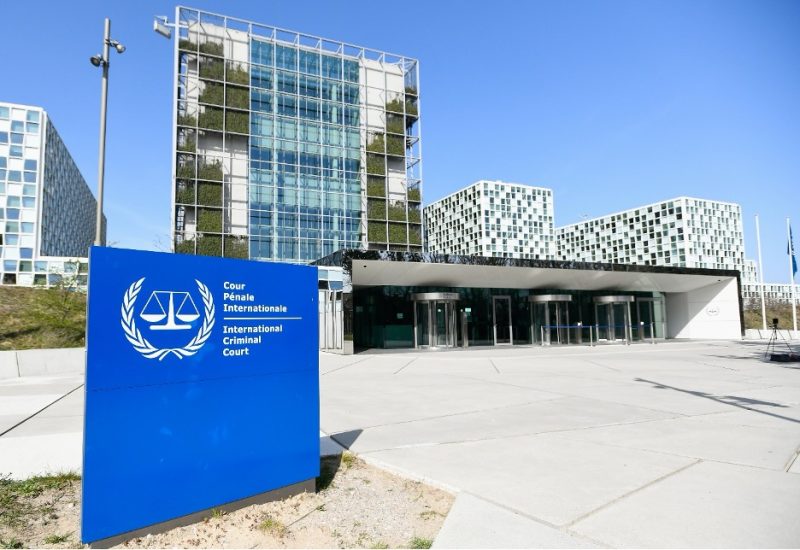


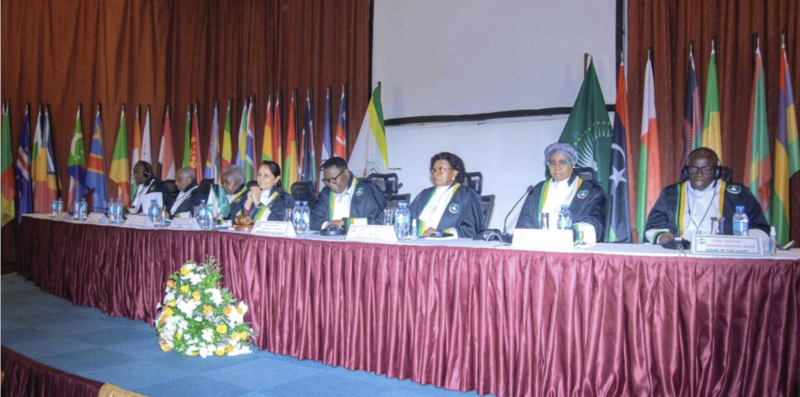
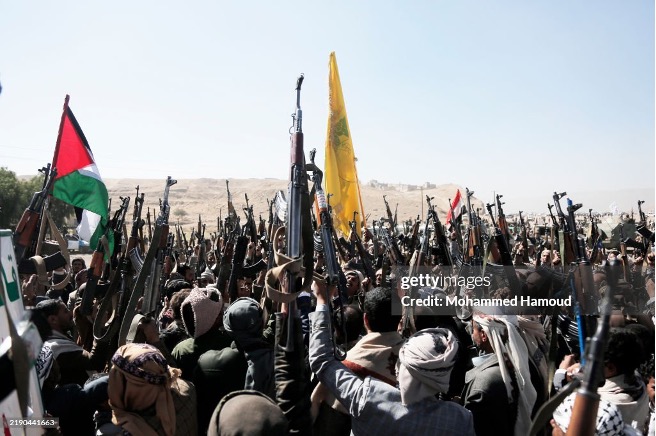

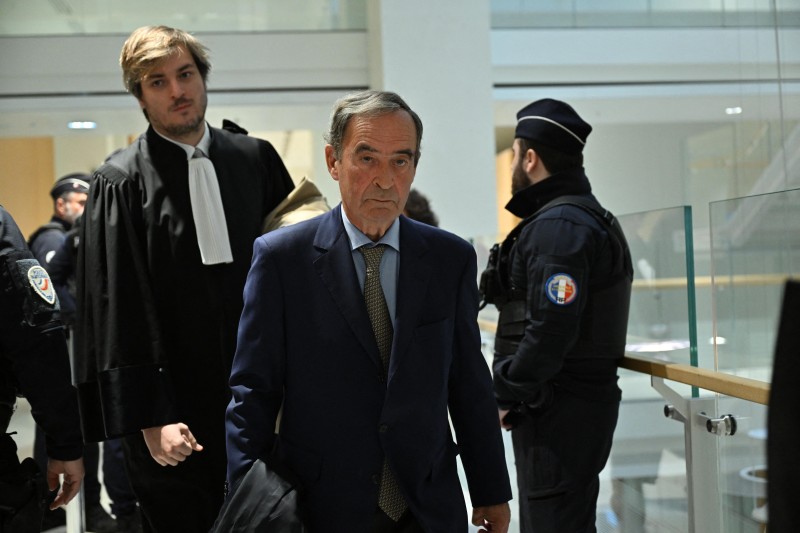



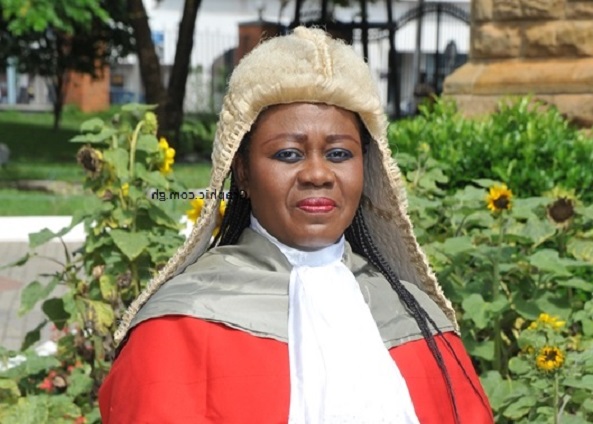
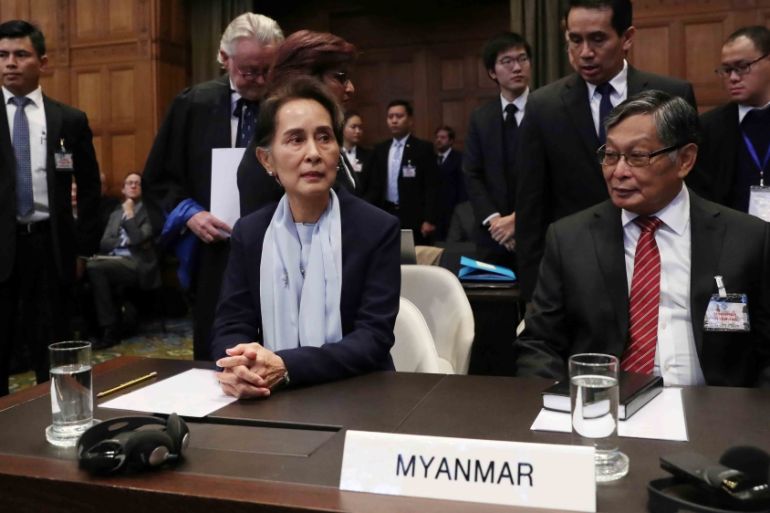
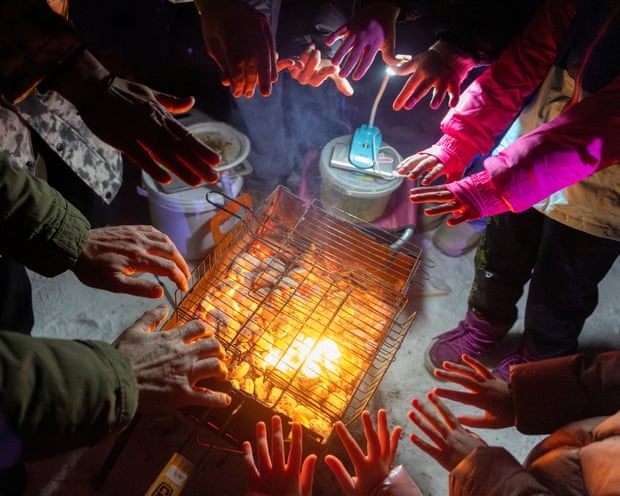
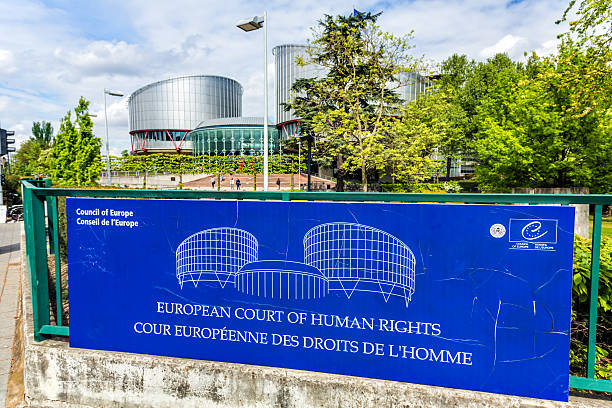
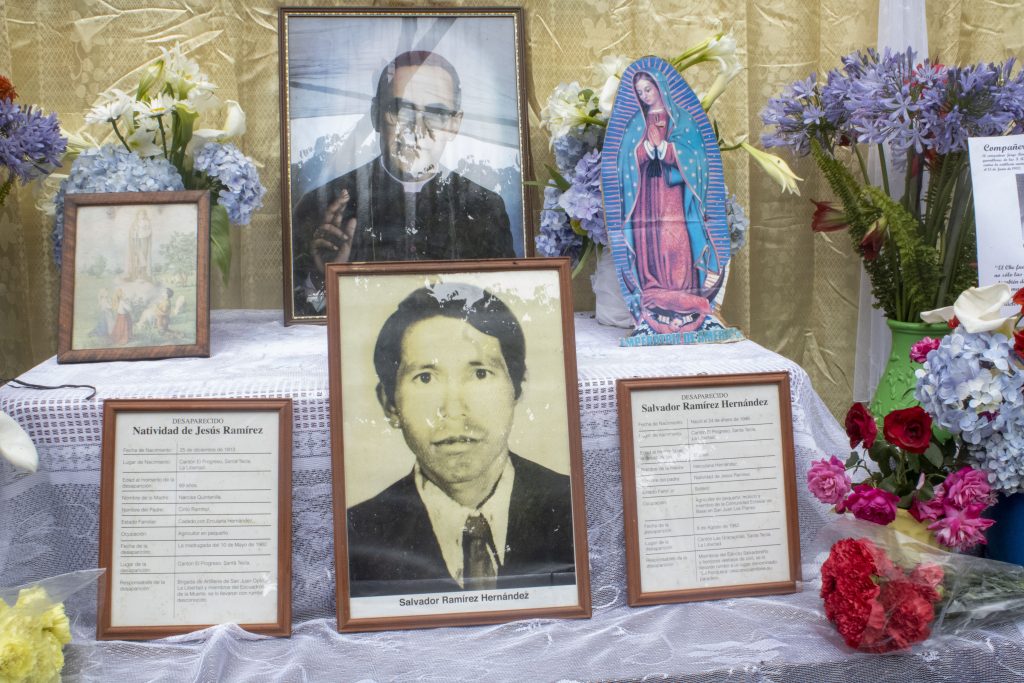


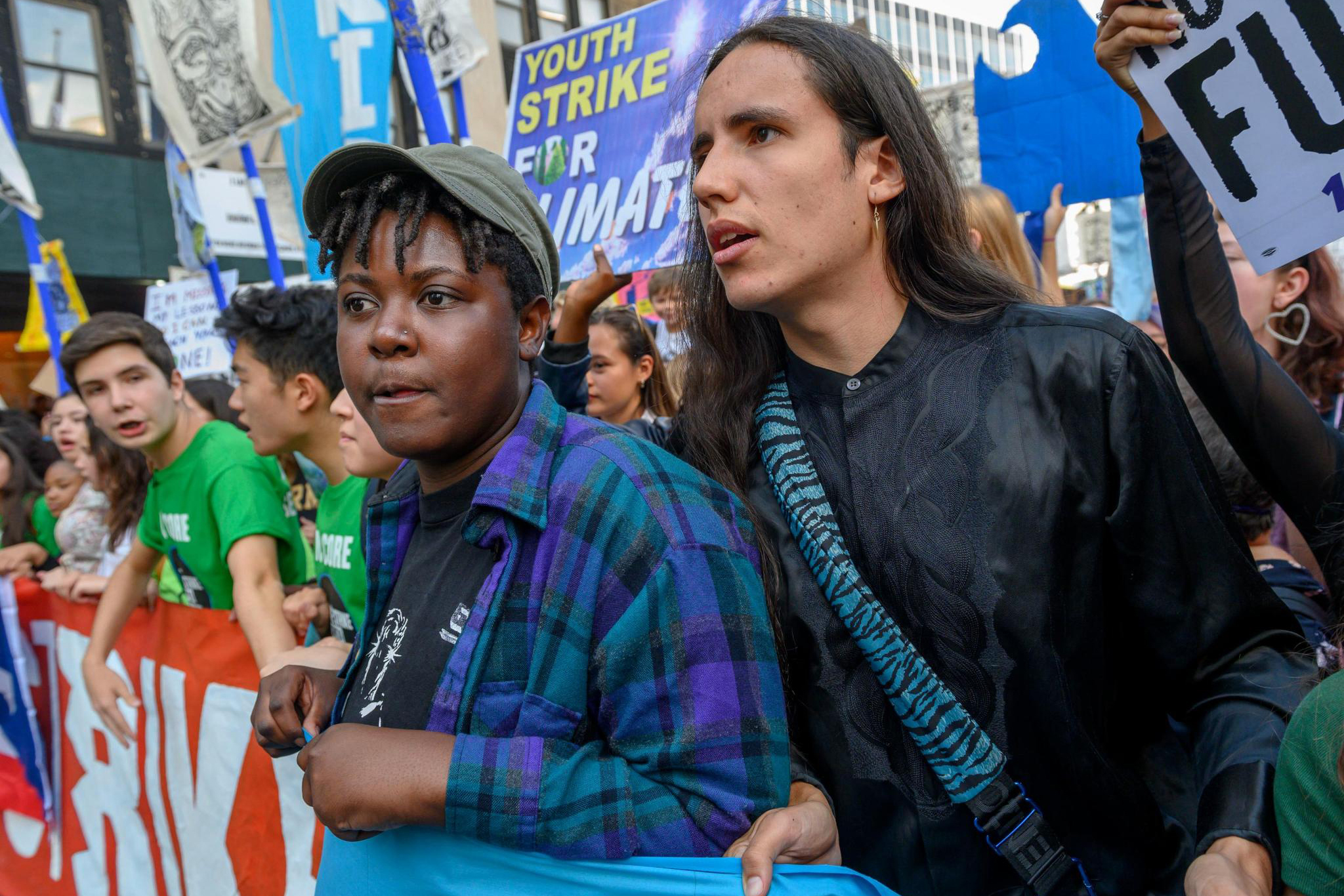
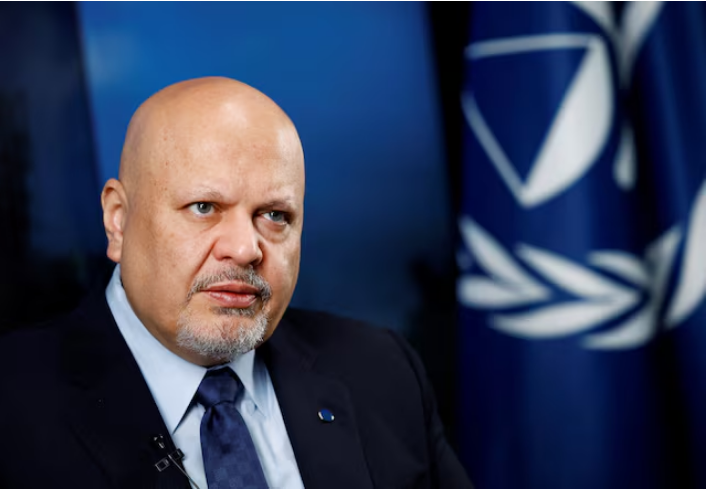

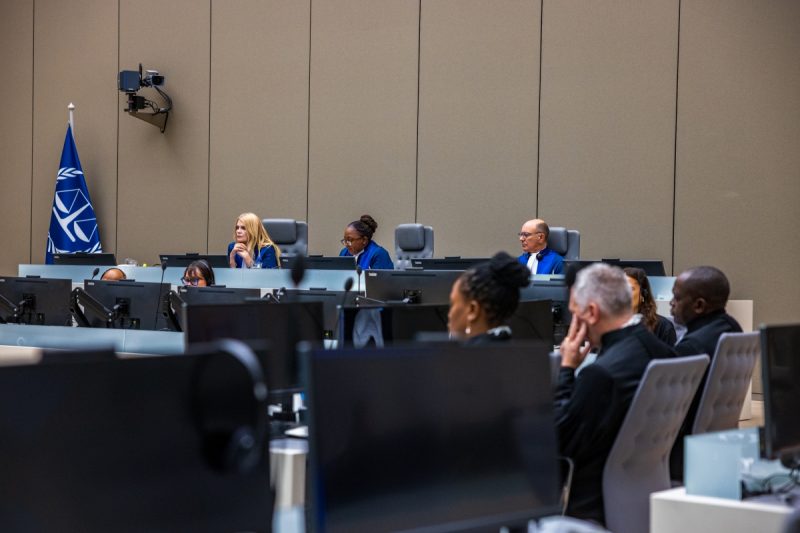
![From left, the heads of state of the three countries: Mali's Assimi Goita, Niger's General Abdourahamane Tchiani and Burkina Faso's Captain Ibrahim Traore [File: Mahamadou Hamidou/Reuters]](https://img-s-msn-com.akamaized.net/tenant/amp/entityid/AA1N98ke.img?w=768&h=525&m=6&x=1567&y=763&s=1220&d=251)