Africa

Malawi Will not Attend African Union Summit

By Vicki Turakhia
Impunity Watch Reporter, Africa

LILONGWE, Malawi – The Malawi President Banda will not be attending the African Union (AU) Summit this year. Earlier this month, President Banda banned the Sudanese President from entering Malawi for the African Union Summit due to war crimes.

Malawi's president Joyce Banda has taken a number of bold steps to steer the country into donor-friendly waters. (Photo Courtesy of AFP)

The Sudanese President Omar al-Bashir was told by President Banda that he would be arrested if he entered Malawi. Malawi is a member state of the International Criminal Court (ICC) and would be required to arrest President al-Bashir for war crimes.

The ICC is holding Bashir responsible for over 300,000 deaths in Darfur. President Ian Khama of Botswana agrees with the ICC and has stated in reference to al-Bashir, “His failed leadership is like a cancer in his country.”

Instead, the AU meeting will be held in Ethiopia where the Malawian President has refused to attend. President Banda is focused on economic recovery for Malawi and believes any association with the Sudan President would only discourage international donors.

Around 40 percent of Malawi’s development funding comes from foreign aid. President Banda is supported by the Malawi government and Vice President Khumbo Kachali has stated that Malawi will not bow to the AU’s conditions for hosting the summit.

The ICC’s chief prosecutor has asked that aid be cut to all countries that fail to arrest the Sudanese president. Other countries such as Chad, Kenya, and Djibouti have been reported to the United Nations Security Council for not arresting Bashir despite their involvement with the ICC.

33 African States have a duty to arrest Bashir due to the ICC rules. The ICC prosecutor is also asking the United Nations Security Council to hold all 193 member states of the UN responsible for issuing warrants for the arrest of President Omar al-Bashir.

However, reactions are mixed about the Sudanese President and his involvement in war crimes. Some have accused the ICC with getting overly involved in African affairs, causing more disruptions than beneficial actions.

The AU meeting is set for July 15-16 in Addis Ababa, Ethiopia, the AU headquarters. This meeting will elect a new commission chair after the January meeting which resulted in a deadlock.


For further information, please see:

Reuters Africa – Malawi Leader Banda Will not Attend AU Summit – 15 June 2012

BBC News – Ethopia to Host African Union Summit After Omar al-Bashir Malawi row – 12 June 2012

New York Times – Malawi: Summit Meeting Declined – 9 June 2012

The Herald Online – Malawi Cancels AU Summit Hosting Over al-Bashir – 9 June 2012
Ex-Ivory Coast President May Get Thirty Years for Crimes Against Humanity

By Tara Pistorese
Impunity Watch Reporter, Africa

YAMOUSSOUKRO, Cote D’ivoire—Ex-Ivory Coast President Laurent Gbagbo faces four counts of crimes against humanity for murder, rape, and inhumane acts that occurred after the 2010 South African presidential elections.

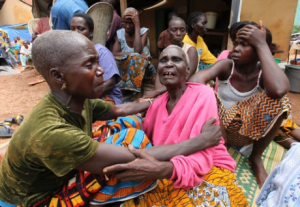
Ivory Coast Refugees Forced to Flee Amidst Post-Election Violence Mourn the Death of a Relative. (Photo Courtesty of AlertNet)

After polls declared internationally accepted candidate Alassane Outtara the new president, Gbagbo refused to step out of office, sparking the beginning of a violent four-month standoff between supporters of the two candidates.

During the post-election period from December 2010 to April 2011, approximately 3,000 people were killed and 1 million were displaced. However, human rights groups have said that both sides committed crimes during this period of violence.

Gbagbo was arrested in April 2011 after being captured by French Special Forces. He was removed to The Hague in November of the same year.

According to a statement issued by the International Criminal Court (ICC), “Mr. Gbagbo allegedly bears individual criminal responsibility, as indirect co-perpetrator, for four counts of crimes against humanity.”

Gbagbo, however, says he is innocent of any offenses committed by forces loyal to him.

Recently, related allegations surfaced that Gbagbo supporters made unsuccessful attempts to stage a coup d’état earlier this year. While Lida Kouassi, South Africa’s previous defense minister, admitted during questioning to possessing information about the coup plot, others claim the allegations were concocted for political gain.

“There is no real evidence of such a coup…this regime is such a mess, due to [President Outtara’s] way of ruling the country, that they think the best way to get out of this situation is to find somebody…and to charge him with trying to make a coup,” said Popular Front Party treasurer Tcheide Jean Gervais.

An ICC hearing to determine whether the evidence against Gbagbo is sufficient to proceed to trial was scheduled for June 18. But, the former ICC chief prosecutor, Luis Moreno-Ocampo, claims the evidence against Gbagbo is “solid” and believes Gbagbo could receive up to thirty years in prison.

This determination will have to wait as Gbagbo’s defense team was granted postponement until August 13 to allow more time to prepare an executive defense and so that Gbagbo may recover from alleged bad treatment he received while in Ivory Coast detention.

Some have also entertained the possibility that the ICC prosecutor and President Outtara may strike a deal regarding Gbagbo’s trial. At this point, however, President Outtara wants to obtain additional information on the matter.


For further information, please see:

Mgemi Online—Ivory Coast Coup Plot ‘Foiled’—14 June 2012

Voice of Africa—Ivory Coast Official Denies Coup Allegations—14 June 2012

CNN-US—War Crimes Court Postpones Gbagbo Hearing to August—13 June 2012

RTT News—ICC Postpones Gbagbo’s Charges Confirmation Hearing—13 June 2012

Reuters—Former Ivory Coast Leader’s Trial Postponed—12 June 2012

All Africa—Cote d’Ivoire: ICC Chief Prosecutor’s Statement Ahead of Laurent Gbagbo’s Hearing Sparks Controversy—4 June 2012

Scandal Resurfaces Within South African Police Force

By Tara Pistorese
Impunity Watch Reporter, Africa

PRETORIA, South Africa—Yet another South African police official has been replaced after accusations of irregular leasing deals with business tycoon Roux Shabangu surfaced.

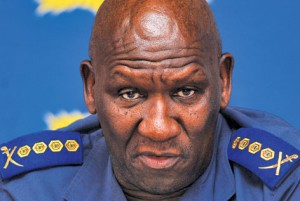
South Africa's Former National Police Commissioner, Bheki Cele. (Photo Courtesy of the Los Angeles Times)

President Jacob Zuma fired the police commissioner over claims that leasing contracts for police headquarters were far above market rates. A subsequent investigation found Cele unfit for office, although Cele vows to “clear his name.”

Sunday Times investigative journalists Mzilikazi Wa Afrika and City Press assistant editor Adriaan Basson believe corrupt police officials and politicians are the reason the South African government has failed to address national issues of inequality and poverty.

“In a country like ours where politicians are rated to earn more money, what makes them steal from the poor?” Wa Afrika asked.

But this is not the first time the South African police force has made headlines due to scandal. Cele’s predecessor, Jackie Selebi, is currently serving a fifteen-year sentence for accepting gifts from a convicted drug trafficker in exchange for information about police investigations.

Recently, Nathi Mthethwa, a South African police minister, revealed Selebi was never formally discharged from his police service. Rather, Selebi’s contract came to a natural end when it was simply allowed to lapse in August 2009.

In other words, Selebi has been able to continually draw a pension and state-funded benefits just as he would have had he resigned or been honorably discharged from service.

Similarly, last year, crime intelligence chief Lieutenant-General Richard Mdluli faced charges of fraud and corruption for using crime intelligence funds to buy luxury vehicles.

Corruption within the police force is undermining the public’s faith in law enforcement, which is increasingly important in the face of recent crime rates.

From March 2010 to 2011 almost 16,000 murders were committed in South Africa, making it one of the world’s leaders in intentional homicide. Additionally, South Africa is host to approximately 43 murders per day.

In light of the crime rate, the role of national police commissioner has been called one of the most difficult public positions in South Africa.

In an effort to renew the department, President Zuma appointed Mangwashi “Riya” Phiyega on June 12, making her the first female commissioner in the country’s history. However, this development emerges amid considerable controversy.

As the prior trustee of Nelson Mandela’s foundation and an executive at Barclay-owned banking group Absa, Phiyega has been called a “super administrator.” But she comes into the new position with very little experience in police work.

“We are still reeling from the shock,” an unnamed police official told The South African Star. “We don’t know who this person is.”

According to Institute for Security Studies researcher Johan Burger, this appointment will further corrode public confidence in their leadership, which may be the reason opposition parties and security experts vied for an experienced police officer to take control.

“This shows that the President has no confidence in the police to lead itself,” Burger said.

But Mthethwa believes the appointment evidences Zuma’s commitment to transforming the police force. Similarly, the ANC Women’s League welcomes the appointment.

“We believe having a strong woman at the help of the police service will bring a renewed focus to overcoming the scourge of gender-based violence, such as rape, which has become a growing concern across the country.”


For further information, please see:

Associated Press —South Africa Appoints New Police Chief —13 June 2012

The Guardian —South Africa’s Corruption-Tainted Police Force Gets First Female Chief —13 June 2012

Radio Netherlands-Worldwide, Africa —Axed S. African Police Chief Vows to Clear His Name —13 June 2012

The South African Star —Zuma’s Top Cop Bombshell —13 June 2012

Business Day —Richard Mdluli Suspended-Again—3 June 2012

Daily News—Selebi Still Draws Pension, Benefits—31 May 2012

All Africa—South Africa: ‘Government is Dysfunctional’ Say Investigative Journalists—30 May 2012


Civil Organization’s Report Stirs Concern Over South Africa’s Deportation Practices

By Ryan Aliman
Impunity Watch Reporter, Africa

PRETORIA, South Africa — A recent report by two civil society organizations on South Africa’s immigration policies brought to light the discrepancies between the legal requirements for the deportation of migrants and its anomalous application.

Migrants waiting outside the Home Affairs offices in Johannesburg. (Photo Courtesy of Tshepo Lesole/Eyewitness News)

The findings of this report reveal that the deportation process involves an array of inconsistencies, violations and abuses consistent with other reports that have been carried out in the area over the last decade. This is despite the fact that South African law regulates the arrest, detention and deportation of illegal foreigners.

For instance, some of the undocumented immigrants were not informed of their illegal status and of their rights to contest their deportation at the time of their arrest.

The manner by which detention is conducted was found to be abusive. Detainees held in Lindela reported not going through any medical screening before detention. Data also shows a lack of access to medical services.

The report was also concerned with length of detention. According to law, detention must not last for more than 120 days. Contrary to this rule, however, it has been common practice to hold detainees for a much longer period. Several reports from legal experts described a release and re-arrest cycle of immigrants used to circumvent the 120 day maximum.

Another anomaly unearthed by the report is that the law leaves the detention of illegal foreigners on the discretion of immigration officers. The report shows that Immigration officers tend to favor detention such that suspected illegal immigrants are automatically detained as soon as they fail to provide the officers proof of their legitimate status.

South Africa receives more asylum seekers than any other country in the world with people mainly coming from Zimbabwe, the Democratic Republic of Congo, Burundi, Ethiopia, Rwanda, and Somalia to escape poverty, insecurity, and political turmoil.

The report noted that South Africa’s focus on deportation practice stretches the resources of the government to combat real criminals and creates a climate that encourages xenophobia.

“Deportations are an ineffective and an expensive policy as those deported almost always return within days,” the report said. “In a survey carried out by the civil groups, over 200 respondents out of 227 said they would return if they were deported, while 144 of them had already been deported before and returned,” it added.


For further information, please see:

IOL News – Groups Question SA Migrant Handling – 8 June 2012

News Day – Over 25,000 Zimbos Deported – 8 June 2012

SW Radio Africa – Concern Raised Over Ongoing Abuses in SA Deportations – 6 June 2012

The Zimbabwean – Over 7 000 Zimbabweans Deported From South Africa – 6 June 2012


For the report, please see:

The Solidarity Peace Trust and the refugee rights group PASSOP (2012) Perils and Pitfalls – Migrants and Deportation in South Africa. Durban: Solidarity Peace Trust: http://www.solidaritypeacetrust.org/1192/perils-and-pitfalls/

Fighting Spreads With the use of Child Soldiers

By Vicki Turakhia
Impunity Watch Reporter, Africa

MONROVIA, Liberia – Liberian boys are being trained to fight and kill for the loyalist fighters of the former Ivory Coast President, Laurent Gbagbo. Mr. Gbagbo is currently being tried for crimes against humanity.

At least 40 people have been killed in cross-border attacks, HRW says. (Photo Courtesy of BBC)

A group known as the “small boys unit,” are child soldiers fighting in the war zones on the Ivory Coast. The Liberian government has been heavily questioned for the lack of involvement in prosecuting the loyalist fighters responsible for their use of child soldiers.

Children as young as 14 are being recruited as child soldiers for the Ivory Coast. One 17-year old Liberian boy was quoted as saying, “I don’t know the total that we have killed….In this mission, we have our bosses who train us and follow us to the field.”

These 14-17 year old boys are being trained to fight in the war zones of the Ivory Coast, while there the boys receive arms and ammunition, food, and medicine. If the boys get sick money is provided to them for a government hospital stay.

The United Nations has asked the Liberian government to hold the soldiers and mercenaries residing there to be held accountable for the war crimes in the Ivory Coast. Since July of 2011 at least 40 people have been killed during the attacks ,with the increased attacks, the fears are now that the fighting will expand.

Liberian and Ivorian militants have crossed into Liberia for protection or to avoid prosecution after former President Laurent Gbagbo’s government fell. Amnesty International and Human Rights Watch have criticized the Liberian government for failing to take actions in locating and prosecuting those responsible for the fighting in the Ivory Coast.

The Liberian government has affirmed that they are doing everything they can to prevent the use of child soldiers and fighting by Liberians on the Ivory Coast.

However, current actions taken by the Liberian government has proven differently. For example, Issac Chego and A. Vleyee, both mercenaries that have partaken in gruesome attacks, have been released. Chego has been accused of participating in massacres which led to the deaths of over 120 people.

There have been allegations that AK-47 ammunition and camouflage uniforms are being sent to the Ivory Coast to Gbagbo’s loyalists. However, the Ivory Coast Deputy Defense Minister, Paula Koffi Koffi, has stated that Ivorian and Liberian authorities are working together to prevent further attacks by Gbagbo’s loyalists.

These conflicting accounts of the events taking place in Liberia and the Ivory Coast are creating further turmoil instead of providing a real solution.

For further information, please see:

All Africa – Liberia: Fighters Set for Côte d’Ivoire – 7 June 2012

All Africa – Liberia: Gbagbo Loyalists Terrorize Border Towns – Enlist Country’s Child Soldiers – 7 June 2012

Liberian Observer – As Deadly Cross-Border Raids in Ivory Coast Persists Gov’t Fails to Curb Child Soldiers’ Recruitment, says Human Rights Watch – 7 June 2012

BBC – Liberia Minors Used in Ivory Coast Raids – HRW – 6 June 2012