Syria Watch

The Death of First Syrian Woman in Custody Cuts Mortal Wound Into the Arab Spring

By Adom M. Cooper
Impunity Watch Reporter, Middle East

HOMS, Syria–A young woman used as a puppet by Syrian security forces to entice the surrender of her activist brother has been found beheaded and dismembered, according to activist and human rights groups. The body of eighteen-year-old Zainab al-Hosni was discovered by her relatives at a morgue in the city of Homs.
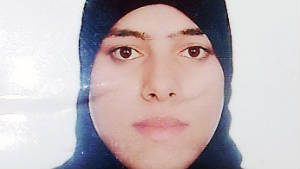
A photograph of 18 year-old Zainab al-Hosni. (Photo Courtesy of CNN)

The discovery was pure chance. The family had been called to the military hospital to pick up her brother’s body three days after his arrest. When they arrived at the morgue, the family was slapped in the face with a very unwelcome discovery, compounding the already existing grief over Mohammed al-Hosni.

The family had gotten word from a Homs military hospital that Mohamed’s body could be retrieved. When they arrived at the hospital, medical officials informed the relatives about another unclaimed body with a label bearing the name ‘Zainab al-Hosni’ that had been kept in a hospital freezer for some time.

Several days later, the al-Hosni family received the woman’s headless and limbless corpse according to the Syrian Observatory for Human Rights, Amnesty International, and the Homs Quarter Union. Regime authorities forced Zainab’s mother to sign a document saying that both Zainab and Mohamed had been kidnapped and killed by an armed gang.

The Syrian government has insisted that armed gangs with foreign agendas, not anyone associated with al-Assad’s regime, are responsible for the violence that has descended upon Syria in recent months.

The number of in-custody deaths has risen to 103 since the protests began in March. Overall, the UN estimates that some 2,600 individuals have been killed in Syria since March.

Zainab al-Hosni is the first woman known to have died in custody during the recent displeasure and demonstrative dissent against Bashar a-Assad’s regime.

Mohammed was slain on September 10, when security forces opened fire on demonstrators in Homs.

Amnesty International, a London-based human rights group, reported that Zainab’s body has been decapitated, her arms cut off, and her skin removed. Philip Luther, Deputy Director for the Middle East and North Africa, shared these sentiments.

“If it is confirmed that Zainab was in custody when she died, this would be one of the most disturbing cases of a death we have seen so far. We have documented other cases of protesters whose bodies were returned to their families in a mutilated state during recent months, but this is particularly shocking.”

The last time that her family saw her alive, Zainab al-Hosni was running a quick errand to the grocery store last month.

Zainab’s brother, Mohammed al-Hosni, was a prevalent opposition activist lauded by his colleagues and peers for heading up anti-government protests and treating the wounded. He had successfully evaded regime authorities for weeks when his sister disappeared, according to the Homs Quarter Union activist group. A union media coordinator relayed this statement to CNN.

“The secret police kidnapped Zainab so they could threaten her brother and pressure him to turn himself into the authorities. The government often uses this tactic to get to activists.”

The Local Coordination Committees of Syria, an activist group, claimed that security forces called Zainab’s family to trade her “freedom for her pro-democracy activist brother’s surrender.”

Amnesty International has reported as many as 15 in-custody deaths since publishing its 21 August report, Deadly Detention: Deaths in Custody Amid Popular Protest in Syria. The organization has list with a running tally of more than 2,200 individuals reported to have died since the anti-regime protests began. Deputy Director for the Middle East and North Africa Philip Luther said these words concerning how the international community should respond.

“The mounting toll of reports of people dying behind bars provides yet more evidence of crimes against humanity and should spur the UN Security Council into referring the situation in Syria to the International Criminal Court.”

The ban on international journalists in Syria is still in full effect, making it extremely difficult to independently verify reports coming from within the country. Now that the first female in-custody death has been reported, one can only hope that it will also be the last. The unrest with al-Assad’s regime cannot continue and the demands of Syria’s citizens must be met. Or unfortunately, the news of the next in-custody death, female or not, will worsen the tensions inside Syria even further.

For more information, please see:

Ahram – More Deaths as Sanctions on Syria Widen – 23 September 2011

Al-Jazeera – More Deaths in Syria as Sanctions Tighten – 23 September 2011

Amnesty International – New Evidence of Syria Brutality Emerges as Woman’s Mutilated Body is Found – 23 September 2011

BBC – Syria Unrest: ‘First Woman Dies in Detention’ – 23 September 2011

CNN – Mourning, Outrage, Disbelief Over Woman’s Mutilation in Syria – 23 September 2011

The Guardian – Syrian Teenager Believed to Be First Female to Die in Custody Since Uprising – 23 September 2011

NYT – Syria: Woman Held by Security Is Beheaded, Rights Group Says – 23 September 2011

Syrian Protesters Call for Help from International Community as Assad Steps Up Brutality

By Zach Waksman
Impunity Watch Reporter, Middle East

DAMASCUS, Syria – Protests against the regime of embattled President Bashar al-Assad reached a new level in Syria on Friday.  For the first time, activists requested assistance from the international community in dealing with Assad’s crackdowns on public dissidence.  More than 2,200 people are estimated to have died since protests started in mid-March.

Protesters Friday held signs calling for aid from the international community, such as the one at left. (Image courtesy of AFP)

At the same time, a story of new atrocities by the security forces surfaced.  Thursday, Human Rights Watch reported that security forces stormed al-Barr hospital in Homs, Syria’s third-largest city on Wednesday, and removed 18 wounded people from the facility.  Five of those taken were in the operating room at the time, and two were unconscious.  A doctor at the hospital told Human Rights Watch that security forces were looking for a man named Bilal, but by the time they arrived, a person of that name who had checked in had succumbed to his injuries.  The forces then went through the hospital and took anyone who had a bullet wound.

“When we tried to help the wounded who needed urgent medical care, the security forces pushed us back, saying these were criminals and rapists. They were beating the wounded as they moved them out of the hospital,” the doctor added.  “A woman, who must have been a mother or a sister of one of the wounded, begged them [the security forces] to give her relative his medication but they pushed her. The security forces then put the wounded in ambulances and drove them away. We could see them beating them inside the ambulance as they departed. I don’t know where they took them.”

This new action runs counter to a statement made by International Committee of the Red Cross president Jakob Kellenberger at the end of his visit to Syria on Monday.  Kellenberger said he insisted that members of the Syrian Arab Red Crescent be able to do their work without interference while he met with Assad.  Instead, it continues a pattern of security forces interfering with medical personnel’s ability to provide needed treatment to the wounded.

Friday’s rally, dubbed “Friday for International Protection,” is the latest statement from the regime’s opposition.  Despite near-certain response from the country’s security forces, these protests, with attendance numbering in the thousands, have taken place every Friday after the week’s primary Muslim prayer service.  This one was no different, with troops firing into the crowd once again.  Several people were killed, including a 15-year-old boy, but the death toll is unclear at this time.

“We want international protection!” was heard in several cities across the country.  Others called for Assad’s execution.  Still others held signs that read “Bashar: Game Over!”

A Facebook page titled “Syrian Revolution 2011” has asked the United Nations to send a permanent observer mission.  Such a mission, if deployed, would be at best, “a first step” in the process of calming and stabilizing a rapidly decaying situation, according to the Syrian Revolution General Commission, an umbrella bloc of activists that called for monitoring as an attempt to deter continued attacks.  But such an effort could also backfire, according bloc spokesman Ahmad al-Khatib during an interview with Reuters.

“Calling for outside intervention is a sensitive issue that could be used by the regime to label its opponents as traitors,” said Khatib.

Syria’s own government does not take the protests seriously.  Friday, SANA, the country’s official news agency, issued a press release reporting that Samih Khreis, Secretary-General of the Arab Bar Association, considered the activists’ cries for help from the international community illegitimate. The report also said that the opposition should not make these requests because “’Genuine reform cannot be built on the ruins of the homeland,” but through unity.  This same release also alleged that the same calls were not representative of the people.  Instead, it said, they were “manufactured by a group from the Canadian-Zionist Organization.”

Syria’s allies are rapidly losing patience with Assad’s continued crackdowns.  Russia, who has long opposed sanctions, still feels that Syria is using excessive force in dealing with the protesters, even if they might be “terrorists.”  Turkey, once a strong supporter of the Assad regime, is now one of its most vocal critics.  Even Iran, its closest friend in the international community, has called for the killing to stop.  Wednesday, Iranian President Mahmoud Ahmadinejad recommended that Assad start talking to the opposition instead of shooting at it.  Friday, he suggested that the region meet in Tehran, his country’s capital.

“A military solution is never the right solution,” Ahmadinejad told a Portuguese broadcaster. “We believe that freedom and justice and respect for others are the rights of all nations. All governments have to recognize these rights.  Problems have to be dealt with through dialogue.”

For more information, please see:

Al Jazeera — Syrians appeal for international protection — 09 September 2011

BBC — Syria unrest: Protesters call for international help — 09 September 2011

CNN — Report: Syrian forces snatched operating room patients — 09 September 2011

New York Times — Group Says Syrian Forces Seized Hospital Patients — 09 September 2011

SANA — Arab Personalities, Political Analysts: Calls for International Protection of the Syrian People Come from Canadian Zionist Organizations — 09 September 2011

Human Rights Watch — Syria: Security Forces Remove Wounded From Hospital — 08 September 2011

Syria Grants Red Cross Access to Detention Facilities

By Zach Waksman
Impunity Watch Reporter, Middle East

DAMASCUS, Syria – Monday marked a step forward for the rights of those detained by the Syrian government since protests against the regime of longtime President Bashar al-Assad began in mid-March.  During a meeting with Jakob Kellenberger, president of the International Committee of the Red Cross (ICRC), Syria agreed to grant the ICRC access to its primary prison facility.

A prisoner gives a defiant thumbs up as fellow detainees gather behind him (Image courtesy of Al Bawaba)
Two prisoners give defiant "thumbs up" as fellow detainees gather behind them in their shared prison cell. (Image courtesy of Al Bawaba)

This recent breakthrough comes on the heels of new information on what happens inside the detention facilities.  Last week, Amnesty International released a report on the treatment of detainees, whose number may run into the tens of thousands over just the past six months.  Highlights of the report include eyewitness accounts of beatings using both bare hands and occasionally weapons, and the use of electric shock on prisoners.  A minimum of 88 people are reported to have died in Syrian prisons between April 1 and August 15 alone, including 10 teenagers.  Amnesty International said evidence existed that 52 of those deaths were connected to torture of some form.  Syria denies that torture took place.

The results of the meeting provide limited access for the time being.  For now, the ICRC will only be able see people who were detained by the Minister of the Interior.  Kellenberger was optimistic of the possibility to expand the visits in the future.  “[W]e are hopeful that we will soon be able to visit all detainees,” he said.

Kellenberger also met with Syrian Walid Muallem Foreign Minister.  In a statement released by SANA, the country’s state-run news agency, Muallem emphasized that there was no shortage of access to medical care.  Despite recent claims that people had difficulty gaining such access, he said that the public hospitals were “constantly ready [to] provide the required medical services for all the citizens.”  He also said he was grateful for the efforts of the Syrian Arab Red Crescent Organization, which had been invaluable in ensuring present needs were met.

While he spoke with Assad, Kellenberger said they “the rules governing the use of force by security forces in the current situation and the obligation to respect the physical and psychological well-being and human dignity of detainees.”

He reiterated that topic while talking to Muallem and other top Syrian officials.

A news release from SANA issued today said that Assad also embraced the ICRC’s visit.  Assad, it claimed, considered it vital that the detention center be directly examined so that alleged media distortions of what happens there could be rectified.  Continuing further, he said he “welcomed the Committee’s work as long as it remains independent and objective and is not politicized.”

The visit will give the Red Cross the chance to talk directly to detainees about their treatment in the facility.  It will also be able to request that Syrian authorities improve prison conditions and tell families about the fate of those detained.

While this news is promising, do not expect to learn exactly what the ICRC finds.  It told the BBC that, as a general rule, it does not release details of its findings during prison inspections to the public because it thinks revealing that information might limit future access to the facilities.

For more information, please see:

SANA — President al-Assad Affirms to Head of ICRC the Importance of Direct Examination of Situation in Syria in Light of Media Distortion — 06 September 2011

BBC — International Red Cross visits Syrian prison — 05 September 2011

CNN — Red Cross granted access to Syrian detention facility — 05 September 2011

ICRC — Syria: ICRC president concludes visit by holding talks with Syrian president — 05 September 2011

New York Times — Syria Allows Red Cross Officials to Visit Prison — 05 September 2011

Al Bawaba — Amnesty: Huge increase of deaths in Syrian prisons — 31 August 2011

Amnesty International — Deadly Detention: Deaths in custody amid popular protest in Syria — 31 August 2011

Raids Continue in Syria as Assad’s Position Weakens

By Zach Waksman
Impunity Watch Reporter, Middle East

DAMASCUS, Syria – The end of Ramadan brought more of the same to the Syrian people.  Over the past two days, security forces began a new series of raids intent on crushing dissent against the regime of President Bashar al-Assad.  Tuesday morning, at least seven people were killed when security forces fired at protesters who had gathered outside of mosques following their morning prayers to mark the first day of the Muslim Eid al-Fitr holiday.  These latest crackdowns come in the face of continued international pressure.

Syrian President Bashar al-Assad President performs the Eid Al-Fitr Prayer Tuesday morning.  At the same time, security forces fired on protesters as they finished the same prayer, killing at least seven.  (Photo courtesy of SANA)
Syrian President Bashar al-Assad President performs the Eid Al-Fitr Prayer Tuesday morning. At the same time, security forces fired on protesters as they gathered after finishing the same prayer, killing at least seven people. (Photo courtesy of SANA)

“They don’t want us to have any peaceful day,” Um Mohammad, a mother of two from Damascus, told the New York Times. “We are grieving this Id, and we were not going to celebrate, so they didn’t have to kill more people today,” she added, referring to the feast of Id al-Fitr, which marks the end of Ramadan.

Syria appears to be in a state of flux at this time.  Although raids have continued, reports have emerged to indicate that dozens of soldiers have deserted their posts to join the uprising against Assad.  In response to the defections, the country’s security forces surrounded Rastan, a town outside Homs, the country’s third largest city, early Monday morning.  According to a Rastan resident who called himself Raed during a telephone interview with Reuters, the defections began three months ago after tanks entered the town to crush street protests, reportedly killing dozens of civilians. Other defections took place Sunday, when several dozen soldiers disobeyed orders to fire on protesters in the Damascus suburb of Al Ghouta.  The targeted activists were attempting to march toward Damascus.  The recent defections may have been influenced by the recent fall of the Qaddafi regime in Libya.

But even as these recent shootings took place, the international community continues its responses. During Monday’s crackdowns, ambassadors to the United Nations Security Council met behind closed doors to discuss further action against Syria, including the possibility of a resolution or sanctions.  The European Union has also stopped making loans through its European Investment Bank.

Turkey, which borders Syria and has been a prime destination for refugees of the Assad regime, expressed concern about its neighbor’s efforts to beat back dissent.

“The only way out is to immediately silence arms and to listen to the people’s demands,” said Prime Minister Recep Tayyip Erdogan. “We have been watching the fate of those who did not chose this path in the past few months in Tunisia, in Egypt — and now in Libya — as a warning and with sadness.”

Even Iran, Syria’s closest ally, has called for Assad to listen to his people’s protests.  “The government should answer to the demands of its people, be it Syria, Yemen or other countries,” said Ali Akbar Salehi, Iran’s foreign minister, on Saturday. “The people of these nations have legitimate demands, and the governments should answer these demands as soon as possible.”

Despite Salehi’s statement, he also mentioned fear that the situation needed to be handled delicately.  He considered the possibility of regional chaos to be great.

Ironically, Assad also performed the traditional prayer in Damascus, accompanied by high officials within the Muslim religion, calling for peace within his country.  He used the occasion to reiterate his belief that Syria was reacting properly and was on a steady path to reform. In the meantime, the stability of the Assad regime may depend on the strength of its security force.  Protests have yet to reach the stronghold of Damascus, so security forces have been able to concentrate on the sites of protest, instead of protecting the cities from activists.

For more information, please see:

Al-Jazeera — Syrian protesters ‘killed’ after Eid prayers — 30 August 2011

BBC — Is Syria slipping out of the grasp of its rulers? — 30 August 2011

New York Times — Security Forces in Syria Fire on Worshipers as Ramadan Ends — 30 August 2011

SANA — President Bashar al-Assad Performs Eid Al-Fitr Prayer at President Hafez al-Assad Mosque — 30 August 2011

Al Bawaba — European Investment Bank stops loans to Syria — 29 August 2011

Al Bawaba — Syrian forces continue raids as Erdogan warns Assad — 29 August 2011

Al Jazeera — Syria forces surround town after ‘defections’ — 29 August 2011

New York Times — Amid Syrian Raids, Reports of Desertions — 29 August 2011

New York Times — Iran Calls on Syria to Recognize Citizens’ Demands — 27 August 2011

Popular Syrian Political Cartoonist Attacked and Hospitalized; Security Forces Suspected

By Zach Waksman
Impunity Watch Reporter, Middle East

DAMASCUS, Syria – Ali Farzat, one of the most popular political cartoonists in the Middle East, was brutally attacked by masked gunman early yesterday morning in Damascus.  The gunmen, suspected to be members of Syria’s security forces, pulled the 60-year-old from his car and beat him, focusing their blows on his arms.  Farzat, who has since been brought to a hospital and is recovering from his injuries, suffered two broken fingers on his left hand, a fractured right arm, and a bruised left eye.

Ali Farzat, Syrias best-known political cartoonist, lies in Damascuss al-Razi Hospital following Thursday mornings attack
Ali Farzat, Syria's best-known political cartoonist, lies in Damascus's al-Razi Hospital following his being attacked Thursday morning. (Photo courtesy of Reuters)

This attack is among the latest in Syria, whose embattled president, Bashar al-Assad, has spent the last several months using security forces to crack down on dissenters.  Earlier this week, the United Nations called for further investigation into the crackdowns, which may constitute crimes against humanity.  But President Assad has continued to stand firm, calling the protesters terrorists whose crushing was necessary to protect the country.

The attack on Farzat indicates a new level of paranoia by the Assad regime.  Even before yesterday, fans could only access his cartoons on his private website because Syria had banned their appearance in local newspapers.  His popularity is derived from his willingness to skewer leaders across the Middle East, including former Iraqi President Saddam Hussein and Colonel Muammar Gaddafi, the head of the Libyan government.  During Farzat’s 40 year career, his work has emphasized the “mismatch between rhetoric and reality in the Arab world,” as described by BBC Arab Affairs analyst Sebastian Usher.  These drawings have generally used generic government officials, but his work over the past few months has directly attacked Assad.  One of his most recent drawings depicted the Syrian leader carrying a suitcase while trying to get a lift from Gaddafi, who is driving a getaway car.  These criticisms came in spite of a ban on caricatures of Assad’s face.

Ayad Sharbaji, a friend of Farzat’s who visited him in the hospital, told the New York Times what Farzat recounted from the beating. “They told him as they were burning his beard, ‘We’ll see what you will draw from now on.  How dare you disobey your masters?’”

Usher considered the attack a sign that Farzat’s cartoons had “hit home and that the authorities’ tolerance for dissent is touching zero.”

Activists were concerned by this attack.  “What happened to Ali Farzat today scared us,” said an activist from Homs, who wished to be identified only by her first name, Sally. “But it’s only a proof of how desperate the regime is. It shows how frightened they are and proves that they are losing control.”

The United States was quick to respond with a statement from the State Department.  Spokeswoman Victoria Nuland, issuing the statement, called Assad’s repeated promises of reform a series of “empty promises about dialogue with the Syrian people.”  Continuing further, Nuland reiterated the U.S.’s stance that Syria should promptly cease its attacks on dissenters against the Assad regime.

SANA, Syria’s official news agency, also reported the assault.  In a press release, the agency said that Farzat’s attackers were “veiled people.”  It concluded that “Authorities concerned are conducting an investigation” of the incident.

For more information, please see:

Al Jazeera — US condemns Syria political cartoonist attack — 26 August 2011

SANA — Caricaturist Ali Farzat Attacked by Veiled People — 26 August 2011

BBC — Syria unrest: Famed cartoonist Ali Ferzat ‘beaten’ — 25 August 2011

New York Times — Political Cartoonist Whose Work Skewered Assad Is Brutally Beaten in Syria — 25 August 2011

Impunity Watch — Assad stands firm against pressure to step down, new investigation of violence in Syria — 23 August 2011