
Uncategorized
Nicaragua Files Application to Commence Proceedings in the ICJ Against Germany
By: Marya Al Khoury
Journal of Global Rights and Organizations, Associate Articles Editor
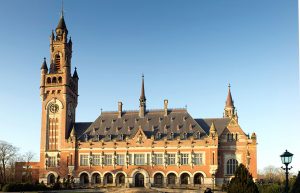
THE HAGUE, The Netherlands – On March 1, 2024, the Republic of Nicaragua filed an Application commencing proceedings before the International Court of Justice (ICJ) against the Federal Republic of Germany regarding Germany’s aid and support of Israel.
 |
In its Application, Nicaragua alleges that, by providing aid to Israel and defunding the United Nations Relief and Works Agency for Palestinian refugees, “Germany is facilitating the commission of genocide and, in any case has failed in its obligations to do everything possible to prevent the commission of genocide.” Such obligations, Nicaragua argues, stem from being a member to the Convention on the Prevention and Punishment of the Crime of Genocide, the Geneva Convention of 1949, and the basic rights afforded by general international and humanitarian law. Nicaragua claims that, by providing, political, financial, and military support to Israel, Germany is allegedly contributing the death, displacement, and starvation of Palestinians.
Though the ICJ has yet to render a determination on whether genocide has occurred, Nicaragua claims that there is, at the very least, a recognizable risk of genocide against the Palestinian population. Nicaragua’s claim against Germany is along a similar vein as South Africa’s case against Israel. Nicaragua, much like South Africa, is pursuing urgent provisional measures to be released by the Court while they await adjudication of the claim’s merits.
The International Court of Justice has yet to set a date for this hearing. However, the ICJ usually sets hearing dates for emergency provisional measures within weeks of filing the case, and so, the Court is expected to set a date in the near future.
For further information, please see:
CTV News – Nicaragua files case at World Court against Germany for aiding Israel – 1 Mar. 2024.
Reuters – Nicaragua files case at World Court against Germany for aiding Israel – 1 Mar. 2024.
Russia Sends No Representation to ECHR Grand Chamber Hearing Regarding Russian Occupation of Crimea
By: Rachel Wallisky
Impunity Watch News Staff Writer
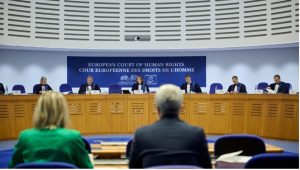
STRASBOURG, France – On December 13, 2023, the European Court of Human Rights (ECHR) held a Grand Chamber Hearing in the case of Ukraine v. Russia (re Crimea). However, the Russian Government failed to notify the court of the names of their representatives prior to the hearing, nor did any representatives appear on its behalf. The ECHR elected to continue with the hearing, pursuant to Rules 64 and 65 of the Rules of the Court. The Ukrainian Government is represented by Marharyta Sokorenko, Ben Emmerson, Iyrna Mudra, Andrii Luksha, and Oleksii Yakubenko.
 |
The Complaints
The Hearing relates to three inter-state applications filed by Ukraine in the ECHR over the past decade. Two applications submitted to the Court by Ukraine in 2014 and 2015 were joined in 2018. The ECHR issued a decision establishing its jurisdiction over the application on December 16, 2020.
The Ukrainian Government argues in its application that Russia has exercised “effective control” over Crimea, the City of Sevastopol, and integral parts of Ukraine since February 27, 2014. By doing so, the Ukrainian Government argues that Russia has violated several Articles of the Convention including Article 2 and Article 3, the Right to Life and Prohibition of Inhuman Treatment and Torture, respectively.
Specifically, Ukraine argues that between February 27, 2014 and August 16, 2015, Russia exercised an administrative practice of “enforced disappearances” of “perceived opponents to Russia,” especially Ukrainian soldiers, ethnic Ukrainians, and Tartars, and that Russia failed to engage in any adequate investigation of those disappearances.
The Hearing
The Hearing began with a reading of a summary of the applications being considered and the complaints surrounding them. The President of the ECHR, Síofra O’Leary, noted that Russia ceased to be a party to the ECHR on September 16, 2022. However, because Russia was a member of the Counsel of Europe at the time of the complaints, it cannot escape its obligations under the Convention. President O’Leary noted that though the ECHR had maintained communication with Russia regarding the allegations made against it by Ukraine, Russia has not communicated with the Court since leaving the ECHR.
When addressing the Court, Mr. Emmerson remarked that it was “unprecedented” that a Hearing continued though only one party was present for arguments. Mr. Emmerson argued that Russia’s “enforced disappearance” practices during its occupation of Crimea fell under Article 2 because the failure of the Russian government to acknowledge that a person had been imprisoned or killed increased the likelihood that they would be subject to inhumane treatment, regardless of if the person is later released or their killing acknowledged.
A ruling from the ECHR can be expected “at a later stage” but a recording of the Grand Chamber Hearing is available on the ECHR’s website.
For further information, please see:
ECHR – Grand Chamber Hearing on Inter-State Case Ukraine v. Russia (re Crimea) – 13 Dec. 2023
ECHR – Interim Measure Granted in Inter-State Case Brought by Ukraine Against Russia – 13 March 2014
ECHR – New Inter-State Application Brought by Ukraine Against Russia – 27 August 2018
ECHR – Rules of Court – 30 October 2023
Chile to Vote on Whether to Adopt New Constitution with Right to Life Provision
By: Carlos Dominguez Scheid
Impunity Watch Staff Writer
SANTIAGO, Chile – On November 7, 2023, the Chilean Constitutional Council presented President Gabriel Boric with a proposal of a new constitution that includes a right to life provision and outlaws the death penalty.
 |
The current Chilean Constitution, in effect since 1981 and approved by referendum in 1980 during Augusto Pinochet’s dictatorship, has been a point of contention due to its undemocratic origins despite undergoing significant reforms in 1989 and 2005. In response to major social unrest in October 2019, political parties agreed to initiate the process of drafting a new constitution, seeking to address the popular demands for improvements in the quality of life. In a 2020 referendum, with a 50.95% turnout, 78.28% of voters supported the creation of a new constitution and endorsed the establishment of a new, independent body, distinct from Congress, tasked with drafting it. The election for the 155 members of the Constitutional Convention was held in May 2021, and the results yielded a supermajority for the left and far left. In the September 2022 referendum, the people rejected their drafted Constitution, with 62% voting against it. The referendum had a historic 85.86% turnout.
Subsequently, a new political agreement led to a different process, involving a Commission of Constitutional Experts appointed by Congress to prepare a draft constitution. This was to be reviewed and voted on by the Constitutional Council, a 50-member body elected in May 2023. With a supermajority held by the right and center-right, the Council is poised to introduce changes to the proposed constitution.
Article 4.1 of American Convention of Human Rights (About the Right to Life), from 1969, states that:
“Every person has the right to have his life respected. This right shall be protected by law and, in general, from the moment of conception. No one shall be arbitrarily deprived of his life.”
In Chile, the current Constitution states that:
“The Constitution ensures to all persons the right to life and to the physical and mental integrity of the person. The law protects the life of the one about to be born. The death penalty may only be instituted for a crime established in a law approved by a qualified quorum.” (Article 19 N° 1)
The Commission of Constitutional Experts proposed the following change:
“The Constitution ensures to all people the right to life. The death penalty is prohibited.”
The Constitutional Council’s final proposal, which will be voted on in the December 17th Referendum, states:
“The Constitution ensures to all people the right to life. The law protects the life of the one who is to be born. The death penalty is prohibited.” (Article 16 N° 1)
This constitution is the first in Chile’s history to prohibit the death penalty. If approved, it would close the debate on this issue. Although the death penalty was abolished in the Penal Code in 2001, it remains in effect for military crimes during wartime. This has allowed for legislative proposals to reintroduce it in the Penal Code, arguing that Chile has not fully abolished it and therefore is not bound by Article 4.3 of the American Convention on Human Rights.
The issue about the protection of the right to life of the unborn was subject to a strong debate. In Chile, abortion is governed by the Penal Code and the Sanitary Code. A total ban on abortion was implemented in 1989, during the last year of the dictatorship, through an amendment to the Sanitary Code. It was only in 2017 that abortion was legalized again, but strictly under three distinct situations: if the woman’s life is at risk, if the fetus is diagnosed with a condition that renders it nonviable outside the uterus, or in cases where the pregnancy has occurred due to rape, with the gestation period capped at twelve weeks (fourteen weeks for those under 14 years of age). This legislative change, stemming from a constitutional mandate to protect ‘the life of the one about to be born,’ was hotly debated. Ultimately, the Constitutional Court upheld the legality of this limited decriminalization of abortion in a 6-4 decision.
The right and center-right dominated Council proposed a key change to the current constitution and to the draft of the Commission of Constitutional Experts, focusing on enhancing the protection of the unborn. In the debate, Article 4.1 of the American Convention on Human Rights was referenced. The distinction between ‘the law protects the life of the one about to be born’ and ‘the law protects the life of the one who is about to be born’, while subtle, underscores crucial legal and ethical interpretations regarding the protection of the nasciturus. The use of ‘who’ suggests personhood, advocating for the recognition of the unborn as individuals with rights from conception. This implies a broader scope of protection, viewing the fetus as an individual entity, rather than an extension of the pregnant woman.
A referendum was announced for December 17, 2023, where Chileans will vote on whether to adopt the new constitution.
For further information, please see:
Reuters – Chile voters sour on right-wing constitution as abortion clause stirs debate – 6 Oct. 2023
Le Monde – Chile’s draft constitution calls into question right to abortion – 24 Sept 2023
The Guardian – Chile’s right wing presents draft conservative constitution – 7 Nov 2023
Rodrigo Delaveau Swett – Constitution of Chile – 2021
Non-Compliance with AfCHPR Threatens Court’s Existence
By: Tiffany Johnson
Impunity Watch News Staff Writer
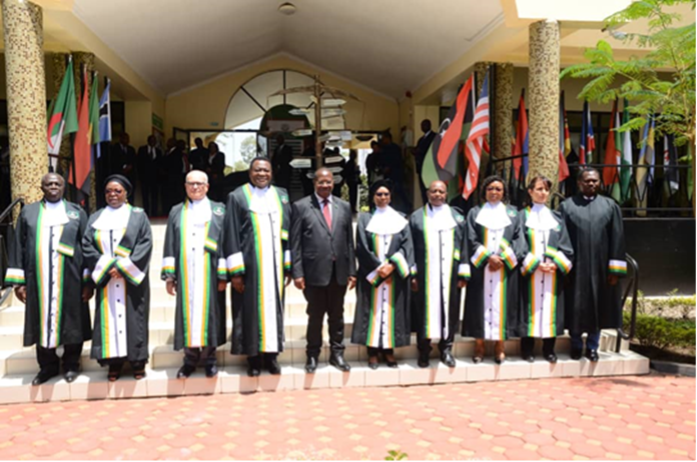
The African Court on Human and Peoples’ Rights (AfCHPR) is facing an existential crisis as countries continue to defy its decisions. This regional institution is dedicated to upholding human rights across the continent, and countries’ defiance undermines the AfCHPR’s existence. The Organization of African Unity (OAU), the forerunner of the African Union (AU), adopted a protocol in Burkina Faso in 1998, which led to the establishment of the AfCHPR. In 2004, the agreement went into effect after being ratified by more than fifteen nations. The Court’s initial judges were chosen in 2006, and its initial decision was rendered in 2009.
 |
The AfCHPR and any other pertinent human rights treaties that have been ratified by the state in question are both circumstances in which the court will consider involving alleged violations of human rights. It was founded with a noble mission – to provide a legal platform for individuals and communities to seek redress for human rights violations. One of its remedies is to provide just recompense or make amends. Its judgments are legally binding, and signatory nations are obligated to comply with its rulings. Yet, the Court’s effectiveness is under threat as several African countries openly disregard its decisions.
The Court’s authority, and ability to protect fundamental human rights in Africa are at stake due to persistent non-compliance. According to a report released earlier this year on the Court’s activities in 2021, states’ “poor level of compliance” with its rulings was a significant issue. During the Court’s 16-year existence only a small number of judgments and orders were implemented out of more than the 200 that were issued. However, a majority have been disregarded by the respondent nations. According to the report, “as of July 2021, only 7% of judgments of the Court had been fully complied with, 18% partially complied and 75% non-compliance. Some States have stated clearly before the Executive Council that they will not comply with the Court’s decisions.”
By end of 2020, the governments of Benin, Côte d’Ivoire, and Tanzania had all revoked the right of individuals and non-governmental organizations to register cases directly with the Court. Rwanda revoked this privilege in 2016, bringing the total number of nations restricting access to this vital path to justice to four. All three governments revoked this right in response to what they perceived to be unfavorable decisions, a rise in intolerance towards human rights defenders, and a general deterioration of national human rights conditions. Tanzania withdrew the privilege, falsely claiming that the Court entertained matters that should have been handled by national courts. Benin disagreed with the Court’s decision to defer the seizure of an applicant’s property in a dispute with a bank, arguing that the decision undermined the country’s economic and political stability.
Most recently, the AfCHPR concluded its 70th Ordinary Session on September 29, 2023. It issued fifteen rulings on September 5, 2023. Responses to these 15 rulings will be foretelling. Despite the Court’s directive, little progress has been made to rectify this injustice, calling into question Tanzania’s commitment to upholding the Court’s decisions.
Cases such as these, regrettably, are not isolated instances. The reasons for non-compliance are multifaceted and include political considerations, limited resources, lack of awareness among government officials and the public regarding the Court’s authority, and concerns over external interference. The implications of non-compliance are far-reaching. They erode the trust in the AfCHPR and weaken its power to protect human rights. If countries can choose to disregard the Court’s rulings with impunity, the very purpose of the Court is undermined, and the dream of justice for human rights abuses in Africa remains elusive.
To ensure the survival and effectiveness of the AfCHPR, a multi-pronged approach is necessary. Primarily, it is essential for member states to honor their obligations and comply with the Court’s decisions. The African Union can play a pivotal role by engaging in diplomatic efforts to encourage compliance and emphasizing the importance of a united commitment to human rights.
Additionally, public awareness campaigns should be launched to educate citizens and government officials alike about the AfCHPR’s role and authority, underlining how it plays a critical role in promoting justice and accountability on the continent.
Moreover, international pressure and cooperation can be instrumental in holding non-compliant countries accountable. The international community can work collectively to stress the importance of human rights and the necessity for all nations to adhere to international norms and agreements.
The African Court on Human and Peoples’ Rights, a beacon of hope for justice and human rights in Africa, stands at a crossroads. The threat of non-compliance with its decisions jeopardizes the very existence of this crucial institution. It is a call to action for African nations, the African Union, and the global community to come together and safeguard the AfCHPR’s authority and its mission of promoting and protecting human rights across the continent. Failure to address this issue may result in the erosion of fundamental human rights in Africa and a setback for justice and accountability.
For further information, please see:
Amnesty International – Why the African Court should Matter to you – 9 Jun 2023
Fair Planet – African Court on Human and People’s Rights Faces Uncertain Future – 26 Nov 2022