By: Spencer Kwabena Boateng Mensah
Impunity Watch News Staff Writer
ACCRA GHANA & ABUJA NIGERIA – In the long constitutional history of Ghana, few episodes have generated as much legal and political debate as the removal of former Chief Justice Gertrude Araba Esaaba Sackey Torkornoo.
The controversy, which began with petitions alleging misconduct in early 2025, quickly expanded into a complex legal saga spanning domestic courts and the ECOWAS Community Court of Justice in Abuja. Nearly two years after the events that triggered the dispute, the case remains a reference point in discussions about judicial independence, constitutional procedure and the limits of executive authority.
Justice Torkornoo assumed office as Ghana’s 15th Chief Justice on 12 June 2023, following her nomination by then-president Nana Addo Dankwa Akufo-Addo and approval by Parliament.
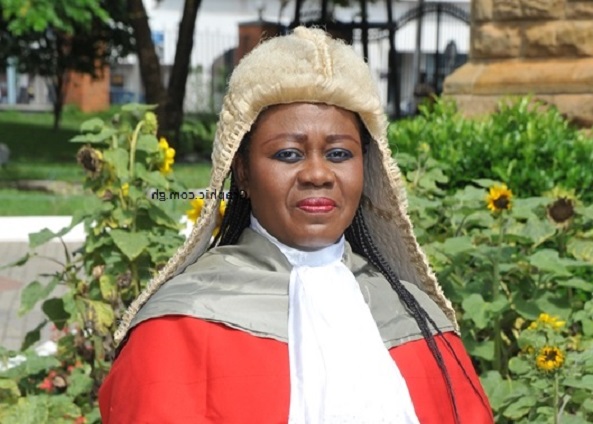
Her elevation marked another milestone for women in the judiciary—she became the third woman to lead the country’s Supreme Court since the beginning of the Fourth Republic.
For nearly two years, her tenure appeared relatively stable. That changed in March 2025.
On 25 March 2025, three petitions seeking her removal were submitted to President John Dramani Mahama. The petitions accused the Chief Justice of administrative misconduct and irregularities in the management of judicial resources.
Under Article 146 of Ghana’s 1992 Constitution, the removal of a superior court judge—including the Chief Justice—follows a defined procedure. The president must consult the Council of State of Ghana and determine whether the petitions disclose a prima facie case before appointing an investigative committee.
After reviewing the petitions and consulting the Council of State, the president announced on 22 April 2025 that such a prima facie case existed. Justice Torkornoo was suspended pending an investigation by a five-member committee.
The most senior justice of the Supreme Court of Ghana, Paul Baffoe-Bonnie, stepped in as acting Chief Justice.
The First Legal Challenges
The suspension immediately triggered litigation.
One of the earliest challenges came from legislator Vincent Ekow Assafuah, who asked the Supreme Court to halt the removal process. His argument centered on whether the president had followed the correct constitutional procedure before determining that a prima facie case existed.
On 6 May 2025, the Supreme Court dismissed the application, allowing the process to continue.
A second challenge soon followed, again questioning the legality of the suspension and the committee proceedings. On 21 May 2025, the Supreme Court rejected that challenge as well.
These rulings cleared the way for the investigative committee to proceed with hearings.
Inside the Investigation
The committee began its hearings on 15 May 2025, meeting regularly to examine the allegations contained in the petitions.
Because Article 146 proceedings are held in camera, much of the investigation unfolded outside the public eye. Nonetheless, the process generated intense public debate and scrutiny.
Justice Torkornoo herself publicly criticized the proceedings during a national address on 25 June 2025, describing what she believed to be fundamental procedural flaws.
“The perversion of law, rules and due process… are driving the proceedings,” she said at the time, arguing that the investigation had strayed from constitutional standards.
Turning to the Regional Court
While the committee hearings continued in Ghana, the dispute also reached the regional level.
On 4 July 2025, Justice Torkornoo filed a case against the Ghanaian state at the ECOWAS Community Court of Justice. The application alleged violations of her rights under regional human-rights law and argued that the suspension prevented her from carrying out the constitutional duties of her office. She sought reinstatement or other relief and $10 million in damages.
Her legal team asked the court to declare that Ghana had breached its obligations and to grant remedies that could include restoration of her judicial status or compensation.
The filing added an international dimension to a dispute already dominating Ghana’s constitutional landscape.
The Historic Removal
The committee eventually completed its investigation and submitted its report to the president.
On 1 September 2025, President Mahama announced that he had accepted the committee’s recommendation and removed Justice Torkornoo from office for “stated misbehavior.”
The decision marked an unprecedented moment: no sitting chief justice had previously been removed through the Article 146 procedure in Ghana’s Fourth Republic.
For supporters of the process, the decision demonstrated that constitutional accountability mechanisms could be applied even to the judiciary’s highest office. Critics, however, warned that the episode risked undermining public confidence in judicial independence.
Litigation Continues
The removal did not end the legal battle.
On 17 September 2025, Justice Torkornoo filed a new challenge at the High Court in Accra, seeking judicial review of the decision to remove her. The case questioned whether the investigative committee and the president had strictly complied with constitutional requirements.
Meanwhile, the ECOWAS court case continued to move through preliminary stages in Abuja.
Legal observers pointed out that while the ECOWAS court can determine whether a state violated international human-rights obligations, it cannot directly overturn decisions made under a country’s constitution. Instead, the court can issue declaratory judgments and order compensation if violations are found.
Beyond One Case
Even as the legal proceedings continued, Ghana’s political institutions moved forward with filling the vacancy in the judiciary’s top office. Parliament began considering the nomination of Justice Paul Baffoe-Bonnie as substantive Chief Justice.
The episode nevertheless left a lasting imprint on Ghana’s constitutional discourse.
For scholars and legal practitioners, the Torkornoo affair has become a case study in how constitutional removal mechanisms operate—and how fragile the balance between judicial independence and accountability can be.
A year after the first petitions were filed, the dispute continues to echo in courtrooms, legal journals and public debates across West Africa.
Key ECOWAS Court Decisions
- Interim Measures Request – Dismissed
On 19th November 2025, the ECOWAS Court dismissed her application for provisional measures, which sought to halt the investigation and removal process while the case was pending.
The court held that she failed to demonstrate urgency or imminent irreparable harm, partly because she filed the request months after the suspension.
However, the court acknowledged that the case raised a prima facie human-rights issue, meaning the main lawsuit could proceed.
- Amendment of the Case – Granted
On 30th January 2026, the ECOWAS Court granted Torkornoo permission to amend her claim so that it explicitly challenges not only her suspension but also her final removal from office.
The court rejected Ghana’s objection and directed the government to file an amended defence within 30 days responding to the expanded allegations.
Present Legal Position March 2026
At the moment, the case is still pending before the ECOWAS Court as only procedural rulings have been issued. No final judgment on the merits has been delivered and Ghana has been ordered to respond to the amended claims.
For further information, please see:
Ghana’s President Removes Country’s Chief Justice after Investigation -September 1, 2025
