By: Caitlin Becker
Journal of Global Rights and Organizations, Associate Articles Editor
THE HAGUE, Netherlands – On January 29, 2026, the International Court of Justice (ICJ) concluded public hearings on the merits for the case of The Gambia v. Myanmar. The Court now enters deliberations, which will concern an evaluation of the application of the Convention on the Prevention and Punishment of the Crime of Genocide.
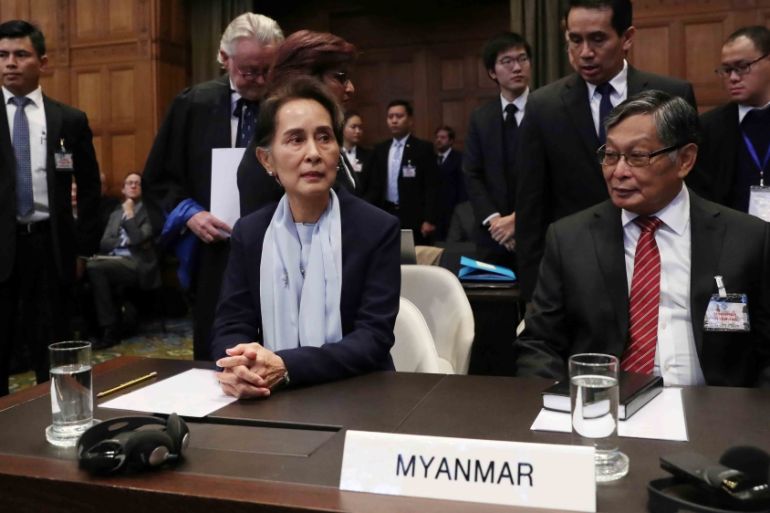
In 2019, The Gambia brought a case before the ICJ, alleging Myanmar was committing genocide against members of the Rohingya, a distinct minority group residing in Myanmar’s Rakhine State, in violation of the Genocide Convention. Eleven states have intervened in the case since it was initiated by The Gambia.
The Gambia alleges that Myanmar has subjected the Rohingya to persecution since late 1989. Since then, the Rohingya have been subject to restrictions on the right to marry and freedom of movement; a systematic hate campaign aimed at dehumanizing the group; and clearance operations. These operations involved the systematic detention, torture, assault, and killing of members of the Rohingya by state police forces.
Provisional measures were granted in by the ICJ in January 2020, calling on Myanmar to take action to prevent all violations of the Genocide Convention within its territory, and to ensure the preservation of evidence related to the allegations. The order also called for compliance reports every six months.
Public hearings on the merits opened on January 12, 2026. It involved two rounds of oral argument, as well as closed sessions where witnesses testified. Three eyewitnesses lived in villages where clearance operations had occurred. Alongside these testimonies, The Gambia relied in part on expert testimony and information from the United Nation’s Report of the Detailed Findings of the Independent International Fact-Finding Mission on Myanmar.
Counsel appearing on behalf of Myanmar, Ko Ko Hlaing, called the United Nation’s report a “condemnation without trial,” and “neither reliable nor objective.” Myanmar’s case, in part, asserted that the clearance operations were counter-terrorism operations, in response to attacks by the Arakan Rohingya Salvation Army, a Rohingya insurgent group operating in the Rakhine State. Myanmar does not deny that people were killed, only denying that this killing was done with a genocidal intent.
It is unlikely that the results of this case will be announced anytime soon, as deliberations at the ICJ usually last between three and nine months. However, this case has been called a landmark moment in international law and human rights. It marks the first time in ICJ history that a country without any direct connection to the alleged crimes has brought a case to enforce the Genocide Convention. Importantly, the outcome of this case will have a direct impact on other cases pending before the ICJ, including South Africa’s genocide case against Israel.
For further information, please see:
ICJ – The Gambia v. Myanmar Order of 23 January 2020 – 23 Jan. 2020.
ICJ – The Gambia v. Myanmar Press release 2026/1 – 29 Jan. 2026.
ICJ – The Gambia v. Myanmar Verbatim record 2026/7 – 16 Jan. 2026.
ICJ – The Gambia v. Myanmar Verbatim Record 2026/23 – 29 Jan. 2026.
