Brazilian Building Codes in Need of Reform in Wake of 17 Deaths

by Emilee Gaebler
Impunity Watch Reporter, South America 

BRASÍLIA, Brazil – A twenty-story building’s collapse in Rio de Janeiro has sparked intense scrutiny of the state of the construction industry in the country set to host two mega sporting events on the world stage over the next few years.

Firefighters on site of the building collapse in Rio's historic theater district. (Photo courtesy of CBS)

Seventeen people in total were killed in the building’s collapse and three are still missing, as reported by the Washington Post.  The building collapsed at night, around 8:30 pm, which helped to minimize the casualties and injuries.  As the building collapsed it also pulled down two neighboring smaller structures.  The buildings were located in the historic theater district of Rio.

Officials are citing illegal construction as the most plausible explanation, although investigations are still underway.  It is alleged that two illegal construction projects were underway on the 16th floor of the building.  Luiz Cosenza, a worker in the building, claims to have been employed on one of those illegal jobs.

Cosenza states that the project was not registered with the building council and that there was no authorized and licensed professional overseeing the work.  He declined to provide further information on what type of work was being done illegally.

The current upswing in construction in Rio has steadily continued as the city prepares to host the 2014 World Cup and 2016 Olympics.  FIFA officials have expressed concerns that the city’s infrastructure is not prepared to handle hosting these two events.

Those who are critical of Rio’s ability as host city note the pressing need to restructure industry standards.  The high demand for new buildings, in the downtown area, has led to lax standards and often sub-standard construction.

“Some firms will have the budget to do everything to a good standard employing Rio’s top professionals, but all too often these are secondary considerations for those looking to do things fast or cheaply,” said Gordon Lewis, a commercial developer in Brazil, to the Rio Times.

A call for more stringent monitoring has been spurred on by the recent tragic collapse.  Officials are in the process of enacting a mandatory periodic review of all buildings.  The review will need to be conducted by a professional who will assess and ensure the structural integrity of the building.

Historically, Brazil has struggled with maintaining a strong infrastructure in construction.  Not only are new buildings going up without the proper safety mechanisms but historic buildings are also structurally unsafe due to disrepair.

As well, the strict civil codes require such exacting compliance that it is impossible for any builder to meet them.  This has led to the general practice of those codes being disregarded and no enforcement of them by municipal authorities.


For more information, please see;

The Washington Post – Building Collapse, Rash of Freak Accidents Raise Questions About Rio’s World Cup Readiness – 1 February 2012

The Rio Times – Rio Responds to Building Collapses – 31 January 2012

BBC – Six Dead After Rio de Janeiro Building Collapses – 27 January 2012

CBS – Brazil: 3 Killed as Building Collapses in Rio – 26 January 2012

Russian and Chinese Vetoes Prevent Passage of UN Resolution Condemning Syrian Violence

By Tyler Yates
Impunity Watch Reporter, Middle East

DAMASCUS, Syria — Russia and China voted against a draft resolution that would have condemned a crackdown on anti-government protests in Syria and called on Bashar al-Assad, the Syrian president, to step aside.

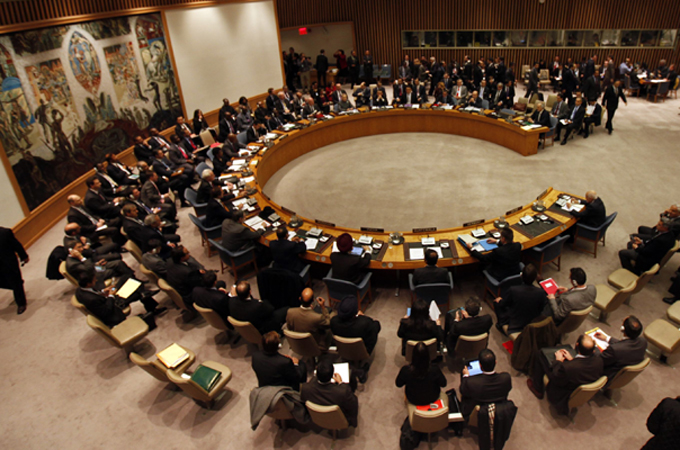
The United Nations Security Council (Photo Courtesy of Al Jazeera).

The countries, two of the United Nations Security Council’s permanent members, have veto power over resolutions put before the Council.

A statement from the Russian ambassador to the United Nations said the resolution, “sent an unbalanced signal to the Syrian parties” by not condemning violence on the part of the armed opposition to the same degree that it did for the Syrian government.

Internationally, the vetoes received tremendous criticism.  Qatar’s minister of state for foreign affairs said the vetoes sent “ a very bad signal to [President Bashar al-Assad] that there is a license to kill.” Other Western and Arab leaders echoed Qatar’s reaction.

Europe will strengthen sanctions imposed on Damascus in a bid to boost pressure on the regime, France said on Sunday. The United States has vowed to block funding and arms supplies to Syria.

“We will work to seek regional and national sanctions against Syria and strenghten the ones we have. They will be implemented to the fullest to dry up the sources of funding and the arms shipments that are keeping the regime’s war machine going,”  US Secretary of State Hillary Clinton said on Sunday.

Despite these international efforts the opposition in Syria is now forced to attempt to stop the government crackdown by itself.

Colonel Riad al-Asaad, commander of the FSA, said that “there is no other road” except military action by his fighters to topple Assad.

Iran welcomed the vetoes from China and Russia, calling the sanctions “just.”

“The Security Council has become a tool for the West’s bullying … of other nations, and this time Russia and China stood up against it,” one of Iran’s top diplomat said.

The Syrian government also saw the vetoes as a victory, saying that the result should be an acceptance of the regime’s program for solving the evolving crisis.

The Tishreen, a state run newspaper, called the vetoes an incentive for Damascus to continue with its announced political reforms, which include drafting a new constitution, allowing the formation of new political parties, and holding parliamentary elections.

It further suggested that the international community support talks between the government and the opposition.

At the same time, it declared that the government would continue with its crackdown, saying it would “restore what the Syrians enjoyed for decades and what they are demanding today which is stability and security and confronting all forms of terrorism.”

For more information, please see:

Al Jazeera —Qatar says UN veteos sent “bad signal” —  05 Feb. 2012

Al Jazeera — Veto power at the UN Security Council — 05 Feb. 2012

Huffington Post — Russia, China Veto Of Syria UN Resolution Sparks Outrage — 05 Feb. 2012

NPR — Syria Veto “Outrageous” Says UN Envoy Susan Rice — 05 Feb. 2012

Reuters — Clinton calls UN Syria vote a “travesty” — o5 Feb. 2012


100 Protesters Still Remain in Detention

By: Jessica Ties
Impunity Watch Reporter, Asia

BEIJING, China – Over 100 Tibetan protestors remain in custody after fleeing from gunshots last week.

Tibetan protester who was injured during the shooting on January 23, 2012 (Photo Courtesy of Radio Free Asia).


The shooting sparked a series of protects against the Chinese government and to push for Tibetan rights. Rights groups believe that at least six people were killed and sixty injured during these protests.

Witnesses have reported that government authorities have been randomly searching homes for dissidents have taken to interrogating people on the streets. One resident stated, “…I dare not to look around in a casual manner, dare not move around freely…Armed personnel are everywhere, police are in every corner.”
Other residents have reported that security personnel have warned them not to discuss politics in during phone calls outside Tibet and have been warned that these personnel are mysteriously aware that they have called relatives living outside the country.
Following the shooting, Chinese officials cut off internet and phone connection to all areas within thirty miles where the shooting occurred.
The government has claimed that “[r]ioters continued to attack and tried to grab the guns from police…[officers] first shot in the air as a warning, but it was completely ignored, so we had no other choice but to open fire.”
Following the shooting, Chinese officials cut off internet and phone connection to all areas within thirty miles where the shooting occurred.

Despite official government reporting that only two Tibetans were killed after a mob attacked local police with knives and stones, witnesses have described the protests as peaceful.

The protest began when government authorities insisted that Tibetans celebrate the Lunar New Year despite the wishes of residents still grieving from earlier protest deaths and desiring to celebrate the Tibetan New Year on February 22.

According to Kalsang, a monk based in India, the police immediately began to use photographs to help identify the protestors and even “…schoolchildren who were identified in the photos have bee detained.”

The most recent conflict follows a string of at least sixteen self-immolations by monks and other Tibetans over the past year. Adding the tension felt in the region is also the recent crackdown on Tibetans and the release of a monk who was left paralyzed from the waist down as a result of the beatings he endured in prison.

China and Tibet have had a tumultuous relationship full of unrest and violence since China’s rule over Tibet began in 1950 with the sending of troops to assume control over the region.

Many Tibetan feel that the Chinese authorities mistreat them and that they are denied the ability to freely exercise their culture and religious preferences. One well-known example is the forced exile of the Dalai Lama and attempt to replace him with a communist-approved alternative.


For more information, please see:

The Guardian – China Cut Off Internet in Area of Tibetan Unrest – 3 February 2012

Fox News – Tensions Rise in Tibet as Chinese Security Forces Bring Fear to the Streets – 1 February 2012

Radio Free Asia – 100 Tibetan Protesters Held – 1 February 2012

The Guardian – Tibetan Unrest Spreads as Two Reported Killed by Chinese Troops – 25 January 2012

BBC – Q&A: China and the Tibetans – 15 August 2011


U.N.’s Highest Court Denies Italy’s Nazi Reparation Claims

By Alexandra Halsey-Storch
Impunity Watch Reporter, Europe

THE HAGUE, Netherlands—The International Court of Justice—the United Nation’s highest court—held on Friday that Germany will maintain legal immunity from being sued in foreign courts by victims of World War II Nazi atrocities.

The ICJ rejects Italy's claim for compensation against Nazi regime (Photo Courtesy of The Montreal Gazette)

The case at hand focuses on the June 29, 1944 murder of 250 Italian civilians in and near the Tuscan town of Civitella by German troops. More than forty years later, family members of the victims sued Germany in an Italian court seeking reparations. In 2008, Italy’s Supreme Court found that one of the plaintiffs, an Italian civilian, Luigi Ferrini, was in fact entitled to reparations for his deportation to Germany in 1944 to work as a slave laborer in the armaments industry. The court iterated that individuals whose human rights had been violated could sue for individual damages.

Germany appealed to the International Court of Justice (“ICJ”) and argued before the court, saying that denying Germany immunity from these types of lawsuits would “open the floodgates to compensation claims by individuals around the world.”

The ICJ “threw out” Italy’s 2008 decision on Friday, February 3, 2012 in a 12-3 decision, determining that the “Italian case violated Germany’s immunity…from being sued in national courts,” a principal which has been widely recognized in international law.

Hisashi Owada, the president of the United Nations court further explained: “The action of Italian courts in denying German immunity…constitutes a breach of the obligation owed by the Italian state to Germany.”

Legal scholars agree that the 2008 decision violated international rules on foreign state immunity as pertaining to human rights cases thus concurring that the ICJ reached the correct decision. “Were one to deny foreign state immunity in this and other similar cases, then Georgian courts, for example, could pass judgment on Russian behavior during the 2008 conflict,” explained Andreas Zimmermann, a human rights professor.

In other words, this ruling is “expected to end a wave of claims for damages” which stem from the Nazi regime’s human rights violations, including one which originated on behalf of Greek victims. On June 10, 1944 S.S. units “assembled 218 women, children and elderly in Distomo, a village not far from Delphi, and murdered them. The Greek representatives sought reparation through the German judicial system.

Amnesty International’s Senior Director of International Law and Policy, Widney Brown, has proclaimed the ICJ’s ruling to be a “big step backwards on human rights” going on to say that “the judgment flies in the face of the Hague Convention, under which victims of war crimes are entitled to sue the state responsible to obtain reparation.”

Germany has already paid tens of billions of dollars in reparations since the 1950s, including a “lump sum” to Italy in the amount of 40 million marks in 1961. Moreover, in 2000, Germany founded the Remembrance, Responsibility and Future Foundation with the goal of compensating forced laborers from Eastern Europe. Germany has also made additional payments at peace conferences as well as a part of treaties with other countries.


For more information, please visit:

Amnesty International—UN Court Ruling on Nazi War Crime Victims ‘a Setback for Rights’—3 Feb. 2012

International Court of Justice—Germany v. Italy—2 Feb. 2012

The New York Times—World Court Upholds German Immunity in Nazi Cases—3 Feb. 2012

Reuters—U.N Court Rules against Italy’s Nazi Compensation Claims–3 Feb. 2012

Speigal Online International—Human Rights Take a Back Seat to Sovereignty—3 Feb. 2012


Brutal Egyptian Riot Highlights Security Force Problem

By Tyler Yates
Impunity Watch Reporter, Middle East

CAIRO, Egypt — At least 74 people were killed and hundreds more injured when fans stormed the field after an Egyptian football game on Wednesday.  An investigation is ongoing to investigate why riot police failed to stop the chaos.

A brutal riot left over 70 dead while riot police just watched (Photo courtesy of ESPN).

The Egyptian military has declared three days of mourning.

The riots highlight a deteriorating security situation in Egypt, still flailing a year after a revolution, which found Hosni Mubarak, president for over thirty years, ousted and replaced by a temporary military rule.

The fight began after an upset victory by the Al-Masry team over the Al-Ahly team.  The winning team stormed the field and began attacking players and supporters of Al-Ahly, even going so far as to chase the players into their locker rooms. Health officials said that victims were stabbed, trampled, and beaten.  There were members of the Egyptian police among the dead.

Estimates put the number of fans supporting the winning team at about 10 to 1.  This disproportion likely added to the chaos.

The incident once again thrusts the ultras, a group of organized soccer fans that played a role in the Egyptian revolution, back into the spotlight.  The ultras have rallied against military rule, and have been very anti-police.

The relationship between the police and the ultras has brought some criticism that the police had reason to allow the riot to continue as a means of revenge.

Witnesses report that there were hundreds of riot police present at the game, but rather than get involved they just stood and watched.  The security forces attempted to turn off the stadium lights in an effort to force people out of the stadium, but this did not help.

The New York Times says the rumors are “impossible to confirm,” but one player interviewed by the Guardian says he saw police urge fans to come onto the field. He also claims to have seen people with “knives and swords” in the melee.

The violence got so bad that it began extending outside of the stadium, reaching into the neighboring province of Suez.

In response to the riot, the Egyptian government has declared that they will punish those responsible, and that justice will be sought.  The Egyptian parliament has called an emergency session.

Overall, there is a growing animosity towards the police and the military in Egypt.  Since the revolution the police and security forces have been accused of not actively engaging in law enforcement.  They have taken a stand back and watch position.

The riot will likely force the military to respond to these allegations of standing back rather than doing their duty.

The governor of Port Said has since resigned in response to the riot.  The head of the Port Said security has been suspended, and the head and board of the football association fired.

There are calls for the firing of the interior minister and a purging of the police force, as many voice disapproval of scapegoating regional officials rather than attempting to fix the real problem.

At least four people have been killed in post-riot fighting, much of which has been the result of protesting against police out of anger for their preventing to stop the earlier riot.

For more information, please see:

Bloomberg — Egypt Lawmakers Criticize Police After Deadly Soccer Riot — 3 Feb. 2012

Macleans — Egypt soccer riots continue — 3 Feb. 2012

Newsday — 4 killed in Egypt clashes over deadly soccer riot — 3 Feb. 2012

NPR — Egypt Soccer Game Turns Deadly for Fans — 2 Feb. 2012