
|
Tomorrow, 15 March 2016, marks five years of devastating and deadly conflict in Syria. Since 2011, more than 260,000 people have been killed, over 11 million displaced from their homes and 13.5 million people are in dire need of humanitarian assistance. Because of the civil war the multi-ethnic, multi-religious fabric of Syrian society has been torn apart and ordinary Syrians are trapped in the largest humanitarian crisis of our time.
After five years of misery there is now some dim hope, with a cessation of hostilities that has largely held since 27 February and intra-Syrian talks restarting today in Geneva. Two task forces created by the International Syria Support Group (ISSG) are overseeing the cessation as well as the delivery of desperately-needed humanitarian aid to thousands of Syrians in besieged areas. The UN Security Council has endorsed these efforts.
But a cessation is not a permanent ceasefire, and the Syrian civil war is far from resolved. Monumental diplomatic efforts will be needed to sustain progress. Syrians cannot afford for the cessation to collapse or for the international community to retreat into passivity in the face of recurring atrocities.
Throughout the course of Syria’s civil war, every major principle of international law has been violated with impunity. The Syrian government has deployed illegal chemical weapons and cluster munitions, deliberately bombed hospitals and dropped barrel bombs on civilians. All parties to the conflict, including the government, have tortured detainees, perpetrated sexual violence, deliberately blocked humanitarian aid, and used food as a weapon to starve besieged communities. Crimes against humanity and war crimes continue to be perpetrated.
For five years the Syrian government has waged war against its own people, and has utterly failed to uphold its Responsibility to Protect. The government has contravened every resolution passed by the UN Security Council with regard to its attacks on armed rebels and unarmed civilian populations presumed to be supporting them.
In the midst of the civil war, the so-called Islamic State has gained territory and influence and has itself carried out crimes against humanity, including mass executions and sexual enslavement. The group poses an existential threat to all religious and ethnic minorities in Syria and must be held accountable for mass atrocity crimes committed in areas under its command and control. All other armed opposition groups who have perpetrated atrocities must also be held to account.
The world is fully aware of atrocities in Syria. But as Syrian refugees flee the country in unprecedented numbers, they now find it increasingly difficult to find sanctuary. Various governments have ignored their obligations under the 1951 Refugee Convention, and many desperate Syrians find international borders closed to them.
Syrians did not need to suffer this fate. For nearly five years the international community, and especially the UN Security Council, has watched the Syrian conflict deepen and deteriorate. The Security Council has been consumed with internal political divisions that have crippled its ability to respond to the Syrian crisis, and it has failed to uphold its responsibilities to the Syrian people. On this solemn anniversary we therefore call upon the Security Council to:
Finally, we call upon all 193 members of the UN to sign the ACT Code of Conduct regarding the Security Council and mass atrocities. No Security Council member should ever vote against a credible resolution aimed at preventing or halting mass atrocity crimes. And no people should ever again have to endure the suffering and death that has been inflicted upon the Syrian people as an ineffective UN Security Council has abdicated its responsibilities. |
ICTJ Brings Together the DRC, Rwanda, Uganda and Tanzania to Discuss Response to International Crimes
|
ICTJ Brings Together the DRC, Rwanda, Uganda and Tanzania to Discuss Response to International Crimes Dear friends, Eastern DRC continues to be affected by conflict and serious crimes continue to be committed against civilians living in the area by the national army (FARDC), national armed groups, and foreign armed forces. Holding perpetrators accountable is essential to dismantling the structures that allow the ongoing cycle of abuses to continue in the DRC. The porous borders the country shares with neighbors in the Great Lakes Region greatly complicate any effort to ensure justice is done. This has allowed certain states to harbor or protect some of the worst perpetrators who were able to hide by simply crossing the border. With the signing of the Peace Security and Cooperation Framework in Addis Abeba (2013), 11 states pledged to take concrete measures to “put an end to recurring cycles of violence” that has afflicted civilians in Eastern DRC. Yet, despite the political commitments, the investigation and prosecution of domestic and international crimes continue to be severely affected by the lack of appropriate judicial cooperation among the states of the region. With this in mind, ICTJ has focused a significant portion of its work on criminal justice in the DRC on trying to facilitate such regional cooperation. As part of this effort, on March 15-16, ICTJ is for the first time bringing together the relevant national authorities and specialized prosecutors from the DRC and neighboring countries of Rwanda, Tanzania, and Uganda for high-level discussion and planning. The objective is to facilitate contact, exchanges and discussions between relevant national authorities on the technical and operational (rather than political) level, to discuss their respective national legislative and procedural frameworks. The event is happening in coordination with the United Nations Joint Human Rights Office (UNJHRO) and collaboration of the Office of the United Nations Special Envoy for the Great Lakes region, in close collaboration with the Ministry of Justice and Human Rights, the Ministry of Defense as well as the the Office of the Military General Prosecutor. The conference comes at a very significant time. Ladislas Ntaganzwa, indicted since 1996 by International Criminal Tribunal for Rwanda (ICTR) for charges of genocide against Tutsis during the 1994 Rwanda genocide was arrested in Eastern DRC on December 9, 2015, and should be transferred from Kinshasa to the United Nations Mechanism for International Criminal Tribunals (UNMICT) after numerous exchanges between the DRC and Rwanda. Ladislas was among the fugitives referred from the ICTR’s prosecutor to Rwanda under article 11 bis of the ICTR statute. Also, Jamil Mukulu, head of the Ugandan armed group Allied Democratic Forces (ADF), was arrested in Tanzania and extradited to his home country, Uganda, in 2015. In Uganda, Mukulu is allegedly responsible for a series of attacks in the west between 1998 and 2000, which led to more than 1,000 deaths. Yet, Mukulu was also wanted by the DRC for atrocities committed in the Beni area, North Kivu. Because Mukulu is facing different charges in Uganda and the DRC, participants at tomorrow’s conference are likely to discuss the case and the possibility of extraditing him to the DRC. The meeting, which will take place tomorrow and on Wednesday in Kinshasa, comes as culmination of a long lasting effort. Two years ago, ICTJ made the strategic decision to move its field office in the DRC from the capital Kinshasa to Goma in the eastern part of the country. The principal rationale behind this was to be based closer to where violations amounting to international crimes are committed, to help catalyze their investigation and prosecution. This has allowed us to work more directly with prosecutors, judicial authorities, victims and civil society activists coming from communities affected by these crimes. Bearing in mind the lack of infrastructure, which greatly contributes to the disconnect between the capital and the eastern part of the country, to be based in Goma has enabled us to inform our work with the specific challenges met by our Congolese counterparts when they attempt to prosecute international crimes. Crucially, we were able to establish channels of consultation with the Congolese authorities from Eastern DRC and Kinshasa, and this has proven instrumental to the work that we do in the DRC, which in the last year focused on regional cooperation. We have spent the last year planning and preparing tomorrow’s conference, and this included drafting of a baseline working document assessing the current regional judicial cooperation framework in the region, numerous bilateral meetings with national counterparts, and coordination efforts with the UNJHRO and the Office of the Special Envoy for the Great Lakes Region. As this work comes to fruition in gathering representatives of these key states to discuss technical aspects of regional cooperation, the hope is that its conclusions will inform the high level meeting of government representatives of the International Conference of the Great Lakes Region, which is to be held in Nairobi in April. Ultimately, the goal of this effort is to ensure that the key states in the region work together to bring perpetrators of atrocities to justice and deter future crimes in eastern DRC. Tomorrow’s conference is a significant first step in that direction. We also invite you to read our latest report The Accountability Landscape in Eastern DRC: Analysis of the National Legislative and Judicial Response to International Crimes (2009–2014). Best regards, Myriam Raymond-Jetté Head of ICTJ Office in DRC Email: mraymond-jette@ictj.org Additional contact: Refik Hodzic Director of Communications, ICTJ New York Tel: +1 917-637-3853 Email: rhodzic@ictj.org |
Syria Deeply Weekly Update: Meet the Doctors Keeping Aleppo Alive
|
Syria Justice and Accountability Centre: The Role of Civil Society in Ceasefire Monitoring
Since the UN Security Council endorsed the United States and Russia’s Joint Statement on the Cessation of Hostilities in Syria on February 26, civilian deaths and violence appear to have decreased substantially. Although reports of violence have been reported, it has been difficult to assess how many of the reports are credible ceasefire violations due to the agreement’s lack of clarity on monitoring mechanisms.
Ceasefire agreements should generally include strong provisions on how to monitor compliance. In the context of civil war, however, there is no standardized best practice for monitoring, and mechanisms vary greatly from country to country. Lessons from other contexts would suggest that when the monitoring is well-planned and civil society is incorporated into the design of the monitoring mechanism, the ceasefire is more likely to hold. Syria’s ceasefire agreement is quite flimsy on this point and alludes only briefly to monitoring, suggesting that the parties develop a mechanism that includes a communication hotline and, if appropriate, “a working group to exchange relevant information.” It does not describe a method for civil society contributions or a process for investigation and verification of violation claims.
As a result, individuals and groups have set up ad hoc mechanisms for monitoring through social media and websites in order to collect information on incidents that might amount to ceasefire violations. The US State Department has also established a hotline that Syrians can call to report violations. The result of this information-gathering is unclear and neither Russia nor the United States has confirmed or denied that violations have occurred, leading to growing frustration that the violators can act without rebuke. An international or joint Russia-US monitoring mechanism to investigate and verify claims could work to give Syrians a sense that the international backers are taking the agreement seriously.
Even with a formal mechanism, verification of claims will be difficult because the parties have not agreed to a map of territorial control. The Islamic State of Iraq and al-Sham (ISIS) and Jabhat al-Nusra are exempt from the agreement, so attacks targeting or committed by these two groups are not violations of the ceasefire. Thus, each side can easily justify a violation by claiming that they were merely targeting ISIS or Jabhat al-Nusra. Without an agreement on which groups control what territory, it could be difficult to discredit such justifications.
Since there is no international monitoring presence in Syria, the work of civil society monitoring is even more important. To effectively assist with ceasefire monitoring, civil society can draw on human rights documentation principles. The most important of these principles include accuracy and impartiality. If an organization publicizes information that is proven false or biased, its own reporting will be discredited and civil society’s credibility may be harmed as well. Monitors should also be working transparently in a way that benefits their own communities while improving the security of opposing sides. This is a difficult task due to the deep hatreds that have developed since 2011, but will be necessary to lasting peace. Methods of human rights documentation can also be employed to monitor ceasefires, including the use of photographs, videos, and interviews to document and verify violations. Including metadata can help verify times and locations in pictures and videos that will lend credibility to claims.
Unlike documenting human rights abuses, however, ceasefire violations are not necessarily violations of international humanitarian or human rights law, but rather violations of the ceasefire agreement itself. An incident that is not a violation of humanitarian law might still be a violation of the agreement, depending on the agreement’s provisions. In the Philippines, for example, civilian ceasefire monitors developed Terms of Reference focusing on particular ceasefire-related incidents and their impacts on civilians’ safety and security to guide the monitoring process.
In addition to ceasefire monitoring, civil society groups can monitor the humanitarian situation to ensure that aid is reaching conflict-affected communities and basic needs are being met. Linking humanitarian aid to ceasefire agreements is essential to the success of ceasefires because the more needs that are met, the more likely Syrians are to commit to peace over renewed fighting. Civil society can also take advantage of the relative calm to educate conflict-affected communities on the peace process and begin the difficult task of building trust across communities to ensure an inclusive process that fosters peace from the ground up.
It is yet to be seen whether the current agreement on Cessation of Hostilities in Syria will have a lasting effect on the conflict. What can be guaranteed, however, is that its impact and long-term success will be greatly increased by a robust monitoring plan that includes civil society.
For more information and to provide feedback, please contact SJAC at info@syriaaccountability.org.
Aung San Suu Kyi Will Not be President, Myanmar’s Parliament Reports
By Christine Khamis
Impunity Watch Reporter, Asia
NAYPYIDAW, Myanmar –
The National League for Democracy (NLD) party in Myanmar has announced its presidential candidates. Ms. Suu Kyi, the leader of the NLD, is not being considered for the presidency. However, it is clear that Ms. Suu Kyi still expects to run Myanmar’s government through a proxy president. Ms. Suu Kyi’s aide and close friend, Htin Kyaw, has been named as a presidential candidate and appears to be the most likely to become president.
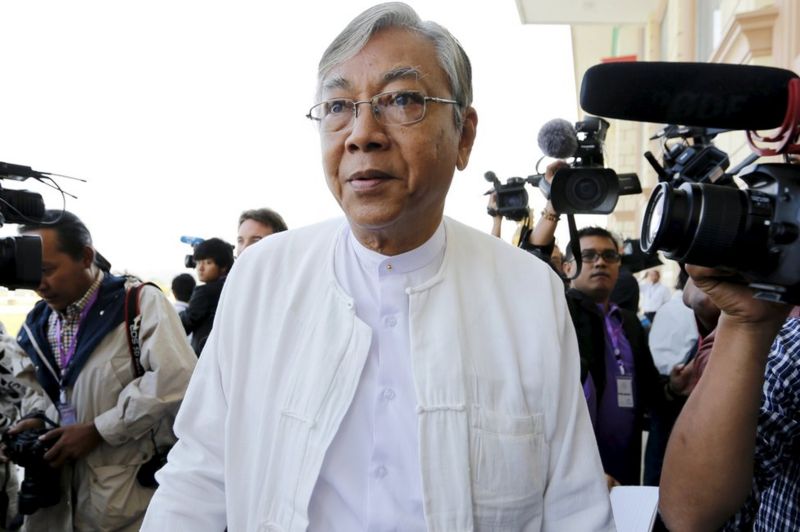
Ms. Suu Kyi is unable to become the president due to a constitutional provision prohibiting those with foreign family members from becoming the president. Both of Ms. Suu Kyi’s sons have British citizenship, as did her husband before his death in 1999.
Ms. Suu Kyi attempted to persuade the military to allow the constitutional provision to be overruled, but was unsuccessful. The military holds a guaranteed 25 percent of parliamentary seats and has the power to veto any proposed changes to the constitution.
The NLD, which won the parliamentary election in November 2015, has named Mr. Kyaw as the lower house vice presidential nominee and Henry Van Thio, a member of the parliament, as the upper house vice presidential nominee.
Both houses of the parliament will choose from among the NLD’s candidates and those from other parties. It is likely that the NLD’s candidates will win because the NLD currently holds a majority in both houses of the parliament. A second vote will then take place to decide who will be the president, with a third, military nominated candidate, Khin Aung Myint, entering the race as well. The two unsuccessful candidates will each become vice-presidents.
Myanmar’s new government will take control on April 1. It will be the first freely elected government in over 50 years. The new government will face issues such as civil war with ethnic groups, poor economic growth, and discrimination against Myanmar’s Muslim Minority, the Rohingya.
For more information, please see:
BBC News – Myanmar Begins Presidential Selection as Aung San Suu Kyi Ruled Out – 10 March 2016
CNN – Aung San Suu Kyi Confidante Htin Kyaw Likely to Become Myanmar’s Next Leader – 10 March 2016
The Guardian – Aung San Suu Kyi Will Not be President of Myanmar, Parliament Confirms – 10 March 2016
The New York Times – Aung San Suu Kyi Finds Roadblocks on Path to Presidency – 7 March 2016