Indonesia To Review Anti-Terror Laws Following Jakarta Attack

By Samuel Miller
Impunity Watch Reporter, North America and Oceania

JAKARTA, Indonesia — Indonesia’s President Joko Widodo has called for revisions to the country’s anti-terrorism laws after last week’s attacks in the capital, Jakarta. The proposed changes would make it easier for officials to arrest anyone suspected of planning an attack.

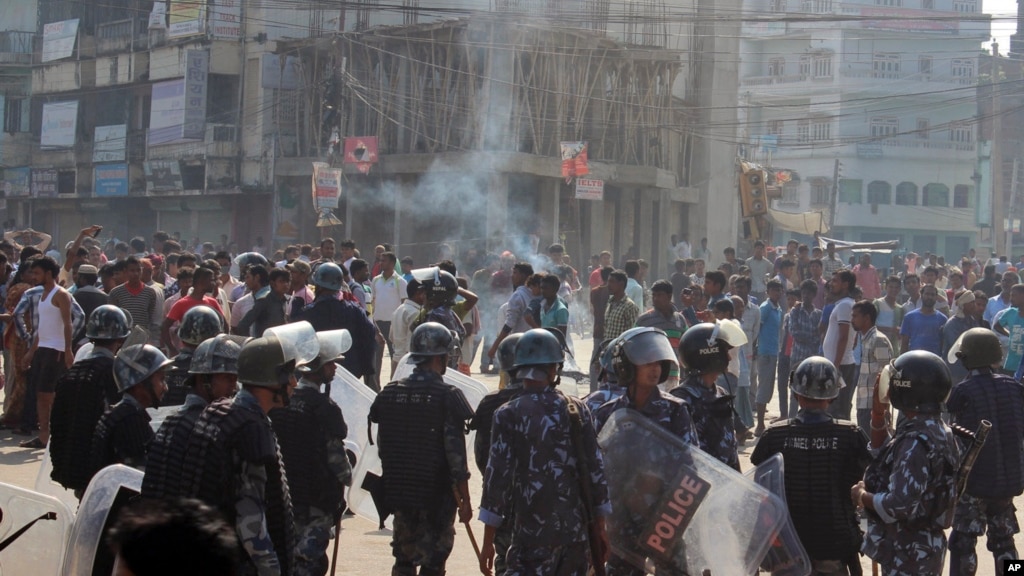
Indonesians Stand Guard Near the Cite of the Jakarta Attack on January 14th. (Photo Courtesy of BBC News)

The call for review comes in the wake of last week’s attacks in Jakarta, which were claimed by ISIL.

President Widodo, addressing a high-level security meeting on Tuesday, called for amendments to the country’s anti-terrorism law after ISIL-linked attackers struck last week at the heart of Jakarta, the capital of Indonesia, the most populated Muslim country.

The proposed changes would make it easier for the authorities to arrest anyone whom they believe have a strong indication to be planning a terrorist attack, according to the minister in charge of security, Luhut Panjaitan. The proposed new legislation would also allow officials to hold suspects for longer than a week without charge and would make it illegal for Indonesians to fight with militants of ISIL.

“It’s true that there are some people who feel this won’t be a solution to the problem, but at the very least it will make it easier to get intelligence data and make it harder for terrorists to get space to operate,” said Panjaitan.

Senior officials in Jakarta believe that roughly 500 Indonesians have traveled to the Middle East region to join the ISIL and other militant groups. Nearly 100 are believed to have returned to the Southeast Asian country in recent months.

Security forces would also be permitted to hold suspects for longer without charge, and it would be made illegal for any Indonesian to fight for ISIL, in an effort to dispel fears that those returning could plan further attacks after being radicalized.

Indonesia’s national police chief, Badrodin Haiti, reportedly admitted their current authority is limited. “We can detect, but we can’t take action before any crime is committed. That is the weakness of our regulations. For example, if there are those who came back home from Syria after joining IS, there is no proof of their crime and we can’t take action against them.”

The planned laws have faced opposition from human rights organizations, political figures, and Islamic groups who argue that the proposed laws are too authoritarian in nature and would mark a step back towards the powers that the police once held under the previous Indonesian dictatorship.

It should be noted, however, that all of the major parties have expressed at least some support for the measures, suggesting the proposed laws will most likely be approved by the Indonesian parliament.


For more information, please see:

BBC News — Jakarta attacks: President Widodo seeks terror laws review – 19 January 2016

NewEurope — Indonesia’s anti-terrorist law overhaul debated – 19 January 2016

PressTV — Indonesia president seeks terror law review – 19 January 2016

Voice of America — Indonesia’s Widodo Seeks Terror Law Review – 19 January 2016

The World Weekly — Indonesia to strengthen anti-terror laws after Jakarta attacks – 19 January 2016

Bloomberg — Indonesia to Strengthen Anti-Terror Law Following Jakarta Attack – 18 January 2016

Zika Found in 20 Latin American Countries

By Kaitlyn Degnan
Impunity Watch Reporter, South America

BRASILIA, Brazil —  Officials report that infections of the Zika virus have been found in 20 Latin American countries. Zika was originally discovered in Uganda in 1947 and outbreaks have historically been contained to Africa, South East Asia and the Pacific Islands. The disease was first reported in Brazil in May 2015. Although scientists are not yet sure how the disease reached Brazil, it is possible that it travelled with visitors during the 2014 World Cup, or by French Polynesian competitors participating in a canoe race.

A child born with microcephaly. (Photo courtesy of the BBC)

While Zika symptoms are usually mild, the concern with this outbreak is that the disease has been linked to a rising number of cases of children born with microcephaly, wherein a child is born with unusually small heads and brain damage. Brazilian health authorities have tracked 4,000 cases of microcephaly since October of 2015. This number is especially concerning considering that only 150 cases were reported during all of 2014.

Some governments in the region have responded to the outbreaks by warning women not to get pregnant, a move that has prompted criticism. Colombia, Ecuador, El Salvador and Jamaica have so far asked women to put off pregnancies for periods of time as short as 8 months (Colombia) to until 2017 (El Salvador). Monica Roa, a member of Women’s Link Worldwide called the move “Incredibly naïve” in a “region where sexual violence is prevalent.”

Brazilian officials have expressed further concern that cases of the virus may be connected to Guillain-Barré syndrome, a rare condition where a person’s immune system attacks their nervous system. Those affected often suffer from paralysis and need life support. The syndrome is usually so rare that it isn’t required to be reported to Brazil’s Health Ministry. However, in the past year, there have been hundreds of cases Guillain-Barré in northeast Brazil, the area most affected by the Zika virus.

The Center for Disease Control is considering Guillain-Barré a serious risk, however they caution that “reports must be treated as anecdotal because little pertinent supporting diagnostic information is available.” The C.D.C and Brazil will be conducting a study to evaluate the connection between Zika and the syndrome.

According to the Pan American Health Organization and the World Health Organization, there is an “increase of congenital anomalies, Guillain-Barré syndrome, and other neurological and autoimmune syndromes in areas where Zika virus is circulating.”


For more information, please see:

BBC – The alarming threat of Zika virus – 21 January 2016

New York Times – Zika Virus May be Linked to Surge in Rare Syndrome in Brazil – 21 January 2016

PRI – Brazil fears new danger from Zika virus: Paralysis – 21 January 2016

Voice of America – Brazil Defects Linked to Zika Virus Still Rising in Brazil – 21 January 2016

Washington Post – U.S., Brazilian officials probing possible link between Zika virus, rare paralysis condition – 21 January 2016

Latin American Dispatch – Zika Virus Prompts Brazil and El Salvador to Warn Pregnant Women – 22 January 2016

NBC – Zika Virus Spreads to 20 Latin American Countries – 22 January 2016

Vox – As Zika virus spreads, women in Latin America are told to delay pregnancies – 22 January 2016

BBC – Zika virus triggers pregnancy delay calls – 23 January 2016


Colombia Cracks Down On Acid Attacks

By Kaitlyn Degnan
Impunity Watch, South America

BOGOTA, Colombia — Colombia has changed its laws to require harsher sentences for perpetrators of acid attacks. As many as 100 acid attacks are thought to occur in Colombia each year.

The law, signed by President Juan Manuel Santos in a ceremony on 18 January, imposes a minimum of 12 years imprisonment for anyone using a chemical agent to cause physical harm. An attack that doesn’t cause any bodily harm still carries a 5 year sentence. If the victim suffers permanent disfigurement, the sentence may be up to 50 years. Prior to this change, a loophole in Colombia’s laws classified acid attacks as “personal injuries” rather than “intentional violent crimes.”

Natalia Ponce de Leone (left) and President Juan Manuel Santos (right). (Photo courtesy of the BBC).

The new law was named after victim and high profile campaigner Natalia Ponce de Leon, who also appeared at the ceremony. She was targeted by a neighbor, who threw a liter of sulphuric acid on her face and body in 2014. She has received 15 reconstruction operations. Ms. Ponce de Leon’s appearance at the ceremony was the first time she has appeared in public without a face mask to protect her delicate skin.

The Institute of Legal Medicine reports 926 acid attacks in Colombia between 2004 and 2014, although it is likely that that number represents all of the victims. Because the previous sentence for perpetrators was so light, and rarely imposed at all, many suffering these attacks have never come forward.

The victims of these attacks are overwhelmingly women (87 percent of victims), while the perpetrators are usually men (90 percent). “Usually it is someone from the victim’s inner circle, a husband or the father of her children, who cannot accept being turned down or left,” according to Gina Potes, who is thought to be Colombia’s first acid attack victim (having been attacked in 1996). Most of the cases of attacks against men occurred during a mugging.


For more information, please see:

The City Paper – New law brings harsher penalties for acid attacks in Colombia – 18 January 2016

BBC – Colombia’s President Santos enacts tougher law on acid attacks – 19 January 2016

Express – Brave acid attack victim shows her face for the first time since the horrific assault – 20 January 2016

Global Post – Colombia finally cracks down on a horrific wave of acid attacks against women – 20 January 2016

Supreme Court Will Decide Obama’s Immigration Plan

By Samuel Miller
Impunity Watch Reporter, North America and Oceania

WASHINGTON, D.C., United States of America — The Supreme Court on Tuesday said it will decide whether President Obama has the authority to declare that millions of illegal immigrants be allowed to remain and work in the United States without fear of deportation. The justices also added a question on whether Obama’s action violated the Constitutional provision that he sees the laws be faithfully executed.

Supporters of the President’s Immigration Plan Demonstrate Outside the Supreme Court Building. (Photo Courtesy of BBC News)

The court will most likely hear the case sometime in April, with a ruling before the court adjourns in June.

If the court rules by this spring in favor of the White House, President Obama could begin putting the changes into effect during his final months in office. But if the administration loses, court battles could keep the program on hold for several more years.

With Congress deadlocked over an immigration overhaul, in November 2014, President Obama cited his executive authority in making changes in immigration policy to give a temporary reprieve to illegal immigrants whose children hold U.S. citizenship or permanent residency. The plan sought to prioritize removal of serious criminals while allowing parents of children to work without fear of deportation.

The president’s program, called Deferred Action for Parents of Americans and Lawful Permanent Residents (DAPA), would allow illegal immigrants in those categories to remain in the country and apply for work permits if they have been here for at least five years and have not committed felonies or repeated misdemeanors.

Texas and 25 other states filed suit to invalidate the President’s proposed program. Fifteen states and the District of Columbia, along with leaders of major cities including Houston, Los Angeles and New York, have backed the administration.

Previously, in 2015, a federal district judge in Texas halted the immigration plan, a decision upheld by the Fifth U.S. Circuit Court of Appeals. In each case, the lower courts found the administration had not followed proper administrative procedures in issuing the regulations.

In a statement, Texas Attorney General Ken Paxton welcomed the Supreme Court’s review.

“In deciding to hear this case, the Supreme Court recognizes the importance of the separation of powers. As federal courts have already ruled three times, there are limits to the President’s authority, and those limits enacted by Congress were exceeded when the President unilaterally sought to grant ‘lawful presence’ to more than 4 million unauthorized aliens who are in this country unlawfully.”

Additionally, the court added an additional question to the case. The court asked the parties to address whether the immigration plan violates the Take Care Clause of the Constitution. That is the provision directing the president to take care that the laws be faithfully executed.

Experts said the addition of the Constitutional issue could simply signal a desire to make sure the parties address all legal issues that could be relevant to the case. But the added question could be seen as signaling that some justices don’t agree with the Justice Department’s claim that the states’ interests haven’t been impacted sufficiently to give them legal standing to sue over the immigration initiatives.

“In deciding to hear this case, the Supreme Court recognizes the importance of the separation of powers,” said Paxton.

For more information, please see:

BBC News — Barack Obama’s migrant plan taken up by US Supreme Court – 19 January 2016

CNN — Supreme Court to take up Obama immigration actions – 19 January 2016

NBC News — Supreme Court to Consider Obama Immigration Rules – 19 January 2016

Politico — Supreme Court to rule on Obama immigration orders – 19 January 2016

USA Today — Supreme Court will rule on President Obama’s immigration plan – 19 January 2016

Wall Street Journal — Supreme Court to Rule on Obama’s Bid to Block Deportations – 19 January 2016

Washington Post — Supreme Court to review Obama’s power on deportation policy – 19 January 2016