Several Killed by Suicide Bombing in Pakistan

By Christine Khamis

Impunity Watch Reporter, Asia


ISLAMABAD, Pakistan –


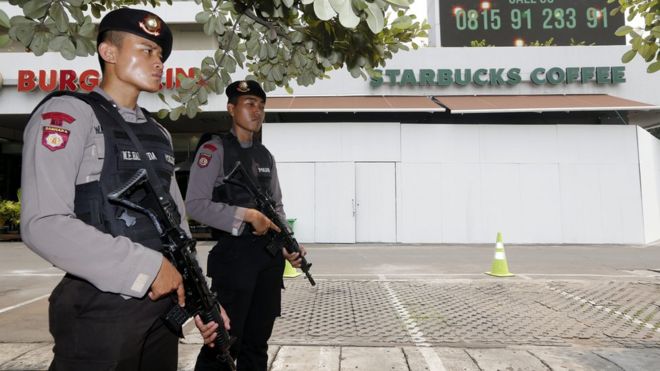
At least ten people were killed by an explosion at a military checkpoint outside of Peshawar, Pakistan on Tuesday. At least 20 people were also wounded. Pakistani authorities say that the death toll is expected to increase as rescue efforts continue.

The checkpoint that the suicide bomber targeted. (Photo courtesy of BBC)

Shahab Ali Shah, the administrator for the region, has stated that based on eyewitness accounts, the attack was a suicide bombing. According to police, the suicide bomber rode a motorcycle loaded with explosives into a roadside military checkpoint located on the Torkham-Jalalabad Highway, near the Pakistan-Afghanistan border. The bomber drove the motorcycle directly into a police car and the checkpoint, detonating the explosives on the vehicle. In addition to the casualties, several vehicles and buildings near the checkpoint were damaged in the explosion.

Among those killed in the explosion were a child, a military officer, and a prominent senior member of the Tribal Union of Journalists. At least five policemen were also killed. Saiful Islam, an official in the region, has stated that a local security official, Nawab Shah, appears to have been the intended target.

It is unclear at this time who planned the bombing, and multiple parties appear to be taking responsibility for the attack. The senior commander of the Pakistani Taliban, Maqbool Dawar, is one of the parties who has claimed responsibility for the bombing. Mr. Dawar told Reuters that the bombing was revenge for the deaths of Taliban members who died recently while in government custody. A separate Taliban group, Tehreek-e-Taliban Pakistan Jamaatul Ahrar (TTP-JA), has also claimed responsibility for the explosion.

The explosion occurred in the Federally Administered Tribal Areas near the outskirts of Peshawar. The region has been marked by fighting between security forces and the Pakistani Taliban since more than 150 people were killed in a nearby school in December 2014.

At least 26 people were killed in another suspected suicide attack on a government building in northwestern Pakistan last month.


For more information, please see:

Al Jazeera America – Deadly suicide blast in Pakistan kills at least 10 – 19 January 2016

BBC – Pakistan Suicide Bombing ‘Kills 10’ in Peshawar – 19 January 2016

NBC News – Motorcycle Suicide Attack Hits Major Pakistan Highway, Killing 10 – 16 January 2016

Newsweek – Suicide Bomber Kills at Least 10 in Northwest Pakistan – 19 January 2016

The New York Times – Explosion, Said to Be Suicide Bombing, Kills 8 in Northwest Pakistan – 19 January 2016

ICTJ | World Report January 2016 – Transitional Justice News and Analysis

In Focus

Dreams of January

Five years ago, Tunisia’s youth played a lead role in protests that drove dictator Zine El Abidine Ben Ali from power and set the country on a transition towards democracy, but efforts to address past human rights abuses have been hampered by waning political support and a restrictive climate fueled by fears of terrorism. The second in a series of long form multimedia pieces highlighting the role of local and national activists pushing for change, “Dreams of January” portrays the thoughts and struggles of the young Tunisians who helped sparked the Arab Spring and continue to fight for accountability and justice today.

Read More…


World Report

AFRICA

Thomas Lubanga and Germain Katanga, each convicted by the International Criminal Court (ICC) of war crimes and crimes against humanity committed in the Democratic Republic of Congo (DRC), were transferred to the DRC to serve out the remainder of their prison sentences. Lawyers for Kenya Deputy President William Ruto urged ICC judges to throw out the case against him, arguing that the prosecution had failed to prove its case. In Côte d’Ivoire, the trial of several top officials in former president Laurent Gbagbo’s government for the murder of ex-military chief Robert Guei during a 2002 coup attempt was delayed due to procedural issues. The UN documented cases of security forces gang raping women during searches of opposition members’ houses and has heard testimony of mass graves in Burundi, where tensions have been high since President Pierre Nkurunziza announced he would seek a third term in office. The testimony phase ended in the trial of Hissène Habré, former president of Chad, with witnesses sharing harrowing testimony of war crimes and crimes against humanity committed during Habré’s rule. In Rwanda, a court convicted a former pastor of genocide for leading a massacre of people hiding in his church during the 1994 genocide.

Read More…

AMERICAS

Under an agreement between the FARC and Colombia’s government, the bodies of 29 people who disappeared during the country’s civil war were returned to their families. A Colombian prosecutor said that up to 24,000 state agents are linked to crimes committed during the conflict. In Guatemala, the retrial of former dictator Efrain Rios Montt on charges of genocide and crimes against humanity committed during the civil war in the 1980s was suspended shortly after it began in order to resolve outstanding legal petitions. Eighteen former military officials were arrested on charges related to massacres and disappearances committed during Guatemala’s civil war. A former El Salvador defense minister was deported from the United States for his role in extrajudicial killings and torture during the country’s civil war.

Read More…

ASIA

In Nepal a victims’ advocate petitioned the Supreme Court to review of contradictory provisions in the existing rules and regulations regarding compensation benefits and services for victims of Nepal’s civil war. After her political party won Myanmar’s historic elections, opposition leader Aung San Suu Kyi participated in national peace talks for the first time. In a deal with South Korea, Japan apologized to so-called ‘comfort women’ – women forced into sexual slavery by the Japanese military during World War II – and promised to provide compensation, but victims criticized the deal because they were not consulted on the deal and because the compensation takes the form of humanitarian aid rather than reparations. A new report asserted that civilians are still abducted, tortured, and sexually abused by Sri Lanka’s security forces, despite the new government’s commitment to seek justice for those and other crimes.

Read More…

EUROPE

In Bosnia and Herzegovina, despite being ruled unconstitutional, the Republika Srpska publically celebrated the founding of the Serb Republic, dredging up ethnic divisions in towns like Prijedor. Meanwhile, the European Union approved funds to support Bosnia’s war crimes prosecutions after the government adopted a justice sector reform strategy. Human rights campaigners in Montenegro called on the government to establish a research and documentation center for crimes committed during conflicts in the 1990s, as it has promised to do. The Dutch government announced that it will host a special court for war crimes committed during the 1999 Kosovo conflict, and that the court will begin operations this year. The International Criminal Tribunal for the former Yugoslavia demanded that Serbia provide regular updates on efforts to arrest three members of the Serbian Radical Party accused of threatening witnesses in the war crimes trial of their leader.

Read More…

MENA

The head of Tunisia’s Truth and Dignity Commission said that the commission has received 20,600 complaints of human rights violations from victims around the country. In a new report, Amnesty International accused police in Tunisia of torture and killing detainees as security forces have cracked down after several recent terrorist attacks. In Egypt, security forces arrested several prominent activists ahead of the anniversary of the 2011 uprising that ousted then-president Hosni Mubarak. Meanwhile, in Lebanon, the head of the Lebanese Forces political party endorsed his wartime rival for the presidency, stressing that the country must move forward while remembering past events in order to avoid recurrence of violence. The head of a British investigation into crimes allegedly committed by United Kingdom forces in Iraq said that some soldiers may face prosecution for charges including murder.

Read More…

Publications

Education and Transitional Justice: Opportunities and Challenges for Peacebuilding

This report, part of a joint research project by ICTJ and UNICEF on the intersections of education, transitional justice, and peacebuilding, explores how a transitional justice framework can help to identify educational deficits relating to the logic of past conflict and/or repression and inform the reconstruction of the education sector.

View Report

Tunisia in Transition: One Year After the Creation of the Truth and Dignity Commission

This briefing paper details and analyzes the progress made so far in Tunisia to implement its historic Transitional Justice Law, with a particular focus on the Truth and Dignity Commission, created one year ago.

View Report

More Publications

Julian Assange to be Questioned by Swedish Prosecutors

by Shelby Vcelka

Impunity Watch Desk Reporter, Europe

LONDON, England–

Ecuador’s foreign minister, Ricardo Patino, has announced that the Swedish government will be allowed to question Wikileaks founder Julian Assange at the Ecuadorian embassy in London. Assange has been living in the embassy seeking refuge since 2012, awaiting extradition to Sweden on rape allegations.

Julian Assange, the founder of Wikileaks, will be questioned by Swedish prosecutors with the consent of the Ecuadorian government. Assange has been housed in the Ecuadorian embassy seeking asylum since 2012. (Photo courtesy of Telesur).

Assange’s extradition to Sweden was allowed in 2012 after a long legal battle he ultimately lost in supreme court. After his bail was set for extradition, Assange fled to the Ecuadorian embassy out of fear that his extradition back to Sweden would be a pretext for his extradition to America. Both Assange and his supporters believe he could be charged under the U.S. Patriot Act for posting classified documents on the Wikileaks site.

Under Swedish law, Assange cannot be formally charged without an interview taking place. In December 2014, the Swedish Prosecution Authority announced it was making a new request to interview Assange in London. The British government granted the request last June. “When all necessary permits and arrangements are ready, the interview will be performed by the supporting prosecutor to the case, chief prosecutor Ingrid Isgren, together with a police investigator,” the Swedish authority commented.

The Ecuadorian authorities have responded that they are willing to accept Sweden’s petition to question Assange, “as long as the sovereignty of the Ecuadoran state and the laws in the constitution are respected.” Patino requested that the Swedish prosecutors provide their Ecuadorian colleagues with the questions they will be asking Assange, as well as allowing them to place one of their own prosecutors in the room during the interview.

Kristinn Hrafnsson, a spokesperson for Wikileaks, stated that Assange has embraced the “opportunity to deliver his statement to the prosecutor. Julian has been offering his statement to the prosecutor by various means for five years [in total] and for three-and-a-half years since he went into the embassy – whether via videolink or by the prosecutor coming to London. Let’s hope [the interview] can be carried out as soon as possible. Julian is very eager to get his point of view into the investigation.”

For more information, please see–

The Guardian– Julian Assange to be questioned by Swedish prosecutors in London— 15 January 2016

Latino One– Ecuador Announces Cooperation with Swedish Prosecutors in Julian Assange Case— 15 January 2016

Telesur– Ecuador Gives Sweden Green Light for Assange Interrogation— 15 January 2016

South China Morning Post– WikiLeaks founder Julian Assange free to live in Ecuador if cleared of Swedish charges— 16 January 2016

Press Release: US Appeals Court to Hear Emergency Motion on Disqualification of Lawyer John Moscow in the Magnitsky Case in New York

18 January 2016 – The United States Court of Appeals for the Second Circuit has agreed to an emergency hearing to be held at 10 am on Friday, 22 January 2016, on an application from Hermitage Capital Management seeking to suspend the case of US vs Prevezon, to hear an appeal which will determine whether lawyers with a serious conflict of interest should be allowed to remain on the case.

Hermitage’s application arises out of U.S. law firm Baker Hostetler and its partner, John Moscow, switching sides in the Russian money laundering case from representing the victim – Hermitage, to representing the beneficiary of the crime – Prevezon Holdings.

Hermitage said in support of its motion for stay in the legal proceeding:

“A stay pending appeal is in the public interest. A lawyer’s obligation to preserve client confidences “touches upon vital concerns of the legal profession and the public’s interest in the scrupulous administration of justice.”

Hermitage’s motion is supported by the US Department of Justice, who said to the Appeals Court that the conduct of Baker Hostetler represents an “unheard of”, “extremely rare” and “egregious” case of conflict of interest given that the law firm not only switched sides but went further by accusing Hermitage, its former client, of the crime of which Hermitage has been the victim.

“The egregious situation seen here, where an attorney for a victim attempts to switch sides to represent a beneficiary of the offense, is extremely rare, and it is unheard of that such attorney would go further and accuse his former client, the victim, of committing the offense. Accordingly, courts have seldom been called upon to rule on such an extreme conflict, often because it is simply not done,” said the US Department of Justice in their affirmation of Hermitage’s motion.

On 18 December 2015, the district court judge Thomas Griesa in the Southern District of New York granted Hermitage’s motion to disqualify Baker Hostetler and John Moscow, finding it would be improper for Baker Hostetler to continue to represent defendants Prevezon Holdings because of Baker Hostetler’s prior representation of Hermitage. However, on 8 January 2016, Judge Griesa reversed his decision ruling that Prevezon’s right to the choice of lawyers was more important than Hermitage’s right to not be betrayed by former counsel.

Prevezon Holdings is owned by the son of a senior Russian government official and, according to the U.S. Department of Justice’s lawsuit, has been involved in laundering proceeds from the US$230 million fraud uncovered by Hermitage’s late lawyer Sergei Magnitsky. The US Department of Justice, having traced proceeds stolen in Russia to Prevezon’s real estate properties in Manhattan, filed a civil lawsuit seeking money laundering fines and forfeiture of US$14 million in Prevezon’s US assets. After the assets were frozen, Prevezon sought the services of John Moscow and Baker Hostetler. In spite of the obvious conflict of interest, John Moscow and Baker Hostetler agreed to represent alleged beneficiaries of the US$230 million crime – ignoring the fact that they had been previously hired by Hermitage to identify and bring to justice perpetrators and beneficiaries of this crime.

On 13 January 2016, Hermitage filed an emergency motion to suspend the proceedings in the asset forfeiture case against Prevezon until the issue of John Moscow and Baker Hostetler’s disqualification is resolved.

In supporting the Hermitage’s motion, the US Department of Justice stated:

“After taking almost $200,000 of Hermitage’s money to attempt to prevent Hermitage from being accused of committing the fraud, [Baker Hostetler’s partner] Moscow is now taking the money of an alleged beneficiary of the very same fraud to himself accuse Hermitage of committing the fraud.”

“Allowing the trial to take place in this fashion, and to expose Hermitage to such irreparable injury at the hands of its former counsel, would be a miscarriage of justice setting a precedent that would severely harm crime victims’ interests and could chill the cooperation of victims with law enforcement,” said the US Justice Department in its filing.

The US$230 fraud and money laundering case was uncovered by Hermitage’s Russian lawyer, Sergei Magnitsky, who was tortured and killed in Russian police custody after he had given testimony implicating Russian government officials in the scheme. To perpetrate the US$230 million fraud, the Russian criminal organisation stole three Russian companies belonging to the Hermitage Fund and then sought an illegal refund of US$230 million of taxes previously paid by those companies.

When Hermitage’s Russian lawyers reported the officials involved, the lawyers themselves became subject of retaliation from Russian authorities. In 2008, Hermitage hired Baker Hostetler’s partner John Moscow to protect Hermitage and its lawyers and executives from the retaliation. Mr. Moscow had previously been a specialist in combating Russian organised crime and corruption in the New York District Attorney’s office. He assisted Hermitage with the identification of the beneficiaries of the US$230 million fraud and liaising with the US law enforcement in bringing those beneficiaries to justice. Several years later the US Department of Justice traced some of the US$230 million proceeds to Manhattan properties owned by Prevezon and filed a lawsuit in which John Moscow and Baker Hostetler appeared for Prevezon.

The hearing will take place in New York in the Thurgood Marshall U.S. Courthouse, 17th floor, Room 1703 later this week, on 22 January 2016.

For more information, please contact:

Justice for Sergei Magnitsky Campaign

+44 207 440 1777

e-mail: info@lawandorderinrussia.org

www.lawandorderinrussia.org

Twitter: @KatieFisher__

www.facebook.com/russianuntouchables