By Christine Khamis, Impunity Watch Reporter
BEIJING, China –
A clash between Ethnic Uighurs and Chinese police on Monday led to the death of an estimated 18 people in Kashgar, a city in the Xinjiang region in western China. The attack by the Uighurs on a police checkpoint was reported by Radio Free Asia.
Radio Free Asia, or RFA, is a Washington-based news service that employs Uighur reporters. Chinese news media fails to report much of what the RFA and pro-Uighur websites report on attacks against Chinese authorities.
RFA has reported that a car attempted to go through the police checkpoint in the Xinjiang region without stopping. A police officer attempted to stop the car and the car backed up, crushing the officer’s leg. Two individuals got out of the car and stabbed two traffic officers. Several other attackers arrived at the scene, as well as armed police officers. 15 of the attackers and 3 police officers were killed during the attack.
The RFA’s report has been corroborated by members of the neighborhood where the attack occurred. A police officer also confirmed the attack but wished to remain anonymous because he was not allowed to speak with foreign news organizations.
There is a long history of tension and conflict between the Uighurs and Chinese authorities. Tensions especially intensified in 2009 when there was ethnic rioting in Urumqi, Xinjiang’s regional capital. Hundreds of people have been killed during attacks throughout the past three years.
The Uighurs are an ethnic Turkish group comprising more than forty percent of the 22 million people in the Xinjiang region. Most Uighurs are Muslim. Beijing has increasingly controlled the Uighurs’ right to practice Islam, including allowing fewer mosques and strict oversight of religious schools.
In July 2014, some Muslim civil servants were not allowed to fast during the Muslim holy month of Ramadan. In some areas of the Xinjiang region, Uighurs are subject to fines or detention for wearing veils or having beards.
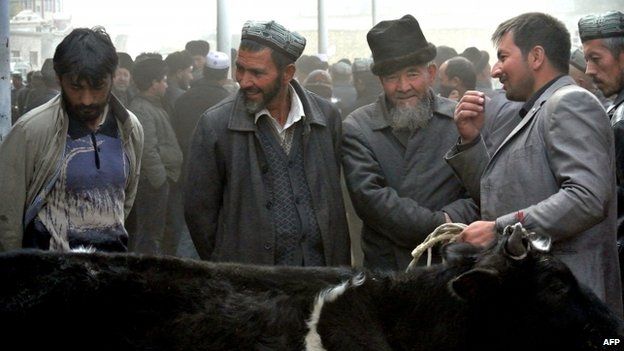
The Xinjiang region has expanded economically and with that expansion, a number of Han Chinese have settled in the region. The Han Chinese are said to have the best employment options in the region and many of them do well financially. This has also fueled animosity among Uighurs.
Some of the Uighurs are separatists who want to create an independent East Turkestan, and some of those separatists commit similar attacks against Chinese authorities.
An Amnesty International report in 2013 stated that Chinese authorities criminalized “what they labeled ‘illegal religious’ and ‘separatist’ activities” and cracked down on “peaceful expressions of cultural identity”.
For more information, please see:
BBC – China Police Checkpoint Attack ‘Kills 18’ in Xinjiang – 24 June 2015
Bloomberg Business – Attack in China’s Xinjiang Region Kills at Least 18, RFA Reports – 24 June 2015
New York Times – Deadly Clash Between Police and Ethnic Uighurs Reported in Xinjiang Region of China –24 June 2015
Reuters – Bomb Attack In Restive Xinjiang and Police Response Kill at Least 18: Radio Free Asia – 24 June 2015
BBC – Why Is There Tension Between China and the Uighurs? – 26 September 2014
Amnesty International – Annual Report: China 2013 – 25 May 2013
by Shelby Vcelka
Impunity Watch Desk Reporter, Europe
BAKU, Azerbaijan–
From June 12-28, over 6,000 athletes will compete in the first-ever European Games, which is styled after the global Olympic Games. Prior to the Games, however, the host country, Azerbaijan, blocked a number of media outlets and human rights organizations from entering the country due to its history of substantial human rights abuses and a violent track record of suppressing dissent.
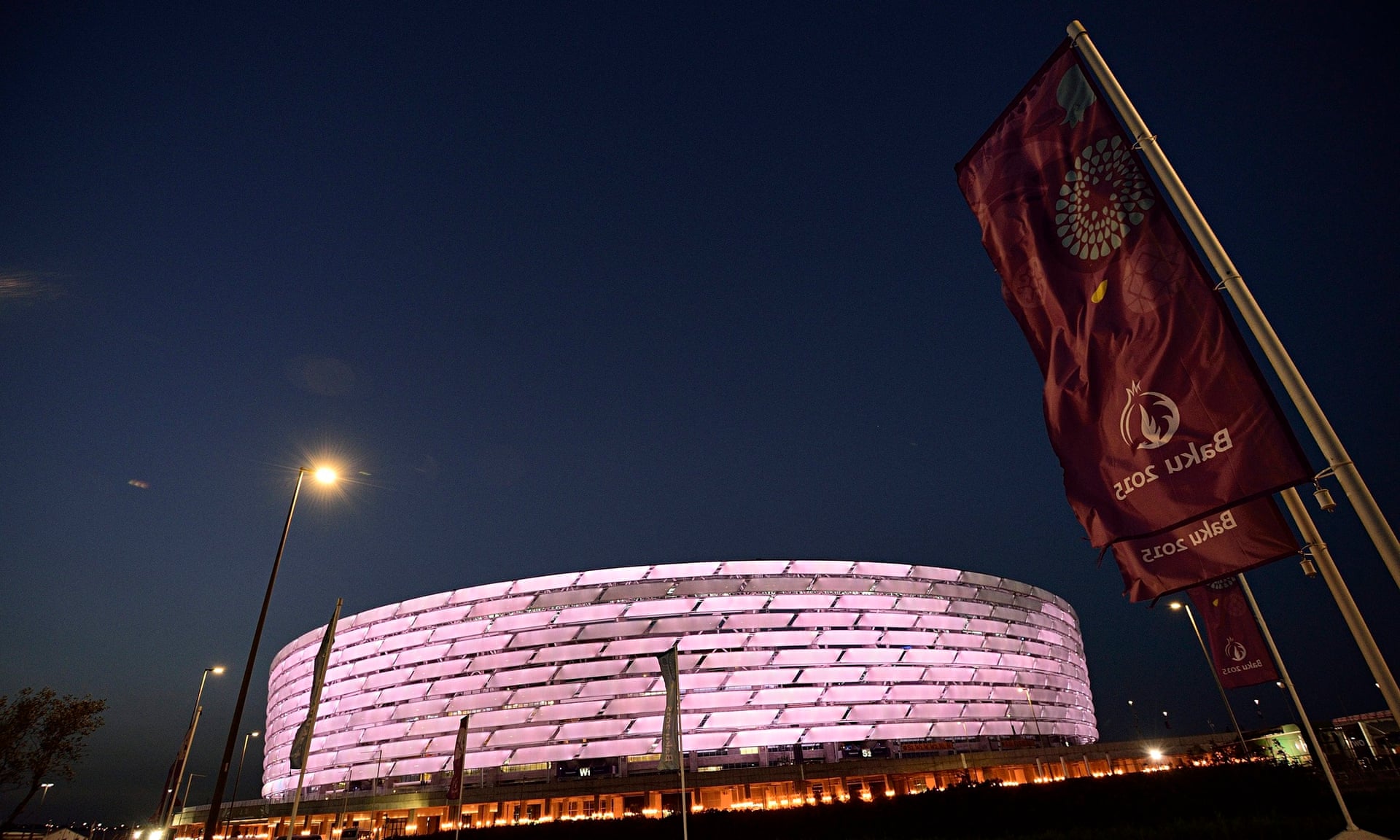
Amnesty International is among those organizations barred from entering Azerbaijan during the European Games. The organization had been planning to report on the recent suppression of free speech, as protests have erupted over the Games. However, shortly before Amnesty officials were to arrive in Azerbaijan, they received a message from the Azerbaijan Embassy in London on June 9th, stating that the officials were no longer welcome until after the Games had ended.
At least 20 political prisoners are currently being held for exercising free speech and protesting peacefully against the European Games, according to Amnesty. However, activists within the country have drawn up a list of at least 80 names being held, with many more experiencing harassment, and seizure of property by local Azerbaijani authorities. Among those being held that are known are Khadija Ismayilova, an investigative reporter, and Intigam Aliyev, a human rights attorney for the European court of human rights.
Amnesty International’s deputy director for Europe and Central Asia, Denis Krivosheev, said, “The actions of the authorities have only highlighted their desperate attempts to create a criticism-free zone around the games. Far from advancing the goals of press freedom and human dignity enshrined in the Olympic charter, the legacy of these games will be to further encourage repressive authorities around the world to view major international sporting events as a ticket to international prestige and respectability.”
Azerbaijan has managed to repel criticism thus far by making powerful allies in international settings. By offering things such as free trips, expensive meals and other major gifts to Western European decision makers, as well as paying agencies to lobby on the country’s behalf, the Azerbaijani government has wrestled itself into a comfortable position within the Council of Europe to avoid condemnation of its policies. Its additional resourcefulness as a source of oil and gas makes Azerbaijan a useful alternative to Russian oil and gas. Member states of the European Union, looking to avoid Russian supplies, have subsequently turned to Azerbaijan. As a result of Azerbaijan’s successful marketing campaign and the reality of realpolitik, most countries participating in the games, as well as the European Union, have remained silent about Azerbaijan’s human rights abuses.
For more information, please see–
Washington Post– A letter from an Azerbaijani prison— 18 February 2015
UN Human Rights–“Azerbaijani activists must be freed before the Baku 2015 Games” – UN expert— 2 June 2015
The Guardian– Amnesty International blocked from visiting Azerbaijan before Baku 2015— 10 June 2015
The Guardian– Azerbaijan bans Guardian from reporting on Baku European Games— 11 June 2015
Newsweek– Games Put Azerbaijan’s Appalling Human Rights Record In The Spotlight— 12 June 2015
UN News Centre– Azerbaijan: UN rights office urges Government to ensure free expression and association— 16 June 2015
by Mridula Tirumalasetti
Impunity Watch Reporter, Middle East
MANAMA, Bahrain—Shia opposition leader, Sheikh Ali Salman, has been sentenced to four years in prison by a Bahraini court for “insulting an official body,” that being the interior ministry. The country’s public prosecutor stated that Salman was also convicted for the “explicit incitement against a group of the people, including disturbing the public peace and explicit incitement toward disobeying the law,” He has been acquitted of seeking to overthrow the Sunni-ruled monarchy and change the political system, for which he could have been jailed for life. Salman does have the chance to appeal, said his defense attorney, Abdullah al-Shamlawi.
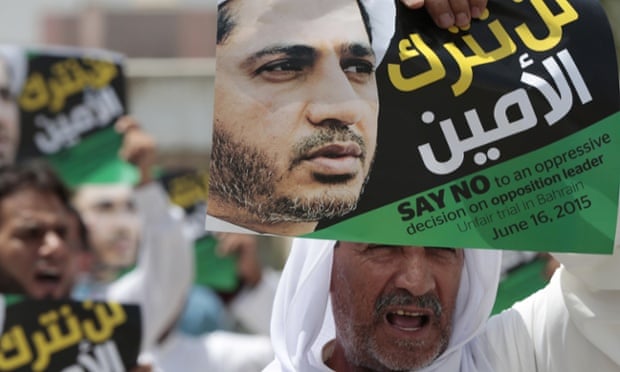
Salman, a 49-year old Muslim cleric and head of the al Wefaq Islamic Society, was arrested and detained on December 28 after delivering a series of speeches that called for political reform. Salman had just been re-elected as the party leader.
Salman’s arrest was condemned by states such as United States and Iran, and by human rights groups. Additionally, protests ensued throughout Bahrain. Human rights groups called Salman a “prisoner of conscience” and say that abuses in the country are continuing unabated.
Amnesty International said that Salman’s conviction violated the International Covenant on Civil and Political Rights, of which Bahrain is a signatory of. Middle East and North Africa deputy director, Said Boumedouha stated that Salman’s conviction is “another clear example of Bahrain’s flagrant disregard for international obligations.” He continued, “Sheikh Ali Salman has been sentenced solely for peacefully expressing his opinion.” The organization urged for the immediate release of Salman.
Since the Arab Spring in 2011, Bahrain has been struck by unrest and instability in the form of protests and demonstrations. Shia Muslims in the country have demanded a more representative government and a constitutional monarchy. There have been at least 89 deaths due to clashes with security forces. Hundreds of others have been arrested and put on trial.
For more information, please visit:
The Guardian—Bahrain opposition leader Ali Salman sentenced to four years in jail—16 June 2015
The Independent—Sheikh Ali Salman: Bahrain opposition leader jailed for four years day after UK minister ‘opens’ Royal Navy base in kingdom—16 June 2015
The Daily Star—Hezbollah denounces Bahrain’s ‘malicious’ jailing of opposition chief—16 June 2015
BBC News—Bahrain opposition leader Sheikh Ali Salman jailed—16 June 2015