British Spies Moved After Snowden Files Decrypted by Russia, China

by Shelby Vcelka

Impunity Watch Desk Reporter, Europe


LONDON, England–

British intelligence agents have been moved due to deciphered documents that both Russia and China have access to, a high-ranking government official said. The encrypted documents, stolen in 2013 by American whistleblower Edward Snowden, were recently cracked and placed a number of UK spies at risk. Both Russia and China have specific information that led to the spies being moved, but none have been injured thus far.

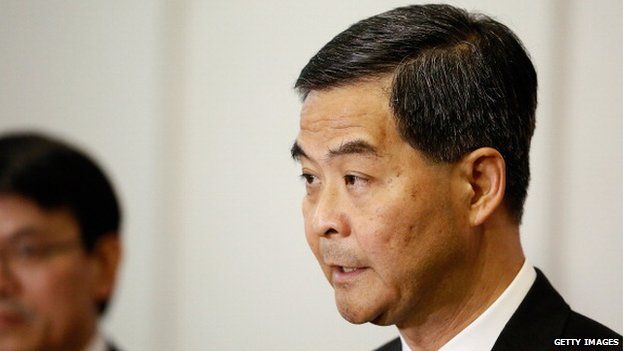
American whistleblower Edward Snowden downloaded 1.7 million documents before leaving the US. He previously stated the encrypted documents could not be broken. (Photo courtesy of BBC).

The information obtained by Russia and China placed a substantial burden on how the UK receives information, and gave the countries knowledge of how British intelligence operates in the area. Although Snowden did not have access to British intelligence databases, the UK government feared that Russia and China could identify agents by certain communications listed in the databases.

Snowden had previously stated that “no intelligence service” could decode the 1.7 million documents he stole, and that he would be able to keep the information from “being compromised even in the highest threat counter-intelligence environments.”

This news comes after Home Secretary Theresa May informed the House of Commons’ home affairs select committee in March about the “damage” the Snowden leaks had produced to the country’s security and intelligence gathering capabilities. The leak, Secretary May claimed, had “an impact on the ability of our agencies to do the work they need to do.”

Conversely, the human rights group Liberty commented that the news of agents being moved comes days after a counter-terrorist watchdog group released a report that suggested new and clearer laws should come up for debate in Parliament. The current situation, according to David Anderson QC, is “undemocratic, unnecessary, and- in the long run, intolerable.”

Shami Chakrabarti, director of Liberty, questions the claims agents were moved. She believes that the revelation comes at a convenient time to rile up the public to support a bill that invades personal liberty and privacy, to expand the government’s intelligence collection powers. Other privacy campaigners state that no evidence has been presented to corroborate allegations that intelligence gathering capabilities had been hindered by the Snowden leaks, and that he had done a public service by revealing the scope of government mass surveillance.

For more information, please see–

BBC– Surveillance powers: New law needed, says terror watchdog— 11 June 2015

Al Jazeera– Report: UK moved spies after Snowden leaks were cracked— 14 June 2015

BBC– British spies ‘moved after Snowden files read’— 14 June 2015

The Guardian– UK under pressure to respond to latest Edward Snowden claims–14 June 2015

Independent–Timing of claims that British spies were withdrawn over Edward Snowden documents is ‘extremely convenient’, say campaigners–14 June 2015

The Telegraph– British spies removed from operations after Russia and China crack codes to leaked Snowden files— 14 June 2015


NPR: Sudanese President Avoids Arrest In South Africa For War Crimes


NPR’s Melissa Block interviews David Crane, the former prosecutor of the special court for Sierra Leone, about how President Omar al-Bashir was indicted by the ICC for war crimes in Darfur.MELISSA BLOCK, HOST:

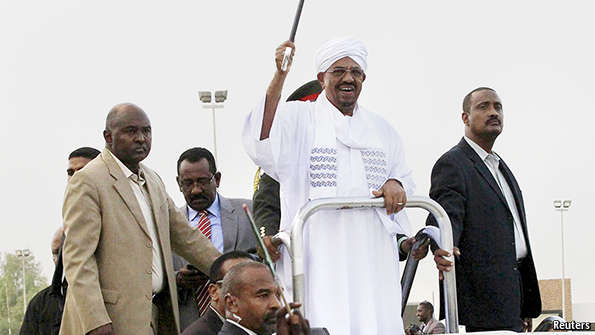
As a South African court debated whether to detain a war crime suspect, the man boarded a plane and jetted out of South African airspace. Those who wanted Sudan’s president, Omar al-Bashir arrested are furious. Bashir’s been indicted by the International Criminal Court on charges of crimes against humanity and genocide for atrocities in Darfur. So how did Bashir escape arrest? We’ll put that question to David Crane. He was the chief prosecutor of another African leader who was ultimately convicted of war crimes, Liberia’s Charles Taylor. David Crane, welcome to the program.

DAVID CRANE: It’s good to be with you.

BLOCK: Well, Sudan’s president, Omar al-Bashir, was in South Africa for a meeting of the African Union. South Africa is a party to the International Criminal Court. What happened? How did he manage to slip out of the country without arrest?

CRANE: Well, the South African government, even though they had been notified that a court had directed that he be held pending a hearing related to the ICC indictment, ignored that order and let him flee back to the Sudan.

BLOCK: I believe the South African government, ahead of this meeting, had said that heads of state would have immunity. Is that an unusual thing?

CRANE: Well, what they’re doing here is that they’re trying to gloss over an international warrant for his arrest and basically put everybody on notice that they were not going to hold Bashir despite the court order.

BLOCK: Have you seen other cases like this before where a leader who’s been indicted by the International Criminal Court has been allowed to enter and leave the country without risk of arrest?

CRANE: Other than Bashir, no. And Bashir seems to travel the world flaunting this indictment in the face of the International Criminal Court.

BLOCK: And why is that, do you think?

CRANE: Well, you know, he realizes that his brotherhood, the heads of state of Africa, are going to protect him. He doesn’t feel threatened. He has no respect for the International Criminal Court, and so he doesn’t feel that he is going to be held accountable.

BLOCK: There has been a backlash from other African government officials who say, look, the International Criminal Court is disproportionately targeting African leaders. I was looking at a statement from a South African official who said this is an opportunistic act only meant to pit African leaders against each other in the name of international law. Do they have a point?

CRANE: They really don’t. It’s a political statement. Every case that is before the International Criminal Court related to Africa has either been referred to by the African state that has had the problem or the Security Council has referred it to the International Criminal Court.

BLOCK: Well, when President Bashir got home to Sudan today, there were supporters there at the airport greeting him and some even carrying a coffin that said the ICC to its last resting place. How big a blow do you think this is to the authority of the International Criminal Court?

CRANE: It has to hurt. It sends the wrong signal to dictators and thugs around the world that the ICC may not have the clout, politically, to do anything that it has done related to its mandate of war crimes, crimes against humanity and genocide. This is not a good situation for, you know, international criminal law.

BLOCK: Given that blow to the clout of the International Criminal Court, as you describe it, what would it take to restore the credibility and the power of that body?

CRANE: Well, I think it’s two-sided. One is the International Criminal Court has to continue its work diplomatically and politically in working with the leaders around the world in all state’s parties in ensuring that they are comfortable with working with the International Criminal Court. That’s the state’s parties who have to, in fact, live up to their treaty obligations under international law, and South Africa, today, chose not to do that.

BLOCK: David Crane, thanks for talking with us.

CRANE: My pleasure.

BLOCK: David Crane, former chief prosecutor of the Special Court for Sierra Leone. He now teaches at Syracuse University College of Law.

Migrants Claim Australia Paid Smugglers to Turn Back

By Samuel Miller
Impunity Watch Reporter, North America and Oceania

MELBOURNE, Australia — Earlier this week, migrants reported to United Nations workers they witnessed an Australian official hand cash to the crew of a people-smuggling boat to take passengers back to Indonesia. Sixty five migrants, including 54 from Sri Lanka, 10 from Bangladesh and one from Myanmar, gave their accounts to employees of the United Nations refugee agency in Indonesia, where they were brought ashore and placed in detention.

Migrants Located on a Boat in the South Indian Ocean. (Photo Courtesy of BBC News)

Babar Baloch, a spokesman for the United Nations refugee agency in Geneva, briefly detailed what had been relayed to him by local sources and migrants.

“They are telling us that they were intercepted by Australian officials at sea,” said Baloch. “They were taken on board an Australian customs boat for four days. They were then put on two blue boats and the crews were paid to take them back to Indonesia.”

The allegation of payments to people-smugglers has strained relations between Indonesia and Australia, which has a policy of turning back all migrants who arrive by boat.

Australia has refused to confirm or deny the payment; furthermore, Prime Minister Tony Abbott went on the defensive Friday when asked about the claim. Abbott refused to comment on operational matters, but said that the government “would stop the boats by hook or by crook.”

Prime Minister Abbott also went on to say, “We will do whatever is reasonably necessary to protect our country from people smuggling and from the effects of this evil and damaging trade that costs lives.”

Agus Barnas, spokesman for Indonesia’s coordinating ministry for political, legal and security affairs, said Abbott’s comments could be interpreted by Australian officials as endorsing bribery and might encourage people smuggling.

Indonesia could perhaps take action against Australia under the 2000 United Nations Protocol against the Smuggling of Migrants by Land, Sea and Air; at this time, however, such a move is considered unlikely. Indonesia’s foreign minister, Retno Marsudi, has demanded a response from the Abbott administration and said she had taken up the issue with Australia’s ambassador to Jakarta.

Relations between Indonesia and Australia remain strained following the execution of two Australian Nationals part of the so-called Bali 9 group of drug smugglers in April. Australia recalled its ambassador from Jakarta following the incident.

On the domestic front, it is unclear whether such a policy would be in breach of Australian law. An Australian political party have written to the Australian Federal Police asking them to investigate what laws have been violated. Experts suggest the alleged policy would be a breach of the provisions of the Criminal Code outlawing people smuggling.

The allegations have arisen amid a humanitarian crisis in which Indonesia, Malaysia, Thailand, and international aid organizations have been trying to manage the exodus of thousands of desperate, ill-treated migrants from Myanmar and Bangladesh.

Migrants escaping poverty or oppression typically use Indonesia as a transit point for the perilous journey in often barely seaworthy vessels to Australia.

For more information, please see:

Yahoo News — Migrants say they witnessed Australian payment to boat crew — 17 June 2015

BBC News — Migrant boat allegations cast cloud over Australia — 15 June 2015

CNN — Australia urged to come clean over claims it paid traffickers — 15 June 2015

NY Times — Asian Migrants Say Australia Paid Smugglers to Turn Back — 12 June 2015

Yahoo News — Indonesian official decries Australia PM’s asylum boat stance — 12 June 2015


Ceballos Ends Strike – Dozens More Continue

By Kaitlyn Degnan
Impunity Watch Reporter, South America

CARACAS, Venezuela — Daniel Ceballos, a jailed Venezuelan opposition leader, ended his hunger strike on June 11. He is the former mayor of San Cristobal.

Ceballos, along with fellow opposition leader Leopoldo Lopez have been engaging in hunger strikes for the release of imprisoned Venezuelan opposition members.

They are also demanding that the government set a date for parliamentary elections, which are due to be held this year.

Ceballos ended his strike after 20 days due to kidney pain. His weight had dropped to 57 kilos (125 pounds). It has not been confirmed whether Lopez has continued his strike.

Ceballos was arrested last year in response to his role in anti-government protests. Venezuelan President Nicolas Maduro has accused Ceballos and Lopez of being responsible for 40 deaths during anti-government protests last year.

The announcement of the end of his strike was made by Patricia de Ceballos, who ran for (and won) her husband’s mayoral position after his arrest.

Following the announcement of the end of his strike, Ceballos was transferred to a new detention center.

Venezuelans in New York City protest outside the United Nations. (Photo courtesy of the PanAm Post)

About 74 Venezuelans, in the country and elsewhere throughout the world have joined Ceballos and Lopez in their protest. The protesters come from all walks of life, including five political prisoners, one congressman, two councilmen, a teacher, a state employee and over 50 youth activists.

Two councilmen from Venezuela in Rome participating in the protests met with Monseigneur Carlos Mendiola, a Vatican representative. Venezuelan exiles in New York City protested outside of the United Nations Headquarters and were granted an audience with UN Secretary General Ban Ki Moon.

Those striking in solidarity has stated their main objective is to gain attention for the plight of the political dissidents from bodies like the United Nations and the Catholic Church. These protests have been somewhat successful – some world leaders have begun issuing statements directed at Maduro and Venezuela.

European Council President Donald Tusk expressed his disapproval over the opposition imprisonments in Venezuela. Although the Council’s official declaration discussed its opposition to US sanctions against Venezuela, Tusk called this a “compromise.” He indicated that the perceived human rights violations in Venezuela were a topic of conversation were a topic behind closed doors.

In an opinion piece in El País, Desmond Tutu, South-African Archbishop and Nobel Peace Prize laureate called on Maduro to release political prisoners. He also condemned human rights violations in the country.

Venezuela has yet to respond to any of the allegations or demands.


For more information, please see:

Buenos Aires Herald – Jailed former Venezuela mayor ends hunger strike – 11 June 2015

PanAm Post – Vatican, UN lend an ear to Venezuelan hunger strikers – 11 June 2015

Reuters – Jailed former mayor ends hunger strike in Venezuela – 11 June 2015

PanAm Post – Desmond Tutu slams Nicolas Maduro over human rights violations – 12 June 2015

PanAm Post – Venezuelan political prisoner Daniel Ceballos abandons hunger strike – 12 June 2015

Wall Street Journal – European council president challenges Venezuela after human rights violations after summit – 12 June 2015