Inter American Commission on Human Rights Files Case Against Nicaragua for the Murder of Journalist and Calls for the Nation to Cease its Pursuit of Human Rights Activists

By: Emma Bissell

Impunity Watch News Staff Writer


Nicaragua – The Inter American Commission of Human Rights concluded the State of Nicaragua liable for the murder of journalist Ángel Gahona López while he was covering a protest and urgently calls for their continued human rights violations to cease.

 
Members of the community honor Ángel Gahona López after he was killed while covering a protest. Photo Courtesy of Noticiero El Meridiano.
 

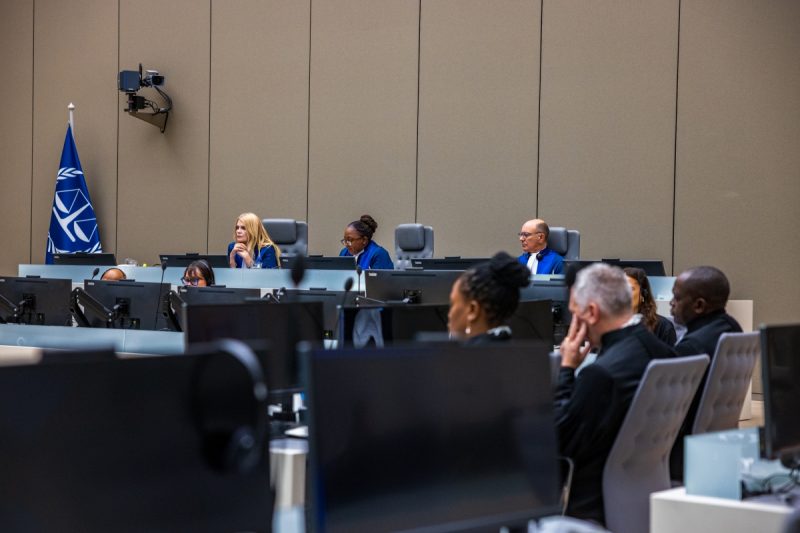
On July 4th, 2024, The Inter-American Commission on Human Rights (The Commission) filed a case with the Inter American Court of Human Rights (IACHR) against Nicaragua concerning the execution of journalist Ángel Gahona López on April 21, 2018. The Commission concluded that the State of Nicaragua is responsible for violating Lopez’s rights to life and freedom of expression and concluded that the State failed to provide evidence to support the use of force against Lopez given the amplified and intense circumstances.

While covering protests against State violence in April 2018, Lopez was fatally shot. Although he did receive medical assistance from nearby civilians, witnesses reported that state officials present at the scene failed to provide any aid, further indicating that this was motivated by the state itself rather than being a random and unfortunate occurrence. Lopez died just a few hours later. The Merits Report indicated that a state agent was responsible for the murder and also indicated that the murder was linked to Lopez’s work as a journalist reporting on anti-government protests.

The Commission ultimately concluded that the State of Nicaragua violated the American Convention on Human Rights’ articles 4.1, 8.1, 13, and 25. These articles pertain to individuals having the right to an impartial hearing, freedom of thought and expression, to have their life respected, and the right to judicial protection.

Two young men were initially convicted of his murder but were released in 2019 under Law 966, which is also known as the amnesty law. This law was passed by the National Assembly of Nicaragua and intended to provide “broad amnesty” to all people who played a role in events throughout the country from April 18th, 2018, until the law entered force. This essentially applied to political crimes, and otherwise related crimes, which is why the two men were released. The Commission previously denounced this law on the grounds that it would exonerate those who committed grave human rights violations.

After finding the State of Nicaragua at fault, the Commission suggested that the State, in response to an array of human rights violations over the last 10 years, undertake reparations such as providing financial compensation to victims of human rights violations, conducting thorough investigations into matters such as Lopez’s death, and implementing protocols to prevent repetition of these ghastly acts.

The death of Ángel Gahona López was not an isolated incident. The State of Nicaragua has committed a lengthy series of human rights violations over the last several years. In fact, the Commission recently published a statement condemning the State for depriving its citizens of basic human rights and imprisoning many of them in appalling conditions. The Commission is not only calling upon the Nicaraguan government to cease its relentless persecution of human rights defenders but has also called upon the international community to provide support to those suffering at the hands of the government.

Unfortunately, as evidenced by the death of Ángel Gahona López, the plight of journalists in Nicaragua and other Central American countries, as well as internationally, is dire. In 2018 alone, there were 95 journalists killed on the job. Lopez’s death not only added to the number of journalists killed worldwide but is just one more example of the many heinous acts committed by the Nicaraguan government over the last decade.


For further information, please see:

IACHR – OAS – American Convention on Human Rights – 22 Nov. 1969

IACHR – OAS – Expresses Concern Over the Passing of Amnesty – 12 June 2019

IACHR – OAS – Files Case with IA Court Over Journalists Death and Ongoing Impunity in Nicaragua – 1 Oct. 2019

IACHR – OAS – Condems Grave Human Rights Violations Against People Deprived of Their Freedom in Nicaragua – 9 Oct. 2024

IFJ – In the Shadow of Violence; Journalists and Media Staff Killed in 2018 – 2019


Russia Violates Freedom of Expression in Recent ECHR Case

By: Neha Chhablani

Impunity Watch News Staff Writer


STRASBOURG, France – On October 15th, the European Court of Human Rights (ECHR) held that Russia violated the right to Freedom of Expression in the case of Gadzhiyev and Gostev v. Russia. The case concerned two applicants who were dismissed from their jobs after criticizing workplace practices without permission. The ECHR’s ruling challenged Russia’s strict prohibition on public statements issued by State employees.   

While the ECHR ruled on Mr. Gadzhiyev and Mr. Gostev’s cases together, their individual claims were slightly different. Mr. Gadzhiyev served as a police colonel for the Dagestan Ministry of the Interior since 1978. In 2013, after his previous attempts to raise awareness about corruption within regional police forces failed, Mr. Gadzhiyev arranged a meeting with the Federal Minister of Internal Affairs. In anticipation of this meeting, he gave four interviews with media outlets in which he claimed the presence of corruption. On March 1st, 2013, the Minister of the Interior of Dagestan opened an investigation and found that Mr. Gadzhiyev failed to get permission from the Public Relations Department for interviews. Ultimately, he was dismissed from his post because he failed to seek this approval and spoke out negatively against a government agency, which was a violation of domestic law. All national courts ruled against or dismissed Mr. Gadzhiyev’s case on the grounds that he criticized a government agency without concrete facts to support his claims.

 
Photograph of Moscow Metro. Photo Courtesy of David Burdeny.
 

Mr. Gostev was an employee of the Moscow Metro since 1992 and, in 2014, became chairman of the Metro Workers’ trade union. After a series of technical accidents, the trade union organized protests to draw attention to the safety conditions of the metro service. After further issues, Mr. Gostev gave two interviews with media outlets, during which he commented on the safety deficiencies of the metro system. The Moscow Metro Authority issued a reprimand to Mr. Gostev, as all employees were required to publish material through the metro press service and not engage with the press directly. After his second interview was published, the Authority fired Mr. Gostev. National courts rejected Mr. Gostev’s application, stating that he had been informed of the proper procedures for communicating with the press but chose to ignore them. They found that his dismissal was not an infringement of freedom of expression, only a restriction on his exercise of this right.

            Due to their similarity, the ECHR considered Mr. Gostev and Mr. Gadzhiyev’s case at the same time. The court determined that the purpose of their statements was to safeguard the public and they had no malintent. Although the domestic courts ruled a lack of evidence, numerous police officers corroborated Mr. Gadzhiyev’s claims, demonstrating their validity. Furthermore, while domestic courts claimed Mr. Gostev’s statements could have harmed Moscow Metro, they failed to show any evidence of harm.

            Ultimately, the ECHR ruled that the severity of punishment was disproportionate to the crime, given the relevance and legitimacy of Mr. Gostev and Mr. Gadzhiyev’s statements. They ruled that strict enforcement of Russian law prohibiting or discouraging any negative statements made to the public could deter employees, union representatives, and whistleblowers from voicing legitimate concerns.

            While the court held that Russia was to pay 9,950 and 10,500 euros to Mr. Gadzhiyev and Mr. Gostev, respectively, the ruling implied a broader disagreement with Russian law and its application regarding the prohibition of public statements against the State. Ultimately, the ECHR suggests Russia should evaluate the presence of democratic procedures within the State when claiming that interference with freedom of expression is unnecessary in a democratic society.


For further information, please see:

European Court of Human Rights – CASE OF GADZHIYEV AND GOSTEV v.

RUSSIA – (15 Oct. 2024)

European Court of Human Rights – European Convention on Human Rights – (20 Oct. 2024)

European Court of Human Rights – Gadzhiyev and Gostev v. Russia Press Release – (15 Oct. 2024)


ECHR Holds Turkey Violated Seven Individuals’ Right to Freedom of Expression

By: Sarah Peck

Impunity Watch News Staff Writer


STRASBOURG, France On October 8, 2024, the European Court of Human Rights (ECHR) ruled in four separate cases that Turkey had violated Article 10 of the European Convention for Human Rights, the right to freedom of expression.  According to the ECHR, the Turkish government wrongfully imposed on seven individuals suspended sentences of imprisonment and lengthy probations for comments each had made criticizing the governing bodies of Turkey, including the President and Prime Minister at the time.

 
Photo of a crowd with a Turkish flag on a street. Photo courtesy of Emir Bozkurt.
 

The Convictions

Bayram Yorulmaz, Abuzer Serdar Özlü, Binali Erdoğan, Mihriban Şorli, Tugay Kurnaz, Saide İnaç, and Jinda Açıkgöz were all convicted by Turkish courts of offenses under the Turkish Criminal Code as a result of either verbal or written criticisms of the Turkish Government or its officials. The convictions included:

Bayram Yorulmaz: A public official at the Adana courthouse in Turkey charged with the offense of insulting a public official.

Abuzer Serdar Özlü: A Turkish national convicted of public denigration of the Turkish Nation, the Republic of Turkey, the Grand National Assembly of Turkey, and the judicial bodies of the state for nine publications he had made on his Twitter account in March and April 2016.

Binali Erdoğan: A Turkish national convicted of insulting the President of the Republic via a Facebook post.

Mihriban Şorli: A Turkish national convicted of insulting the President of the Republic via comments she made verbally during an altercation with police officers.

Tugay Kurnaz: A Turkish national convicted of insulting the President of the Republic and overtly insulting a public official via Facebook and Twitter.

Saide İnaç: A German national convicted of insulting the President of the Republic by sharing an article via Facebook post, which stated that the President of the Republic had provoked attacks on the Kurds and caused their massacre.

Jinda Açıkgöz: A Turkish national convicted of insulting the President of the Republic via Facebook posts.


The Criticisms

The individuals’ criticisms varied in severity. Some examples include:

Mr. Yorulmaz: “They sneeringly give each other as gifts the paintings of the people they condemned to death… What is this? Effrontery? Insolence? Perversion?”

Mr. Özlü: “You suspended the Constitution and cancelled out the police and the judiciary because of the bribes this man distributed to your Ministers!”

Mr. Erdoğan: “You and your damned presidency, that’s enough!”

Ms. Şorli: “You [your] dishonourable Tayyip (şerefsiz) can’t do anything to me, Tayyip’s soldiers killed my brother in the mountains, I’m going to retaliate.”


The Sentences

For each of the convictions, the Turkish Government handed down the following sentences:

Individual

Imprisonment

Probation

Bayram Yorulmaz

Eleven months and twelve days, suspended

Five years

Abuzer Serdar Özlü

Five months, suspended

Five years

Binali Erdoğan

Held for one month in pre-trial detention and sentenced to ten months, suspended

Five years

Mihriban Şorli

Ten months, suspended

Five years

Tugay Kurnaz

One year, two months and seventeen days, suspended

Five years

Saide İnaç

One year, five months and fifteen days, suspended

Five years

Jinda Açıkgöz

One year, two months and seventeen days, suspended

Five years


The ECHR’s Ruling

In each of the cases, the Turkish Government argued that the suspension of the prison sentence meant that the individuals had not suffered any obligations or restrictions, and therefore did not have victim status. However, the ECHR determined that despite the suspension of the imprisonment, the criminal convictions amounted to an interference with their exercise of the right to freedom of expression  as the sentences may have had  a deterrent effect. The ECHR further noted that the Turkish national authorities failed to weigh the interests at stake in accordance with the criteria in Turkey’s case law and the interferences were not shown to have been necessary in a democratic society.

Citing Durukan and Birol v. Türkiye, the ECHR explained that Article 231 of Turkey’s Code of Criminal Procedure, which provides for the suspension of pronouncement of judgments entailing convictions, did not offer the required protection against arbitrary infringement by the public authorities of the rights guaranteed by the European Convention for Human Rights.

The ECHR found that the Government of Turkey had violated the right to freedom of expression in each case and ordered Turkey to pay following penalties:

Individual

Non-Pecuniary Damages

Costs & Expenses

Bayram Yorulmaz

2,216 euros (EUR)

EUR 1,500

Abuzer Serdar Özlü

EUR 2,600

EUR 1,000

Binali Erdoğan

EUR 5,000

N/A

Mihriban Şorli

EUR 2,600

N/A

Tugay Kurnaz

EUR 2,600

N/A

Saide İnaç

EUR 2,600

N/A

Jinda Açıkgöz

EUR 2,600

EUR 1,000


For further information, please see:

ECHR – Case of Açikgöz v. Türkiye – 8 Oct. 2024

ECHR – Case of Durukan and Birol v. Türkiye – 3 Oct. 2023

ECHR – Case of Erdoğan and Others v. Türkiye – 8 Oct. 2024

ECHR – Case of Özlü v. Türkiye – 8 Oct. 2024

ECHR – Case of Yorulmaz v. Türkiye – 8 Oct. 2024


African Court on Human and Peoples’ Rights Still Pending Decision on Detainee’s Right to Life

By: Jocelyn Anctil 

Impunity Watch News Staff Writer 


ARUSHA, Tanzania – On October 3, 2024, the African Court on Human and Peoples’ Rights reached a decision on provisional matters in Moadh Kheriji Ghannouchi and Others v. Republic of Tunisia. This case involves several political activists whom the applicants allege have been wrongfully imprisoned without probable cause detained. These activists are members of the Ennahda Party, a major political group in Tunisia aiming for Islamic democracy. Applicants on behalf of the activists allege that during detention these activists were deprived of their right to dignity and protection against cruel punishment. The Court ordered the Republic of Tunisia to better protect the current detainees. By this order, the Republic of Tunisia must eliminate barriers to communication between current detainees and lawyers or medical personnel. They must also adequately inform the detainees of the basis for their detention, and report on any measures taken to fulfil these orders within 15 days of the decision. However, the court dismissed the request for release of the four detainees.

 
Loved ones and supporters of Ridha Bouzayene gather at his funeral service. Photo courtesy of Al-Sabil.
 

The applicants also allege that the Republic of Tunisia infringed upon a detainee’s right to life although no conclusion on this issue has been reached. Article 4 of the African Charter on Human and Peoples’ Rights and Article 6 of the International Covenant on Civil and Political Rights ensure and protect one’s right to life. Ridha Bouzayene, a well-known member of the Ennahda Party, died during a protest against the Government in the Republic of Tunisia on January 14, 2022. He went missing at the demonstration and five days later it was discovered he had died from injuries inflicted by police. 

Mr. Bouzayene’s death also implicates the right of peaceful assembly, protected by Article 11 of the African Charter on Human and Peoples’ Rights and Article 21 of the International Covenant on Civil and Political Rights. Mr. Bouzayene went missing during what the applicants allege to be a peaceful protest and sustained fatal injuries while exercising his rights. 

Applicants also allege the Republic of Tunisia discriminated against Mr. Bouzayene based on his political opinion which further violates his rights protected by the African Charter on Human and Peoples’ Rights. The Constitution of Tunisia purports to establish a Constitutional Court, yet the Court has not been operational. As a result, the applicants further allege that the Republic of Tunisia has not upheld the independence of lawyers and the judiciary, leading to the ineffective investigation of Mr. Bouzayene’s death. As of this decision, the Tunisian judicial system has not found anyone responsible for Mr. Bouzayene’s death and the applicants maintain he was arbitrarily deprived of life. The applicants request the Court to order the Republic of Tunisia to open an investigation into Mr. Bouzayene’s death. 

The provisional decisions in this case, requiring the Republic of Tunisia to better inform and protect current detainees, may indicate a favorable decision to Mr. Bouzayene’s family in the future regardless of their denial of release. 


For Further Information Please See:  

ACHPR – Moadh Kheriji Ghannouchi and Others v. Republic of Tunisia – 3 Oct. 2024 

UK asked to impose sanctions on Tunisia officials – Middle East Monitor – 22 Mar. 2023 

Ennahda: Before and After the Coup in Tunisia – Crown Center for Middle East Studies | Brandeis University – 8 July 2022 


ECHR Rules Spain Violated Right to Privacy and Freedom of Religion

By: Neha Chhablani

Impunity Watch News Staff Writer


STRASBOURG, France – On September 17, 2024, in the case of Pindo Mulla v. Spain, the European Court of Human Rights (ECHR) ruled that Spain had violated the right to privacy and religious freedom of Ms. Rosa Edelmira Pindo Mulla, a Jehovah’s witness, by administering blood transfusions against her will. The ruling marks another victory for individual autonomy and religious freedom in healthcare, reaffirming the ECHR’s commitment to self-determination.

 
Photograph of the Pindo Mulla v. Spain judgement delivery. Photo Courtesy of the European Court of Human Rights.
 

Ms. Rosa Edelmira Pindo Mulla, an Ecuadorian national living in Spain, firmly opposes blood transfusions due to her religious beliefs. Following a series of medical evaluations between May and July 2017, she was advised to undergo surgery to remove a myoma. In preparation for the procedure, she issued two legal documents—an advance directive and a lasting power of attorney—refusing blood transfusions under any circumstance.

On June 6, 2018, Ms. Pindo Mulla was admitted to the hospital due to severe internal bleeding. She reiterated her refusal of a blood transfusion and was transferred to a specialized hospital in Madrid that could provide alternative treatments. However, multiple miscommunications during this transfer—including incomplete sharing of her advance directive, unclear information about treatment preferences, and a failure to consult with her or her family—resulted in a duty judge authorizing blood transfusions without knowledge of her legal documents or religious beliefs. The doctors administered three life-saving blood transfusions while Ms. Pindo Mulla was unaware and unable to give informed consent. 

Ms. Pindo Mulla pursued her case through each level of the Spanish judiciary before appealing to the ECHR. Both the local judge and the provincial court concluded that the absence of her advance directive and insufficient evidence of her refusal justified the transfusion. When the case reached Spain’s Constitutional Court, she argued that medical professionals violated her rights to legal protection, physical integrity, and freedom of religion, under Articles 24, 15, and 16 respectively of the Spanish Constitution. Ultimately, her appeal was deemed inadmissible as it did not meet the “special constitutional significance” threshold under Rule 54 § 3 of the Rules of Court.

On March 13, 2020, Ms. Pindo Mulla brought her case to the ECHR, claiming that Spain violated Article 8 (right to respect for private life) and 9 (freedom of thought, conscience, and religion) under the European Convention on Human Rights (ECHR). Spain relinquished jurisdiction to the ECHR on July 4, 2023, and the Grand Chamber hearing took place on January 10, 2024.

The court scrutinized the medical professionals’ decision-making process and evaluated whether they had shown sufficient respect for Ms. Pindo Mulla’s autonomy. Based on its investigation, the court determined that the doctors’ shortcomings in providing incomplete information and failing to confirm consent prevented her from exercising self-determination and autonomy. The court ruled that Spain had violated Article 8 in light of Article 9 and ordered the government to pay Ms. Pindo Mulla 12,000 Euros in non-pecuniary damage and 14,000 Euros for her legal costs and treatment expenses.

In this case, the ECHR had to carefully weigh the right to life under Article 2 of the ECHR and the right to religious freedom. While medical professionals justified their actions as necessary to preserve life, the court held that when a patient refuses treatment freely, autonomously, explicitly, and without ambiguity—as Ms. Pindo Mulla had done—the right to autonomy supersedes the right to life. By ruling in her favor, the ECHR reaffirmed the primacy of self-determination in healthcare and strengthened the legal protections of religious minorities in medical jurisprudence.


For further information, please see:

ECHR – Case of Pindo Mulla v. Spain – 17 Sept. 2024

ECHR – Grand Chamber Judgment Pindo Mulla v. Spain – 17 Sept. 2024

ECHR – European Convention on Human Rights – 29 Sept. 2024

Human Rights Without Frontiers – EUROPEAN COURT: Ruling about forced blood transfusion of a Jehovah’s Witness – 17 Sept. 2024

Tribunal Constitucional de España – The Spanish Constitution – 29 Sept. 2024