Yacouba Traore’s Case Dismissed by the African Court

By: William Krueger

Impunity Watch Staff Writer

ARUSHA, Tanzania – On February 20, 2018, Yacouba Traore filed an application before the African Court on Human and Peoples’ Rights against the Republic of Mali alleging a violation of his rights to “respect for life and physical and moral integrity” and “work under fair and satisfactory conditions” as granted to citizens under the jurisdiction of the Court in section 4 and Article 15 of the Charter respectively.
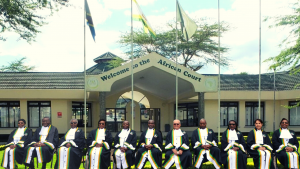
The Eleven Honorable Justices of the African Court on Human and Peoples’ Rights Seated Outside of the Courthouse. Photo Courtesy of the AfCHPR.


The allegations stem from what Traore alleges was an unfair dismissal on August 31, 2012, from his position as a Chief Chemist with ANALAB Exploitation, a company that is a member of the ALS Mali SARL Laboratory Group. Traore stated that he was not classified in a category that responded to his profession and was underpaid for his work. Traore made claims to be reclassified but was met with retribution, one such act being sent to work in Bamako for training. While Traore worked in Bamako he continued to face acts of retribution cumulating in being summoned before a disciplinary board, being laid off, and having his work obstructed by coworkers at the employer’s request.

Traore first attended the Bamako Labour Court as he alleged that his dismissal violated Article L 277 of the Labour Code where his position required that an employer seek authorization from the Regional Director of Labor before dismissing him. The Bamako Labour Court ruled that his dismissal was unlawful on January 7, 2013, but saw no further action taken against his employer. The case would rise up to the Supreme Court of the Republic of Mali who would remand the case to the Bamako Court of Appeals on the basis there was a failure to recognize Traore’s rights. Traore had also filed a complaint with the Bamako Public Prosecutor on February 22, 2017, alleging forgery by the former National Director of Labour, the former Regional Director of Labour in Bamako, and an employee of a Bamako labor service who he believes was involved in his dismissal from ANALAB Exploitation. However, the Public Prosecutor of Bamako dismissed these complaints as the office believed there had been no violation of criminal law. Traore requested that he receive reimbursement for contributions to social security, payment of eighty million CFA francs in damages in accordance with a letter filed with the Bamako Labour Court, the remaining eight million CFA francs of a housing bonus, reimbursement of medical costs stemming from treatment of his spouse and children, payment of one million CFA francs for overtime, and the issuance of a work certificate. The Republic of Mali requested the Court declare the Application as inadmissible and baseless and for Traore to pay his own court costs.

The Republic of Mali objected to Traore’s application on the basis that Traore had failed to exhaust local remedies before filing with the Court. The Republic of Mali argued that Traore failed to produce any evidence illustrating his exhaustion of local remedies, having only provided copies of decisions. Upon investigation, the Court found that the Supreme Court of the Republic of Mali overturned a judgment on September 12, 2017, and referred it back to the Bamako Court of Appeals which led to his win in Bamako Labour Court. However, Traore never saw action taken against his employer because he had filed his application well before the case was decided in a local remedy. Thus, the Court had found that Traore’s application did not comply with Article 56 of the Charter and Rule 40.

Specifically, Traore’s application failed to comply with Article 56.5 and Rule 40.5 as both require an applicant to only file after an “exhaustion” of local remedies. In a unanimous decision, Traore’s application was found inadmissible and was dismissed.

For further information, please see:

African Court on Human and Peoples’ Rights – African (Banjul) Charter on Human and Peoples’ Rights – 27 June 1987

African Court on Human and Peoples’ Rights – Judgment (25 Sept. 2020) – 25 Sept. 2020

African Court on Human and Peoples’ Rights – Rules of Court – 2 June 2010
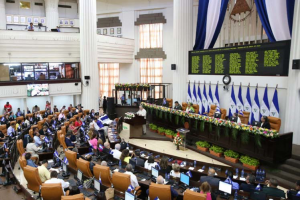
Nicaragua’s Proposed Foreign Agent and Cybercrime Bills Target Independent Media and Human Rights Organizations

By: Elyse Maugeri 

Impunity Watch Staff Writer

MANAGUA, Nicaragua – In late September of this year, President Daniel Ortega’s ruling party introduced two new bills to Nicaragua’s National Assembly. These bills are the Proposed Foreign Agent bill and Cybercrime bills. The aim of the new legislation is to severely restrict freedom of speech and limit the critics of the Sandinista party.

Inside of the Nicaragua National Assembly. Photo Courtesy of Prensa Latina

Human Rights Watch has noted the bills’ likeness to similar laws in Russia. Those laws have notably been condemned by the Commissioner for Human Rights of the Council of Europe, as a violation of international norms; and have been the subject of litigation in the European Court of Human Rights more than once.

The Law for the Regulation of Foreign Agents is aimed at human rights organizations and media outlets operating in Nicaragua. These organizations fear that this law targets them specifically as many of them depend on foreign-based funding.

This bill requires any person or entity receiving funding directly or indirectly from abroad to register with the government as a “foreign agent.” They also must register if they work for or represent the interests of a foreign government, foundation, or business. If they fail to do so, the consequences include fines, cancellation of registration, and seizure of property. Furthermore, if these “foreign agents” are found to have intervened in any domestic political affairs, they will face unspecified legal sanctions.

The Special Law on Cybercrimes is aimed at criminalizing those who spread “fake news” and other critical speech on the internet. Its provisions include lengthy criminal sentences for anyone found “publishing or disseminating false or distorted information” or any expression that “promotes hate and violence.” Prison sentences are also outlined for any person using technology to disclose classified or “personal” information and for anyone “praising” criminal activity. The terms used are not further defined in the bill, leaving them up to interpretation.

Nicaragua has ratified both the International Covenant on Civil and Political Rights (ICCPR) and the American Convention on Human Rights (ACHR). Under these, countries may only limit free speech when necessary, and the limitations must be done proportionately. Both of the new bills work directly against the goals of the ICCPR and ACHR and are largely inconsistent with international law.

The Inter-American Commission on Human Rights (IACHR) expressed its concern in a statement in which it highlighted Article 13 of the ACHR, which establishes the right to freedom of thought and expression. They further point to the 2011 Joint Declaration on Freedom of Expression and the Internet of the IACHR and UN Special Rapporteurs that promotes freedom of expression as it applies to the internet, allowing only for limitations in circumstances in which international law would allow such as national security.

The decision by the Nicaraguan government to introduce these bills has only intensified international concern. Since 2018, journalists and independent media outlets have been targeted by the government. Emmanuel Colombié, of Reporters Without Borders stated recently, “we totally condemn this outrageous and unconstitutional bill designed to step up censorship and intimidation of Nicaragua’s independent media. The national assembly must reject this draconian legislation, which would provide Daniel Ortega’s government with a new repressive tool for silencing its critics.”

For further information, please see:

Associated Press – Proposed Nicaragua law could muffle dissent – 23 Sept. 2020

Human Rights Watch – Nicaragua: Ortega Tightening Authoritarian Grip – 8 Oct. 2020

IACHR – The IACHR and its Office of the Special Rapporteur for Freedom of Expression express concern about new legal threats to freedom of expression and indirect measures against the media and journalists in Nicaragua – 7 Oct. 2020

Reporters Without Borders – RSF and PEN urge Nicaraguan legislators to reject “foreign agents” bill – 29 Sept. 2020

ICC’s Prosecutor Visits the Central African Republic Ahead of the Trial Against Two Alleged War Criminals

By: Thomas Harrington

Journal of Global Rights and Organizations, Lead News Editor

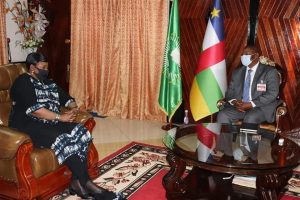
BANGUI, Central African Republic – Fatou Bensouda, International Criminal Court’s (ICC) chief prosecutor in its investigation into the Central African Republic (CAR), met with CAR’s president to discuss the progress of the ICC’s investigations and the upcoming trials of two of the accused. Bensouda concluded her third trip to the CAR since the ICC’s investigations into the conflict began in 2014.

ICC Prosecutor Fatou Bensouda concludes her trip to the Central African Republic. Photo Courtesy of the ICC.

The conflict in the CAR has been going on since March of 2013 and is between ex-Seleka Muslims and anti-Balaka Christians. The fighting has caused the displacement of millions and has resulted in numerous war crimes. While the CAR is predominantly Christian, Seleka rebels overthrew the government in 2013 and held power until 2014. The Seleka president was forced to step down due to international pressure and disbanded the Seleka. Since then, the country has largely been separated into a Muslim North and Christian South. The Christian anti-Balaka militias and ex-Seleka groups have since continued the fighting. The United Nations Security Council and the ICC began investigations into human rights abuses back in 2014, and two cases are about to begin in the ICC.

On February 9th, 2021, the trial against Alfred Yekatom and Patrice-Edouard Ngaïssona, is set to begin in the ICC. The charges against them are a result of the ICC’s investigation, asked for by the CAR’s government, into both sides of the conflict. Yekatom and Ngaïssona are both accused of being anti-Balaka leaders who committed various crimes against humanity and war crimes against Muslim Seleka’s. While the investigation is into both sides of the conflict, the ICC has so far not charged any Seleka fighters.

Alfred Yekatom is an alleged former commander in the anti-Balaka movement who commanded around 3,000 soldiers. He is accused of committing the war crimes of murder, torture, directing attacks against a civilian population, “enlistment and conscription of children under the age of 15 years to participate in hostilities,” amongst other crimes. Yekatom is also accused of multiple crimes against humanity in various locations throughout the CAR.

The ICC stated that Patrice-Edouard Ngaïssona was the National General Coordinator of the anti-Balaka militia, and that he aided, abetted, or otherwise assisted in crimes against humanity and war crimes in the CAR. Ngaïssona was the former head of the CAR’s football federation and committee member of the Confederation of African Football. Because of his position, many in the CAR believed him to be “untouchable.” He was arrested in France in 2018 and charged with similar war crimes and crimes against humanity as Yekatom, with the addition of rape.

The Pre-trial Chamber II joined the cases of Yekatom and Ngaïssona in February of 2019. The decision was made in order to enhance and expedite the proceedings and avoid duplication of evidence. At the time of the joinder, 1,085 victims had been permitted to participate in the hearing through legal representation.

Bensouda’s trip to the CAR, along with the ICC’s launch of an assistance pilot project from the Trust Fund for Victims (TFV), are important visible steps toward justice from the horrific violence from this conflict. The ICC is showing that it is continuing to keep its promise, from 2014, to investigate the crimes against humanity committed in the CAR between the ex-Seleka and anti-Balaka groups.

For more information, please see:

International Criminal Court – Statement of the Prosecutor, Fatou Bensouda – 1 Oct. 2020

International Criminal Court – Case Information Sheet: Situation in Central African Republic II – 17 Mar. 2020

AP News – ICC: Former Central African Republic militia leader arrested – 12 Dec. 2018

Aljazeera – UN launches CAR probe to prevent genocide – 10 Mar. 2014

BBC NEWS – Central African football official Ngaïssona faces war crimes trial – 12 Dec. 2018

Reuters – Central African Republic rebels demand partition in Brazzaville talks – 22 Jul. 2014

International Criminal Court – Press Release – 8 Oct. 2020

The “Disappeared” in Colombia

By: Anthony B. Emmi

Impunity Watch Staff Writer 

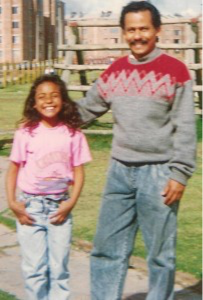
WASHINGTON, D.C. – The Inter-American Commission on Human Rights (Commission) has referred the case of Pedro Julio Movilla Galarcio to the Inter-American Court of Human Rights. The Colombian government allegedly disappeared Movilla Galarcio on May 13th, 1993.

Mr. Movilla with his daughter, Jenny.

Movilla Galarcio is one of 120,000 reported missing persons to have allegedly disappeared during the bloody 52-year conflict that gripped the nation between 1954 and 2016. Many citizens of Colombia remain in danger as fragmented combatant groups continue to clash throughout the country.

Examination of the specific circumstances surrounding Mr. Movilla’s disappearance revealed compelling evidence suggesting that he was disappeared by the State. As a union leader and leftist, Mr. Movilla fit into a group of people which was highly targeted throughout the conflict. Around the time of the disappearance, people like Mr. Movilla suffered high rates of execution and forced disappearance. The Commission notes further that a person of Mr. Movilla’s profile is labeled an “internal enemy” of the state in government counter-insurgency manuals.

In addition to these broad factors, Mr. Movilla and his family were surveilled, and strangers often warned him to be careful of his safety. In terms of surveillance, the State security forces created intelligence files regarding Mr. Movilla’s political and union activity, along with an alleged link to a guerilla organization. The State provided no explanation for the intelligence it gathered on Mr. Movilla.

After Mr. Movilla disappeared, evidence points toward the possibility of a cover-up effort. The State denied the habeas corpus meant to locate Mr. Movilla simply because his specific place of detention was not listed, an obvious impossibility. Investigation efforts into the disappearance were characterized by inefficient proceedings, which have left the investigation in its infancy more than 25 years later. The State did not make efforts to locate Mr. Movilla until 15 years after his disappearance. The combination of the specific circumstances and the broader historical context led the Commission to the conclusion that the State forcibly disappeared Mr. Movilla.

Directly regarding Mr. Movilla, the Commission found the State violated Articles 3 (Right to Juridical Personality), 4 (Right to Life), 5 (Right to Humane Treatment), 7 (Right to Personal Liberty), 8 (Right to a Fair Trial), and 16 (Freedom of Association) of the American Convention on Human Rights (Convention). Regarding Mr. Movilla’s family, the State is in violation of Article 5, due to the extreme mental anguish suffered as a result of the disappearance.

The Commission has also made five recommendations for action to be taken by the State. First, the State should create a method to compensate Mr. Movilla’s family in both a material and immaterial manner. Second, the State should provide mental health services for Mr. Movilla’s family. Third, it should attempt to find Mr. Movilla or uncover his story and deliver his remains if the search yields them. Fourth, see the criminal investigation of Mr. Movilla’s disappearance to its conclusion, exercising proper diligence. Finally, take measures to prevent this conduct in the future, such as eliminating the use of the general profile describing Mr. Movilla in counterinsurgency manuals.

For more information, please see:

Human Rights Watch – World Report 2020: Colombia Events of 2019 – 2020

International Commission on Missing Persons – ICMP Colombia Infographic- 1 Sept. 2020

Organization of American States – IACHR refers case on Colombia to the Inter-American Court – 2 Oct. 2020

ECHR Grand Chamber Hears Case on Unlawful Detention in Belgium

By: Rebecca Buchanan

Impunity Watch Staff Writer

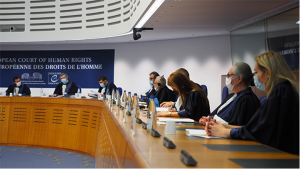
STRASBOURG, France – On October 21, 2020, the Grand Chamber of the European Court of Human Rights (“ECHR”) held a hearing on the case of Denis and Irvine v. Belgium, regarding the release of applicants held in compulsory confinement in Belgium for crimes no longer eligible for detainment under the Compulsory Confinement Act of May 5, 2014. The applicants alleged that their continued confinement constitutes a violation of Articles 5(1) and 5(4) of the European Convention on Human Rights: the right to liberty and security of person and the right to a quick decision on the lawfulness of detention. 

The Grand Chamber during the hearing of Denis and Irvine v. Belgium on October 21, 2020. Photo Courtesy of the ECHR.

The complaint represents an aggregation of separate claims from applicants Jimmy Denis, a Belgian national, and Derek Irvine, a British national, brought to the court on August 21, 2017. Both applicants were placed in compulsory confinement under the Social Protection Act of April 9, 1930—Denis for theft 2007, and Irvine for attempted aggravated burglary in 2001.

The Social Protection Act allows that “trial courts may order the detention of an accused who has committed a serious crime and is suffering from one of the conditions set out in section 1,” including severe mental disturbance, defects, or disorders that make an individual incapable of controlling their actions. The applicants were both evaluated and confined pursuant to these qualifications, a point which they do not argue before the court.

The Compulsory Confinement Act of May 5, 2014, which entered into force in October 2016, restricted the court’s ability to order compulsory confinement only to individuals “who ha[ve] committed a crime or serious offense that has harmed or could have harmed the physical or mental integrity of another person,” and for “whom there is a danger that he or she will commit fresh offenses…on account of his or her mental disorder.” According to the Justice Committee of the House of Representatives, the act was intended to clarify the requisite conditions for compulsory confinement to ensure that minor offenses could no longer result in continuing detainment and to isolate properly those cases for which extended confinement is just.

In accordance with the new legislation, the applicants argue that their compulsory confinement is without legal basis, as the reasons for their incarceration do not meet the updated requirements. They applied to the Belgian courts for immediate trial and release but were denied. Upon their denial, the applicants lodged their complaint with the ECHR.

In the Chamber judgment issued by the ECHR on October 8, 2019, the Court determined that the continued compulsory confinement of the applicants did not qualify as a violation of Article 5(1) or 5(4), as it had not been “arbitrary or manifestly unreasonable” under Belgian law, and “continued to be based on judicial decisions taken under the former social protection legislation.”

Following the unanimous decision of the Chamber Court, the applicants successfully requested that their case be referred to the Grand Chamber. The hearing will aid in determining the retroactive applicability of the Compulsory Confinement Act and the legislative impacts of its amended scope.  

For further information, please see:

European Court of Human Rights – Denis and Irvine v. Belgium, Chamber Judgement – 8 Oct. 2019

European Court of Human Rights – Forthcoming Hearings in October 2020 – 1 Oct. 2020