Police Brutality Protests in Nigeria Continue Despite Being Met with Further Violence

By: Hannah Bennink

Impunity Watch Staff Writer

LAGOS, Nigeria – On October 8th, 2020, protests broke out across 21 states in Nigeria and in other countries around the world in response to a video posted online showing the Nigerian Special Anti-Robbery Squad (SARS) shooting a man they had forcibly removed from a hotel. The overwhelmingly peaceful protests have been met with continued violence by authorities which continues to escalate.
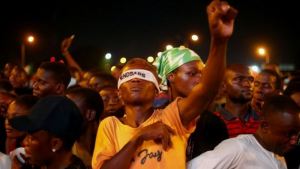
Abuja, the Nigerian capital – #EndSARS Protests in Nigeria Continue Despite Being Met With Police Brutality and Violence. Photo Courtesy of BBC.

Police have used tear gas, water cannons, and live ammunition rounds on protestors.  Gangs that politicians turn a blind eye to or support financially, commonly referred to as sponsored gangs, have also been perpetuating violence against protestors. Hundreds of protestors have been injured and at least 10 are dead, including a 17-year-old who was allegedly tortured to death on Monday.

The Nigerian Government announced on October 11th, 2020, that it would disband the SARS unit which has had been implicated in widespread human rights violations including torture, extortion, and extra-judicial killings since its creation in 1992. The government announced that it will replace the SARS unit with the Special Weapons and Tactics team (SWAT) and that former SARS agents would be ineligible to join. The training of the SWAT team will include instruction on humanitarian laws, police conduct in conflict, and human rights in the use of force, arrest and detention by the International Committee of the Red Cross (ICRC).  

Senate President Ahmad Lawan has called for the protestors to stand down in light of the steps already taken by the government, and due to concerns regarding COVID-19; however, protests show no sign of ending. The protestors are now calling for the release of arrested protestors, justice and adequate compensation for the victims of police brutality at the protests, and the prosecution of the suspected responsible parties.

Amnesty International released a statement on October 15th calling for Nigeria to ensure police were complying with international human rights standards on policing, in particular the UN Code of Conduct for Law Enforcement Officials and the UN Basic Principles on the Use of Force and Firearms by Law Enforcement Officials. Contrary to the government’s multiple commitments to ending human rights violations in the past, Amnesty International has documented at least 82 cases of torture, ill-treatment, and extra-judicial executions in the country between January of 2017 and May of 2020.

The African Commission on Human and Peoples’ Rights released a press statement on October 13th, 2020, expressing concern regarding the excessive use of force by police against the SARS protestors. While the Commission welcomed the dissolution of the SARS unit, it emphasized that the abuses in Nigeria were not unique to SARS and ultimately called on the government to initiate overall reforms to address gaps in policies and laws regulating police conduct.

Violence continues to escalate in Nigeria following the shutdown by protestors in Lagos, the country’s commercial hub, this week and the escape of over 200 prisoners from a state prison. There continue to be reports of heightened police brutality and coordinated attacks on protestors. The conflict has been gaining global attention through internet campaigns like #EndSARS, #EndBadGovernance, #BetterNigeria, and #FixNigeriaNow.

BBC NEWS – End Sars protests: Amnesty warns of ‘escalating attacks’ – 19 Oct. 2020

Reuters – Nigerian Police pledge ICRC training as thousands protest nationwide – 18 Oct. 2020

Human Rights Watch – Nigeria: Crackdown on Police Brutality Protests – 16 Oct. 2020

Associated Press Nigeria’s anti-police brutality protests block major roads 16 Oct. 2020

BBC NEWS Ends Sars protests: Osun governor escapes ‘assassination attempt’ – 18 Oct. 2020
Amnesty International – Nigeria: Authorities must initiate genuine reform of the police – 15 Oct. 2020

African Commission on Human and Peoples’ Rights – Press statement on human rights violations by law enforcement institution in Nigeria – 13 Oct. 2020

ECHR to Review Domestic and International Standards of News and Plurality

By: Jamie McLennan

Impunity Watch Staff Writer

STRASBOURG, France– On October 14, 2020, the Grand Chamber of European Court of Human Rights heard the case NIT S.R.L v. Republic of Moldova after the initial chamber relinquished jurisdiction to the Grand Chamber. According to Article 30 of the ECHR, the chamber in which the case was initially selected, may relinquish their jurisdiction if the issue before the court raised a serious question that requires interpretation of the protocol or prior resolutions by the ECHR.

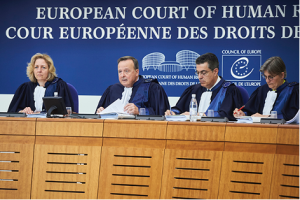
The European Court of Human Rights in Strasbourg, France. Photo Courtesy of the ECHR.

The applicant party, Noile idei televizate SRL, was a private television station located in Moldova since 1996. Beginning in 2004, the station received its license to broadcast nationally and the station allegedly has a close relationship with the Communist Party of Moldova, who held power until 2009. Between 2009-2011, the television station repeatedly broadcasted news that favored the Communist Party and as a result, received multiple sanctions for breaching legislation in Moldova that imposed duties of fairness and neutrality in the news. In particular, the television station was accused of politically biased news, favoring oppositional political parties and promoting fake and biased media. After the television station was sanctioned eleven times by the audio-visual national authority, the television station’s license to operate was withdrawn and the station could no longer publicly broadcast in Moldova since 2012.

In 2013, the television station challenged the sanctions through the court system, but the action was dismissed as unsubstantiated. The Court of Appeal affirmed the decision, stating that the harsh sanctions were likely founded, given that the station refused to comply after many warnings. The television station then sought remedy through the European Court of Human Rights and the Moldovan Government was notified of the application in April of 2018.

Here, the television station believed that they had formal complaints against the Moldovan Government under Article 6 (right to a fair trial), in which the revocation of the licensure was unfairly given due to the television station’s critical attitudes of the Moldovan Government. And, the television station also complained under Article 10 (freedom of expression), in which they argued that domestic law should not be able to impose an obligation of neutrality and fairness on privately owned stations that broadcast publicly. They further alleged that this action would constitute a breach against ownership of their broadcasting network, as stated under Article 1 of Protocol No. 1 (protection of property). They asked the court to review the issues and determine the power balance between a state’s protection of plurality and private enterprises that wish to freely express political messages. The ECHR would have to delineate between domestic and international standards for news and media, determining which area of governance should hold more power. Although the court held an initial hearing on October 14th, the case is still pending judgment before the Grand Chamber.

For further information, please see:

European Court of Human Rights- Forthcoming Hearings in October 2020- 10. Jan. 2020

European Court of Human Rights- Information Note on the Court’s Case Law- Mar. 2020

European Court of Human Rights- Press Release- 3. Sept. 2020

Authorities Owe More: Expansion of the Duty to Protect the Right to Life

By: Anthony B. Emmi

Impunity Watch Staff Writer

STRASBOURG, France – On September 17th, 2020, the European Court of Human Rights (ECHR) issued judgment on the case of Kotilainen v. Finland. The ECHR held that Finnish authorities violated Article 2 (right to life) of the European Convention on Human Rights (the Convention) when they failed to seize a school shooter’s firearm, which he later used to kill nine students and one teacher on September 23, 2008.

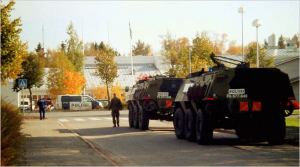
Police Vehicles at the Vocational School Where the Shooting Occurred, 23 Sept. 2008, Kauhajoki, Finland. Photo Courtesy of The New York Times.

The Court’s decision expands on previous case law regarding the obligation of authorities to protect identified persons’ rights to life by creating a general duty of protection. Nineteen relatives of the victims brought the case before the ECHR with the goal of holding the state accountable for allegedly failing to perform their due diligence to protect the lives of the deceased.

Section 92 of Finland’s Firearms Act allows police to seize at will the firearms of people suspected of misusing them. In 2010, domestic courts dismissed a claim of negligent dereliction of duty against the Detective Chief Inspector who interviewed the shooter, Matti Saari, the day before the shooting. Saari had posted troubling material online, including a comment attached to a video of the Columbine High School shooting, which stated, “entertainment as its best.”

The ECHR approached the case from two standpoints: one of the state’s duty to protect lives; and, two the state’s duty of diligence in the protection of public safety. On the duty to protect lives, the Court found that the evidence available to the police at the time did not demonstrate that Saari posed any immediate or specific risk. Thus, the police did not incur a duty to protect the specific lives of those who were killed.

However, the ECHR did find that the state failed to perform its duty of diligence in the protection of public safety. The 6-1 decision turned on whether it would have been reasonable for the authorities to seize the firearm given the circumstances and the inherent risk that a firearm poses to life. The Court stated that because seizure of the firearm would not have interfered with other articles under the Convention, and doubt surrounded Saari’s fitness to own a firearm, the police reasonably could have seized the firearm as a precaution. In failing to do so, the state did not exact its duty of diligence to protect public safety and violated Article 2 of the Convention. On this matter, the Court awarded approximately EUR 30,000 to the household of each applicant, as well as court expenses.

Judge Eicke was the dissenting member of the court. He reasoned the majority had applied a more general standard of due diligence, which extended beyond the duty of protection to specific individuals. He further argued that this decision created the possibility of “regulatory overreach,” which could make it difficult for authorities to comply while comporting with due process. Judge Eicke noted that compliance with this decision may require authorities to continuously supervise those persons licensed to own a firearm in the state.

For further information, please see:

European Court of Human Rights – Case Information Sheet: Finnish authorities failed to take the precautionary measure of seizing a student’s weapon before a school shooting – 17 Sept. 2020

European Court of Human Rights – Case of Kotilainen and Others v. Finland – 17 Sept. 2020

UUTISET – ECHR: Finland violated “right to life” of 2008 school shooting victims – 17 Sept. 2020

UUTISET – Charges Dismissed in School Shooting Case – 29 Jan. 2010

United States Stands against Justice by Issuing Sanctions Against the ICC

By: Hannah Gavin

Impunity Watch Staff Writer

THE HAAG, The Netherlands – This summer United States President Donald Trump issued an executive order leveling sanctions against the International Criminal Court’s lead prosecutor Fatou Bensouda and officials on the court.

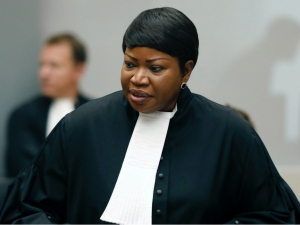
ICC Lead Prosecutor Fatou Bensouda. Photo Courtesy of NPR.

The sanctions were deemed a response to the ICC’s decision to investigate U.S. crimes in Afghanistan since the early 2000s. The ICC’s lead prosecutor asked for an investigation to be opened to examine the U.S.’s role in the country. Specifically, Bensouda wanted to look into the ways in which detainees were interrogated, and whether soldiers had committed war crimes including torture, cruel treatment, and sex crimes. The U.S. use of torture has been under a magnifying glass for decades and was only heightened by several public incidents of torture to detainees in U.S. custody, primarily in the Middle East and U.S. military prisons.   

The sanctions imposed cut off Bensouda and her colleagues from assets in the U.S. as well as from all commercial or financial transactions with U.S. banks and companies. This blow will turn not only American based companies away from the court but will affect the individual’s ability to utilize non-U.S. companies and banks who refuse their service for fear that they may be subject to sanctions for not complying. Sanctions have historically been utilized for terrorists, and to protect international peace and national security. They are not intended to be leveled against prosecutors who are working towards justice for international crimes. In addition, individuals have had severe restrictions placed on them regarding entrance to the U.S. 

This month a group of NGOs, faith-based groups, legal professionals, experts and former government officials released a letter in response to the sanctions. The signatures on the document comprised of 58 of the United States’ most respected organizations, colleges and professionals. They all unequivocally condemned the President’s actions. The group cited their reason for publishing the letter, “[I]t is uniquely dangerous, extreme, and unprecedented to utilize a mechanism designed to penalize criminals, their aiders, and abettors, against an independent judicial institution.” The letter went on to emphasize that the U.S. has placed itself on the side of impunity over justice. This effectively places the U.S. on the world stage against righteousness.  

In the first year of his term, Donald Trump chose the slogan “America First” to represent some of his policies and his ideals for the nation. He has shown this to mean that he protects the America he wants to. Immigrants and “outsiders” are not included. Although his apprehension toward an investigation of U.S. troops is not surprising, it is unsettling. As one of the leading nations in the World, with troops stationed in nearly every country globally, we have a responsibility. If we choose to place ourselves on the world stage as a protector, we have a duty to take responsibility for actions that are contradictory to that. We must stand on the side of justice, or we risk allowing impunity to reign.

For further information, please see:

Human Rights Watch – Non-Governmental Organizations, Faith-Based Groups, Legal Professionals, Experts, and Former Government Officials Unequivocally Oppose U.S. Sanctions Against the International Criminal Court – 21 Sept. 2020

NPR News – Trump Administration Sanctions ICC Prosecutor Investigating Alleged U.S. War Crimes – 2 Sept. 2020

Abd-Al-Rahman Transferred into ICC Custody, Confirmation Hearing Planned for December

By: Christian González

Journal of Global Rights and Organizations, Associate Articles Editor

THE HAGUE, Netherlands – Ali Muhammad Ali Abd-Al-Rahman, an alleged leader of the Janjaweed militia in Sudan and commonly known as “Ali Kushayb”, has been transferred into International Criminal Court (ICC) custody on June 9th, 2020. Charges against Abd-Al-Rahman include various crimes against humanity and war crimes. The confirmation hearing for these charges is scheduled provisionally for December 7th, 2020.

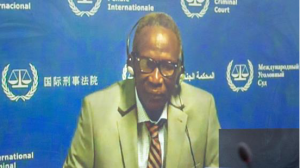
Mr. Abd-Al-Rahman at his first ICC appearance on June 15th, 2020. Photo Courtesy of The ICC.

A Sudanese national, Mr. Abd-Al-Rahman has been accused of leading thousands of Janjaweed (Arabic for “mounted gunman”) soldiers in the Darfur region of western Sudan. The Janjaweed, composed mainly of nomadic tribesmen of Arab descent, had been conducting aggressive raids on villages throughout Darfur in 2003 and 2004. Because the villages targeted were known sources of recruitment for the rebel armies involved in the Second Sudanese Civil War, it is believed that the Janjaweed were supported by the government of Sudan.

Mr. Abd-Al-Rahman’s involvement with the Janjaweed allegedly included acting as a mediator between Janjaweed leadership and the Sudanese government, as well as enlisting, arming, supplying, and funding troops. He has been accused of both ordering troops to commit and personally participating in crimes against humanity and war crimes against civilians. These actions were allegedly conducted in a joint government-Janjaweed counter-insurgency campaign.

Two warrants for arrest against Mr. Abd-Al-Rahman had been issued. The first, issued on April 27th, 2007, lists 50 counts of crime. These crimes were composed of twenty-two counts of crimes against humanity that include deportation, imprisonment, torture, inhumane acts of inflicting serious bodily injury and suffering, and rape; and twenty-eight counts of war crimes that include violence to life and person, outrage upon personal dignity in humiliating and degrading treatment, intentional attacks on a civilian population, pillaging, rape, and destroying or seizing property. These acts were conducted from August 2003 to March 2004 in the towns of Kodoom, Bindisi, Mukjar, and Arawala and constitute violations of articles 25(3)(a) and 25(3)(d) of the Rome Statute respectively. The second warrant, made public on June 11th, 2020, adds three charges of murder and other inhumane acts done in Deleig in March 2004.

After voluntarily turning himself in to authorities in the Central African Republic, Mr. Abd-Al-Rahman was transferred to ICC custody on June 9th, 2020, and on June 15th, 2020 his identity was confirmed at a hearing before Judge Rosario Salvatore Aitala. The judge ensured that Mr. Abd-Al-Rahman was aware of the charges being brought against him. When asked about them, Mr. Abd-Al-Rahman stated that these charges were “untrue.”

The confirmation hearing scheduled for December 7th will be held to determine if there is sufficient evidence to establish substantial grounds of a belief that Mr. Abd-Al-Rahman did indeed commit each of the alleged crimes. If any or all charges are confirmed, the case will move on to the trial phase. Mr. Cyril Laucci is serving as defense counsel for Mr. Abd-Al-Rahman. There is currently no representation for the victims.

For further information, please see:

International Criminal Court – Case Information Sheet: Situation in Darfur, Sudan – 15 June 2020

UN News – Arrest of Sudanese war crimes suspect ‘extremely significant’: UN rights chief – 9 June 2020

Slate – Who Are the Janjaweed? – 22 July 2004

International Criminal Court – Rome Statute of the International Criminal Court – 17 July 1998

Reuters – Sudan war crimes charges are untrue, suspect say – 15 June 2020

YouTube, IntlCriminalCourt – Ali Muhammad Ali-Al-Rahman case: initial appearance, 15 June 2020 ENGLISH – 15 June 2020