Escalating Humanitarian Activist Arrests in Syria: Muna Al-Wadi

Re-posted Courtesy of:
Syrian Network for Human Rights

The Syrian government has issued several releasing decrees which reduce or cancel the prison sentence on most crimes, the last two decrees were issued in May and December in 2012, nonetheless those decrees does not include the humanitarian activists whom should never have been arrested or prosecuted in the first place; every day there is increasing news about activists got killed under torture or due to hunger or suffocation inside prisons lack the simplest standards of basic life.

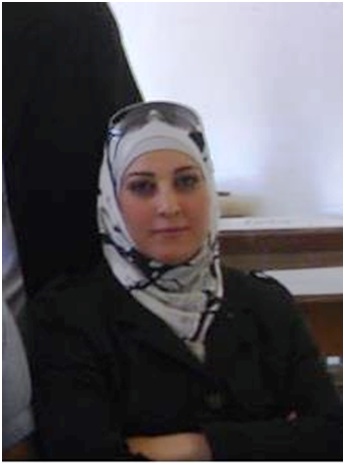
Muna Al-Wadi, an activist arrested in November for her humanitarian work.  (Photo Courtesy of Syrian Network for Human Rights)

Muna Al-Wadi, who is a student in college, is one of those prisoners who are located in far place from the outside world where the worst violations take place far away from any independent UN observers. Muna’s only crime was helping others.

On 26-11-2012 Muna got arrested while she was in her vehicle at a checkpoint for vehicle security which operates for Palestine security branch (according to many local sources) in Der-Al-Assafeer that is located in the eastern Ghouta in Rural Damascus, the cause of arrest was that the security forces found a bag of food she meant to deliver to a affected family, also Muna’s car was confiscated too at the same checkpoint.

Muna has been taken to Palestine security branch in Damascus, and she remained there until she was transferred to the air force intelligence branch in Al-Moza a few days ago according to the testimony of former prisoners, her family weren’t able to contact her or see her.

Name: Muna Al-Wadi also known as (Yaman)
Father name: Adnan
Mother name: Fatima
Date of birth: 1976
Place of birth: Daraa- Al-Harra town
Work: electrical engineering-majored in Damascus University
Social status: Married

The SNHR has documented the arrest and harassment against the humanitarian activists, doctors, and students while they were trying to do their humanitarian duty by the Syrian government, those actions are considered violations of the Syrian government commitment to the international law which requires enabling and facilitating the necessary aids to be distributed to the affected civilians in a fair manner, and to guarantee the freedom of movement for the humanitarian activists.

From this standpoint the SNHR demands the Syrian government to release immediately Muna and all the humanitarian activists, also the SNHR demands the international community to take effective steps and press on the Syrian government in every possible way in order to clarify the fate of Muna and all the prisoners and the enforced disappeared victims.


الشبكة السورية لحقوق الإنسان

Syrian Network for Human Rights
http://www.syrianhr.org/
https://www.facebook.com/syrianhr

Peru Experiences Recent Upheaval in Latest Mining Protests

By Pearl Rimon
Impunity Watch Reporter, South America

LIMA, Peru – Peru has been experiencing clashes for the last 18 months in the Cajamarca region. Four people were shot and killed and more than 20 wounded in the protests surrounding Newmont’s $5 billion Conga mine due to taking water away from the villages and farms.

Peruvians hold a demonstration at the Conga mine. (Photo Courtesy of Financial Times)

“The only thing the people want is water for families, but the mining companies want to take it. And soldiers will kill if you get in the way”, said Adelaida Tabaco, the widow of a man killed in the most recent clash.

In order to build Conga, two lakes will be dug for the copper and ore while two other lakes will be filled with the debris from separating the metals from ore. Conga is projected to produce 680,000 ounces of gold and 106,000 tons of copper yearly.

The conflict spans the continent of South America, pitting South American governments paired with foreign companies against citizens who are at risk of losing their homes due to their water supply being used for industrial causes. South America is seeing a trend with leaders accelerating the approval of water-use projects like the Conga mine. Peru is on track to expand 6% in GDP this year due to gold, silver and copper mine investments.

The majority of Peru’s mines including Conga are located in the Andes where they experience nearly nonexistent rainfall from May to October. According to the UN, growing populations have decreased the amount of usable water per person by 1/5 since 1992 in Peru.

In the areas of the country where mines are expanding, the water supply is already in short supply according to the National Water Authority. The Peruvian government must spend $394 million on canals and reservoirs by 2016 for use during the annual water shortages that occur during the dry seasons.

The conflict over the limited water resources has become deadly. Since 2010, fifteen people have been killed in protests against the government for allowing mining companies to use the water resources. This water shortage has made it difficult for substantial farming to occur. The protests began in April 2010 against Southern Copper Corporation’s mine near the Chile-Peru border. This escalated the next year by two people dying in protests against water use by a Switzerland-based company’s mine.

The constant hostility due to the mining operations has been an issue for President Humala since his slight margin of victory in 2011.

People in the Andes area are already struggling with water shortage due to the rainfall being below average for two years.


For more information, please see:

Bloomberg News — South Americans Face Upheaval in Deadly Water Battles – 13 Feb 2013

Financial Times — Mining: Andean concessions – 05 Feb 2013

Vancouver Sun — Manthorpe: Peru battles widespread local hostility to mining projects – 03 Feb 2013

Human Rights Watch — Peru: Letter to Presidente Ollanta Humala – 20 September 2012

OTP Briefing – Issue #134 and Issue #135

Office of the Prosecutor: 10 November 2012 – 19 December 2012


Office of the Prosecutor: 20 December  2012 – 28 January 2013

European Lawmakers Call on the EU Foreign Policy Chief to Implement Magnitsky Sanctions

Press Release
Hermitage Capital

13 February 2013 – Ahead of the upcoming posthumous trial in Russia of Sergei Magnitsky, scheduled in Moscow for next Monday, European lawmakers called upon the European Commission Vice-President Catherine Ashton to implement EU-wide visa sanctions and asset freezes against Russian officials implicated in the Magnitsky case. The recommendation to introduce visa sanctions and asset freezes was adopted by the European Parliament last October in an overwhelming vote in favor.

The broad parliamentary support for this recommendation reflects the widespread indignation, in Russia and around the world, over the arrest of Mr Magnitsky, the inhuman conditions of his detention and the serious allegations surrounding his subsequent death in custody,” said the group of lawmakers on behalf of the Alliance of Liberals and Democrats for Europe in the European Parliament.

The continuing posthumous prosecution of Sergei Magnitsky is a further violation of international and Russian law and clearly indicates the malfunctioning of the Russian criminal justice system and the systemic failure of the Russian state to protect its citizens,” wrote the European parliamentarians Guy Verhofstadt, Kristiina Ojuland, Marietje Schaake, Alexander Graf Lambsdorff in their formal address posted on the European Parliament’s website.

While recognising that visa restrictions and other restrictive measures are not traditional judicial sanctions per se but constitute a political signal of the EU’s concern to a larger target audience and thus remain a necessary and legitimate foreign policy tool, does the VP/HR [vice-president of the European Commission] intend to raise this matter at the Foreign Affairs Council?” asked the European parliamentarians writing on behalf of the ALDE group in the European Parliament.

Parliamentarians are calling for answers on the position of Catherine Ashton, EU’s High Representative for Foreign Affairs and Security Policy, on the “need to establish a common EU list of officials responsible for the death of Sergei Magnitsky and for the subsequent judicial cover-up, to impose and implement an EU-wide visa ban on these officials and to freeze any financial assets they or their immediate family may hold inside the European Union.”


For further information please contact:

Hermitage Capital
Phone:             +44 207 440 1777
Email:              info@lawandorderinrussia.org
Website:          http://lawandorderinrussia.org
Facebook:        http://on.fb.me/hvIuVI
Twitter:           @KatieFisher__
Livejournal:     //hermitagecap.livejournal.com/

See Question from ALDE on European Parliament website:
http://www.europarl.europa.eu/sides/getDoc.do?type=OQ&reference=O-2013-000010&format=XML&language=EN

U.S. Senate Renews Violence Against Women Act with Added Protections

By Mark O’Brien
Impunity Watch Reporter, North America

WASHINGTON, United States — By a more than 3-to-1 margin, U.S. senators voted to reauthorize the Violence Against Women Act on Tuesday, expanding the anti-domestic-violence protections to include lesbians, immigrants, and Native American women for the first time.

The U.S. Senate voted on Tuesday to reauthorize the Violence Against Women Act, sponsored by Sen. Patrick Leahy (D–VT). The bill needs House approval before it can be signed into law. (Photo Courtesy of Women’s eNews)

The 78-to-22 vote authorizes $659 million during the next five years for various programs, including more attention to sexual assault prevention and efforts at reducing a backlog in processing rape kits.  The issue now moves to the House of Representatives before the law takes effect.

Dr. Dara Richardson-Heron, CEO of the YWCA, released a press statement saying that House members should followed the Senate’s lead “so that YWCAs across the country can continue to provide safe harbor for the many women who seek protection from violence.”

Sarah Schmidt, Chairwoman of the Lesbian Superpac, went a step further, calling on supporters to lobby their representative.

“This is a hugely important moment for women and LGBT people across the country,” Schmidt said in an email to Women’s eNews.  “We all deserve protections against violence.”

The act expired in 2011, which stalled efforts to strengthen its federal programs.  While both chambers of Congress passed renewal bills last year, the two sides were unable to reach a compromise bill that could become law.

This year, House Republicans appear more willing to ensure the issue succeeds.  House Majority Leader Eric Cantor (R­–VA) has led an effort to negotiate the House bill, according to the Associated Press.

Among those who have reached out Cantor is Vice President Joe Biden.  In 1994, Biden—then a senator from Delaware—successfully helped negotiate the original Violence Against Women Act.

An apparent sticking point with the renewal is whether tribal courts will be allowed to prosecute non-natives who are accused of assaulting Native American women on reservations.  Republican senators argued that would be unconstitutional, but their efforts were defeated.  But observers say this issue could be a hurdle still, as lawmakers try to reconcile the Senate version of the bill with a House version that is likely to pass.

All 20 women members of the Senate voted for the VAWA bill, sponsored by Sen. Patrick Leahy (D–VT), which also drew support from 23 Republican votes.  The Senate also voted 93 to 5 to include a provision that targets human trafficking, and 100 to 0 to include a provision that ensures child sex trafficking victims are eligible for grant assistance.

For further information, please see:

All Voices — Violence Against Women Act Reauthorization Clears Senate in Significant Gender-Split Vote — 12 February 2013

Huffington Post — Senate Approves Anti-Violence Against Women Act — 12 February 2013

Women eNews — VAWA Passes Senate, Turning Attention to House — 12 February 2013

The Paramus Post — Rape Survivor Demands Congress Extend the Violence Against Women Act Immediately — 11 February 2013