“Attacks on the Press” in the Middle East

By Justin Dorman
Impunity Watch Reporter, Middle East

The New York-based Committee to Protect Journalists (CPJ) just released its annual assessment on how press freedom is being treated throughout the world; and, the results were not pretty. The report details both the censorship of information, as well as the treatment of individual reporters. A new edition to the report included a “risk list” of ten places where press freedoms were particularly bad in 2012. Three such countries, Syria, Turkey, and Iran, are located in the Middle East.

In no previous time have journalists’ lives been at greater risk. (Photo Courtesy of the Committee to Protect Journalists)

This past year was not the safest of years to be a journalist. Globally, the number of journalists who were imprisoned in 2012 reached an all time high. Two hundred and thirty two journalists were reportedly detained, which is an increase of fifty three for the year before.

Seventy journalists had died while actively reporting in the past year which is a forty-three percent increase from 2011. CPJ’s research has came up with the harrowing figure that over the past two decades, one journalist is killed while working, once every eight days. These figures only include the known dead. There are at least thirty-five more journalists who are currently missing.

At this moment, Syria is the most dangerous place in the world to be a journalist. In the past year, at least twenty-eight journalist have been killed, while another two are missing.

While not as many journalists have been killed in Turkey; in no other place have more journalists been imprisoned. Forty-nine journalists were jailed in 2012. Turkey’s government utilizes laws which restrict the press’ freedom of speech, in order to curtail dissent.

Only four less journalists were imprisoned in Iran, however, the likelihood of their mistreatment during detention was far greater than anywhere else. Reporters and editors faced torture, solitary confinement, and deprivation of medical care. Those who were formally detained generally were arrested under some anti-state charge.

CPJ deputy director Robert Mahoney stated that, “when journalists are silenced, whether through violence or laws, we all stand to lose because perpetrators are able to obscure misdeeds, silence dissent, and disempower citizens.”

He added, “the battle to control information is an assault on public accountability that cannot go unchallenged. Governments must prosecute perpetrators and stop those seeking to incapacitate public oversight by blunting critical and probing reporting.”

Not only does limitation on freedom of speech violate international human rights law in its own regard, but the continuance of these attacks on the press serve to continue the existence of impunity in the Middle East.

The CPJ has been releasing its annual report since 1990.

For further information, please see:

Guardian – Journalism Under Attack Across the Globe Imperils Press Freedom – 14 February 2013

Huffington Post – CPJ Attacks on the Press Report: Number of Journalists Imprisoned, Killed Spiked in 2012 – 14 February 2013

Washington Post – Glance at Attacks on the Press – 14 February 2013

CPJ – Attacks on the Press: Journalism on the Front Lines in 2012

WOZA Protesters Beaten and Detained During Anti-Constitution Demo

By Ryan Aliman
Impunity Watch, Africa

HARARE, Zimbabwe – Several members of the Women of Zimbabwe Arise (WOZA) were assaulted and detained after two consecutive protests against the new draft constitution.

More than 200 WOZA members gathered outside the police station as they demanded to be arrested in solidarity with their colleagues. (Photo courtesy of The Zimbabwean)

On February 13, WOZA members in Harare marched towards the parliament to stage a demonstration against the draft constitution.

Believing that the draft constitution is a “result of negotiations behind closed doors and a deal that suits the principals and the political parties in the inclusive government”, around 50 women filled the streets and rallied against its enactment. “… it was written for a current political climate and not for the future generation. A constitution is supposed to be written by the people because they should determine how they want to be governed. It is their role to give the rule to the rulers,” read some of the flyers the WOZA members were distributing during their march.

However, as they were approaching the parliament building, they were blocked by police officers. In an attempt to disperse the group, the police fired tear gas at the WOZA members. Afterwards, they arrested a number of protestors. Reports say that the police also used baton sticks, locally known as “sjamboks”, to beat up the detainees as they were being bundled into police vehicles.

The arrested WOZA members were eventually released without charge on the same day. But according to Dr. Tarisai Mutangi from the Zimbabwe Lawyers for Human Rights, a number of women sustained major injuries from the assault.

The following day, members from the Bulawayo chapter held their annual Valentine’s Day protest. With the theme – One Love, the protest was set to be staged outside the police Headquarters in 9th Avenue, at Southampton House. It aimed to raise awareness about police brutality and to urge the police to respond to the group’s formal complaints about arbitrary arrests and the police’s use of indiscriminate violence against protesters. Although the march began smoothly and peacefully, as the members neared the venue, police officers started chasing them off with baton sticks. Once again, WOZA members were brought into custody without charge and released on the same day. However, according to WOZA leader Jennifer Williams, unlike the arrests the previous day, six of their male co-members and one female co-member remain in detention.

Amnesty International’s southern Africa director Noel Kututwa condemned the violent treatment of WOZA members by the police forces. “This most recent incident sounds yet another alarm bell for the exercise of internationally guaranteed rights to freedom of expression, association and peaceful assembly in advance of the referendum on a new constitution and elections later this year,” Kututwa stated. “Human rights violations by the police, including arbitrary arrests and raids at offices of human rights defenders, go against the calls for tolerance made by President Mugabe and Prime Minister Tsvangirai,” he added.


For further information, please see:

WOZA – 195 arrested during Valentines Day protest, 50 beaten, Bertha remains in custody – 15 February 2013

All Africa – Zimbabwe: Woza Valentine’s Day Protestors Beaten And Arrested in Bulawayo – 14 February 2013

Amnesty International – Zimbabwe: Eight women arrested after handing out teddy bears and roses in peaceful protest – 14 February 2013

The Zimbabwean – Police arrest and assault WOZA members – 14 February 2013

ZimEye – Woza Woman Strips Naked Before Police, 180 Arrested – 14 February

SW Radio Africa – WOZA women beaten & detained after anti-constitution demo – 13 February 2013


Zimbabwe Prepares for New Constitutional Reform

By Heba Girgis
Impunity Watch Reporter, Africa

HARARE, Zimbabwe—Recent reports from the country of Zimbabwe indicate the country’s intent in preparing to hold major constitutional reform in March of this year.

Threats of violence, however, surround the upcoming votes and elections. (Photo Courtesy of TRNS)

Zimbabwe’s constitutional affairs minister says that a referendum on a new constitution has already been “tentatively” set for March 16, 2013. Following this referendum, the country will partake in elections later in the year to end the country’s current shaky coalition government.

The nearness of this March vote, however, has raised some suspicion among activist groups that Zimbabwe voters will not have enough time to read and become informed on the stances of this new constitution, a document the government has slated for a print run of 90,000 copies for distribution to Zimbabwe’s six million registered voters. This plan was announced at a half day public awareness workshop for members of parliament.

The Constitutional and Parliamentary Affairs Minister Eric Matinenga said, “On my way from Mvurwi (in Mashonaland Central) I learnt that the Office of the President was looking for me. I was then advised through the Minister who stood in for me at that meeting that the principals wanted to convey to me that tentatively the referendum will be held on the 16th of March.”

Matinenga hopes to have a two-day referendum in order to allow people to express their opinions. He commented further saying, “I am trying to gain audience with the powers that be and try to argue with them for a two-day referendum.” He also noted that this draft Constitution would be publicized, for “any document of this nature must be officially publicized.” This explains the 90,000 copies ready for distribution.

However, currently the voting is scheduled for just one day. Advocacy groups expressed concern that such a quick polling period prevents adequate voter education on the new rewritten constitution.

The new document was just completed on February 6, after three years of debates and disputes. Democratic reforms to the constitution were a key demand of the country’s regional mediators after the violent and disputed elections that took place in 2008.

Finance Minister Tendai Biti told members of Parliament that the United Nations had responded to the government’s request for funds in order to finance the referendum and to keep harmonized polls for the vote.


For further information, please see:

ABC News – Zimbabwe Sets March 16 Vote Date – 14 February 2013

AllAfrica – Referendum Date Set – 14 February 2013

Fox News – Zimbabwe Sets March 14 For Constitution Referendum Vote – 14 February 2013

TRNS – Zimbabwe and Kenya Brace for Major Elections – 14 February 2013

Teenage Boy Killed in Bahrain Protest

By Ali Al-Bassam
Impunity Watch Reporter, Middle East

MANAMA, Bahrain — A teenager was killed on Thursday morning while participating in a protest that took place in the village of Daih.  The protest itself took place during the second anniversary of the demonstrations for democratic reforms.

A riot in the village of Daih resulted in the death of a teenager when he was shot by police forces. (Photo Courtesy of Al Jazeera)

Bahrain’s Interior Ministry confirmed via Twitter that a person had died, but offered no further details beyond this.  The Interior Ministry tweet stated that “Operations Room received call from SMC [Salmaniya Medical Complex, the country’s largest hospital] reportain an injured individual pronounced dead.”  Al Wefaq,Bahrain’s largest opposition group, said in a report that the deceased teenager was 16 year old Hussain al-Jaziri, and that he was killed by shotgun fire at close range.  Al Wefaq’s report stated that al-Jaziri sustained a serious injury to his stomach.”

Throughout the villages of Bahrain, clashes occurred after several hundred demonstrators, mostly comprised of Shi’ite youths, blocked the roads to Manama and hurled stones and firebombs towards police forces.  Protesters reported that teargas was used in several locations.  Three photojournalists were arrested while reporting in Daih.

The current clashes are the most violent in recent months and have the potential to mar talks that were initiated last Sunday between mostly Shi’ite Muslim opposition groups and the Sunni dominated government in an effort to end the political deadlock that has dominated Bahraini politics.

The Chief of Public Security, Major-General Tariq Hassan al-Hassan, issued a statement reporting that “[t]he worst clashes occurred in Daih where around 300 people at around 8 am attacked the security men stationed there to protect the area,” he said.  Al-Hassan also mentioned in his reports that Police forces in Daih had to take action since they “had come under attack from rioters with rocks, steel rods, and Molotov cocktails. Warning shots were fired but failed to disperse the advancing crowd who continued their attack. Officers discharged birdshot to defend themselves.”

Al-Hassan said that he initiated an investigation, and intends to quiz several members of the unit involved in the incident.  Al-Hassan also pleaded to demonstrators to not use al-Jaziri’s death as means to commit more violence.  “I urge all citizens not to heed the calls to exploit this death to undermine public order and cause further loss of life and property,” he said.

Al Wefaq says that the death of al-Jaziri “exacerbated emotions” for demonstrators throughout the country who participated in protests.  It has called for a massive demonstration to take part on Friday morning, requesting everyone to take part.

For further information, please see:

Al Jazeera — ‘Teenager Killed’ in Bahrain Protest — 14 February 2013

BBC News — Teenager Killed in Bahrain Anniversary Protests — 14 February 2013

Gulf News — Teenager Killed as Clashes Erupt in Bahrain — 14 February 2013

Reuters — Teen Killed in Protests on Bahrain Revolt Anniversary — 14 February 2013

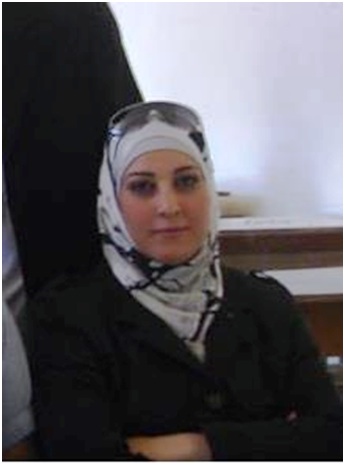
Escalating Humanitarian Activist Arrests in Syria: Muna Al-Wadi

Re-posted Courtesy of:
Syrian Network for Human Rights

The Syrian government has issued several releasing decrees which reduce or cancel the prison sentence on most crimes, the last two decrees were issued in May and December in 2012, nonetheless those decrees does not include the humanitarian activists whom should never have been arrested or prosecuted in the first place; every day there is increasing news about activists got killed under torture or due to hunger or suffocation inside prisons lack the simplest standards of basic life.

Muna Al-Wadi, an activist arrested in November for her humanitarian work.  (Photo Courtesy of Syrian Network for Human Rights)

Muna Al-Wadi, who is a student in college, is one of those prisoners who are located in far place from the outside world where the worst violations take place far away from any independent UN observers. Muna’s only crime was helping others.

On 26-11-2012 Muna got arrested while she was in her vehicle at a checkpoint for vehicle security which operates for Palestine security branch (according to many local sources) in Der-Al-Assafeer that is located in the eastern Ghouta in Rural Damascus, the cause of arrest was that the security forces found a bag of food she meant to deliver to a affected family, also Muna’s car was confiscated too at the same checkpoint.

Muna has been taken to Palestine security branch in Damascus, and she remained there until she was transferred to the air force intelligence branch in Al-Moza a few days ago according to the testimony of former prisoners, her family weren’t able to contact her or see her.

Name: Muna Al-Wadi also known as (Yaman)
Father name: Adnan
Mother name: Fatima
Date of birth: 1976
Place of birth: Daraa- Al-Harra town
Work: electrical engineering-majored in Damascus University
Social status: Married

The SNHR has documented the arrest and harassment against the humanitarian activists, doctors, and students while they were trying to do their humanitarian duty by the Syrian government, those actions are considered violations of the Syrian government commitment to the international law which requires enabling and facilitating the necessary aids to be distributed to the affected civilians in a fair manner, and to guarantee the freedom of movement for the humanitarian activists.

From this standpoint the SNHR demands the Syrian government to release immediately Muna and all the humanitarian activists, also the SNHR demands the international community to take effective steps and press on the Syrian government in every possible way in order to clarify the fate of Muna and all the prisoners and the enforced disappeared victims.

—
الشبكة السورية لحقوق الإنسان

Syrian Network for Human Rights
http://www.syrianhr.org/
https://www.facebook.com/syrianhr