Uncategorized

Defying Strasbourg: Kavala v. Türkiye and the Enforcement Crisis in European Human Rights Law

By: Abigail Wilcher

Journal of Global Rights and Organizations, Associate Articles Editor

Strasbourg, France – Osman Kaval (Mr. Kaval), a prominent businessman and human rights advocate, remains unlawfully detained despite two rulings from the European Court of Human Rights declaring his detention arbitrary and politically motivated.

Osman Kavala is seen at European Parliament headquarters in Brussels, Belgium, on December 11, 2014. Photo Courtesy of CNN.

Mr. Kaval is well-known for his involvement in numerous civil society initiatives. Mr. Kaval was arrested in Istanbul in 2017 and placed in pre-trial detention one month after his arrest. Mr. Kaval faced criminal charges related to his alleged participation in the mass protests in the 2013 Gezi protests and the attempted coup on July 15, 2016. Mr. Kaval is serving an aggravated life sentence in Marmara Prison for attempting to overthrow the government. Currently, Mr. Kaval is serving an aggravated life sentence in Marmara Prison, along with other high-profile prisoners, for attempting to overthrow the government.

After unsuccessful attempts to challenge the proceedings in domestic courts, Mr. Kaval appealed to the European Court of Human Rights. In 2019, the Court determined that his detention was arbitrary and politically driven, finding that he was detained for exercising fundamental human rights. Further, the Court found that Turkish authorities aimed to silence him. However, despite this judgment and a subsequent European Court of Human Rights decision in 2022 regarding Turkey’s failure to implement the 2019 ruling, Mr. Kaval was convicted and sentenced to life imprisonment.

Mr. Kavala has since filed a second application to the European Court of Human Rights, alleging violations of rights under numerous Articles of the European Convention on Human Rights. Specifically, Mr Kavala argues that his rights under the European Convention on Human Rights Articles 3 (prohibition of inhuman or degrading treatment), 5 (right to liberty and security), 6 (right to a fair hearing), 7 (no punishment without law), 10 (freedom of expression) and 11 (freedom of assembly and association, taken together with Article 18 (limitation on use of restrictions on rights) have been violated as a result of the continuing arbitrary and politically motivated deprivation of his liberty which breached the terms of the ECtHR’s 2019 judgment.

The European Court of Human Rights will hold a Grand Chamber Hearing to review Mr. Kaval’s continued detention following the Court’s 2019 decision ordering his immediate release. The proceedings will address whether Turkey’s refusal to comply with that judgment, as well as Turkey’s later imposition of a life sentence in 2022, constitutes ongoing violations of Mr. Kaval’s rights. Mr. Kaval’s continued imprisonment illustrates the broader systemic failures in Turkey’s legal system by using excessive and prolonged detention. Furthermore, Osman Kaval’s imprisonment has become a defining test of whether the European Court of Human Rights’ judgements carry meaningful authority when member states fail to comply with its orders.


For more information:

Türkiye – Statement by the Spokesperson on ECtHR ruling against Türkiye in the Kavala Case (Nov. 7, 2022)  

Kavala v Türkiye (Third Party Intervention)  
ECHR – Case of Kavala v. Türkiye (No. 2): a Six-Week Deadline is Set for Submitting Requests for Third-Party Intervention (Dec. 12, 2025)  

Türkiye: Osman Kavala Marks 7 Years Behind Bars Wrongly Detained Rights Defender Awaits New European Court Ruling (Nov. 1, 2024)   

Jailed Since 2017, Kavala says Turkish Government Made an Example of Him to Intimidate Activists (Feb. 25, 2026)  


March 2025 Review: Ghana’s Former Chief Justice Removal and her Appeal before Regional African Court.

By: Spencer Kwabena Boateng Mensah 

Impunity Watch News Staff Writer 

ACCRA GHANA & ABUJA NIGERIA – In the long constitutional history of Ghana, few episodes have generated as much legal and political debate as the removal of former Chief Justice Gertrude Araba Esaaba Sackey Torkornoo. 

The controversy, which began with petitions alleging misconduct in early 2025, quickly expanded into a complex legal saga spanning domestic courts and the ECOWAS Community Court of Justice in Abuja. Nearly two years after the events that triggered the dispute, the case remains a reference point in discussions about judicial independence, constitutional procedure and the limits of executive authority. 

Justice Torkornoo assumed office as Ghana’s 15th Chief Justice on 12 June 2023, following her nomination by then-president Nana Addo Dankwa Akufo-Addo and approval by Parliament. 

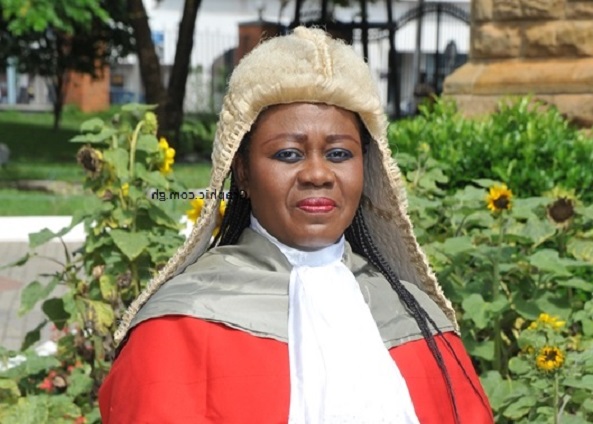
Former Chief Justice of the Republic of Ghana, Gertrude Araba Esaaba Sackey Torkornoo Photo Courtesy: Graphic Online

Her elevation marked another milestone for women in the judiciary—she became the third woman to lead the country’s Supreme Court since the beginning of the Fourth Republic. 

For nearly two years, her tenure appeared relatively stable. That changed in March 2025. 

On 25 March 2025, three petitions seeking her removal were submitted to President John Dramani Mahama. The petitions accused the Chief Justice of administrative misconduct and irregularities in the management of judicial resources. 

Under Article 146 of Ghana’s 1992 Constitution, the removal of a superior court judge—including the Chief Justice—follows a defined procedure. The president must consult the Council of State of Ghana and determine whether the petitions disclose a prima facie case before appointing an investigative committee. 

After reviewing the petitions and consulting the Council of State, the president announced on 22 April 2025 that such a prima facie case existed. Justice Torkornoo was suspended pending an investigation by a five-member committee. 

The most senior justice of the Supreme Court of Ghana, Paul Baffoe-Bonnie, stepped in as acting Chief Justice. 

The First Legal Challenges 

The suspension immediately triggered litigation. 

One of the earliest challenges came from legislator Vincent Ekow Assafuah, who asked the Supreme Court to halt the removal process. His argument centered on whether the president had followed the correct constitutional procedure before determining that a prima facie case existed. 

On 6 May 2025, the Supreme Court dismissed the application, allowing the process to continue. 

A second challenge soon followed, again questioning the legality of the suspension and the committee proceedings. On 21 May 2025, the Supreme Court rejected that challenge as well. 

These rulings cleared the way for the investigative committee to proceed with hearings. 

Inside the Investigation 

The committee began its hearings on 15 May 2025, meeting regularly to examine the allegations contained in the petitions. 

Because Article 146 proceedings are held in camera, much of the investigation unfolded outside the public eye. Nonetheless, the process generated intense public debate and scrutiny. 

Justice Torkornoo herself publicly criticized the proceedings during a national address on 25 June 2025, describing what she believed to be fundamental procedural flaws. 

“The perversion of law, rules and due process… are driving the proceedings,” she said at the time, arguing that the investigation had strayed from constitutional standards. 

Turning to the Regional Court 

While the committee hearings continued in Ghana, the dispute also reached the regional level. 

On 4 July 2025, Justice Torkornoo filed a case against the Ghanaian state at the ECOWAS Community Court of Justice. The application alleged violations of her rights under regional human-rights law and argued that the suspension prevented her from carrying out the constitutional duties of her office. She sought reinstatement or other relief and $10 million in damages.  

Her legal team asked the court to declare that Ghana had breached its obligations and to grant remedies that could include restoration of her judicial status or compensation. 

The filing added an international dimension to a dispute already dominating Ghana’s constitutional landscape. 

The Historic Removal 

The committee eventually completed its investigation and submitted its report to the president. 

On 1 September 2025, President Mahama announced that he had accepted the committee’s recommendation and removed Justice Torkornoo from office for “stated misbehavior.” 

The decision marked an unprecedented moment: no sitting chief justice had previously been removed through the Article 146 procedure in Ghana’s Fourth Republic. 

For supporters of the process, the decision demonstrated that constitutional accountability mechanisms could be applied even to the judiciary’s highest office. Critics, however, warned that the episode risked undermining public confidence in judicial independence. 

Litigation Continues 

The removal did not end the legal battle. 

On 17 September 2025, Justice Torkornoo filed a new challenge at the High Court in Accra, seeking judicial review of the decision to remove her. The case questioned whether the investigative committee and the president had strictly complied with constitutional requirements. 

Meanwhile, the ECOWAS court case continued to move through preliminary stages in Abuja. 

Legal observers pointed out that while the ECOWAS court can determine whether a state violated international human-rights obligations, it cannot directly overturn decisions made under a country’s constitution. Instead, the court can issue declaratory judgments and order compensation if violations are found. 

Beyond One Case 

Even as the legal proceedings continued, Ghana’s political institutions moved forward with filling the vacancy in the judiciary’s top office. Parliament began considering the nomination of Justice Paul Baffoe-Bonnie as substantive Chief Justice. 

The episode nevertheless left a lasting imprint on Ghana’s constitutional discourse. 

For scholars and legal practitioners, the Torkornoo affair has become a case study in how constitutional removal mechanisms operate—and how fragile the balance between judicial independence and accountability can be. 

A year after the first petitions were filed, the dispute continues to echo in courtrooms, legal journals and public debates across West Africa. 

Key ECOWAS Court Decisions 

  1. Interim Measures Request – Dismissed 

On 19th November 2025, the ECOWAS Court dismissed her application for provisional measures, which sought to halt the investigation and removal process while the case was pending. 

The court held that she failed to demonstrate urgency or imminent irreparable harm, partly because she filed the request months after the suspension.  

However, the court acknowledged that the case raised a prima facie human-rights issue, meaning the main lawsuit could proceed.  

  1. Amendment of the Case – Granted 

 On 30th January 2026, the ECOWAS Court granted Torkornoo permission to amend her claim so that it explicitly challenges not only her suspension but also her final removal from office.  

The court rejected Ghana’s objection and directed the government to file an amended defence within 30 days responding to the expanded allegations.  

Present Legal Position  March 2026 

At the moment, the case is still pending before the ECOWAS Court as only procedural rulings have been issued. No final judgment on the merits has been delivered and Ghana has been ordered to respond to the amended claims. 


For further information, please see:  

Ghana’s President Removes Country’s Chief Justice after Investigation -September 1, 2025 

ECOWAS Court Dismisses Former CJ Torkornoos Bid to Halt Investigative Committees Work – November 19, 2025

Ghana Dispatch: Regional African Court Orders Ghana to Respond to Alleged Human Rights Violations – December 28, 2025 

Merits Hearings End in ICJ Genocide Case Between The Gambia and Myanmar

By: Caitlin Becker 

Journal of Global Rights and Organizations, Associate Articles Editor 

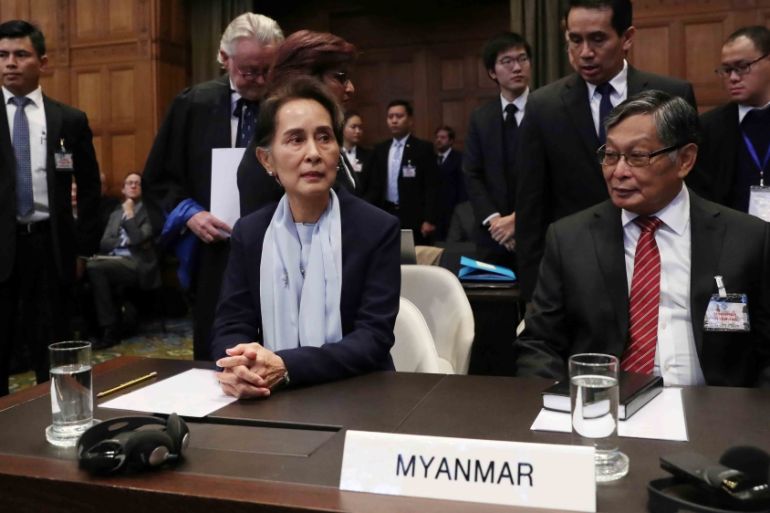
THE HAGUE, Netherlands – On January 29, 2026, the International Court of Justice (ICJ) concluded public hearings on the merits for the case of The Gambia v. Myanmar. The Court now enters deliberations, which will concern an evaluation of the application of the Convention on the Prevention and Punishment of the Crime of Genocide. 

Myanmar leader, Aung San Suu Kyi, attends ICJ hearing. Photo Courtesy of Reuters/Yves Herman

In 2019, The Gambia brought a case before the ICJ, alleging Myanmar was committing genocide against members of the Rohingya, a distinct minority group residing in Myanmar’s Rakhine State, in violation of the Genocide Convention. Eleven states have intervened in the case since it was initiated by The Gambia.  

The Gambia alleges that Myanmar has subjected the Rohingya to persecution since late 1989. Since then, the Rohingya have been subject to restrictions on the right to marry and freedom of movement; a systematic hate campaign aimed at dehumanizing the group; and clearance operations. These operations involved the systematic detention, torture, assault, and killing of members of the Rohingya by state police forces. 

Provisional measures were granted in by the ICJ in January 2020, calling on Myanmar to take action to prevent all violations of the Genocide Convention within its territory, and to ensure the preservation of evidence related to the allegations. The order also called for compliance reports every six months. 

Public hearings on the merits opened on January 12, 2026. It involved two rounds of oral argument, as well as closed sessions where witnesses testified. Three eyewitnesses lived in villages where clearance operations had occurred. Alongside these testimonies, The Gambia relied in part on expert testimony and information from the United Nation’s Report of the Detailed Findings of the Independent International Fact-Finding Mission on Myanmar. 

Counsel appearing on behalf of Myanmar, Ko Ko Hlaing, called the United Nation’s report a “condemnation without trial,” and “neither reliable nor objective.” Myanmar’s case, in part, asserted that the clearance operations were counter-terrorism operations, in response to attacks by the Arakan Rohingya Salvation Army, a Rohingya insurgent group operating in the Rakhine State. Myanmar does not deny that people were killed, only denying that this killing was done with a genocidal intent. 

It is unlikely that the results of this case will be announced anytime soon, as deliberations at the ICJ usually last between three and nine months. However, this case has been called a landmark moment in international law and human rights. It marks the first time in ICJ history that a country without any direct connection to the alleged crimes has brought a case to enforce the Genocide Convention. Importantly, the outcome of this case will have a direct impact on other cases pending before the ICJ, including South Africa’s genocide case against Israel. 

For further information, please see: 

Human Rights Watch – Developments in Gambia’s Case Against Myanmar at the International Court of Justice – 14 Feb. 2022. 

ICJ – The Gambia v. Myanmar Application Instituting Proceedings and Request for Provisional Measures – 11 Nov. 2019. 

ICJ – The Gambia v. Myanmar Order of 23 January 2020 – 23 Jan. 2020. 

ICJ – The Gambia v. Myanmar Press release 2026/1 – 29 Jan. 2026. 

ICJ – The Gambia v. Myanmar Verbatim record 2026/7 – 16 Jan. 2026. 

ICJ – The Gambia v. Myanmar Verbatim Record 2026/23 – 29 Jan. 2026.

Turning Winter into a Weapon: Four years of Ukraine’s resilience against Russia and Russia’s Systematic and Deliberate Destruction of Infrastructure.

By: Anastasia Nedbalska  

Journal of Global Rights and Organizations, Associate Articles Editor 


Author Note: For me, as a Ukrainian living abroad, February 24th is more than a date on the calendar – it is my painful loss and the enduring fight for dignity and freedom.  

Today, Ukraine marked the 1,461st day of Russia’s full-scale invasion. Still, more than a decade has passed since Russia first violated Ukraine’s sovereignty by annexing Crimea. 

Слава Україні! (“Glory to Ukraine”) 


KYIV, UKRAINE – As the temperature in Ukraine dropped below zero, Ukrainians once again braced for the consequences of blackouts. Electrical grids and power plants are struck. The heating systems fail. First responders rely on generators. Kyiv and cities across Ukraine were left without power. Nonetheless, Ukraine is strong and continues to fight for its independence.

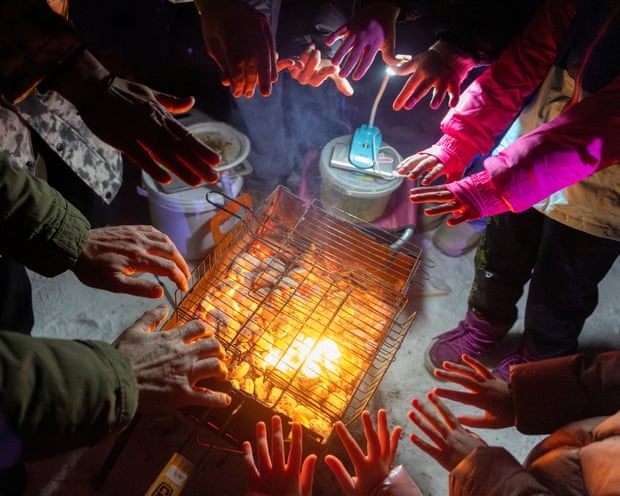
People in Kyiv warm their hands over a barbecue at a blackout party during an electricity outage on 24 January 2026. Photograph: Thomas Peter/Reuters

Since 2014, Russia’s actions have breached a myriad of international humanitarian laws, including systematically attacking infrastructure and cutting off power supplies.  

While blackouts have been an ongoing issue, they have become alarming in recent weeks. Winter itself turned out to be Russia’s weapon against Ukraine. 

Targeting Civilian’s Objects is a War Crime 

Russia neglects that power plants, electrical grids, and water reservoirs are not military objects; they are essential to civilian survival. Extensive and intentional targeting of infrastructure leads to complex legal concerns – war crimes and a humanitarian crisis that the international community cannot ignore.   

International Law is unquestionably clear. The Geneva Convention and the Rome Statute expressly forbid targeting civilian objects that are indispensable for an individual’s survival. Such conducts were affirmed as war crimes by the ICTY (“Internation Criminal Tribunal for the Former Yugoslavia”).  

The International Criminal Court (“ICC”) has initiated investigations into all war crimes committed by Russia in this war. In 2024, the ICC issued warrants against two Russian military commanders: Sergei Kobylash and Viktor Sokolov, alleging their responsibility for the deliberate targeting of infrastructure. Yet the ICC’s prosecution remains fruitless. 

In late January 2026, the Nordic-Baltic countries urged Russia to immediately cease its tactics and demanded the international community hold Russia’s leaders accountable for these “potential” war crimes. Nonetheless, accountability in the international arena is challenging.  

Targeting Infrastructure Is Not a Consequence of War – It is Russia’s Strategy 

As Ukraine approached one of its coldest winters, its air defense system has been overwhelmed. Russia intensified strikes against infrastructure, leaving cities across Ukraine without electricity, heat, and necessities.  

On January 21, 2026, approximately 60% of Kyiv, nearly 4,000 apartment buildings, were left without electricity. Heavy bombing in Kharkiv left over one million consumers without power. Every day, first responders work tirelessly trying to restore electricity to some extent. Yet the restored power remains temporary.  

Russia’s strikes continue.  

On February 17, 2026, Russia launched nearly 400 drones and 29 missiles overnight. As a result, in Kyiv alone, over 2,600 buildings remained without heating, power, and water. Across Ukraine, civilians’ daily lives once again are being dictated by power outage schedules.  

Missile is a Partial Weapon, and Cold Completes It 

Civilians have been forced to live in freezing apartments and to bundle up in layers with limited or no opportunities to warm up. Elderly individuals and people with disabilities are even more vulnerable. Recent reports show an increase in cases of hypothermia and deterioration of chronic health conditions from prolonged cold exposure. 

Childhood is being stolen. Education is severely disrupted as schools close due to the inability to maintain safe heating.  

Yet, despite being worn out, Ukrainians are stronger than ever. They managed to cook and warm up with portable devices. In Kyiv, a city that is constantly under attack, neighborhoods gather for a barbecue party, with music and dancing to stay warm and show resilience.  

On this 4th anniversary of full-time invasion, and every day at 9:00 AM, Ukraine freezes for a minute of silence honoring every life unjustly taken by this devastating war, carrying forward the memory of its heroes.  

Also, gratitude is owed to the Ukrainian soldiers, first responders, and medical personnel, who work through sleepless nights, and to all Ukrainians who remain resilient despite the relentless hardship.  

Ukrainians once again remain undefeated. Nonetheless, the wounds of this war will never fade.  


For more information:  

Almost 60% of Kyiv Without Power as Russian Strikes Shatter Grid 

Surviving the Cold Without Electricity in Ukraine 

Ukrainians are Sharing Hacks Online On How to Survive Winter Power Cuts 

‘Difficult’ Russia-Ukraine Peace Talks End Without Breakthrough 

Ukraine Warns of Long Outages After Wave of Russian Strikes Hit Power Grid 

‘Everything Is Frozen’: Bitter Winter Drags on for Kyiv Residents as Russia Wipes Out Power 

Statement By The Nordic Baltic States on Russia’s Destruction of Energy Infrastructure In Ukraine 

Situation In Ukraine: ICC Judges Issue Arrest Warrants Against Sergei Ivanovich Kobylash And Viktor Nikolayevich Sokolov 

Explainer: When Are Attacks On Civilian Infrastructure War Crimes? 

Medmoune v. France: ECHR Finds No Article 2 Violation in Withdrawal of Life-Sustaining Treatment

By: Julia Wheeler 

Journal of Global Rights and Organizations and Impunity Watch News 

Medmoune v. France arises out of doctors’ decision to withdraw life-sustaining medical treatment from patient “A.M.”. This decision was made despite A.M.’s drawn up advance directives, which stated his wishes for the continuation of life-sustaining treatment, even in the case of permanent loss of consciousness and ability to communicate. This raises the legal question of whether this decision was a violation of Article 2 (right to life) of the European Convention on Human Rights. 

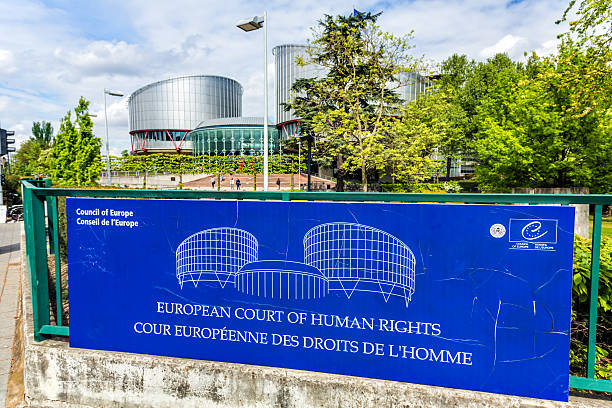
Strasbourg, France – April 22, 2014: Information sign of the European Court of Human Rights. The European Court of Human Rights is an international court established by the European Convention on Human Rights, it is located in Strasbourg, France.

Background – Bruay-sur-l’Escault, France:  

In May of 2022, A.M., a 44-year-old male, was run over by a commercial vehicle that he was repairing. He suffered severe trauma, including cardiorespiratory arrest and prolonged oxygen deprivation. A.M. was admitted to the Valenciennes Hospital ICU, where it was determined that he no longer had brain-stem reflexes or brain activity and had sustained anoxic injuries.  

On May 31, 2022, pursuant to Article R. 4127-37-2 of the French Public Health Code, the hospital began its collective procedure, the process doctors follow when deciding whether to limit or withdraw treatment. On June 1, 2022, the doctors decided that treatment would be withdrawn on June 9, 2022. The applicants challenged this decision, and before the withdrawal date on June 8, 2022, the Lille Administration Court suspended it. Revisiting the decision on July 15, 2022, the head of the ICU again decided to withdraw treatment on July 22, 2022. The applicants again challenged this through an urgent application for protection of a fundamental freedom, which the Administrative Court dismissed on July 22, 2022.  

The applicants appealed to France’s highest administrative court, the Conseil d’État, seeking review of the constitutionality of the legal provision authorizing the hospital’s decision. The Constitutional Council upheld the constitutionality of the provision on November 10, 2022, and the Conseil d’État dismissed the applicants’ action. 

As a final recourse, the applicants requested an interim measure from the ECHR under Rule 39. They hoped to be granted a stay of execution of the July 15, 2022, decision, and continuation of treatment while their case was pending. The judge denied the applicants’ request. 

Treatment was withdrawn on December 26, 2022, and A.M. passed away that day.  

Applicants’ Claim/Argument 

The applicants claimed that A.M.’s right to life under Article 2 was violated, as was his right to respect for private life under Article 8, and his freedom of thought, conscience, and religion under Article 9 of the Convention. 

They criticized France’s Public Health Code for permitting doctors to override patients’ advance directives deemed “manifestly inappropriate,” arguing that this grants excessive discretion to doctors which in turn creates a risk of arbitrary interference with Convention rights.  

Decision 

The Court upheld the French legislation framework as compatible with Article 2. Under the Convention, States have the discretion to determine which factors to consider and how to weigh competing rights and interests. 

The Court acknowledged that the doctors were initially unaware of A.M.’s advance directives. After reviewing them, the medical team concluded that following the directives was not compatible with A.M.’s medical condition, and that continuing treatment would be considered “unreasonable obstinacy,” meaning it would provide the patient with no real benefit. The team also considered the family’s objections but decided that these could not override their medical judgment. The Court found that A.M.’s wishes were properly considered throughout the process. 

The Court found that the State had provided the applicants with prompt and reasonable judicial remedies, which considered various factors, such as medical evidence and A.M.’s advance directives. Therefore, the State has complied with its positive obligations under Article 2 of the Convention.  

The Court referenced prior rulings to reiterate that while Article 8 protects personal autonomy, it does not bind States to advance directives, as they may utilize their discretion. On this basis, the Court found the French framework compatible with Article 2. Further, the Court held that applicants’ Article 9 complaints were sufficiently addressed by its Article 2 analysis.  

Significance 

This case is the first before the ECHR where it involves not a patient’s advance directives to withdraw life-sustaining medical treatment, but their directives to continue the treatment.  

For further information, please see: 

ECHR  

Judgment Medmoune v. France – Press Release Issued by the Registrar of the Court  

Public Health Code: Article R. 4127-37-2  

ECHR Case Law