
By Megan Bush
Journal of Global Rights and Organizations, Associate Articles Editor
ARUSHA, Tanzania – On June 5, 2026, the African Court on Human and Peoples’ Rights delivered its final judgment in the case of Masudi Said Selemani v. United Republic of Tanzania. The court ruled that the imposition of a mandatory death sentence without judicial discretion violates due process.
On July 15, 2010, the appellant killed his cousin, following false reports made by his cousin’s family to the village authorities that the appellant stole maize from a neighbor. Subsequently, on October 18, 2012, Selemani was arrested and arraigned. Selemani was later convicted on May 15, 2013 of murder. Due to the nature of his crime, Selemani was automatically sentenced to death by hanging. Selemani appealed to an appellate court, but the court dismissed his appeal on November 22, 2014.
On August 19, 2019, Selemani filed an application to the African Court on Human and Peoples’ Rights seeking for the court to set aside his death sentence and remove him from death row. The application was accepted.
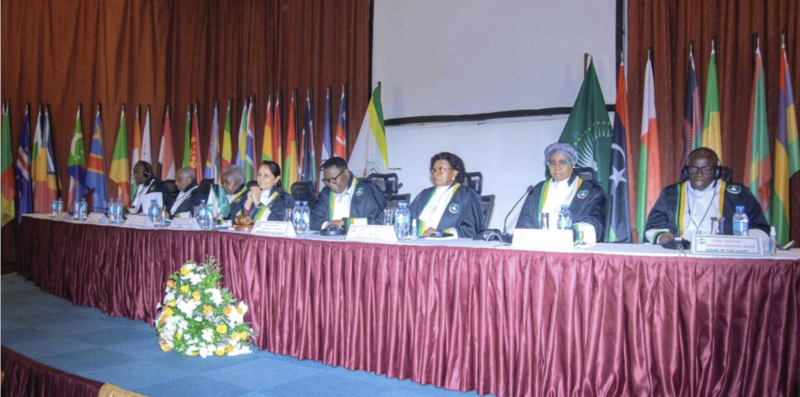
African Court on Human and People’s Rights during the ruling of the case in Arusha, Tanzania on June 5, 2026. Photo courtesy of The East African.
During the hearings, Selemani argued that Tanzania violated his right to life under Article 4 of the African Charter on Human and Peoples’ Rights, and his freedom from cruel, inhuman, and degrading treatment or punishment under Article 5.
The court found the imposition of a mandatory death sentence without the allowance of judicial
discretion is a violation of due process. The mandatory death sentence also violates Article 4 because it arbitrarily deprives life. The court additionally found that Article 5 was violated due to Selemani’s prolonged detention on death row, dehumanizing conditions, and the execution method of hanging being implemented.
Due to its findings, the court ordered Tanzania to take all necessary measures to remove the mandatory death sentence provision quickly and to disallow the use of hanging as a method of execution. Additionally, the court directed Tanzania to vacate Selemani’s sentence, remove him from death row, and rehear his case through a procedure allowing judicial discretion. The court awarded Selemani 300,000 Tanzanian shillings in moral damages.
For further information, please see:
African Case Law Analyzer – Selemani v. Tanzania, No. 042/2019 June 2026
OAS – African Charter on Human and Peoples’ Rights (Banjul Charter)
The East African – “African Court Orders Tanzania to End Mandatory Death Penalty, Hanging” June 2026
