“The Beauty of the law is that There is no Place to Hide.” Trial of Mahamat Said Opens

By: Nikolaus Merz

Impunity Watch News Staff Writer

THE HAGUE, Netherlands – On Monday September 26th, 2022, the trial of Mahamat Said Abdel Kani began in the sixth chamber of the International Criminal Court with opening remarks by the prosecution.

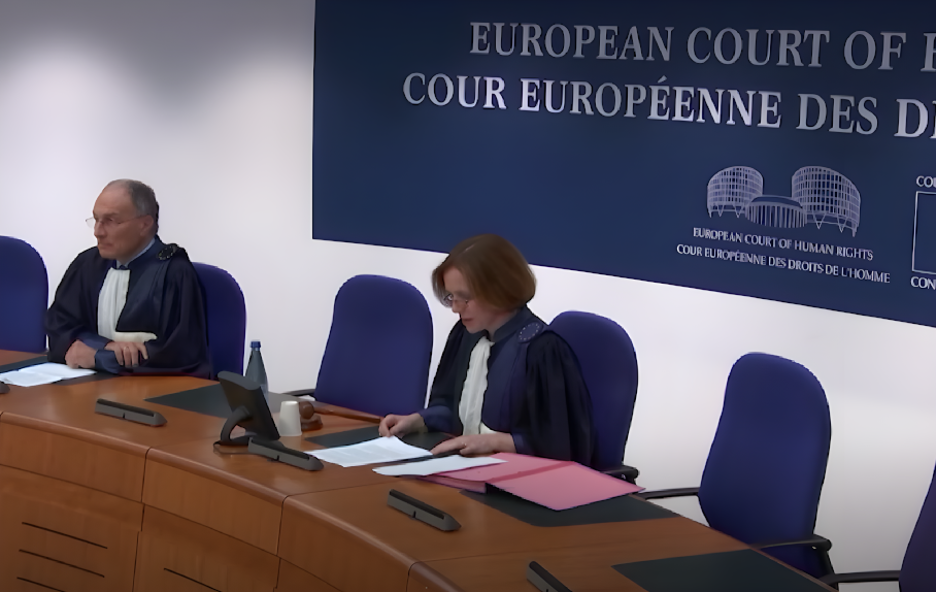
Mr. Said at the opening of his trial. For his role as de facto commander of the Central Office for the Repression of Banditry, Mr. Said is accused of War Crimes and Crimes Against Humanity under the Rome Statute. Photo courtesy of the International Criminal Court.

The Central African Republic (“CAR”) devolved into civil conflict in 2012, as the anti-government militia group the “Seleka” began armed resistance against President François Bozizé’s government. As the Seleka advanced and occupied the CAR capital of Bangui, they incorporated existing institutions and structures into their organization. In particular, the Central Office for the Repression of Banditry, or “OCRB,” was repurposed by the Seleka to suppress perceived resistance to the militia. Mr. Said, having been appointed de-facto commander of the OCRB by his superiors, had full authority over the Seleka elements within the OCRB in Bangui.

Shortly after establishing a basis of control, Seleka began persecuting people believed to be threats to its power; predominantly targeting Christians, members of the Gbaya tribe, and others with perceived ties to the government of François Bozizé. The OCRB under Seleka control is accused of extorting, harassing, and abducting civilians – often without evidence or justification.

Once in OCRB custody, victims would be held under inhumane conditions, including cramped, overcrowded cells, as well as pits in the earth. Witnesses are expected to testify that the few times they could leave the cells were to be beaten by members of the Seleka. Victims were frequently tortured by a variety of methods, including (but not limited to): being whipped while having gravel on their backs (so as to enhance the pain of the whipping), having their body parts be pulled with pliers, and having their limbs bound in such positions to cause extreme agony and even partial paralysis.

The arrest warrant for Mr. Said was issued in 2019, and he only recently entered International Criminal Court (“ICC”) custody in late 2021. Following a pre-trial decision confirming the charges, Mr. Said stands accused of seven counts of War Crimes and Crimes Against Humanity stemming from eighteen instances of “attritional violence.” The counts include deprivation of liberty, torture, outrages upon personal dignity, and persecution among others.

At the beginning of his trial, Mr. Said pled not guilty to all charges against him.

Prosecutor Khan, delivering the opening statement of the prosecution, highlighted the resolve of Mr. Said’s victims, as well as the long and arduous journey the case has endured to date. Prosecutor Khan further emphasized the sense of justice the case invoked, which reverberated to the core principles of the ICC, saying in simple yet powerful terms “the beauty of the law is that there is no place to hide.” The prosecution is expected to call 43 witnesses during the course of the trial.

The Court will convict Mr. Said only if the charges have been proven beyond a reasonable doubt.

For further information, please see:

ICC – Case Information Sheet – The Prosecution v. Mahamat Said Abdel Kani – Aug. 2022

ICC – Decision on the confirmation of charges against Mahamat Said Abdel Kani – 9 Dec. 2021

ICC – Public Redacted Version of ‘Warrant of Arrest for Mahamat Said Abdel Kani’ – 7 Jan. 2019

ICC – Said trial opens at International Criminal Court – 26 Sept. 2022

IntlCriminalCourt – Said case: Trial opening, 26 September 2022 – 1st session FLOOR – 26 Sept. 2022

Court Determines Mexico Responsible for Failures in Investigation into Death of Human Rights Defender

By: Sallie Moppert

Journal of Global Rights and Organizations, Associate Articles Editor

SAN JOSE, Costa Rica — In a judgment handed down by the Inter-American Court of Human Rights, IACHR, Mexico was deemed to be internationally responsible for the failures of the investigation into the death of human rights activist Digna Ochoa y Plácido in October of 2001. The court determined that the “serious shortcomings” of the investigation into Ochoa’s death constituted a violation of the obligation to guarantee to the right of life for Ochoa in addition to a violation of the right to the truth on behalf of Ochoa’s family.

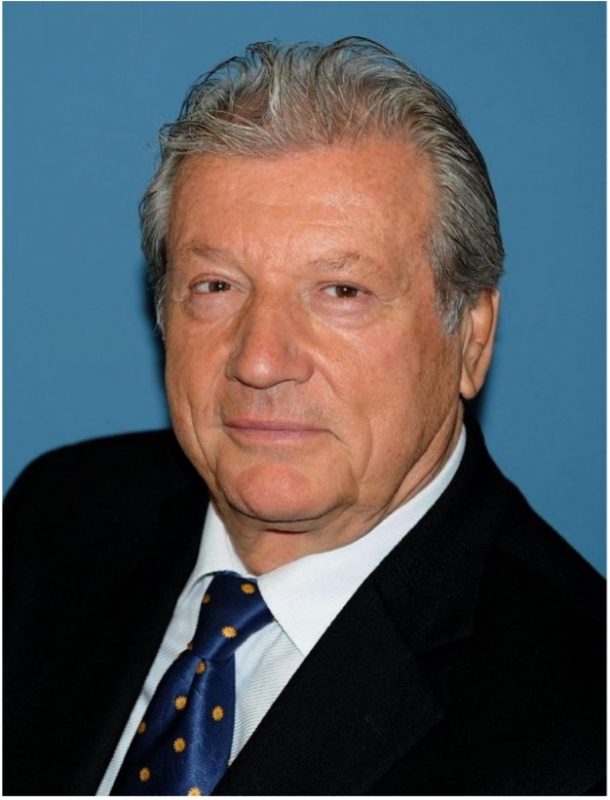
A woman leaves a tribute at a memorial set up for Digna Ochoa
after her assassination in 2001. Photo courtesy of Reforma.

Ochoa was a human rights lawyer and activist in Mexico. Prior to her death, she endured many threats and attacks against her in response to her human rights defense work. With the continued threats to her safety, Ochoa, with support and accompanied by the Center for Justice and International Law (CEJIL) and la Red de Organismos Civiles de Derechos Humanos, came before the IACHR in 1999 to obtain preventative measures and later provisional measures to combat the continued threats and attacks. The protective measures were granted and in place for two years before IACHR terminated the provisional measures in 2001. Ochoa was assassinated two months after the protective measures were lifted.

The IACHR ruled that the investigation into Ochoa’s death was biased and corrupted from its inception. Although her body was found to have multiple gunshot wounds, Mexican officials determined that Ochoa’s death was a suicide, so the investigation was halted and the case deemed to be closed. In addition, the IACHR found that there was little equal protection under the law for Ochoa and females in general, as gender stereotypes were relied upon and intimate and personal aspects of Ochoa’s life were used against her to question her credibility. “[A]s a result of the deficient investigation and the discourse of state agents aimed at insulting her public image, the defender’s right to honor and dignity was also prejudiced,” the court found. The court also found that Mexican officials had failures in its handling of the crime scene, its documentation and the forensic autopsy, along with not investigating the facts within a reasonable time frame.

Along with its judgment, the IACHR ordered Mexico to take several measures of reparation, with the main order being to continue the necessary investigations to determine the circumstances surrounding Ochoa’s death. Other reparations included: making a public act of acknowledgment of international responsibility, creating an award for the defense of human rights that is to be named after Ochoa, and creating and then implementing a specific and specialized protocol for the investigation into attacks of human rights activists at a federal level, among others.

For further information, please see:

Center for Justice and International Law – Cejil 30 Years: Digna Ochoa

Inter-American Court of Human Rights – Judgment of the Inter-American Court in the Case of Digna Ochoa and relatives v. Mexico: The State is responsible for the serious failures in the investigation of the death of human rights defender Digna Ochoa – Jan. 19, 2022

Reforma – Llevan a Corte IDH caso de Digna Ochoa – Feb. 18, 2020

Kuwaiti’s Constitutional Court Overturns Anti-Transgender Law in a Historic Decision

By: Matthew Mayers

Journal of Global Rights and Organizations, Associate Articles Editor

KUWAIT A judgment issued by Kuwaiti’s Constitutional Court on Wednesday February 16, 2022, held that Article 198 of the penal code was unconstitutional. The court reasoned that the law, which criminalized “imitation of the opposite sex”, lacked an objective analysis for identifying the offense. Accordingly, the law violated Article 30 of the Kuwaiti Constitution, which guarantees personal freedom.

Formerly imprisoned Kuwaiti transgender woman, Maha al-Mutairi. Photo courtesy of happymag.tv.

The enactment of Article 198 of the Criminal Code in December 10, 2007, criminalized LGTBQ identities and expression. The law provided that “any person committing an indecent act in a public place or imitating the appearance of a member of the opposite sex, shall be subject to imprisonment for a period not exceeding one year or a fine not exceeding one thousand dinars” (i.e., $3,500). Legal and human rights advocates have argued that the law was vague and arbitrarily enforced. Consequently, on December 29, 2021, the law was challenged in the Constitutional Court.

Since the law’s enactment, it has been used to perpetuate disproportionate arrests and abusive treatment by the Kuwaiti police against the transgender community. In 2012, Human Rights Watch issued a 63-page report documenting the significant discretion Kuwaiti police had over what constituted “imitating the opposite sex”. Transgender women were arrested regardless of if they were wearing gender affirming clothing and were arrested for having a “soft voice” or “smooth skin.” The report also detailed the harms (i.e., rape, sexual assault, and physical assault) that police inflicted among transgender women upon arrest.

The damaging effects of the law has sparked online movements advocating for the release of Kuwait’s LGBTQ persons. Maha al-Mutairi, for example was arrested under Article 198, was fined and sentenced to two years in prison. She used Snapchat, GoFundMe and petition platforms to raise awareness of the abuse she endured from Kuwaiti police officers during her 2019 detention. Her efforts promoted her release and dropped charges on appeal in 2021.

Kuwaiti’s Constitutional Court’s decision is considered a tremendous breakthrough by some. Human rights advocate, Tareq Alkhudari, suggested that since 2020, Kuwait is facing a significant LGBTQ movement with people changing their attitudes and becoming more educated about LGBTQ rights. Lynn Maalouf, Deputy Director of Amnesty International’s Middle East and North Africa Division, however, says that the rights of LGBTQ persons in Kuwait require additional protections. Maalouf says that Kuwait must repeal Article 198, prohibit enforcement of the law, drop all charges and convictions of persons unjustly arrested from the law, and investigate the allegations of police misconduct pursuant to the law.

For further information please see:

Amnesty International – Kuwait: Overturning law that criminalized ‘imitation of the opposite sex’ a breakthrough for transgender rights – 16 Feb. 2022

Human Rights Watch – Kuwait: End Police Abuses Against Transgender Women – 15 Jan. 2012

Reuters – Kuwait court overturns law criminalising imitation of opposite sex – 16 Feb. 2022

The New York Times – Kuwait Overturns Law Used to Prosecute Transgender People – 16 Feb. 2022