Stoian v. Romania: Disabled Boy’s Right to Education Denied by European Court of Human Rights

By: Mujtaba Ali Tirmizey

Impunity Watch Staff Writer

BUCHAREST, Romania — On June 25, 2019, the European Court of Human Rights (“ECHR”), in a highly controversial decision, held that Romania did not deny the right to education and did not discriminate against a disabled boy and his single mother.

Stefan Stoian, now 18 years old. Photo Courtesy of Validity.

Stefan Stoian, a young boy with quadriplegia born in 2001, and his single mother, Luminita Stoian, complained that two state schools failed to accommodate Stefan and were mostly inaccessible for wheelchair users. They allege that learning was not customized with respect to teaching or testing the curricula, and the variety of therapies that Stefan required were not available. Luminita had to provide her son with personal assistance during school time, including carrying him around, helping him go to the toilet, and helping him with his physiotherapy exercises.

Luminita turned to a number of authorities in Romania to request the support that Stefan needed. The Government argued that both schools had adequate facilities and authorities had taken steps to enhance and modify them over time. They argued that he benefited from some educational support, physiotherapy, and occupational therapy, and he was also provided a personal assistant for short periods. Minimal change resulted from years of litigation and complaints, so Luminita turned to ECHR in 2013.

The complaint alleged a violation of the right to respect for private and family life, prevention of discrimination, and right to education violations, claiming that the authorities failed to take required measures to conform with their obligations under both national law and the European Convention. The Court noted that the authorities determined that Stefan should attend mainstream schools, which aligned with international standards. The Government admitted that there were delays in making sure that the school buildings in question met adequate standards.

The applicants also relied on United Nations Convention on the Rights of Persons with Disabilities (CRPD), which Romania ratified in 2011. It acknowledges the right to education in comprehensive settings for children with disabilities and requires governments to provide support (reasonable accommodation and personal assistance) to attain full participation and inclusion for children with disabilities in mainstream schools. The Court held that the authorities had not turned a blind eye to Stefan’s needs, but had apportioned resources to his schools to accommodate his special needs. There were certain issues along the way, but some of those problems had been generated by Luminita herself. As a result, the Court found that the authorities had complied with their obligations, and therefore, did not violate the Articles of the Convention.

The Court’s holding that fundamental rights of persons of disabilities are predominantly a matter of resources that prohibits them from protection under the Convention is discouraging. Furthermore, how the Court reached their judgment is troublesome: the case was downgraded to a three-judge Committee level, facts were distorted, Government’s views were given more weight and meaningful scrutiny was not applied. This case exposes the degree to which children with disabilities are marginalized and denied justice, and they are running out of options regarding what litigation strategies may produce an encouraging result at the Court.

For further information, please see:

Strasbourg Observers – Stoian v. Romania: The Court’s Drift on Disability Rights Intensifies – 5 Sept. 2019

European Court of Human Rights – Romania Took Sufficient Steps to Make Reasonable Accommodation for Disabled Child to Attend School – 25 June 2019

Validity – Romania: Justice denied for Stefan Stoian after a decade of legal action – 28 June 2019

What is Happening Along the Border of Turkey and Syria?

By: Madison Kenyon 

Impunity Watch Staff Writer 

DAMASCUS, Syria — On Sunday, October 20, Syrian Kurdish forces began their withdrawal from Ras al-Ayn, a town along the Syrian border. This withdrawal is part of a cease-fire negotiated by the United States’ Vice President, Mike Pence, and Secretary of State, Michael Pompeo with Turkey’s President, Recep Tayyip Erdogan. This cease-fire began Thursday, October 17, and will end on Tuesday, October 22. By Tuesday evening, the Kurdish forces must not only have all soldiers removed from Ras al-Ayn, but also, they must withdraw from a zone about 75 miles wide and 20 miles deep between Ras al-Ayn and the town of Tel Abyad.

The aftermath of a shelling by Turkish forces on a target in Das al-Ayn. Photo courtesy of NPR.

Despite the Kurdish forces’ withdrawal from this zone, Turkey states that this is not enough. Rather, Erdogan wants the Kurdish forces to withdraw more than 260 miles from the Syrian border.  He has vowed that if the forces fail to do so, he will “continue to crush the terrorists’ heads.” Erdogan’s persistency to remove the Kurds from the Syrian border comes from his belief that the presence of any Kurds along the Turkey border is an “existential threat” to Turkey.

This tension between Turkey and the Kurds stems from years of conflict. The Kurds, a largely Muslim ethnic group, are one of the largest groups of people without a state of their own (despite being promised one after World War I). Due to this, for years, a Kurdish militant group has launched attacks throughout Turkey in an attempt to achieve autonomy. Therefore, Turkey sees the Kurdish forces located in northern Syria as linked to this militant group. Thus, Turkey argues that it wants to create a “safe zone” between the Turkey-Syrian border. It also argues that it wants to resettle at least a million refugees living in Turkey who were displaced by the Syrian war into this zone.

Previously, the U.S. has backed the Kurds in their defense against Turkey. However, recently, President Donald Trump signed an executive order withdrawing U.S. troops from northern Syria. The Kurds have now had to turn to Bashar al-Assad, Syria’s leader, and Vladimir Putin, Russia’s President, for help in this conflict.

Since President Trump’s decision to withdraw troops from Syria, over 200,000 people have been displaced. Many of these people blame President Trump for this displacement. One 70-year-old Kurdish man, forced to flee from his home in Ras al-Ayn, stated, “This was a clear betrayal by the Americans. The Turks never would have done what they did had the Americans stayed.”

This criticism is what led the U.S. to negotiate this cease-fire. However, despite the Kurds’ current withdrawal, both sides claim that the other side still repeatedly violates the cease-fire. For example, Turkey’s Defense Ministry stated that the Kurds killed one of its soldiers today during an attack.

It is hard to believe that this cease-fire will make any real difference in this conflict. Rather, the world is awaiting to see what happens at the Turkey-Syrian border Tuesday evening once the cease-fire ends.

For further information, please see: 

Time – Kurds Begin to Evacuate Besieged Syrian Border Town – 20 Oct. 2019

Washington Post – The Latest: Kurdish Fighters Pull Out of Syrian Border Town – 20 Oct. 2019

Bloomberg – Syrian and Kurdi News: Trump Approach to Turkey Syria Incursion – 20 Oct. 2019

Los Angeles Times – ‘How Long Can We Live Like This?’: Kurds in Growing Refugee Camp Plead for Help, End to Losses, Suffering – 20 Oct. 2019

CBS News – Turkey’s Involvement in Syria’s Civil War: The Complicated History of How We Got Here – 15 Oct. 2019

Akdağ v. Turkey: Right to a Lawyer While in Police Custody

By: Mujtaba Ali Tirmizey

Impunity Watch Staff Writer

ANKARA, Turkey — On September 17, 2019, the European Court of Human Rights (“ECHR”) held that the Turkish government unfairly restricted a citizen from gaining access to a lawyer, thus violating Article 6 §1 of the European Convention on Human Rights.

Hamdiye Akdağ was arrested in November 2003 and while in police custody, she confessed to being a member of the PKK/KADEK (the Workers’ Party of Kurdistan), an illegal organization. On her statement form, in the “no lawyer sought” section, she printed an “X” next to it, and was not provided a lawyer subsequently. However, once she was brought before the public prosecutor and the investigating judge, she instantly retracted her statement.

Before the trial court, Akdağ maintained her position, claiming that she was forced into signing her statement. She also noted that she was illiterate. Ultimately in 2009, Akdağ was found guilty of membership in a terrorist organization and sentenced to over six years in prison. In 2010, the Court of Cassation upheld the conviction.

Here, the Government argued that Akdağ had specified on her statement form that she did not require legal assistance. Therefore, the Government noted that she justifiably waived her right to a lawyer. However, the Court held that Akdağ did not waive her right to a lawyer because she immediately withdrew her statement before the public prosecutor and the investigating judge, and also asserted that position before the trial court. In addition, her statement form just had a printed “X” next to the type-written “no lawyer sought.” With regards to her contention that she was illiterate, the trial court did not perform a proper assessment. Lastly, the Government failed to show that Akdağ had explicitly been advised about the consequences of not requesting the assistance of a lawyer.

The Court stated that while Akdağ had been allowed legal representation during the trial, the national courts had failed to examine the validity of the waiver or of the statements she had made to the police in the absence of a lawyer. As a result, the Court found the Government violated Article 6 §1 of the ECHR and the trial was unjust because the insufficiency of close scrutiny had not been resolved by any other procedural measures.

The ECHR dedicates an entire section of the Convention to rights to access court, the right to a fair trial, and the right to access a lawyer. In this decision, the ECHR ensured that Akdağ was not deprived of this fundamental right after the lower courts failed her. This decision will help set the precedent for citizens from member states who find themselves in a similar situation.

For further information, please see:

European Court of Human Rights – Case of Akdag v. Turkey – 17 Sept. 2019

ECHR Case Law – Invalid Resignation of an Illiterate Accused of the Right to a Lawyer, Infringement of Fair Trial – 17 Sept. 2019

European Court of Human Rights – Guide on Article 6 of the European Convention on Human Rights – 30 Apr. 2019

African Court on Human And People’s Rights Strikes down Mali’s Family Code

By: Jordan Broadbent

Impunity Watch Staff Writer 

BAMAKO, Mali — In March 2018, the African Court on Human and Peoples’ Rights issued a ruling striking down Mali’s Family Code affirming their commitment to advancing women’s rights. 

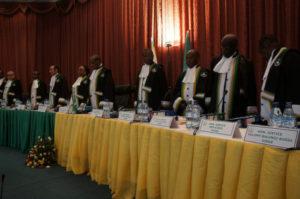
Judges for the African Court on Human and Peoples’ Rights. Photo Courtesy of AfCHPR on Flickr.

The Association for the Advancement and Defense of Women’s Rights, a Malian organization dedication to the fight for equal rights, along with the Institute for Human Rights and Development in Africa, brought the Mali government to court over the implementation of the Family Code. The Applicants stated that the Code violated the African Charter on Human and Peoples’ Rights, to which Mali became a party in 1986.

The Family Code implemented several harsh laws including lowering the minimum age of marriage to 16 for females, or 15 with the consent of their fathers. The law does not require ministers to obtain consent from both parties, rather just the husband. Nor do both parties need to be present at the ceremony for the marriage to take place. Additionally, the Family Code implemented harsh inheritance laws where women could only receive half of the inheritance men in their family could receive. The applications claimed that implementations of these laws would violate Mali’s obligation under the Maputo Protocol, which lays out fundamental rights for women.

The Maputo Protocol states that the age of marriage for both genders is 18, requires consent for marriage, and mandates equal inheritance laws for both genders in countries which have ratified the Protocol.

Mali argued that the Family Code reflected the social and religious reality within the country and that the flexibility within the law respects religious rules throughout the region. The Court rejected both of these arguments.

The Court adopted the Applicants stance that the Family Code policies laid out above violate Mali’s responsibility under the Charter and thus, struck down the code. The Court’s ruling marks the first time the Court has found that a country’s statute constituted a violation of the Protocol on the Rights of Women, a major win for women’s equality in Africa.

However, the Court also reached into a country in a major way because the legislation at issue concerned a country’s social and cultural practices. This demonstrates the Court’s willingness to construe a country’s social practices in order to uphold human rights.

Since this decision, there has been little action by the Mali government to implement this ruling. The Islamic community within Mali has called to keep these laws intact, despite the Court’s ruling. Their statement stated that the Muslim community will “take any action to save the country from danger.” The government’s reluctance to overturn the Family Code in compliance with the Court’s ruling could stem from the current climate within the country.

For further information, please see:

Cambridge Core – APDF & IHRDA vs. Republic of Mali – 2 Jan. 2019

EJIL: Talk – African Court on Human and People’s Rights Delivers Landmark Ruling on Women’s Rights and the Rights of the Child in Mali – 27 July 2018

International Justice Resource Center – African Court Finds Mali’s Family Laws Violates Human Rights Obligations – 29 May 2018

African Court on Human And Peoples’ Rights – Judgement – 11 May 2018


The ICC Prosecutor’s Road to Justice for Afghanistan

By: Madison Kenyon 

Impunity Watch Staff Writer 

KABUL, Afghanistan — On September 17, 2019, the Pre-Trial Chamber II of the International Criminal Court (ICC) granted in part the request of the prosecutor for Leave to Appeal the Chamber’s earlier decision, which rejected the prosecutor’s request for authorization to investigate into the situation in the Islamic Republic of Afghanistan. The Pre-Trial Chamber originally rejected this authorization because it believed that an investigation at the current stage of the situation would not serve the interests of justice. Thus, on June 7, 2019, the prosecutor, Fatou Bensouda, filed for leave to appeal this decision.

International Criminal Court’s prosecutor, Fatou Bensouda. Photo courtesy of the ICC.

This procedural history stems from the preliminary examination, which began in 2006, by the Office of the Prosecutor of the situation in Afghanistan. Specifically, the prosecutor examined alleged crimes against humanity and war crimes that have occurred in Afghanistan since July 1, 2002, with particular focus on alleged crimes that occurred on May 1, 2003. The prosecutor asserts that the results of this examination prove the following: (1) crimes against humanity and war crimes by the Taliban and their affiliated network; (2) war crimes by the Afghan National Security Forces, and in particular, members of the National Directorate for Security and the Afghan National Police; (3) and war crimes by members of the United States’ armed forces and the United States Central Intelligence Agency (CIA). Overall, through this examination, the prosecutor determined that there is a reasonable basis to proceed with an investigation into this situation and thus made the request for authorization to investigate on November 20, 2017.

The prosecutor asserts that, at a minimum, the crimes against humanity that have been committed include: murder; imprisonment or other severe deprivation of physical liberty; and persecution against an identifiable group or collectivity on political and gender grounds. Along with this, the prosecutor states that the war crimes that have been committed include: murder; cruel treatment and torture; outrages upon personal dignity; intentionally directing attacks against civilians; intentionally directing attacks against personnel or objects involved in a humanitarian assistance or peacekeeping mission; internationally directing attacks against protected objects; rape and other forms of sexual violence; using, conscripting or enlisting children under the age of fifteen; and killing or wounding treacherously a combatant adversary. Further, regarding the United States’ involvement in the situation in Afghanistan, the prosecutor states that there is a reasonable basis to believe that members of the U.S. armed forces and members of the CIA committed acts of torture, cruel treatment, outrages upon personal dignity, and rape and sexual violence against conflict-related detainees in Afghanistan and other locations.

Although the Pre-Trial Chamber granted the prosecutor leave to appeal its earlier decision, this does not mean that it will also grant the prosecutor authorization to investigate further into the situation in Afghanistan. Due to the evidence produced by the prosecutor from her preliminary examination, if the Chamber again refuses to grant authorization to investigate further, it may leave many to wonder if the court is actually concerned about the “interests of justice” or if it is actually trying to avoid upsetting an international powerhouse like the United States.

For further information, please see: 

International Criminal Court – Afghanistan: ICC Pre-Trial Chamber II Authorises Prosecutor to Appeal Decision Refusing Investigation – 17 Sept. 2019

International Criminal Court – Situation in Afghanistan: Summary of the Prosecutor’s Request for Authorisation of an Investigation Pursuant to Article 15 – 20 Nov. 2017

International Criminal Court – The Prosecutor of the International Criminal Court, Fatou Bensouda, Requests Judicial Authorisation to Commence an Investigation into the Situation in the Islamic Republic of Afghanistan – 20 Nov. 2017