Special Election In Venezuela Hints At Electoral Misgivings

By Brendan Oliver Bergh
Impunity Watch Reporter, South America

CARACAS, Venezuela – Despite losing last year to Hugo Chavez in the Presidential election, Henrique Capriles is rising to call again as he faces hand-picked and acting interim president Nicolas Maduro in the special election for Venezuela’s Presidency.

Interim President Nicolas Maduro is defending his judicial appointment in a special election accused of electoral fraud. (Photo Courtesy of Venezuela Analysis)

While Venezuela gathers its base after the death of their President, Hugo Chavez, the country has been taking a hard pressed stance against the United States and their Western allies. After subtle accusations blaming the U.S. for assassinating Chavez – with an injection to give him cancer – interim president Maduro and the remaining cabinet have halted all official channels of communications between the countries. Venezuelan Foreign Minister Elias Jaua states that “until there is a clear message on what type of relationship the United States wants with Venezuela, it makes no sense to continue wasting time.

While U.S. Assistant Secretary of State for Western Hemisphere Affairs Roberta Jacobson called for open, fair and transparent elections in Venezuela there may be indications that the quick turnaround is hardly fair. The campaign of Henrique Capriles has accused the government of abuse of power and constitutional fraud in inaugurating Maduro as president. Capriles denounced the supreme court which allowed Maduro to become President and then run again in the special election. He has stated that “What the supreme court did I’ve qualified as an electoral fraud,” and insisted that the 60 day election opening, from the time of Chavez’s death to the April 14 election is likely to lead to a favored bias towards Maduro.  They have accused Venezuela’s National Electoral Council (CNE) as “no more than a tool of the regime to maintain its power.” This of course a massive description from the regimes coalition calling it “an excellent example of democratic institutions in the country.”

In order to adhere to fair elections the CNE has signed an agreement with the Union of South American Nations, in which they would send electoral teams in order to “witness the electoral process “ and hopefully ensure fair elections. Several Venezuelan electoral NGO’s have been invited to augment and observe the upcoming election.

Mr. Capriles has stated that “I feel that this fight… has become a spiritual struggle of a divine character, because those who live in Venezuela feel that this has become a struggle to break down a wall of evil.”

Despite allegations of electoral misgivings, polls have Mr. Capriles at 22%.

For further information, please see:

Telegraph – Capriles Says Venezuela Election Is A War Of  ‘Good And Evil’ – 25 March 2013

Venezuela Analysis – Maduro Counters Campaign To Discredit Venezuelan Electoral System – 25 March 2013

Press TV – Venezuela Suspends Communications With US Top Diplomat Ahead OF Election – 20 March 2013

Huffington Post – Venezuela Election Candidate Nicolas Maduro Has Upperhand As Chavez’s ‘Heredero’ – 14 March 2013

Guardian – Venezuelan Opposition Challenges Nicolas Maduro’s Legitimacy – 8 March 2013


Russia Raids NGOs, Rights Groups

By Madeline Schiesser
Impunity Watch Reporter, Europe

MOSCOW, Russia – The Justice Ministry’s inspections of Non-governmental Organizations (NGOs) this week have been compared to the Great Terror during the Soviet government’s campaigns in the 1920s-30s that closed down religious institutions and foreign organizations.  It is estimated that at least 100 organizations from 25 regions across Russia have been inspected so far, and the inspections are expected to continue.

A worker at Memorial, one of Russia’s oldest and most respected rights groups, prepares some of the 600 documents demanded in the government raids. (Photo Courtesy of the Moscow Times)

Authorities in Russia have claimed that the purpose of the checks is to ensure that the activities of the NGOs match those the organizations have declared.  Justice Ministry stressed in a press release the legality of the Ministry’s actions and the importance of the checks in light of a November law requiring NGOs in Russia that receive forging aid to register as “foreign agents.”

While the Prosecutor General’s Office says that the inspections are scheduled, several groups have reported surprise inspections by the Justice Ministry, the fire-safety service, the Health Department, prosecutors, and tax police.  It is possible as many as 2,000 organizations have been visited in the last month for the collection of registration and financial documents.

Lev Ponomaryov, director of For Human Rights, believes the raids are illegal, and would only be permissible “only if there is information about the organization violating existing laws and no grounds for [such accusations] were presented to us.”

Memorial, one of Russia’s oldest and most respected rights groups, which was required to submit over 600 documents, called the audits “worrying and unprecedented.”  Amnesty International and the movement For Human Rights say that officials requested documents that should already be on file with the government.  The inspections have slowed the effectiveness of some top rights watchdog groups in Russia, and some activists fear that audits will eventually force them out of the country.

The term “foreign agent” which the law passed in November requires NGOs receiving foreign funding to identify themselves as, has its roots in the Stalin Era, when it was used to discredit enemies of the state.  Many NGOs, including Amnesty International, believe the label will be used to “to harass and seek closure of those [organizations] highlighting abuses and critical of the government.”  In spite of the law, all NGOs have refused to register as “foreign agents.”  It is estimated that in 2011, Russian NGOs received about $613 million (19 billion rubles) in foreign funding.

A wide variety of organizations have been raided by the Justice Ministry and others, including women’s rights groups, environmental advocates, and Roman Catholic parishes.  A number of rights groups known for their criticism of the government have also meet with various inspectors.  These groups include: Transparency International, Human Rights Watch (HRW), Amnesty International, the movement For Human Rights, the Public Verdict Foundation, the Agency for Social Information, Memorial, Agora, the Moscow Helsinki Group, and two German NGOs: the Konrad Adenauer Foundation (KAS) and the Friedrich Ebert Foundation (FES), which caused backlash in Berlin.

Analyst Dmitry Oreshkin say the raids are an attempt by Putin’s (who described the ongoing inspections as “routine measures”) government to regain clout.

“It reflects the intense nervousness of authorities over the fact that their popularity is falling, that Putin’s popularity is falling, that United Russia’s popularity is falling,” says Mark Urnov, head of the Political Behavior Department at Moscow’s Higher School of Economics.  “Authorities are very scared of all organized protests and groups that gather information to this effect, on issues such as corruption, for instance. This is why these organizations are being targeted. This is the behavior of a regime that is becoming increasingly insecure.”

“The State Duma has been passing laws that contradict the spirit of the constitution, the spirit of the law,” said Lev Ponomaryov, emphasizing the tactics that the government has taken to boost its power. “The new law on high treason, in particular, has transformed the legal system. It is a Soviet-style law. What is now happening with nongovernmental organizations is a continuation of this. Hundreds of nongovernmental organizations are being subjected to unlawful actions by the Prosecutor-General’s Office.”

For further information, please see:

The Moscow Times – NGO Checks ‘Unprecedented’ in Post-Soviet Russia – 29 March 2013

RFE/RL – Russian Rights Council Members Criticize ‘Unprecedented’ NGO Searches – 28 March 2013

BBC News – Fears for NGOs in Russia as Tax Raids Multiply – 27 March 2013

RFE/RL – Raids On NGOs In Russia Suggest ‘Increasingly Insecure’ Kremlin – 26 March 2013

RFE/RL – Russian NGOs Subjected To Continuing Searches – 25 March 2013

RT – Amnesty International Probe Lawful, Pre-Scheduled – Ministry – 25 March 2013

Jordan Charges ‘Devil Worship’ Students With Incitement

By Ali Al-Bassam
Impunity Watch Reporter, Middle East

AMMAN, Jordan — Last Wednesday, Jordanian prosecutors charged five Al al-Bayt University students with incitement, for allegedly desecrating the Quran and engaging in acts of “devil worship.”  The students had been detained for fifteen days, since March 12, 2013, and were charged by prosecutors after Human Rights Watch (HRW) urged the Jordanian government to either charge or release them.  If convicted, the students could face up to three years in prison.  The students deny the accusation.

Five university students were detained, and eventually charged with incitement, after rumors claiming that they had ripped up a Quran in a bathroom had spread. (Photo Courtesy of Al Bawaba.)

They were accused of ripping and burning Quran manuscripts while performing a “religious ritual” in a campus bathroom in the city of Mafraq.  Prior to being detained, the students were assaulted by a crowd of other students when rumors had spread about their involvement in the act.  A sister of one of the students claimed that a mob of 200 other  students had attacked the accused, which is comprised of her sister and four male students.

HRW released a statement from the students’ families, which said that “no evidence of criminal activity had been presented to the accused.”  HRW said that Jordanian authorities should actively do their best to protect the students and arrest anyone who allegedly attacked and threatened them.  “Jordanian authorities should release the five students and take steps to protect them from further attack,” said Eric Goldstein, deputy Middle East Director at HRW.  “The authorities should hold to account anyone who joined in this witch hunt and committed acts of violence.  They should not be allowed to walk free while their victims are locked up.”

HRW also urged Jordanian authorities to investigate reported remarks that advocated the students’ deaths, such as those made by a well-known Salafi shaikh.  Salafists are an ultra-conservative group derived from the Sunni sect of Islam.  HRW believes that these remarks have sparked a chain reaction of Facebook messages by other university students calling for the death of their fellow students.  HRW says that such messages have “prompted fears for their safety and doubts about whether they will be able to complete their university studies in Jordan.”

International law, and Jordan’s treaty obligations as a member of the International Covenant on Civil and Political Rights (ICCPR) requires Jordan to take reasonable steps in ensuring that the right to security for all people within Jordan is protected.  Jordan is also required to uphold the rights to freedom, expression and thought, conscience, and religion.  This establishes that it must not prosecute people who peacefully express their views, and must protect those who do from others who coercively try to curb their expressions of opinion and religious belief.

Al-Rai, a Jordanian newspaper, reported that the president of the university had established an investigative committee to determine the truth as to whether the students were involved in “throwing manuscripts of the Quran in the toilets.”  The head of the investigative committee informed a news website, Kharbani, that it could not find any evidence that the students had committed such acts, and also said that none of the statements against them were based on first-hand evidence.

For further information, please see:

Al Bawaba — Jordan Charges Students With Incitement After Claims of “Devil Worship” — 27 March 2013

The Raw Story — Jordan Charges Students With ‘Devil Worship’ — 27 March 2013

Al Jazeera — Jordan Urged to Free ‘Devil Worship’ Students — 26 March 2013

Human Rights Watch — Jordan: Students Accused of ‘Devil Worship’ — 26 March 2013

Magnitsky’s Mother Asks Russian Press to Avoid Becoming an Accomplice in the Posthumous Trial of Her Son

Press Release
Hermitage Capital

27 March 2013 – Ahead of another day in the historic posthumous trial of Sergei Magnitsky in Moscow, Magnitsky’s mother has addressed the Russian press asking them to refrain from repeating false accusations that the state is making against her dead son. She called the trial today a “blasphemy” and “desecration of the memory of her son” organised in response to the Magnitsky Law passed in the United States.

“Those who do not understand the purpose of this trial, I want to clarify that the current government needs a court document, a judgment that my son was allegedly guilty of the crimes he was incriminated of while he was still alive. This document is necessary for the authorities to compromise my son, whose name is on the law passed against corrupt Russian officials involved in plundering the Russian budget, and in the reprisal against him for their exposure,” said Ms Magnitskaya.

Ms Magnitskaya emphasized that her son was detained and persecuted in retribution for exposing the large theft of budget money.

“Today you are not forced to repeat the false allegations composed by persons responsible for ensuring that they kept my son for a year as a hostage, trying to get from him testimony they wanted, and to make him withdraw his testimony about the theft of 5.4 billion rubles from the budget of our country, from pockets from all of us,” said Natalia Magnitskaya.

“Representatives of the media who today are repeating false accusations emanating from the court, from the police, investigators, and prosecutors, who tortured my son and had motive to wish his death, will become complicit in the ongoing blasphemy,” said the mother of Sergei Magnitsky.

Ms Magnitskaya said her son had repeatedly stated that the accusations against him would not hold up in a proper open trial and stressed that he vowed to bring those responsible for the falsification of his case materials to justice just three days before his death in custody.

“The last complaint from my son to the court was about the falsification of materials of his case. Sergei said that he would seek to bring to justice those responsible for fabricating case materials. This happened just three days before his death, on November 13, 2009. Now, one can only assume the role this complaint played in his death,” said Ms Magnitskaya.

Ms Magnitskaya said the posthumous trial is “an example of hypocrisy and lawlessness” of the Russian justice system.

Full text of statement from Ms. Magnitskaya follows:

“Due to the continuation in the Tverskoi Court of Moscow of the posthumous trial of my son, Sergei Magnitsky, I appeal to you not to allow yourself to get involved in the shameful campaign of posthumous desecration of his name, not to repeat the false accusations against him, and to demonstrate this way respect to his memory, and to the feelings of family and relatives.

Please bear in mind that this proceeding is an example of hypocrisy and lawlessness of modern [Russian] justice, and, of course, will go down in history as one of its most infamous pages. Those participating in this proceeding and those who are behind it, have scorned the universal notions of morality, flouted the opinion of the family of the deceased, and the opinion of independent legal and human rights organizations.

Those who do not understand the purpose of this trial, I want to clarify that the current government needs a court document, a judgment that my son was allegedly guilty of the crimes he was incriminated of while he was still alive. This document is necessary for the authorities to compromise my son, whose name is on the law passed against corrupt Russian officials involved in plundering the Russian budget, and in the reprisal against him for their exposure

Using this unlawful process, those who organized reprisal against my son, who deprived him of liberty, health and life, now want to take away his good name and discredit him posthumously, using the fact that Serge is dead and cannot answer their charges.

Representatives of the media who today are repeating false accusations emanating from the court, from the police, investigators, and prosecutors, who tortured my son and had motive to wish his death, will become complicit in the ongoing blasphemy.

The court proceeding in the Tverskoi District Court of Moscow is a desecration of the memory of my son, who was given an international award for the fight against corruption. Even while in prison, subjected to unbearable physical and psychological suffering and humiliation, he did not  make a deal with his conscience and stayed true to himself and his beliefs about honor, law and justice. In memory of his civil feat there is a permanent exhibition at the Museum of the Berlin Wall in Germany.

Sergey repeatedly stated that the charges against him relied on false accusations of tax crimes based on conclusions of interested experts who would not have been able to justify them in an open trial. All his requests for cross-examination of persons who gave false evidence against him were refused by investigators.

The last complaint from my son to the court was about the falsification of materials of his case. Sergei said that he would seek to bring to justice those responsible for fabricating case materials. This happened just three days before his death, on November 13, 2009. Now, one can only assume the role this complaint played in his death.

Today you are not forced to repeat the false allegations composed by persons responsible for ensuring that they kept my son for a year as a hostage, trying to get from him testimony they wanted, and to make him withdraw his testimony about the theft of 5.4 billion rubles from the budget of our country, from pockets from all of us.

If you want to report the news of this proceeding, do not give place to the formalism and lies in your reports, publish statements and complaints of my son, thankfully, they are available to the public on the website of his friends and colleagues “Stop the Untouchables” (http://russian-untouchables.com/rus/).”

For further information please contact:
Hermitage Capital
Phone:             +44 207 440 1777
Email:              info@lawandorderinrussia.org
Website:           http://lawandorderinrussia.org
Facebook:        http://on.fb.me/hvIuVI
Twitter:            @KatieFisher__
Livejournal:     //hermitagecap.livejournal.com/

Peru Reinstates the Draft, Targets the Poor

By Pearl Rimon
Impunity Watch Reporter, South America

 LIMA, Peru – Peru has reinstated selective military service. However, this obligatory military service can be avoided by paying a $700 fee. The government of Peru is being accused for imposing a draft for the poor.

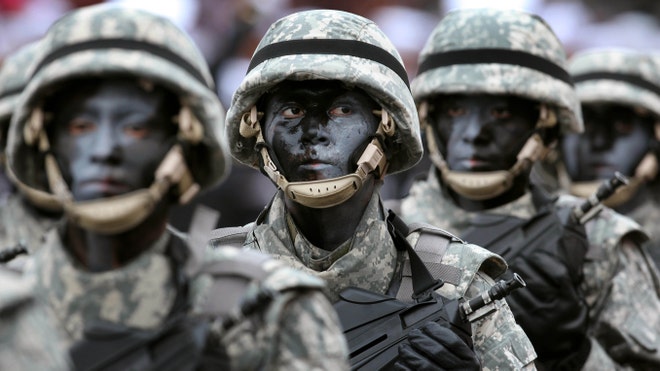
Soldiers marching in a parade celebrating Peru’s Independence Day. (Photo Courtesy of AP)

Military service in Peru has been voluntary since 1998, but the harsh conditions and lack of incentives has left the armed forces short 30,000 recruits this year.

President Ollanta Humala, a former army officer, reimposed the draft via decree. Military chief Adm. Jose Cueto announced that the draft would be held in May. The draft applies to all males between the ages of 18 to 25 chosen by lottery. There are exemptions for parents, university students and anyone who can afford the $700 fee.

“It seems to me completely improvised with the aggravating factor that it directly affects the poor,” said human rights activist Wilfredo Ardito. Ardito called the draft discriminatory on several counts. The poor get hit twice — they cannot afford neither higher education nor the fine, he said.

Adm. Cueto believes that President Humala acted out of necessity in issuing the decree. He told The Associated Press that Peruvian armed forces are operating in a different era from the one in the 1980s and 1990s that contained many human rights abuses.

The draft entails two years of obligatory military service. Cueto believes that the draft would be beneficial for poor young men.  He has said, “Military service has been stigmatized as something bad and the exact opposite is true, because it provides a series of benefits to young men, principally those of humble means. It offers instruction, trains them, creates values and, in addition, gives them a profession.”

Peru’s southeastern hot zone, located between the Purimac and Ene river valley is where more than 80 soldiers have been killed since 2008 in battles between the cocaine-funded vestiges of the Shining Path.

The soldiers who participate in the draft are paid a little more than $100 per month and can increase to $146 with room and board included. However, the minimum wage in Peru is $283 per month.

Most of the citizens are against this draft seemingly imposed just on the poor. “I’m against it. They would be depriving young people of their right to decide. A lot people here can’t afford to pay (the fine),” said Eduard Rodriguez, a 24-year-old gastronomy student.

Peru may have taken a cue from neighboring countries in the reinstatement of its draft, since Boliva and Colombia have ranks of their armed forces filled by many poor citizens.


For more information, please see:

Associated Press —Peru criticized for ‘avoidable’ military draft – 27 March 13

East Oregonian — Peru criticized for ‘avoidable’ military draft – 27 March 13

Fox News Latino — Peru Criticized For Military Draft On The Poor – 27 March 13

Yahoo News —  Peru criticized for ‘avoidable’ military draft – 27 March 13