ICC Rejects Bemba’s Request to Appeal Denial of Compensation and Damages Claims

By: Shane Kelly

Impunity Watch Staff Writer

CENTRAL AFRICAN REPUBLIC, Africa – On October 1, 2020, the Pre-Trial Chamber II of the International Criminal Court (“ICC”) rejected the request of Jean-Pierre Bemba Gombo to appeal the decision on his claim for compensation and damages following the overturning of his conviction and subsequent release from prison.

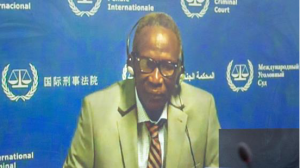
Jean-Pierre Bemba Gombo, President and Commander-in-chief of the Mouvement de libération du Congo (Movement for the Liberation of Congo), sitting before the International Criminal Court.

On June 8, 2018, the Appeals Chamber of the ICC acquitted Bemba from charges of war crimes and crimes against humanity. The acquittal reversed Trial Chamber III’s 2016 majority decision finding Bemba guilty under Article 28(a) of the ICC Rome Statute as a person acting as a military commander with control over Mouvement de Libération du Congo (“MLC”) troops.

The MLC were called in by then-president, Ange-Félix Patassé, to subdue an attempted coup. The MLC troops, under Bemba’s leadership, were alleged of the crimes against humanity of murder and rape and the war crimes of murder, rape, and pillaging. The ICC arrested Bemba and took him into custody in 2008, while also freezing his assets and seizing his property. Bemba remained in custody through his conviction in 2016 and served another two years in prison per his eighteen-year sentence.

After his release from prison, Bemba filed a claim for compensation and damages under Article 85 of the Rome Statute. Bemba sought sixty-nine million euros for his time spent in prison, legal costs, and the loss in value of his frozen assets. On May 18, 2020, the Pre-Trial Chamber II denied Bemba’s claim for compensation and damages. The court ruled that Bemba “failed to establish that he had suffered a grave and manifest miscarriage of justice.” Bemba then requested leave to appeal the decision and submitted that the decision was appealable and gave rise to twelve issues that would meet the appeal requirements of Article 82(1)(d).

The court found that the issue was not appealable. Articles 81 and 82 specifically list issues that are subject to appeal, and decisions under Article 85 do not qualify. The court then considered Bemba’s ability to appeal under Rule 155 which allows a party to request leave to appeal any decision “that involves an issue that would significantly affect the fair and expeditious conduct of the proceedings or the outcome of the trial.” However, the court observed that Article 82(1)(d) limits such a route only to interlocutory appeals. Because the decision dismissed the claim in part for lack of jurisdiction, the claim fell outside the scope of appealability in the ICC.

Bemba’s request for leave to appeal the denial of his compensation claim was therefore rejected. The court curiously acknowledged in its original decision denying the claim that “10 years is a significant amount of time to spend in custody, likely to result in personal suffering, which would trigger compensation” in many national legal systems.

For further information, please see:

International Criminal Court – Decision on the Request for Leave to Appeal the ‘Decision on Mr Bemba’s Claim for Compensation and Damages’ – 1 Oct. 2020

International Criminal Court – Case Information Sheet – Updated Mar. 2019

Courthouse News – ICC Rejects Compensation Claim by Former Congo VP Bemba – 18 May 2020

Continued Support of Abortion Rights Guatemala’s Human Rights Ombudsman in Trouble Again

By: Elyse Maugeri

Impunity Watch Staff Writer

GUATEMALA CITY, Guatemala – In Guatemala, abortion is only legal if the woman’s life is in danger. However, if the country determines a woman’s abortion was due to her own negligence, she could face up to four years in prison.

Jordan Rodas, Guatemala’s Human Rights Ombudsperson, speaks during a press conference after a meeting with members of the organization “proud of my PNC” (Civil National Police), formed by relatives of police officers.

In August 2018, the Guatemalan Congress adopted a preliminary version of the “Life and Family Protection” bill which would raise the maximum prison sentence for abortion from three to ten years. It would also move to criminalize miscarriages, impose prison sentences for women who have miscarriages, and criminalize the promotion or facilitation of abortion access. As of right now, this bill is still pending in Guatemala’s Congress.

Regarding abortion, Guatemala’s Human Rights Ombudsman, Jordán Rodas, is facing new troubles with his country’s government. On August 20, 2020, the Supreme Court of Justice in Guatemala ruled in favor of a complaint claiming that Rodas has failed to comply with the Court’s ruling in 2017, which called for him to cease his outward support for abortion.

In the 2017 ruling, the Court ordered Rodas to “suspend the presentation and distribution of the manual of ‘Human Rights, Sexual and Reproductive Rights, and Pregnancy care in Girls and Adolescents.’” His overt openness in advocating for abortion, access to abortion, and the promotion for its legalization has called his compliance with the court order into question. The Court has ordered the Prosecutor’s Office to investigate the claims of non-compliance. If Rodas is found guilty, he could face up to three years in prison.

This is not the first time that Rodas’ job has been threatened. Guatemala’s conservative government has largely opposed his stances on abortion and LGBTQI+ rights and has sought to remove him from office since he assumed his role in 2017. In 2019, the Inter-American Court of Human Rights (IACHR) expressed concern regarding criminal proceedings submitted by the Human Rights Commission of the Congress of the Republic of Guatemala against Rodas. The IACHR acknowledged the repeated attempts by the government to remove Rodas from his position; the government claiming “abuse of authority, misuse of public office, and breach of public duties.”

The current investigation and attempt to remove Rodas stems from the Associación la Familia Importa (Family Matters Association). The association, a Guatemalan pro-life group, requested the Supreme Court revisit the 2017 ruling and address whether Rodas’ recent actions violated their ruling. The issue the group pinpointed was Rodas’ calling for the Guatemalan government to adopt recommendations presented by the United Nations Committee on the Rights of the Child regarding abortion access. Rodas asserts, however, that he called for the adoption of recommendations regarding gender-based violence and discrimination issues, not just abortion access.

While Rodas states that his office has suspended issuance of the disputed manual, the Guatemalan Supreme Court held that he has not done enough, and his office must “make an emphatic and categorical statement that it did not support abortion… in defense of the right of the unborn child.”

For further information, please see:

Human Rights Watch – Guatemala: Reject ‘Life and Family Protection’ Law – 31 Aug. 2020

Human Rights Watch – Guatemala: Rights Official at Risk of Criminal Prosecution – 9 Sept. 2020

Amnesty International – Guatemala: Discriminatory law puts at risk the lives and rights of thousands of women, girls and LGBTI people – 4 Sept. 2018

IACHR – IACHR Expresses Its Concern over a New Attempt to Dismiss the Guatemalan Human Rights Ombudsperson – 19 Nov. 2019

Living Life on Zoom: An Interview with Kevin Belbey

By: Nadia Abed & Melissa Berouty 

3Ls at Syracuse University College of Law

As an agent at The Montag Group, Kevin Belbey represents sports broadcasting clients from national networks to local markets. His clients include play-by-play announcers, analysts, radio hosts, writers and reporters. Kevin is a graduate of Syracuse University, where he received his bachelor’s degree in Broadcast Journalism from the S.I. Newhouse School of Public Communications, his Master’s Degree in New Media Management from Newhouse and his Juris Doctor from Syracuse University’s College of Law.

He currently serves on several Syracuse boards including the Syracuse University Law Alumni Association, The Newhouse 44, and the Generation Orange Leadership Council. In March of 2017, Kevin was named to Front Office Sports’ “Rising 25” list of up-and-coming sports business professionals. In September 2019, Kevin was the recipient of the Generation Orange Award by his alma mater, an award recognizing a young alumnus making major contributions in their field of work.  

How did you become interested in the industry you currently work in?

BELBEY: Honestly, it was trial and error. I spent a lot of time researching online, going to different networking events, and seeing guest speakers on campus. Some of the best advice I ever got was “the key to figuring out what you want to do is first figuring out what you do not want to do.” I had so many conversations with media attorneys, broadcasters, trial attorneys, and agents in different fields. With every conversation, I really tried to learn what their day-to-day was like to see if it was something that might interest me long term.

I tried to collect as much knowledge as I could. After doing so, I looked to get first-hand experience. While in law school, I did the Washington D.C. externship program and interned with the FCC. This position led me to intern with CBS in their legal department. These two opportunities in law school were highly formative in leading me towards what I wanted to do.

How has the sports media industry been impacted by the pandemic?

BELBEY: It has been totally rocked. For a while, there had been no sports. During this time, so many of our clients were sitting on their couch watching Tiger King like the rest of us. They want to work, but when there are no games or stories to report on, it becomes difficult.

Obviously, there are more pressing things going on in the world with more cases and tragic deaths. It’s important to keep that in perspective. A lot of our clients are paid per game and have filed for unemployment after going a span of five months with no games. It’s been a whirlwind and something that is evolving daily. I think our industry is truly taking it day by day.

You mentioned the unemployment rate, which continues to soar. Is this something that has impacted your industry hard?

BELBEY: It’s been very tough. In our business, summer is a very healthy time and full of new job opportunities. Outside of baseball, summer is typically an off time for sports. Basically, at this time, networks would be preparing for sports to come back. Right now, there a lot of changes in terms of talent, new shows being developed, and plans being made for the fresh seasons. Typically, the summer is when we are negotiating a large number of contracts. However, it’s been very quiet on the deals front as many of the networks do not want to offer contracts unless there is a guarantee there will be games.

Even for the people who still have their jobs, nearly everyone in our industry has taken pay cuts. On-air talent for FOX Sports, NBC Sports, ESPN, and NFL Network have all taken pay cuts to salaries that they have already agreed to. While they are voluntary, I think everyone is trying to be a team player and do the right thing.

With the world becoming increasingly more virtual, how has contract negotiation and general client interaction been for you?

BELBEY: We are pretty much living our life on Zoom these days. We have company meetings at 10:30 AM every morning where we provide updates on the deals we are working on, people we are talking to, and clients we are prospecting. At this point, I try to do as many Zoom calls as I can to get closer to the feeling of in-person interaction.

It is interesting to see different companies and organizations use different technology. For example, NBC sports are big Microsoft Teams people. We really are doing everything we can to make up for the lack of in-person interaction.

During the time that games were not being held, what was your concern and what were the concerns of your clients?

BELBEY: Networks are hesitant to make commitments right now. For the last five months, a lot of networks have been paying people to essentially not work. Right now, people who would usually have had new contacts by now are left waiting to see how the NCAA and these networks will operate moving forward. From there, we will be left with the question of where talent fits in.

Talent is being put on the back burner until everything else is figured out. This is tough. They have kids and families to support. Aside from the money, talent relies on the benefits particularly the health insurance during the pandemic as everyone else in the country has been. In this cloud of uncertainty, I give a lot of credit to our clients for being patient.

With more games expected to be televised, do you see an increase in the need for broadcasters?

BELBEY: I genuinely hope that is the case. I hope that this industry starts booming and there are more job opportunities. On the other hand, I can see a continued use of remote production. Typically, sports broadcasters are on sight at the stadium. Now, some games are being called out of the studio or even broadcaster’s own homes.

As we remain virtual in our day-to-day operations, we see the same thing happening with broadcasters. If this continues, it will actually lead to a decrease in jobs. If you are calling one college football game on the weekend and need to travel the day before and after, you are calling just one game. However, if you are just calling it out of your basement, maybe you can call two to three games in a weekend. This may lead to less opportunity and allow networks to save money.

What do you see the future of sports media looking like moving forward?

BELBEY: My hope is that we tread water and stay afloat for the next six to eight months. By then, hopefully, we will be discussing a vaccine, fans returning to stadiums, and the Olympics next summer. In the meantime, we as an industry just need to hang tight.

Is the new norm to have broadcasters conduct their work offsite?

BELBEY: The benefit for broadcasters that are on-site is that there are one to two other people in the radio booth with them. This allows them to practice social distancing. Before our broadcasters go back to work, they want to ensure that there is a health and safety plan. For our broadcasters on-site, they need to be provided with information like how they will get there and where will they stay. This then adds another question of whether the overnight amenities are safe and what is the health and safety plan inside the arena. Thankfully, overall, there are fewer people inside stadiums, so you are able to keep your distance.

Are these safety considerations accounted for contractually? If not, are these considerations that will come into play during contract negotiation moving forward?

BELBEY: I think networks have an inherent responsibility to offer broadcasters a safe work environment. However, this is definitely something that could change moving forward. One thing that we have seen in contracts more than ever is the phrase force majeure.  Frankly, this is something we always reviewed, but never really expected to carry this type of weight. Now, we are reading these clauses twenty times over given their weight.

Do you have any advice for law students trying to network during this time?

BELBEY: In law school and college, I would exchange emails and get on the phone with people in various industries. One thing I always knew was that I was not that memorable to them. There are so many emails and phone calls that are happening all day long. This makes it difficult for people to remember you. The best way to network is to grab lunch or a coffee. Obviously, you cannot do that right now, but what you can do is ask someone to grab coffee over Zoom. Honestly, if someone asked me to meet over Zoom six months ago, I would have thought it was weird. But today, this is the way we conduct our business. While there might be people that say no, I do believe face-to-face interactions are more memorable. I think this is a way you can stand out. This is what I would do.

At the end of the day, the vast majority of jobs are based on who you know, not just applying online. This is how I got my job. So, I would encourage law students to put themselves out there.

This interview has been condensed and edited for length and clarity.

First Witness of the Prosecution Testifies at Al Hassan’s Trial

By: William Krueger

Impunity Watch Staff Writer

THE HAGUE, Netherlands – The trial of Al Hassan Ag Abdoul Aziz Ag Mohamed Ag Mohamed (Al Hassan) began back on July 14th, 2020 in the International Criminal Court (ICC) in Trial Chamber X. Al Hassan, an alleged member of Ansar Eddine/Al Qaeda, has been charged with crimes against humanity and various war crimes.

Mr. Al Hassan during the opening of the confirmation of charges hearing at the seat of the Court in The Hague.

The charges stem from April 2012 to January 2013 where the prosecutor believes that Al Hassan acted as the de facto chief of an Islamic police force that, with his authority, committed acts of violence against civilians in the city of Timbuktu, Mali. Furthermore, the prosecutor believes that Al Hassan had acted in the enforcement of a policy of forced marriages that led to the enslavement and rape of women in the Timbuktu region. The first day of trial consisted of a reading of the charges in the court; after which the Chamber was assured that Al Hassan fully understood what he was being accused of. At this point in the trial, Al Hassan has not plead guilty or not guilty.

On September 8th, 2020 the court had a witness for the prosecution, Harald Doornbus, sworn in under Rule 66 of the Rules of Procedure and Evidence used by the ICC. Doornbus identified himself as a freelance journalist who had been working in the country of Mali in January 2013. Doornbus had gone into the bank and the Hotel La Maison, which were transformed into a police station and the Sharia court for the Islamic police respectively. In both locations, he had collected documents written in Arabic. Pictures taken by Doornbus and the documents he had collected were entered into evidence by the Prosecutor. One of the documents collected by Doornbus had two women in niqabs with dress code instructions in Arabic and French. The Prosecution then rested their examination of Doornbus.

The Legal Representatives of the Victims then questioned Doornbus about how the population of Timbuktu reacted to the news of the militants fleeing upon action by Malian and French forces. The Defense then had their opportunity to cross-examine Harald Doornbus. The Defense questioned Doornbus on his relationship with the ICC and his conduct and connections in Mali. The factual integrity of the bank was also brought into question as Doornbus had to get entry from an unknown person who had a key to the location. Doornbus also admitted he had to work quickly and as a result, some documents that were not collected or photographed may have been missed in his haste. He also did not take some documents when visiting the Hotel La Maison as the manager was there and Doornbus had concerns about offending him by taking the paperwork. The Defense also brought up how Doornbus had previously recovered documents overlooked by the FBI in Benghazi, Libya.

On September 18th, 2020, Al Hassan’s associate counsel, Nicoletta Montefusco, has filed a motion to be withdrawn from the defense team without the consent of Al Hassan or lead counsel Melinda Taylor. Currently, the public does not know of the result of this motion by Montefusco. The trial of Al Hassan continues on September 21st, 2020. As of October 3rd, 2020 the Prosecution continues to build their case against Al Hassan.

For further information, please see:

International Criminal Court – Case Information Sheet: Situation in Mali – 14 Jul. 2020

International Criminal Court – Al Hassan Trial Opens at International Criminal Court – 14 Jul. 2020

International Criminal Court – 08 September 2020 – Session 19 – 08 Sep. 2020

International Criminal Court – Request for Withdrawal – 18 Sep. 2020

People Are Not Machines: An Interview with Terri Gerstein

By: Nadia Abed & Melissa Berouty 

3Ls at Syracuse University College of Law

Terri Gerstein is the Director of the State and Local Enforcement Project at the Harvard Law School Labor and Worklife Program and a Senior Fellow at the Economic Policy Institute. She recently completed an Open Society Foundations Leadership in Government Fellowship. Previously, she was the Labor Bureau Chief in the New York State Attorney General’s Office and a Deputy Commissioner in the New York State Department of Labor.

Prior to her government service, Terri worked at nonprofit organizations in Miami, representing immigrant workers and domestic violence survivors, and co-hosting a Spanish-language radio show on workers’ rights. She was a law clerk to the Honorable Mary Johnson Lowe in the U.S. District Court for the Southern District of New York, and she is a graduate of Harvard College and Harvard Law School. Her writing on workers’ rights issues has appeared in publications including the New York Times, the Washington Post, NBC News Think, Slate, the Guardian, Morning Consult, the American Prospect, the Hill, the Nation, and the Daily News, among others.  

Email address: tgerstein@law.harvard.edu; Twitter handle: @TerriGerstein  

Did you always have an interest in worker’s rights?

GERSTEIN: In law school, I knew I wanted to go the public interest route. I spent a year between undergrad and law school in Mexico. This experience led me to want to work with the immigrant community. I also spent a summer interning at a worker’s center on Long Island that worked with immigrants, mainly from El Salvador. This is really what drove me to pursue a career in worker’s rights. After I graduated law school, I got a fellowship and worked for a few years in Miami at nonprofits. I always knew I wanted to use my legal training to achieve social justice in some way. It wasn’t until halfway through law school that I landed on the particular area of workers’ rights.

Later in my career, I began working in government for the New York State Attorney General’s Office in the Labor Bureau. Honestly, when I went to law school, I did not see myself doing government work. I thought I would be a legal services or nonprofit lawyer. However, I ended up working at the Attorney General’s office during an administration that was aggressive in ensuring worker’s rights.

Can you elaborate more on your time working at the Attorney General’s Office?

GERSTEIN: I loved the teamwork aspect of government work. Government work differs from academia and nonprofit work in that when you’re working for the government, you don’t get any credit. The elected person above you gets the credit for everyone’s work. Additionally, you do not have to fundraise, as it’s public work and paid for out of the public budget. This structure—no fundraising and nobody gets credit—encourages collegiality, teamwork, and a focus on the greater mission.

In my opinion, people who are self-promotional in nature would not do well in government work. (This may not be universally true, but it’s been my experience. I have been lucky to work in really great administrations.)

One benefit to government work, if you’re advocating for disempowered people, is that at the end of the day, people call you back when you are calling from the Attorney General’s office. Thus, you have the ability to really bring the power of the government’s office to bear on the problems that working people and those who often do not have power are facing. And you have the ability to address structural problems instead of being limited to individual cases.

What has the pandemic revealed to you about worker’s rights in the United States?

GERSTEIN: Honestly, it has not revealed much to me. I was already aware of the lack of power that workers have, the impunity that too many employers operate with, the disparity of power between employers and workers, the precarity of so many jobs, and the lack of protection from retaliation. I was already very aware of all of these pressing issues. 

But it’s a situation where I would get absolutely no pleasure from saying “I told you so.” We knew these were problems. We knew that workers were disempowered. We knew that there were not enough enforcement resources for workers.

One thing that has been new for me is the focus on workplace safety and health. I always worked at a state level in New York, and the Occupational Safety and Health Administration (“OSHA”) has primary authority for enforcement of health and safety in the private sector. At the state level, we didn’t really have as much expertise in this area. Five years ago, we talked about wage theft, worker misclassification, or a whole host of other issues, but not as much about workplace health and safety. I think that this issue has really skyrocketed to the forefront of everyone’s attention because of the current health crisis.

With this, something that has horrified me is the extent to which companies are so cavalier about people’s health and safety. Frankly, I do not know how some of these corporate decisionmakers sleep at night. People are not machines. People are not things. People are unique and irreplaceable. Even if you do not know them, their families love them and they are human beings. The idea that some of these companies have been so utterly cavalier and callous about this – still leaves me speechless. I knew it was bad, but I did think there was a little bit more respect for basic human life.

Do employers have a general duty to ensure workplace safety? With this, do employers have a duty to protect their employers from contracting COVID-19?

GERSTEIN: OSHA has a general duty clause. This entails a duty to provide a workplace that is free from known hazards that could cause fatality or serious injury. In addition to that, there are standards. A standard is a rule that is passed by OSHA that relates to a particular workplace hazard. For example, this could include fall protection or the handling of a particular chemical.

Under the general duty clause, employers have an obligation to provide a workplace where people are not going to be exposed to a foreseeable risk of COVID-19.

In terms of a specific standard, there has been real pressure on OSHA to pass an emergency COVID-19 specific standard. The AFL-CIO filed an unsuccessful lawsuit against OSHA trying to force them to do it. The state of VA passed a standard filling in that gap from the federal government. Additionally, Oregon published a draft emergency standard. [NOTE: in the time since our interview, California also announced its intention to enact a COVID-specific workplace safety standard.]

OSHA has issued substantial amounts of guidance to employers. However, the guidance uses language like “employers should strive to” and “if feasible.” The language used is not really anything that is enforceable, but rather just advice.

There was a recent report by US Department of Labor Inspector General about OSHA’s insufficient handling of whistleblower complaints. In response, OSHA said that it had processed 50% of the COVID-19 related complaints. This means that half of the complaints of individuals who have been fired after complaining of work safety and health have not even been addressed yet. 

A number of states and localities have really stepped up to the plate and have been taking action: issuing Executive Orders, passing laws, and taking enforcement actions to protect workers. Some have been very serious and aggressive about trying to fill the void left by OSHA’s inaction.

Do workers have any rights or protections if they need to stay home because of COVID-19 related circumstances?

GERSTEIN: The federal Families First Coronavirus Response Act does offer some paid sick leave and paid family leave. In addition to this, unemployment insurance is administered through the state and each state passes its own set of rules. There are some states that have been flexible in their unemployment rules, in terms of permitting people to get unemployment for a variety of reasons, including COVID-related. However, some states have not been as liberal in this way.

Additionally, there are some states and localities that have paid sick leave laws in place. The new federal law offers some protection, but it exempts far too many people. For example, it exempts employers with over 500 employees. Again, some states and cities have filled in this gap while others have not. So the answer to this question goes back to the typical law school answer, “it depends.” Here, it really depends on what city and state you live in and the size of your employer.

Following up on our previous question, do you believe that these protections are adequate?

GERSTEIN: No, not at all. People need to have comprehensive paid sick days and paid family leave. Even before the pandemic, we were so far behind every industrialized country in this area. There was already a large gap before COVID-19 and now the consequences are very clear to ordinary people in a way that they previously had not been.

In terms of enforcement, the resources are very inadequate and have been for some time. The resources have also atrophied. The Trump administration has not filled many OSHA positions because of attrition. The agency has existed for over 50 years. I believe that the staffing level is at its lowest since its inception.

Additionally, there have been several issues with the unemployment system. Aside from the policy question of what it covers, there are serious administrative issues with the unemployment system. These systems are not set up to assist the millions of individuals that are now applying as a result of the pandemic. They were set up to handle a fraction of that. Again, states have a real opportunity to improve access to unemployment, in addition to paid leave.

Recently, we have seen stories of workers in the gig economy being impacted by the pandemic. You spoke of the OSHA general duty to offer a safe work environment. Does this same standard apply to independent contractors?

GERSTEIN: This is one of the major problems with the misclassification of workers as independent contractors. All of our workplace laws cover employees and not independent contractors. This applies to everything from minimum wage laws to workers’ compensation laws. Paid leave and safe workplace guarantees are issues that have been very salient during the pandemic.

A company that has employees has a duty to provide a safe workplace. But this doesn’t apply for independent contractors. Some of these gig economy companies have made a big show saying “we gave masks to our drivers/shoppers.” Setting aside the fact these companies have given workers one or two flimsy masks…if they were employees, it would be a legal obligation to provide protective equipment and a safe workplace. This would not be considered an act of generosity or benevolence. Similarly, with paid sick days, it would be a right under the law. The fact that misclassified workers do not have these protections was a problem before the pandemic, but again the problem is more stark now. It’s very important for government at both the state and federal level to crack down on the illegal treatment of workers as independent contractors when they should be employees with all of the related protections.

 Is there any particular group of workers that you feel are most at risk for poor working conditions during the pandemic?

GERSTEIN: There is a lot of vulnerability in the health care sector, like workers in hospitals and workers in nursing homes. Additionally, workers in various parts of the food chains like farmworkers, meatpacking, and warehouse workers have all been at a very high risk. Immigrant workers are particularly vulnerable for a variety of reasons. Additionally, undocumented workers are even more at risk given a fear of deportation.

The health risks are also borne by workers who deal with the public a lot. In the early stages of the pandemic, there were a lot of transit workers who were impacted. Obviously, the spread of COVID-19 in the prison system is a huge criminal justice issue, but also the working conditions of correction officers creates a workplace issue as well.

Also, the concern arises as schools at every level have begun to reopen. This has created a big area of concern for teachers, teachers’ unions, and students. I have a sister who is a seventh-grade public school teacher. Honestly, I worry about her.

What do you think the most pressing issue in worker’s rights is right now?

GERSTEIN: There are both short-term and long-term ways to answer this question. Short term, OSHA should issue a temporary emergency standard. If OSHA does not do this, states should do so. OSHA should start aggressively enforcing the law and publicizing it. If OSHA does not do this, states should do everything they can. OSHA should also staff up.

At the end of the day, keeping people safe is important because they are human beings. It is also important if you want to reopen the economy. Unless this gets dealt with in a serious way, COVID-19 spreading through workplaces does not help with reopening in a lasting manner.

Longer-term, there needs to be a recalibration of the balance of power between workers and employers. It needs to be easier for workers to organize into unions. We also need to address corporate concentration and monopsony. The extreme power of corporations is to the detriment of worker power and leaves workers in a difficult position.

Short term, we need to focus on workplace safety in a very intense and concentrated way. Long term, changing the power dynamic is what needs to happen.

This interview has been condensed and edited for length and clarity.