Uncategorized

Chile to Vote on Whether to Adopt New Constitution with Right to Life Provision

By: Carlos Dominguez Scheid

Impunity Watch Staff Writer

SANTIAGO, Chile – On November 7, 2023, the Chilean Constitutional Council presented President Gabriel Boric with a proposal of a new constitution that includes a right to life provision and outlaws the death penalty.

 
President Gabriel Boric is presented with the proposal of the New Constitution by Beatriz Hevia, President of the Constitutional Council | Photo courtesy of the Associated Press
 

The current Chilean Constitution, in effect since 1981 and approved by referendum in 1980 during Augusto Pinochet’s dictatorship, has been a point of contention due to its undemocratic origins despite undergoing significant reforms in 1989 and 2005. In response to major social unrest in October 2019, political parties agreed to initiate the process of drafting a new constitution, seeking to address the popular demands for improvements in the quality of life. In a 2020 referendum, with a 50.95% turnout, 78.28% of voters supported the creation of a new constitution and endorsed the establishment of a new, independent body, distinct from Congress, tasked with drafting it. The election for the 155 members of the Constitutional Convention was held in May 2021, and the results yielded a supermajority for the left and far left. In the September 2022 referendum, the people rejected their drafted Constitution, with 62% voting against it. The referendum had a historic 85.86% turnout.

Subsequently, a new political agreement led to a different process, involving a Commission of Constitutional Experts appointed by Congress to prepare a draft constitution. This was to be reviewed and voted on by the Constitutional Council, a 50-member body elected in May 2023. With a supermajority held by the right and center-right, the Council is poised to introduce changes to the proposed constitution.

Article 4.1 of American Convention of Human Rights (About the Right to Life), from 1969, states that:

“Every person has the right to have his life respected. This right shall be protected by law and, in general, from the moment of conception. No one shall be arbitrarily deprived of his life.”

In Chile, the current Constitution states that:

“The Constitution ensures to all persons the right to life and to the physical and mental integrity of the person. The law protects the life of the one about to be born. The death penalty may only be instituted for a crime established in a law approved by a qualified quorum.” (Article 19 N° 1)

The Commission of Constitutional Experts proposed the following change:

“The Constitution ensures to all people the right to life. The death penalty is prohibited.”

The Constitutional Council’s final proposal, which will be voted on in the December 17th Referendum, states:

“The Constitution ensures to all people the right to life. The law protects the life of the one who is to be born. The death penalty is prohibited.” (Article 16 N° 1)

This constitution is the first in Chile’s history to prohibit the death penalty. If approved, it would close the debate on this issue. Although the death penalty was abolished in the Penal Code in 2001, it remains in effect for military crimes during wartime. This has allowed for legislative proposals to reintroduce it in the Penal Code, arguing that Chile has not fully abolished it and therefore is not bound by Article 4.3 of the American Convention on Human Rights.

The issue about the protection of the right to life of the unborn was subject to a strong debate. In Chile, abortion is governed by the Penal Code and the Sanitary Code. A total ban on abortion was implemented in 1989, during the last year of the dictatorship, through an amendment to the Sanitary Code. It was only in 2017 that abortion was legalized again, but strictly under three distinct situations: if the woman’s life is at risk, if the fetus is diagnosed with a condition that renders it nonviable outside the uterus, or in cases where the pregnancy has occurred due to rape, with the gestation period capped at twelve weeks (fourteen weeks for those under 14 years of age). This legislative change, stemming from a constitutional mandate ​to protect ‘the life of​ the one about to be born,’ was hotly debated. Ultimately, the Constitutional Court upheld the legality of this limited decriminalization of abortion in a 6-4 decision.

The right and center-right dominated Council proposed a key change to the current constitution and to the draft of the Commission of Constitutional Experts, focusing on enhancing the protection of the unborn. In the debate, ​Article 4.1 of the American​ ​Convention on Human Rights​ was referenced. The distinction between ‘the law protects the life of the one about to be born’ and ‘the law protects the life of the one ​who is about to be born​’, while subtle, underscores crucial legal and ethical interpretations regarding the protection of the nasciturus. The use of ‘who’ suggests personhood, advocating for the recognition of the unborn as individuals with rights from conception. This implies a broader scope of protection, viewing the fetus as an individual entity, rather than an extension of the pregnant woman.

A referendum was announced for December 17, 2023, where Chileans will vote on whether to adopt the new constitution.

For further information, please see:

Reuters – Chile voters sour on right-wing constitution as abortion clause stirs debate – 6 Oct. 2023

Bloomberg – Chile’s Right Takes Aim at Abortion, Gender in Amendments to Constitution Draft – 18 Jul 2023

Le Monde – Chile’s draft constitution calls into question right to abortion – 24 Sept 2023

The Guardian – Chile’s right wing presents draft conservative constitution – 7 Nov 2023

AP News – Chile president calls for referendum on new constitution proposal drafted by conservative councilors – 7 Nov 2023

Inter-American Commission of Human Rights – The Death Penalty in the Inter‐American Human Rights System: From Restrictions To Abolition – 31 Dec 2011

Rodrigo Delaveau Swett – Constitution of Chile – 2021


Non-Compliance with AfCHPR Threatens Court’s Existence

By: Tiffany Johnson

Impunity Watch News Staff Writer

The African Court on Human and Peoples’ Rights (AfCHPR) is facing an existential crisis as countries continue to defy its decisions. This regional institution is dedicated to upholding human rights across the continent, and countries’ defiance undermines the AfCHPR’s existence. The Organization of African Unity (OAU), the forerunner of the African Union (AU), adopted a protocol in Burkina Faso in 1998, which led to the establishment of the AfCHPR. In 2004, the agreement went into effect after being ratified by more than fifteen nations. The Court’s initial judges were chosen in 2006, and its initial decision was rendered in 2009.  

 
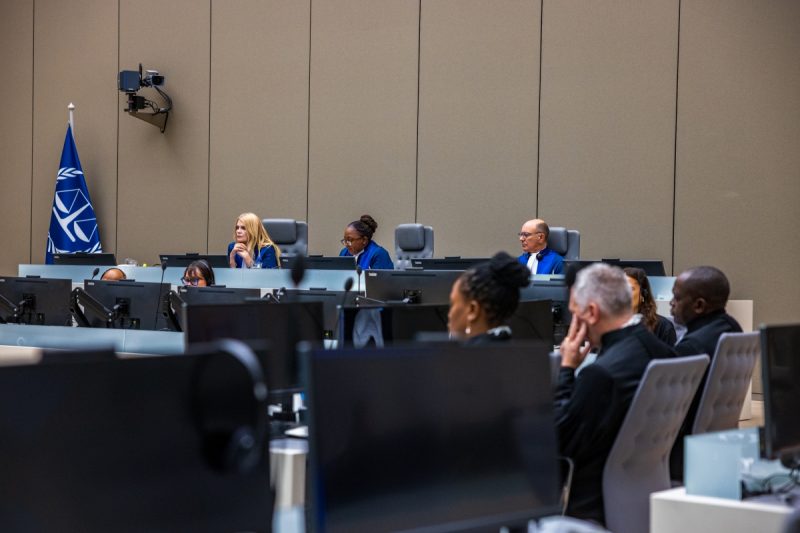
         Group photo of court justices | Photo Courtesy of Ghana News Agency
 

The AfCHPR and any other pertinent human rights treaties that have been ratified by the state in question are both circumstances in which the court will consider involving alleged violations of human rights. It was founded with a noble mission – to provide a legal platform for individuals and communities to seek redress for human rights violations. One of its remedies is to provide just recompense or make amends. Its judgments are legally binding, and signatory nations are obligated to comply with its rulings. Yet, the Court’s effectiveness is under threat as several African countries openly disregard its decisions.  

The Court’s authority, and ability to protect fundamental human rights in Africa are at stake due to persistent non-compliance. According to a report released earlier this year on the Court’s activities in 2021, states’ “poor level of compliance” with its rulings was a significant issue. During the Court’s 16-year existence only a small number of judgments and orders were implemented out of more than the 200 that were issued. However, a majority have been disregarded by the respondent nations.  According to the report, “as of July 2021, only 7% of judgments of the Court had been fully complied with, 18% partially complied and 75% non-compliance. Some States have stated clearly before the Executive Council that they will not comply with the Court’s decisions.” 

By end of 2020, the governments of Benin, Côte d’Ivoire, and Tanzania had all revoked the right of individuals and non-governmental organizations to register cases directly with the Court. Rwanda revoked this privilege in 2016, bringing the total number of nations restricting access to this vital path to justice to four. All three governments revoked this right in response to what they perceived to be unfavorable decisions, a rise in intolerance towards human rights defenders, and a general deterioration of national human rights conditions. Tanzania withdrew the privilege, falsely claiming that the Court entertained matters that should have been handled by national courts. Benin disagreed with the Court’s decision to defer the seizure of an applicant’s property in a dispute with a bank, arguing that the decision undermined the country’s economic and political stability. 

Most recently, the AfCHPR concluded its 70th Ordinary Session on September 29, 2023. It issued fifteen rulings on September 5, 2023. Responses to these 15 rulings will be foretelling. Despite the Court’s directive, little progress has been made to rectify this injustice, calling into question Tanzania’s commitment to upholding the Court’s decisions.  

Cases such as these, regrettably, are not isolated instances. The reasons for non-compliance are multifaceted and include political considerations, limited resources, lack of awareness among government officials and the public regarding the Court’s authority, and concerns over external interference. The implications of non-compliance are far-reaching. They erode the trust in the AfCHPR and weaken its power to protect human rights. If countries can choose to disregard the Court’s rulings with impunity, the very purpose of the Court is undermined, and the dream of justice for human rights abuses in Africa remains elusive. 

To ensure the survival and effectiveness of the AfCHPR, a multi-pronged approach is necessary. Primarily, it is essential for member states to honor their obligations and comply with the Court’s decisions. The African Union can play a pivotal role by engaging in diplomatic efforts to encourage compliance and emphasizing the importance of a united commitment to human rights. 

Additionally, public awareness campaigns should be launched to educate citizens and government officials alike about the AfCHPR’s role and authority, underlining how it plays a critical role in promoting justice and accountability on the continent. 

Moreover, international pressure and cooperation can be instrumental in holding non-compliant countries accountable. The international community can work collectively to stress the importance of human rights and the necessity for all nations to adhere to international norms and agreements. 

The African Court on Human and Peoples’ Rights, a beacon of hope for justice and human rights in Africa, stands at a crossroads. The threat of non-compliance with its decisions jeopardizes the very existence of this crucial institution. It is a call to action for African nations, the African Union, and the global community to come together and safeguard the AfCHPR’s authority and its mission of promoting and protecting human rights across the continent. Failure to address this issue may result in the erosion of fundamental human rights in Africa and a setback for justice and accountability. 

For further information, please see:

Amnesty International – Why the African Court should Matter to you – 9 Jun 2023

Fair Planet – African Court on Human and People’s Rights Faces Uncertain Future – 26 Nov 2022

Netherlands Quarterly of Human Rights – Is the African Court on Human and Peoples’ Rights in an Existential Crisis? – 1 Mar 2022

The Conversation – Successes of African Human Rights Court undermined by resistance from states – 31 Aug 2021

University of the Witwatersrand – African Human Rights Court undermined by resistance African Human Rights Court undermined by resistance from states – 29 Aug 2021

Amnesty International – Africa: Regional human rights bodies struggle to uphold rights amid political headwinds – 21 Oct 2020

Brooklyn Journal of International Law – From Commitment to Compliance: From Commitment to Compliance: Enforceability of Remedial Orders of African Human Rights Bodies – 2015


IACHR Hears First Case on El Salvador’s Total Abortion Ban

Alexa Connaughton
Impunity Watch News Staff Writer

SAN JOSE, Costa Rica – The Inter-American Court of Human Rights has heard its first case regarding the total criminalization of abortion and is expected to deliver a formal written opinion before the end of the year. The case, Beatriz, et al. v. El Salvador, was recommended to the Court by the Inter-American Commission of Human Rights alleging violations of Beatriz’s rights to life and health, to be free from inhumane treatment, to privacy, and to equity before the law. The Court’s decision on this case is expected to set a precedent on abortion laws in Latin America if the woman’s life is in danger or if the fetus will not survive outside the womb.


Protesters placing candles at a memorial for Beatriz. Photo Courtesy of NBC News.

In 2013, eleven weeks into her pregnancy Beatriz was diagnosed with a high-risk pregnancy. Beatriz suffered from lupus and other ailments and was diagnosed shortly after her first pregnancy. An ultrasound revealed that the fetus was anencephalic, a lethal condition in which part of the brain and skull don’t develop inside the womb. Carrying this type of pregnancy to term can lead to many complications including obstetrical hemorrhaging. The medical committee at El Salvador’s national maternity hospital recommended an abortion, however, abortion is illegal in all circumstances in El Salvador. Beatriz’s legal team requested the termination of her pregnancy to save her life, but the Supreme court denied the writ, ruling she could not have an abortion. Beatriz later went into labor early and was required to have an emergency C-section, the fetus died only five hours later.

In El Salvador women have been convicted of homicide for having an abortion, with sentences ranging up to 40 years in prison. Doctors, nurses, and other medical professionals can be convicted if they are found to have supported a woman in getting an abortion and may receive up to 12 years in prison.

In 2021 the Inter American Court of Human Rights found El Salvador responsible for the death of Manuela, a woman who was sentenced to 30 years in prison, charged with aggravated homicide after suffering a miscarriage. As part of the Court’s decision on that case they ruled that criminal sanctions should not be imposed automatically when pregnancy ends as a result of an obstetric emergency. However, El Salvador has made no change to their criminal abortion laws following the 2021 ruling. The hope with the pending decision in Beatriz, et al. v. El Salvador, is that a decision condemning the blanket abortion ban as a whole or in circumstances of high risk will push legislation towards decriminalization.

For further information, please see:

Human Rights Watch – El Salvador: Court Hears Case on Total Abortion Ban – 23 Mar. 2023

IACHR – Caso Beatriz y Otros vs. El Salvador – 21 Feb. 2023

Inter-American Commission on Human Rights, OAS – IACHR Takes Case Involving El Salvador’s Absolute Ban on Abortion to the Inter-American Court of Human Rights – 11 Jan. 2022

Jurist – Inter-American Court of Human Rights hears El Salvador abortion access case – 23 Mar. 2023

NBC News – Activists urge human rights court to condemn El Salvador’s abortion ban – 7 Mar. 2023

Reuters – Human rights court begins review of high-stakes El Salvador abortion case – 22 Mar. 2023

The Guardian – ‘Historic moment’ as El Salvador abortion case fuels hopes for expanded access across Latin America – 24 Mar. 2023

ICC – Defense Responds to Prosecution’s Request for In Absentia Confirmation of Charges in Kony Case

By: Nikolaus Merz
Impunity Watch News Staff Writer

THE HAGUE, Netherlands – Following a procedural stay, the Office of Public Counsel for the Defense (“OPCD”) has submitted its response to the Prosecution’s request to hold an in absentia confirmation of charges hearing in the case against Joseph Kony.

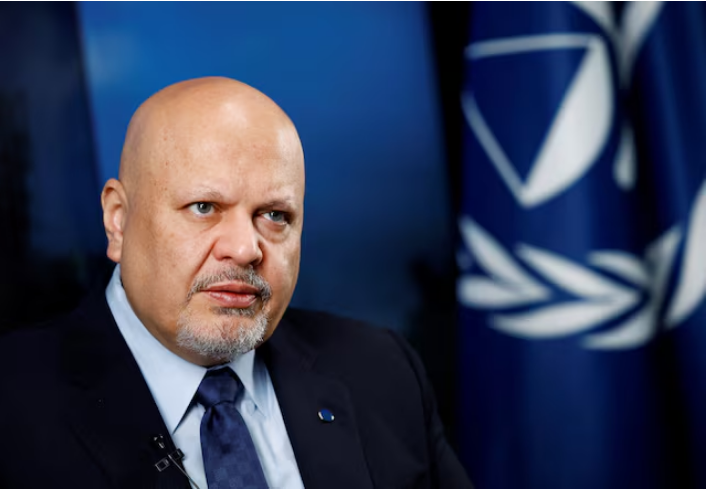
Joseph Kony faces 12 counts of Crimes Against Humanity, and 21 counts of War Crimes. If convicted, Mr. Kony’s case would be among the longest in international criminal history. Photo courtesy of Reuters.

The Prosecution’s unprecedented request was filed in November of 2022, and would seek to expand the scope of the International Criminal Court’s (“ICC”) procedural authority.

The Prosecution justified it’s request due to the extraordinary circumstances of Mr. Kony’s case. First, despite concerted efforts of multiple nations, including the deployment of armed forces and money rewards, Mr. Kony’s whereabouts have yet to be discerned. Second, Mr. Kony has remained at large for almost two decades, making him the second longest suspect at large of any international criminal court or tribunal. Third, the Prosecution points out the myriad of policy and judicial interests that would be advanced, including rights of victims, the galvanization of justice, and applicability to similar future circumstances.

The OPCD has responded to the Prosecution’s request with a broadside attack, raising numerous defenses against each of the Prosecution’s arguments. In general however, the OPCD raised two broad theories against the Prosecution’s request.

First, the OPCD argued the Prosecution misinterpreted the procedural justification for its request. The foundational treaty of the ICC, the Rome Statute, allows for in absentia confirmation of charges in two circumstances under Article 61(2)(a) and 61(2)(b). Article 61(2)(a) involves a situation where a defendant waives their right to in-person confirmation and is not relevant here. However, Article 61(2)(b) allows for in absentia confirmation in situations where the defendant “Fled or cannot be found…” and is the supporting procedural clause the prosecution used for its request.

According to the OPCD, the Prosecution has misinterpreted 61(2)(b) to mean simply any situation where a defendant cannot be apprehended or found. However, the structure of the Rome Statute, the intention of its drafters, and academic treatises indicate that 61(2)(b) is only meant to apply after an initial appearance by the defendant before the Court. Or, in other words, 61(2)(b) is meant to apply when a defendant has escaped ICC custody in an intermediary period between initial appearance and confirmation of charges.

In addition, the OPCD also argued that no reasonable efforts had been made to notify Mr. Kony of the charges against him. This argument is also based on interpretation of 61(2)(b) which differs from the prosecution. While 61(2)(b) allows for in absentia confirmation in cases where a defendant has fled or cannot be found, it also requires that reasonable efforts have been made to inform the defendant of the charges against them. The OPCD has argued that the only way for Mr. Kony to be made reasonably aware of the charges against him is to re-issue his arrest warrant and to broadcast it for a designated period of time.

Secondly, the OPCD argued that the Prosecution failed to carry its burden in showing that the circumstances of the Kony case were extraordinary enough to warrant in absentia confirmation of charges. The OPCD argued that the Prosecution gave no evidence to show that in absentia confirmation would support the policy considerations it put forth. Further, the OPCD argued that an extensive period of time to apprehend a suspect does not, by itself, demonstrate cause for in absentia confirmation of charges. Lastly, the OPCD pointed out that judicial and victim considerations had already factored into the Kony case in previous motions and decisions.

It should be noted that the representatives of the victims contacted the surviving victims regarding the Prosecution’s request; they were in unanimous support.

At present, it is uncertain if the ICC will support the Prosecution’s request. While the OPCD made compelling arguments, it is more likely that the Court will be considering the precedential ramifications of its decision more than anything. As the Prosecution stated, there would be potential to use in absentia confirmation of charges in similar future circumstances. To address the elephant in the room, a ruling in the Prosecution’s favor could raise uncomfortable questions for the Court regarding the situation of Mr. Putin, whom the ICC issued an arrest warrant for on March 17th 2023.

For further information, please see:

ICC – OPCD Observations on the Prosecution’s Request to Hold a Hearing on the Confirmation of Charges against Joseph Kony in his Absence – 30 Mar. 2023

ICC – Public Redacted Version of the “Prosecution’s Request to Hold a Hearing on the Confirmation of Charges against Joseph Kony in his Absence” – 24 Nov. 2022

ICC – Situation in Ukraine: ICC judges issue arrest warrants against Vladimir Vladimirovich Putin and Maria Alekseyevna Lvova-Belova – 17 Mar. 2023

ICC – Victims’ Views and Concerns on the “Prosecution’s Request to Hold a Hearing on the Confirmation of Charges against Joseph Kony in his Absence” – 30 Mar. 2023

Reuters – ICC prosecutor seeks to revive case against fugitive Kony – 24 Nov. 2022

SROF Calls on Guatemala to not use Criminal Proceedings Against Journalists for their Actions in their Capacity as Journalists

By: Marie LeRoy

Impunity Watch Staff News Writer

WASHINGTON D.C., United States – The Office of the Special Rapporteur for Freedom of Expression (SROF) has issued an statement sharing their deep concern with the criminal investigation against journalists in Guatemala.

Picture of José Rubén Zamora’s son holding the last printed edition of Zamora’s Newspaper el Periódico. The cover reads “We won’t be silenced.” Picture curtesy of Global Investigative Journalism Network.

On February 28, 2023, an investigation was initiated against eight journalist who had all covered the criminal proceedings against journalist and government critical newspaper president José Rubén Zamora, who has been imprisoned since July 2022. The Guatemalan Prosecutor’s Office argued that the journalists were attempting to “attack the personal sphere of the operators of justice” when covering Mr. Zamora’s case. These news stories at issue discussed the disciplinary process of Mr. Zamora’s case and questioned decisions by the judicial officials. The coverage of Mr. Zamora’s criminal proceedings could, as according to the Guatemalan Prosecutor’s Office, possibly be considered “obstruction of justice”.

While Guatemala maintains that it recognized the fundamental right of freedom of expression it claims that the investigation into the journalists does not infringe upon that right. The state further states that this investigation does not seek to limit, restrict, or threaten this inherit right but seeks to discover whether the journalists, in their capacity as journalists, knowingly spread false information to influence or hinder the criminal proceedings against Mr. Zamora.

Organizations around the world have responded to this threat to freedom of speech and democracy by voicing their objections to the investigation. The president of the Guatemalan Association of Journalists, Mario Recinos, stated that this is a “deterioration in rights” and compared this action to the Nicaragua’s government who famously have destroyed the rights of journalists. The Committee to Protect Journalists has also publicly urged the end to the investigation and let Zamora go. They stated that the criminal investigation of the journalists are a pointed attempt to “intimidate and harass an investigative outlet and journalists working tirelessly to expose corruption.” PEN International appealed to Guatemala to stop the “harassment of journalists.” The United States Department of State also joined the outcry by issuing their own statement urging Guatemala to support journalists and journalistic functions for the health of the Guatemalan democracy.

SROF warns of the potential consequences of bringing a criminal action against the rights of the journalists’ ability to inform and report and the correlating right of the public to be informed in relation to the continuation of democracy.

SROF calls on Guatemala to adhere to the international standards on freedom of expression for all criminal investigations against the press.


For further information, please see:

AP – Judge orders investigation of Guatemalan journalists – Feb. 28, 2023

CPJ – CPJ calls for Guatemala to halt investigation into elPeriódico journalists – Feb. 28, 2023

Global Investigative Journalism Network – In a Hostile Climate Guatemala’s Journalists Fear the Law Being Turned Against Them – Feb. 13, 2023

OAS — SRFOE expresses concern about the opening of a criminal investigation against journalists in Guatemala for their coverage of matters of public interest – Mar. 29, 2023

PEN – Guatemala: Authorities Must Stop Legal Harassment of Journalists – Mar. 9, 2023

U.S. Department of State – Persecution of Journalists in Guatemala—Mar. 2, 2023